
Fountain Aeration or Bottom Diffusers for Florida Ponds?
A pond fountain can make a Florida property look finished, but appearance isn't its only consideration. The real question is whether you need surface movement, deeper circulation, or both.
Fountains primarily agitate the surface and add visual appeal. Bottom diffusers are generally designed to move and oxygenate deeper water. Your choice depends on pond depth, acreage, shape, access to power, and current water-quality problems.
Before selecting equipment, understand what each system can and cannot do.
Key Takeaways
- Fountains create visible surface movement, add oxygen near the top, and improve the look of a pond.
- Bottom diffusers circulate deeper water and are often better for oxygen distribution throughout the water column.
- Pond size, depth, shape, algae growth, muck, fish load, and electrical access affect system design.
- A fountain and diffuser can work together when a pond needs both visual appeal and deeper aeration.
- Aeration supports water quality, but it doesn't remove excess nutrients or replace testing and maintenance.
What a Pond Fountain Actually Does
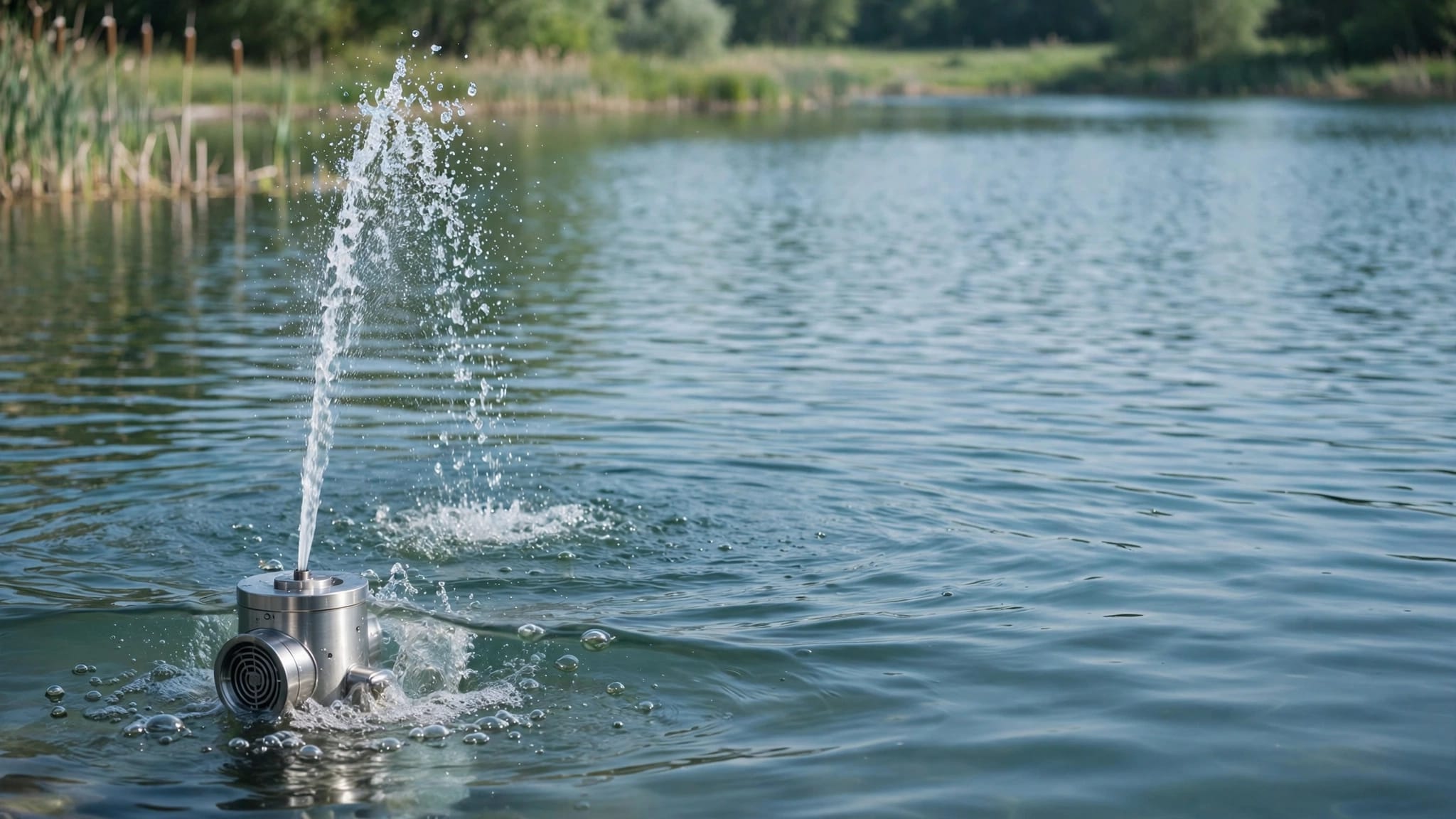
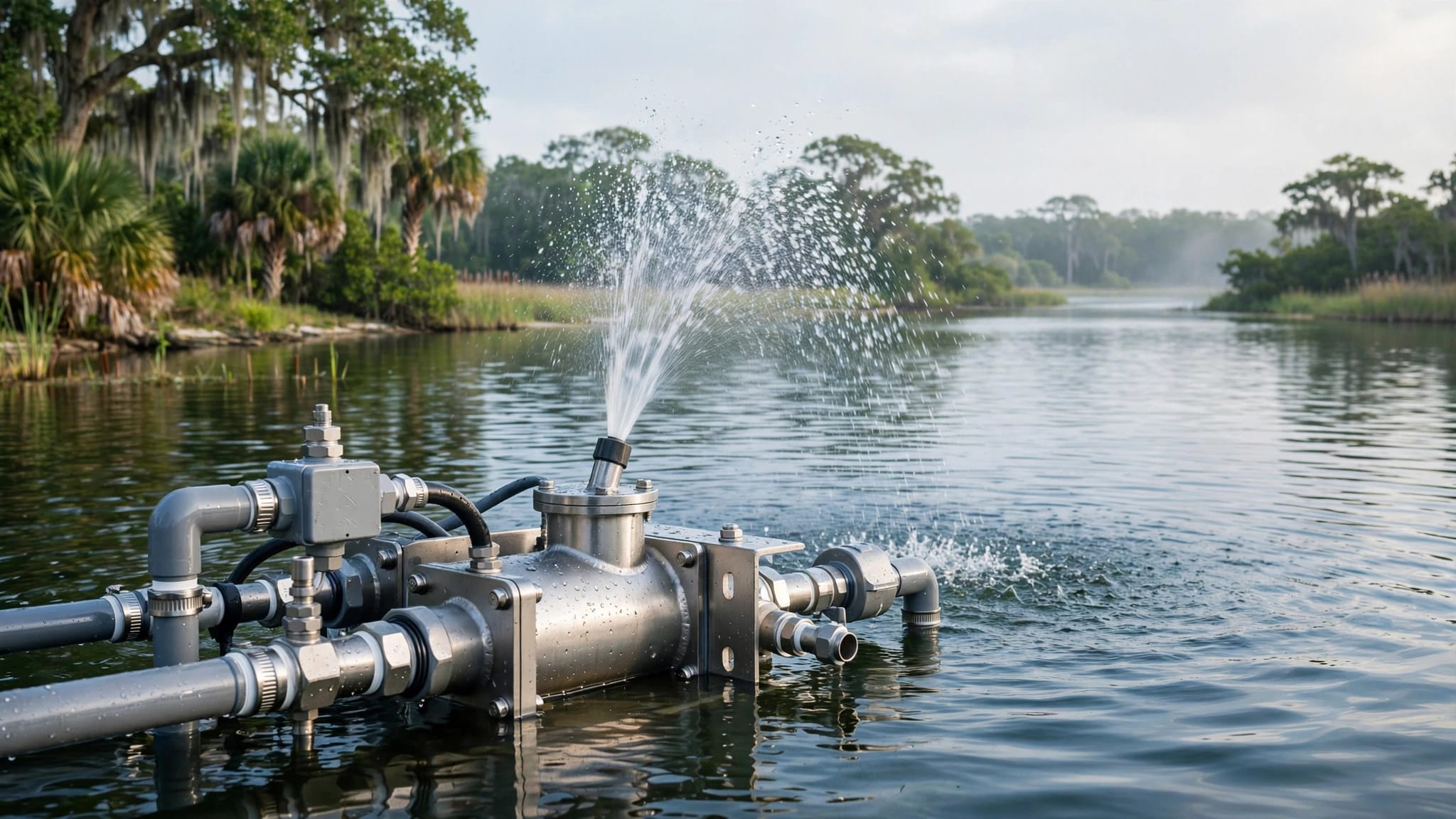
A decorative pond fountain uses a pump to pull water through an intake and spray it above the surface. The spray breaks into droplets, contacts the air, and falls back into the pond. This process adds oxygen near the surface while creating ripples and circulation.
That visible plume is the main advantage. A fountain can turn a flat retention pond into a more attractive feature for a community entrance, golf course, business property, or backyard. It also helps break up stagnant surface water, which can reduce odors and improve the pond's appearance.
However, a fountain's oxygenating effect is strongest near the surface. The spray doesn't automatically mix every part of a deep pond. In a pond with several feet of water, the bottom may remain warm, oxygen-poor, and separated from the upper layer.
Florida's heat makes this distinction important. Warm water holds less dissolved oxygen than cool water. During calm weather, the pond can develop layers, with warmer water near the top and poorer-quality water below. A fountain may improve surface conditions without fully correcting that deeper separation.
Fountains also need careful placement. Wind can push spray toward walkways, homes, roads, or landscaping. Evaporation and splash-out can lower water levels, especially during dry periods. A properly selected unit should match the pond's size and intended viewing distance, rather than relying on a dramatic spray pattern alone.
A fountain is often a good fit when you want:
- A visible water feature for residents or guests
- Surface movement in a shallow or moderately sized pond
- Better appearance and reduced surface stagnation
- Aeration combined with lighting or decorative spray patterns
A fountain may not be enough when the main problem is deep muck, bottom odors, fish stress, or poor oxygen levels throughout the pond.
How Bottom Diffusers Move Deep Water
A bottom diffuser system uses an air compressor on shore, airline tubing, and one or more diffuser plates or membranes placed on the pond bottom. The compressor sends air through the tubing. As bubbles rise, they lift surrounding water toward the surface.
That upward movement pulls deeper water into circulation. Water reaches the surface, releases gases, absorbs oxygen, and then moves back down through the pond. The bubbles themselves provide some air contact, but the larger benefit comes from this water-column circulation.
Because the diffuser operates at depth, it can reach areas a surface fountain may leave untouched. This makes bottom aeration useful for deeper ponds, fish ponds, and water bodies with low-oxygen conditions near the bottom.
A diffuser doesn't create the same visual display as a fountain. From shore, you may see a boil or patch of bubbling water, but the equipment is less noticeable. For a residential pond or neighborhood lake, that lower profile can be helpful when appearance isn't the main goal.
Diffuser placement matters. One station may work in a compact, round pond, while a long, irregular pond may need multiple stations. A single diffuser positioned near the deepest point won't always circulate shallow coves or narrow sections.
The system also needs a gradual startup when a pond has been stratified for a long time. Rapidly mixing oxygen-poor bottom water can temporarily worsen conditions for fish. An installer may recommend shorter operating periods at first, followed by longer cycles as the pond adjusts.
Bottom diffusers are often the better choice when you need to address:
- Low dissolved oxygen in deeper water
- Fish stress during hot weather
- Bottom odors caused by stagnant conditions
- Poor circulation in a deep pond
- Multiple underwater zones that require steady mixing
Fountain vs. Diffuser: Which Fits Your Pond?
Neither system is automatically right for every Florida pond. The best choice depends on the problem you want to solve and the conditions around the water.
| Consideration | Fountain aeration | Bottom diffuser |
|---|---|---|
| Main action | Agitates the surface | Circulates deeper water |
| Visibility | Highly visible spray pattern | Low-visibility bubbling |
| Best use | Appearance and surface movement | Whole-pond circulation |
| Deep-water reach | Limited, depending on design | Stronger in deeper areas |
| Wind exposure | Spray can drift | Little surface splash |
| Installation | Pump, intake, power, and anchoring | Compressor, airline, and diffuser stations |
| Common concern | Evaporation, splash, and spray drift | Compressor noise and airline placement |
Choose a fountain when the pond is part of a visible landscape and surface presentation matters. It can also provide useful aeration in a shallow pond, though the equipment should still match the pond's depth and volume.
Choose a bottom diffuser when water quality problems appear below the surface. A diffuser is usually more practical for deeper ponds where the goal is consistent circulation rather than a large display.
A combined system can make sense for a community lake or larger property. The fountain handles the visible feature and surface agitation, while diffusers work below the surface. This approach costs more and requires more equipment, but it may fit a pond that has both aesthetic and water-quality goals.
A large spray pattern doesn't prove that a system is treating the pond's deepest water. Surface display and deep circulation are separate design questions.
How Florida Pond Conditions Affect the Choice
Florida ponds face conditions that can change throughout the year. High water temperatures, intense sunlight, heavy rain, and long periods of calm weather all affect oxygen levels and algae growth.
Stormwater ponds may also receive fertilizer, soil, leaves, grass clippings, and other organic material from surrounding properties. Those materials add nutrients and create oxygen demand as they break down. Aeration can improve circulation, but it won't remove the source of those nutrients.
Depth matters first. A shallow pond may mix naturally with wind and rainfall, while a deeper pond can develop separated layers. Shape matters as well. Narrow coves, corners, islands, and long shorelines can leave stagnant pockets even when the main basin has good movement.
Acreage affects equipment capacity and diffuser placement. A unit sized for a small backyard pond won't treat a community lake effectively. At the same time, oversizing equipment can create unnecessary noise, splash, electrical use, and stress on the pond's edges.
Existing problems should guide the design. Surface algae, bottom sludge, fish kills, foul odors, cloudy water, and eroded shorelines don't all have the same cause. Aeration may help some of these conditions, but the pond may also need nutrient control, shoreline management, aquatic plant work, or sediment removal.
Water testing can reveal dissolved oxygen, pH, temperature, and nutrient conditions. Testing at different depths is more useful than collecting one surface sample when deep-water problems are suspected.
Sizing, Placement, Installation, and Maintenance
Pond aeration in Florida should be sized for the actual water body, not selected by appearance or horsepower alone. A qualified installer will consider pond acreage, average and maximum depth, volume, shape, diffuser depth, and the number of areas that need circulation.
Power access is another practical issue. A fountain may require an electrical connection near the pond, while a diffuser compressor needs a dry, ventilated location on shore. Both systems need proper protection from moisture, voltage problems, and accidental contact.
Placement affects performance and safety. Keep fountain spray away from roads, homes, pedestrian areas, and electrical equipment. Diffuser airlines should avoid sharp edges, boat routes, and areas where maintenance crews could damage them. Anchoring must account for wind, water level changes, and storm conditions.
Maintenance needs vary by equipment. Fountain pumps may require intake cleaning, impeller inspection, and removal of leaves or string algae. Diffuser systems need compressor service, airline checks, and periodic inspection of the underwater diffuser. Florida storms can also move debris into intakes or damage exposed components.
Operating schedules should follow the equipment design and pond conditions. Some systems run continuously, while others use timed operation. A pond with severe stratification may need a gradual startup instead of immediate full-time operation.
Before approving a project, ask for answers to these questions:
- What depth and pond area will the system treat?
- How many diffuser stations are needed?
- Where will the compressor or fountain controls sit?
- What happens during hurricanes, lightning, or major storms?
- Which parts require routine cleaning or replacement?
- Will the system address the actual water-quality problem?
There is no reliable flat price for a fountain or diffuser installation. Equipment size, electrical work, shoreline access, anchors, airline length, installation labor, and ongoing maintenance all affect the total cost. A site assessment is more useful than comparing pump prices alone.
Conclusion
A fountain gives a Florida pond visible movement, surface agitation, and a finished appearance. A bottom diffuser focuses on deeper circulation and oxygen distribution. When a pond needs both, a combined design may offer the right balance.
The strongest choice starts with the pond itself. Depth, acreage, shape, access, and existing water-quality issues should determine the equipment, placement, and operating plan. Surface beauty can improve a pond's appearance, but properly matched aeration supports the water beneath it too.
Latest posts
Read Our Blog
Tips, guides, industry best practices, and news.
Contact us
Get in touch
Our friendly team is ready to chat.