
Chloramine vs Chlorine: Choosing City Water Filtration
The disinfectant in your city water affects more than taste. It also determines which home water filter can reduce odors, protect equipment, and deliver the results you expect.
The chloramine vs chlorine question matters because the two disinfectants behave differently. A standard activated-carbon filter may reduce chlorine quickly, while chloramine often needs catalytic carbon, longer contact time, or another treatment method. Start with your local water-quality report, then match the system to your actual water chemistry.
Key Takeaways
- Chlorine and chloramine disinfect city water, but they require different filtration strategies.
- Standard activated carbon usually reduces free chlorine more easily than chloramine.
- Sediment filters remove particles, not dissolved disinfectants.
- Whole-house carbon systems treat water throughout the home, while reverse osmosis is usually aimed at one drinking-water faucet.
- Your local utility report is the best starting point for identifying the disinfectant in your supply.
Chlorine and Chloramine Have Different Jobs in City Water
Municipal water treatment uses disinfectants to control bacteria, viruses, and other disease-causing organisms. Chlorine is common because it works quickly and leaves a measurable residual as water travels through distribution pipes.
That residual matters. Water may move miles from a treatment plant to your home, so utilities maintain enough disinfectant to limit microbial growth along the route. Chlorine can create a noticeable pool-like smell or taste, especially when the residual is higher or the water warms.
Chloramine is made by combining chlorine with ammonia. Most utilities use monochloramine because it remains stable longer in the distribution system. It usually produces less of the sharp chlorine odor, but some households notice a medicinal or musty taste instead.
Both chemicals are regulated when used in public water systems. Their presence doesn't mean your water is unsafe. However, the disinfectant can affect comfort, plumbing materials, aquarium water, and filter performance.
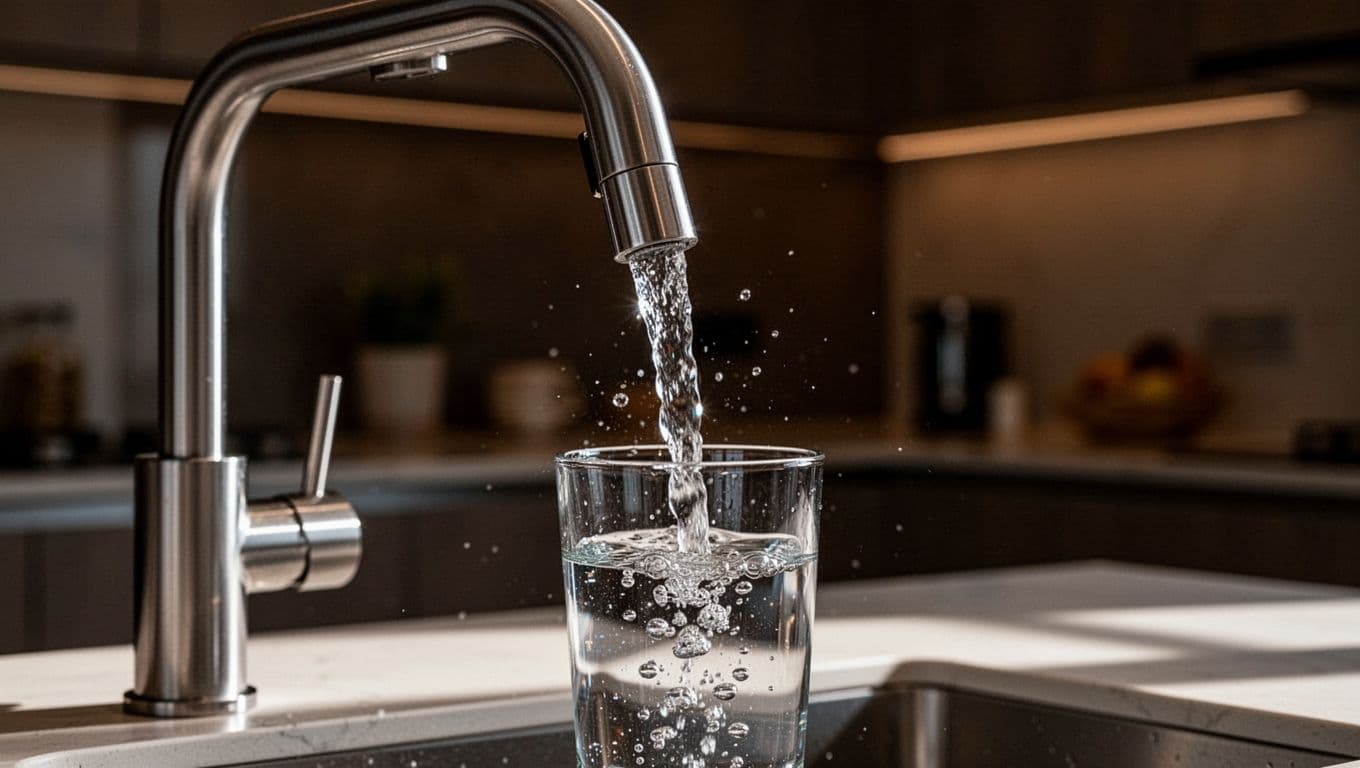
Water disinfection and water filtration are separate steps. Disinfection happens at the municipal plant , where treatment removes or inactivates microorganisms. Filtration at home improves selected qualities after the water reaches your property.
A home filter doesn't replace public disinfection. It may reduce chlorine, chloramine, sediment, odors, or other substances, depending on its media and certification. That distinction prevents a common mistake: assuming any filter removes every contaminant.
For a broader look at why homeowners add treatment after municipal processing, see these reasons to filter your city tap water.
Why Activated Carbon Handles Chlorine More Easily
Activated carbon has millions of tiny pores that capture many organic compounds and improve taste and odor. It also promotes chemical reactions that reduce free chlorine. For that reason, ordinary carbon filters often work well when chlorine is the primary disinfectant.
A carbon block under the kitchen sink can make a quick difference in taste. A larger whole-house carbon tank can treat water before it reaches showers, laundry machines, refrigerators, and faucets.
Chloramine is more persistent. It doesn't react with standard carbon as readily as free chlorine, so water may pass through a basic filter with much of its chloramine still present. Performance depends on the carbon type, bed depth, flow rate, water temperature, and the time water remains in contact with the media.
Catalytic carbon is designed to improve the reaction with chloramine. It often performs better than standard granular activated carbon for this purpose, but it still needs suitable contact time and regular maintenance. A small cartridge moving water quickly may not provide the same reduction as a properly sized tank.
Filter claims deserve close attention. A product labeled for chlorine reduction isn't automatically certified for chloramine reduction. Look for performance information that names chloramine, along with the rated capacity and flow rate.
Other common filters have different limits:
- Sediment filters capture sand, rust, and suspended particles, but they don't remove dissolved chlorine or chloramine.
- Water softeners reduce hardness minerals such as calcium and magnesium. They aren't designed to remove disinfectants.
- Reverse osmosis systems can reduce many dissolved substances, but their carbon prefilters must be selected and maintained carefully when chloramine is present.
- Ultraviolet systems disinfect water but don't remove chlorine, chloramine, taste, or odor.
The filter that worked well in one city may perform poorly in another. The disinfectant and the home's flow demands both matter.
Whole-House Carbon or Reverse Osmosis?
Choosing between whole-house carbon and reverse osmosis depends on where you want treated water and what you want to change.
A whole-house carbon system treats water at the point where it enters the home. This approach makes sense when chlorine or chloramine affects showers, baths, laundry, and every faucet. It can reduce disinfectant taste and odor throughout the house, provided the media matches the water chemistry and the tank is sized for the home's flow rate.
Carbon filtration doesn't usually remove hardness, dissolved salts, nitrate, fluoride, or every emerging contaminant. It is also not a substitute for a softener when hard water causes scale on fixtures and appliances.
Reverse osmosis, often installed under the kitchen sink, pushes water through a semipermeable membrane. It can reduce many dissolved contaminants and produce purified drinking and cooking water. Most systems include sediment and carbon stages before the membrane, followed by a storage tank and a dedicated faucet.
Chloramine creates an important design concern for reverse osmosis. The membrane can be sensitive to oxidants, so the pretreatment must reduce the disinfectant before water reaches it. A system designed for chloraminated water may use catalytic carbon or other suitable media. Replacing cartridges on schedule protects performance.
For a city-water comparison of these two approaches, review this guide to whole-house carbon filtration versus reverse osmosis.
A practical setup may combine both systems. Whole-house treatment can address bathing and household odor, while reverse osmosis supplies lower-contaminant water at the kitchen sink. That combination costs more and requires more maintenance, so it should follow a water test and a clear household need.
How to Choose a City Water Filter for Chloramine or Chlorine
Begin with the water-quality report from your local utility. In the United States, community water systems generally provide an annual Consumer Confidence Report. The report may identify the disinfectant used, typical residual levels, treatment changes, and other regulated measurements.
Look for terms such as free chlorine , total chlorine , or chloramine . If the report isn't clear, call the utility and ask which disinfectant it uses at the treatment plant and in the distribution system. Water chemistry can change, so check the most recent report rather than relying on an old answer from a neighbor.
Next, identify the problem you want to solve. A chlorine odor at every faucet points toward whole-house treatment. A taste concern limited to drinking water may call for an under-sink carbon or RO system. Scale on shower doors is a hardness issue, so carbon alone won't address it.
Flow rate also matters. A filter must handle the demand created by showers, toilets, washing machines, and other fixtures without excessive pressure loss. A cartridge that works at one gallon per minute may not perform the same way at a home's peak flow.
Ask for product documentation before installation. Check the following details:
- The contaminant or disinfectant named in the performance claim
- The rated service flow and capacity
- The required replacement schedule
- The media type, such as standard or catalytic carbon
- Any certification from NSF or another recognized testing organization
- Whether the system needs a drain, electricity, or prefiltration
A water test can reveal issues the utility report cannot show at your tap. It may identify iron, hardness, sediment, pH, or plumbing-related concerns. Testing is especially useful in older homes, properties with long service lines, or homes where the taste differs between cold and hot water.
Avoid choosing a system based on tank size alone. More media can improve contact time, but the complete design must fit your water use, pressure, plumbing, and maintenance habits.
Maintenance Determines Whether Filtration Keeps Working
A filter only performs as long as its media remains active and water flows through it under the intended conditions. Carbon becomes exhausted. Prefilters collect sediment. RO membranes foul when pretreatment fails or maintenance is delayed.
Replacement timing varies by system and water use. Follow the manufacturer's capacity rating and service instructions instead of waiting for taste or odor to return. By that point, the media may have been exhausted for weeks or months.
Whole-house systems often need periodic backwashing or media replacement, depending on their design. Under-sink filters usually require cartridge changes at set intervals. Reverse osmosis systems need several components checked, including prefilters, the membrane, postfilter, storage tank, and faucet.
Chloramine filtration deserves extra attention because the disinfectant may be harder to detect by smell after a filter loses capacity. A system can appear normal while its reduction performance declines. Scheduled service and occasional testing provide a better safeguard than taste alone.
Keep records of installation dates and cartridge changes. Also watch for reduced pressure, leaks, unusual noise, or changes in taste. These signs don't identify the cause by themselves, but they justify inspection.
A qualified installer can check flow rate, bypass settings, drain connections, pressure, and media condition. Proper sizing and setup are as important as the filter brand. A high-quality cartridge can't compensate for water moving too quickly through an undersized housing.
The Right Filter Starts With the Disinfectant
Chlorine and chloramine both help make city water microbiologically safe, yet they don't behave the same way after water enters your home. Chlorine is usually easier for standard activated carbon to reduce. Chloramine often calls for catalytic carbon, carefully selected pretreatment, or a treatment system designed around its longer-lasting chemistry.
Your local water-quality report should guide the first decision. Then consider the treatment point, household flow rate, other water problems, and the maintenance you can keep up with. The best city-water filter is the one matched to the disinfectant and the job you need it to do.
Latest posts
Read Our Blog
Tips, guides, industry best practices, and news.


Contact us
Get in touch
Our friendly team is ready to chat.