Whole-House Carbon Filter vs Reverse Osmosis for City Water

Trademark Water Systems • June 11, 2026

Share this article

City water can still taste like chlorine, smell a little off, or leave you unsure about what's in it. That's why the choice between a whole-house carbon filter vs reverse osmosis matters.

The two systems solve different problems. One treats all the water entering your home, while the other gives you high-purity water at a single tap. If you live on municipal water, the right answer depends on what bothers you most.

What a whole-house carbon filter does for city water

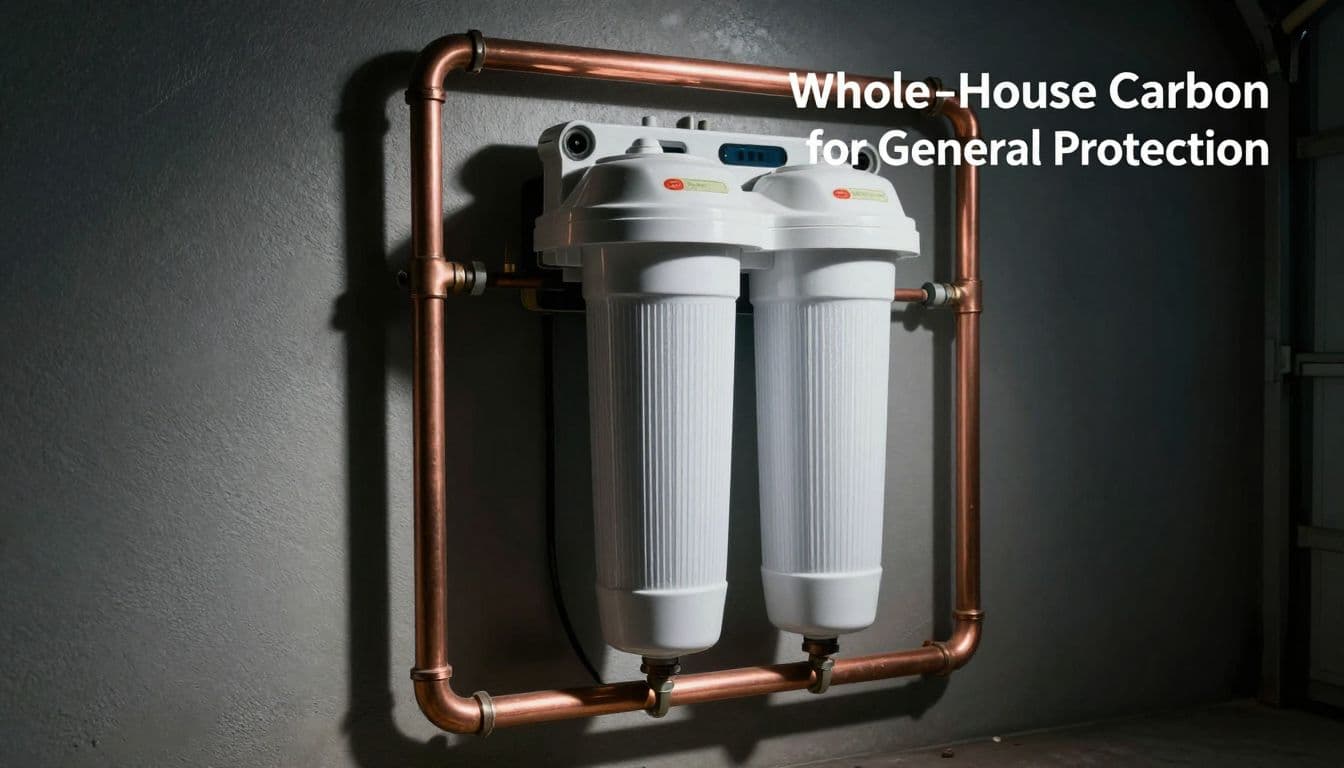
A whole-house carbon filter treats water before it reaches your showers, sinks, washer, and fridge. It uses activated carbon to reduce chlorine, improve taste, and cut down on odor.

That matters more than many homeowners expect. Chlorine does its job in the city supply, but it often leaves water smelling like a pool and tasting flat. A carbon system can make the entire house feel cleaner, not just the kitchen.

A good whole-house carbon setup can also help reduce some disinfection byproducts and other compounds tied to taste and odor. For many homes, that means better shower water, better laundry, and less harsh water in general. If that broad homewide comfort is the goal, professional water conditioning services are often the right place to start.

Carbon filters are not built for every water issue. They do not remove most dissolved solids, and they are not the best answer for lead, fluoride, nitrates, or very high purity drinking water. Their strength is whole-home treatment, not lab-grade purification.

How reverse osmosis works at the tap

Reverse osmosis, or RO, is a point-of-use system. It usually sits under the sink and feeds a small drinking water faucet, or sometimes a refrigerator line.

RO pushes water through a semipermeable membrane. That membrane removes many dissolved contaminants that carbon filters cannot handle well. It is especially useful when you want cleaner water for drinking, cooking, coffee, or baby formula.

RO systems are often chosen for lead risk, fluoride reduction, nitrate reduction, and a wide range of dissolved contaminants. Results depend on the system and on how it is installed, so the details matter. A well-matched RO setup gives you a much higher level of purity at one tap.

The tradeoff is simple. RO is slower, and it sends some water to the drain during the cleaning process. It also does not treat shower water, laundry water, or the hose bib outside. For homeowners who only care about drinking water, that is fine. For whole-home coverage, it is only part of the answer.

RO is the better tool when the cleanest water matters most at the kitchen sink.

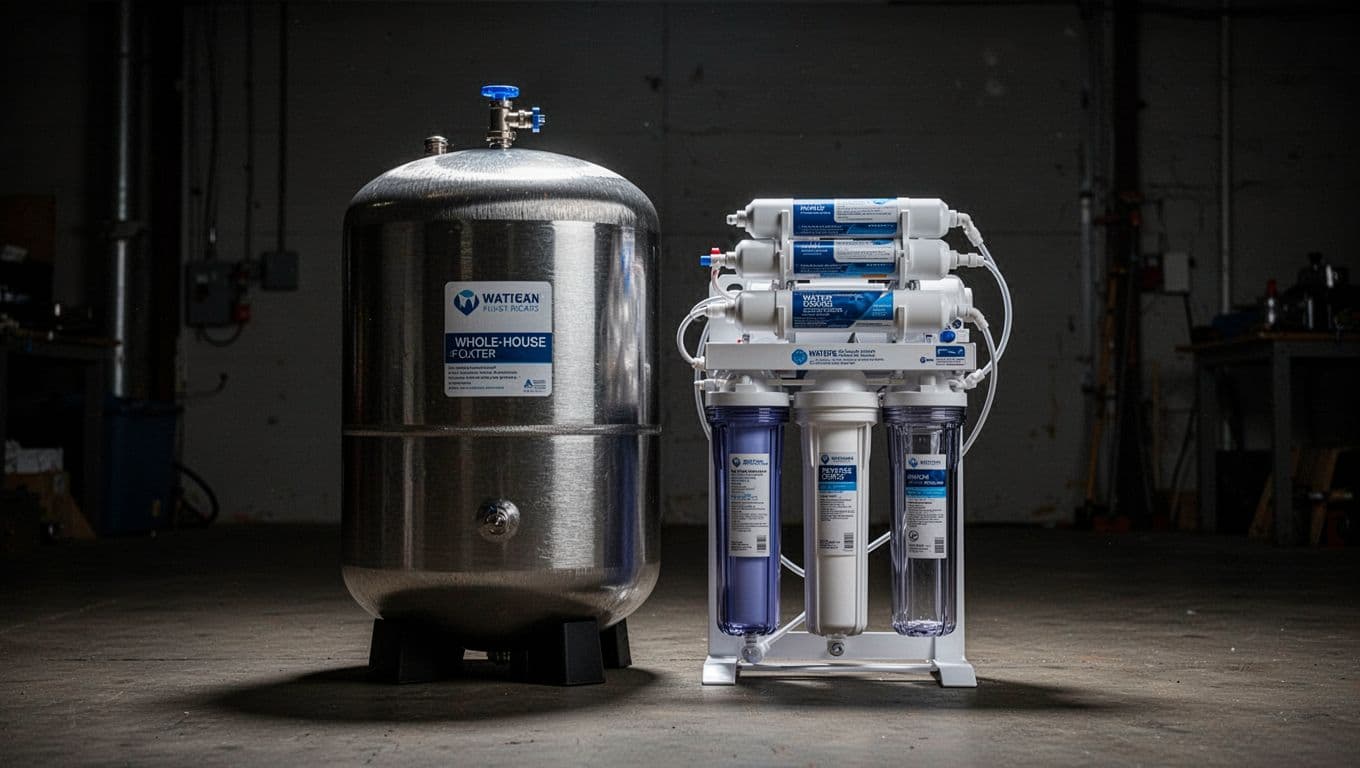
Whole-house carbon filter vs reverse osmosis at a glance

The easiest way to compare the two is to look at where each one works best.

Aspect Whole-house carbon filter Reverse osmosis
Main job Treats all water entering the home Treats drinking water at one tap
Best at removing Chlorine, taste, odor, some disinfection byproducts Many dissolved contaminants, including lead in many systems
Less effective on Dissolved solids, fluoride, nitrates, most dissolved salts Whole-home flow, shower water, laundry water
Flow rate High, designed for the whole house Lower, because it fills a tank or faucet slowly
Wastewater Usually little to none Produces wastewater during filtration
Upfront cost Higher Lower for a single faucet setup
Maintenance Media or cartridge changes over time Prefilters, membrane, and postfilter changes
Best for Homes that want cleaner water everywhere Homes that want very clean drinking water

The table makes the split pretty clear. Whole-house carbon is a comfort and treatment system for the entire home. RO is a precision system for the water you drink.

Common city-water problems and the system that fits

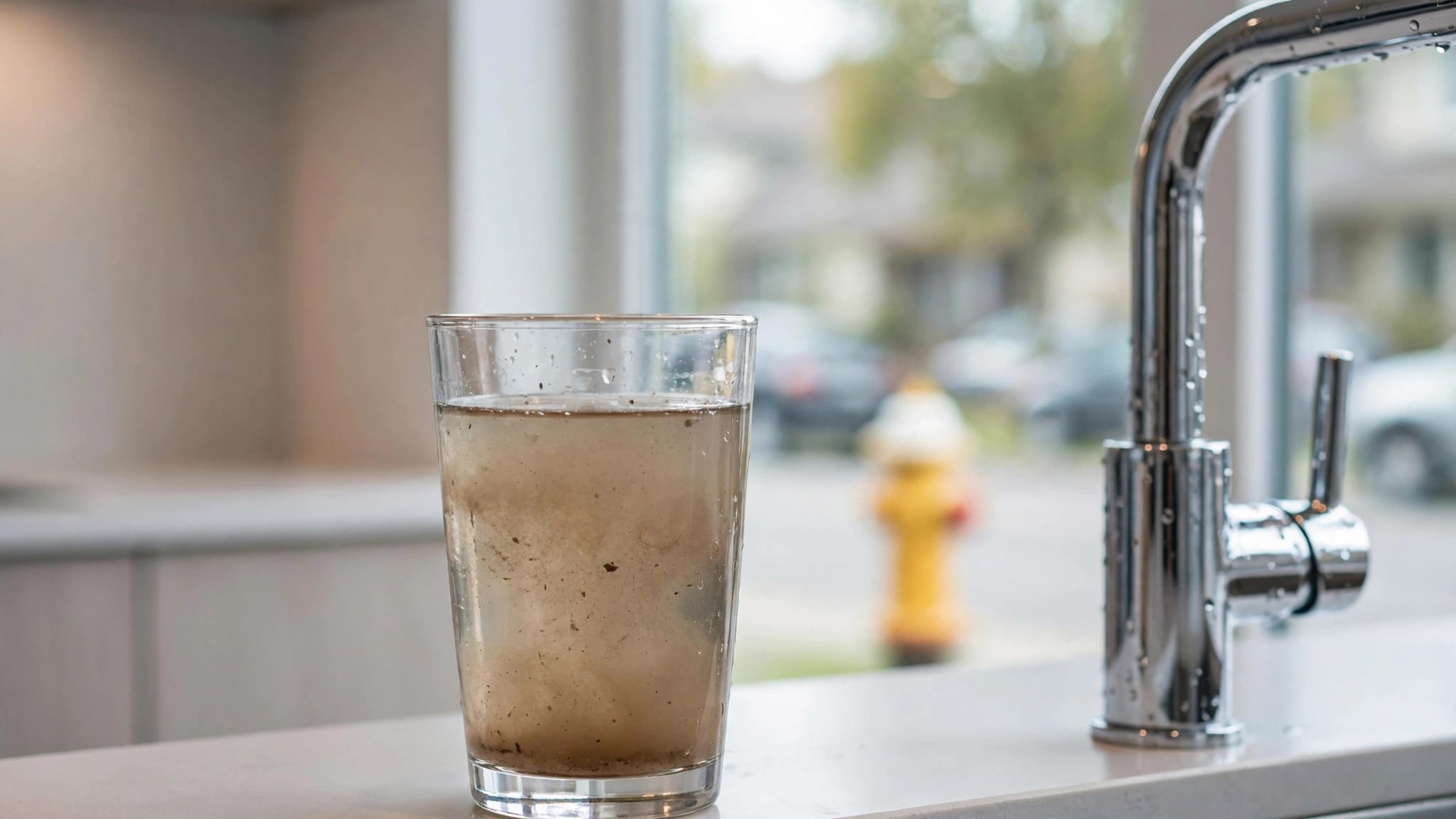
City water is usually safe enough to use, but it can still have annoying or unwanted traits. The right system depends on the problem you're trying to solve.

Chlorine taste and smell

If every faucet smells like a public pool, whole-house carbon is usually the better first step. It handles the problem at the point where water enters the house.

That means your showers, sinks, and laundry all benefit. If the taste issue is limited to drinking water, though, RO may be enough on its own.

Lead risk and drinking water quality

If your home has older plumbing, a lead service line, or a known concern at the tap, reverse osmosis is often the stronger choice for drinking water. It gives you a cleaner point of use for what you drink and cook with.

That said, a whole-house carbon filter can still help with general water quality. Some carbon systems reduce certain contaminants well, but they do not replace a properly chosen RO system when lead is the main worry.

Sediment and cloudy water

Neither system is a magic fix for visible grit or cloudiness. Sediment usually calls for a sediment prefilter or a plumbing issue that needs attention first.

If city water gets cloudy after work on the water main, a prefilter can protect both systems. It also helps them last longer.

Cleaner drinking water versus cleaner water everywhere

This is the big decision. If you want all water in the home to feel better, whole-house carbon is the better fit. If you only care about the water you drink, RO is the better use of space and money.

Many homeowners decide based on the room they notice most. A chlorine smell in the shower points to whole-house treatment. A flat or metallic taste in the kitchen points to RO.

Cost, installation, and upkeep in everyday terms

Whole-house carbon systems cost more up front because they cover the whole house. They need room near the main water line, and installation is usually more involved. They also need regular filter or media replacement, depending on system size and water use.

RO systems usually cost less at first, especially when you only need one faucet. They fit under the sink, but they do need a drain connection, storage space, and routine maintenance. You'll also want to replace prefilters and the membrane on schedule.

Flow rate matters too. Whole-house carbon keeps showers and tubs moving normally. RO delivers slower water because it is making a smaller, cleaner supply.

Long-term costs depend on water use, filter life, and how much water you want to treat. A larger household with heavy use may spend more on a whole-house setup. A smaller household that only wants better drinking water may find RO easier to live with.

Why many homes use both

For city water, the best answer is often not either/or. A whole-house carbon system can remove chlorine taste and odor throughout the home, while an under-sink RO gives you high-purity water at the kitchen sink.

That split makes sense because each system does a different job. One improves everyday water use. The other focuses on what you drink.

It also gives you flexibility if your water concerns change later. You can start with the system that fixes the biggest problem, then add the second layer when you want more protection. For homeowners comparing options, understanding water treatment methods can make that choice feel a lot clearer.

Conclusion

City water can be acceptable and still not feel right at home. That is where the choice between a whole-house carbon filter vs reverse osmosis becomes practical instead of academic.

Whole-house carbon is best when you want cleaner water across the house, less chlorine taste, and better shower and laundry water. RO is best when you want the cleanest possible drinking water at one tap.

For many homes, the smartest setup is both systems working together. One handles the whole house, and the other handles the glass you drink from.

Latest posts

Read Our Blog

Tips, guides, industry best practices, and news.

By Trademark Water Systems June 10, 2026
Well water can cause two very different headaches. One home fights scale on faucets and cloudy dishes, while another deals with salty taste, high minerals, or other dissolved contaminants. That is why whole-house reverse osmosis vs water softener is not a simple either-or choi...
Lake Water Fountain
October 27, 2025
When maintained properly, your fountain becomes more than a visual feature. It becomes a symbol of your community’s commitment to quality, care, and environmental stewardship.
By Trademark Water Systems August 4, 2025
If you're reading this, you probably just lost some fish. Or maybe you're setting up a new tank and someone warned you about using tap water straight from the faucet. Either way, you're asking the right question. The short answer? Yes, city water can absolutely kill minnows and other fish. But it's not because your water department is trying to poison your pets. It's because the same chemicals that keep your drinking water safe can be deadly to fish. The good news is it's completely preventable once you understand what you're dealing with. Why City Water Is Dangerous for Fish Your municipal water supply contains chemicals that fish simply can't handle. The biggest culprit is chlorine, but it's not the only problem. Chlorine and Chloramines Every city adds chlorine to kill bacteria and make water safe to drink. Some cities use chloramines instead – a combination of chlorine and ammonia that lasts longer in the water system. Both will burn your fish's gills and kill them quickly. Minnows are especially sensitive because they're small and have a high surface area relative to their body weight. What might just stress a larger fish will kill a minnow in minutes. Heavy Metals Your pipes, especially older ones, can leach copper, lead, and other metals into your water. Fish absorb these through their gills and skin. Even tiny amounts that won't hurt you can poison fish over time. pH Problems Most city water has a pH between 7.5 and 8.5 to prevent pipe corrosion. Many fish, including most minnows, prefer slightly acidic water around 6.5 to 7.0. The wrong pH stresses fish and makes them vulnerable to disease. Chemical Additives Cities various chemicals to the water for treatment. Fish simply weren't made to handle any of these synthetic compounds. How Fast Can City Water Kill Minnows? Minnows can die in under 30 minutes in heavily chlorinated water. But even if the chlorine doesn't kill them immediately, it damages their gills permanently. Damaged gills can't extract oxygen properly, leaving your fish struggling to breathe. They become sitting ducks for infections and other problems. Signs Your Fish Are Suffering from Bad Water Watch for these warning signs: Fish gasping at the surface Red or inflamed gills Lethargic behavior or lying on the bottom Loss of appetite White patches on skin or fins Fish dying with no obvious cause If you see any of these symptoms after adding new water, your water quality is probably the problem. Quick Fixes That Actually Work Dechlorinator Products The fastest solution is a good dechlorinator. Add it to your water before putting fish in. Most work in minutes, but read the label – some take longer to neutralize chloramines. Don't cheap out here. A $10 bottle of quality dechlorinator can save hundreds of dollars worth of fish. Let It Sit Chlorine will evaporate if you let water sit for 24-48 hours in an open container. This doesn't work for chloramines, though, and it doesn't remove heavy metals or fix pH problems. Boiling Boiling water for 15-20 minutes removes chlorine and chloramines, but it's not practical for large amounts. Plus, you'll need to let it cool completely before using it. Better Long-Term Solutions If you're serious about keeping fish healthy, treating your water properly from the start makes more sense than constantly fixing problems. Carbon Filtration A good carbon filter removes chlorine, many chemicals, and some heavy metals. It won't fix pH problems, but it's a solid first step. Replace the carbon regularly – old carbon stops working. Reverse Osmosis Systems RO systems remove almost everything from water, giving you a clean slate to work with. You'll need to add back minerals for fish health, but you control exactly what goes in. This is what we recommend for serious fish keepers. Yes, it's more expensive upfront, but you'll save money on fish replacements and medications in the long run. Water Conditioners Good conditioners do more than just remove chlorine. They neutralize heavy metals, reduce stress, and protect fish's slime coat. Use them every time you add new water. Testing Your Water You can't fix what you don't measure. Get test strips or a digital meter to check: Chlorine levels (should be zero for fish) pH (most freshwater fish prefer 6.5-7.5) Ammonia and nitrites (both should be zero) Hardness (depends on your fish species) Test your tap water and your tank water separately. Sometimes the problem is in your tank, not your source water. What About Well Water? Well water isn't automatically better for fish. It can have high iron, hydrogen sulfide, or other problems that city water doesn't have. Contact us to get your well water tested before using it in your tank or learn about our water conditioning services . An Honest Recommendation If you just need to save some minnows right now, grab a bottle of dechlorinator from any pet store. Follow the directions exactly – more isn't better. But if you want to keep fish long-term and avoid these problems, invest in proper water treatment. Too often, people spend hundreds on fish and equipment, then lose everything because they skipped water treatment. A basic carbon filter costs less than replacing a tank full of dead fish. An RO system costs less than the medications and fish you'll buy trying to fix problems caused by bad water. When to Call for Help Some water problems are too complex for DIY solutions. If you're dealing with: Extreme pH levels (below 6.0 or above 9.0) High levels of heavy metals Complex chemical contamination Multiple fish tanks with different needs You need professional water treatment. We've solved problems that killed fish for months, and the solution is usually simpler than people think. The Bottom Line City water can definitely kill minnows, but it doesn't have to. The chemicals that make your water safe to drink are poison to fish. Remove those chemicals, and your fish will thrive. Don't gamble with the lives of your fish. Treat your water properly from day one, test regularly, and call us when you're in over your head. Your fish are counting on you to get this right. Good water is the foundation of everything else in fishkeeping. Get the water right, and most other problems solve themselves.

Contact us

Get in touch

Our friendly team is ready to chat.

Black outlined envelope icon on a white background

Email

Our friendly team is here to help.

Black outline of a telephone handset icon on a white background

Phone

Office Hours: Mon-Fri from 8am to 5pm.

Black location pin icon with a circular center on a white background

Office

Locally owned and operated.