
Florida Well Water Purification: What Each Stage Does
Clear water can still contain bacteria, dissolved minerals, or chemicals you can't see. Florida well water also changes by location, aquifer depth, nearby land use, and coastal conditions.
A well-treatment system works best when each stage has a defined job. Florida well water purification isn't one universal filter. It's a treatment sequence built around laboratory results, household water use, and the condition of the well.
Key Takeaways
- Test untreated well water before choosing equipment.
- Sediment, iron, sulfur odor, hardness, tannins, and bacteria need different treatments.
- Softening improves scale and plumbing problems, but it doesn't disinfect water.
- UV light handles microorganisms after filtration, while reverse osmosis targets many dissolved contaminants.
- Every stage needs maintenance, from replacing cartridges to replenishing softener salt.
Start With a Well Water Test
Florida wells often have a mix of nuisance contaminants and health-related contaminants. A rusty stain on a sink points toward iron, while a positive bacteria result requires a different response. Taste and odor alone can't tell you whether water is safe.
Collect a sample from an untreated tap before the water reaches a softener, carbon filter, or other equipment. A qualified laboratory can test for total coliform and E. coli bacteria, nitrate and nitrite, pH, total dissolved solids, hardness, iron, manganese, chloride, and sulfide. Depending on your property, the test may also need tannins, arsenic, pesticides, volatile organic compounds, or other substances linked to nearby agriculture or industrial activity.
Nuisance contaminants usually affect appearance, smell, taste, fixtures, or appliances. Hardness causes scale, iron leaves orange or brown marks, manganese can create dark staining, and hydrogen sulfide creates a rotten-egg odor. Tannins can give water a yellow or tea-like color.
Health-related contaminants need more care. Bacteria can enter through a damaged well cap, cracked casing, flooding, or problems near the well. Nitrate is a concern in areas influenced by fertilizer, septic systems, or agricultural activity. Near the coast, chloride and dissolved salts may indicate saltwater intrusion. These conditions require treatment selected for the actual test result, not a general-purpose cartridge.
If bacteria appear in the sample, have the well and plumbing inspected, disinfect the system when appropriate, and retest. A carbon filter may improve taste, but it doesn't make contaminated well water safe. Treatment should address the source as well as the water entering the home.
What Each Whole-House Treatment Stage Does
A whole-house system usually treats water as it enters the home. The exact order can change, but the stages below cover the most common Florida well-water problems.
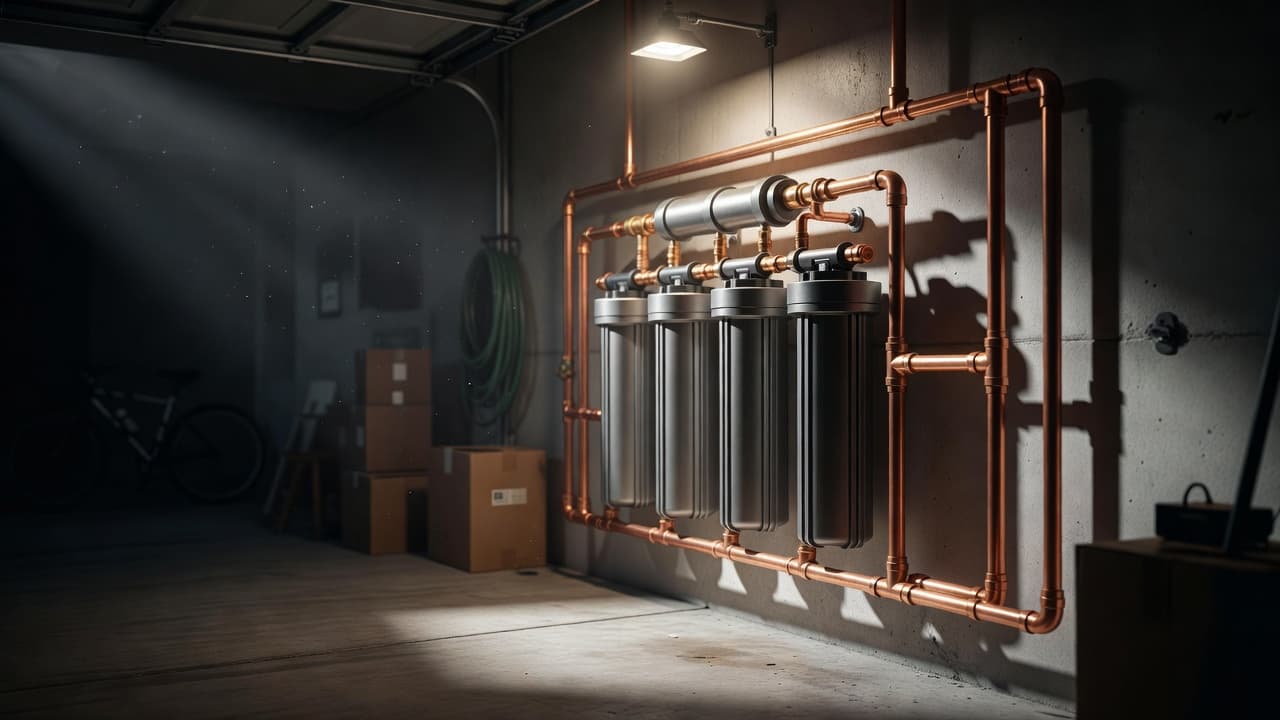
1. Sediment filtration protects the equipment
The first stage catches sand, silt, rust particles, and other solid material. Well pumps can pull fine sediment into the pressure tank and plumbing, especially after heavy rain, construction, or work on the well.
A sediment filter protects valves, injection equipment, softener resin, carbon media, and ultraviolet components. Cartridge filters need replacement when they become dirty or restrict water pressure. Larger backwashing filters reduce the need for frequent cartridge changes, but they still require scheduled backwash cycles and proper drain flow.
Sediment filtration doesn't remove dissolved iron, hardness, nitrate, or bacteria. It handles particles that are already suspended in the water.
2. Oxidation removes iron, sulfur, and manganese
Dissolved iron may leave the faucet looking clear, then turn orange after contact with air. Hydrogen sulfide produces the familiar rotten-egg odor. Manganese can cause dark stains and may require treatment at lower concentrations than iron.
An oxidation stage changes these dissolved substances into particles that a filter can capture. Depending on the test results, equipment may use air injection, catalytic media, or a controlled oxidant. The resulting particles then move into a backwashing filter.
This stage needs regular backwashing and correct media settings. A system that is too small may allow stains or odor to pass through. A system that lacks proper drain capacity may not clean its media effectively.
3. A water softener controls hardness
Hard water contains calcium and magnesium. These minerals form scale inside water heaters, showerheads, faucets, washing machines, and dishwashers. Softening also helps soap rinse more cleanly.
A softener uses resin beads to exchange hardness minerals for sodium or potassium. It doesn't remove bacteria, nitrate, pesticides, hydrogen sulfide, or every dissolved contaminant. It also isn't a substitute for a purification system.
The resin tank regenerates with salt or potassium chloride. Homeowners need to check the brine tank, keep salt from forming a bridge, and confirm that the control valve regenerates correctly. The right capacity depends on hardness, household water use, and iron loading. Learn more about choosing between a water softener and whole-house RO when hardness and dissolved solids are both concerns.
4. Carbon improves taste and odor
Activated carbon can reduce chlorine, many taste and odor compounds, and some organic chemicals. In a well system, carbon may polish water after iron or sulfur treatment. It can also help reduce residual oxidant when the design calls for one.
Carbon doesn't remove hardness, and standard carbon shouldn't be treated as a complete solution for bacteria, nitrate, or saltwater intrusion. Some tannin problems need specialized anion resin or another treatment selected after testing.
Carbon media eventually fills with contaminants. Backwashing units need scheduled cleaning, while cartridge systems need replacement based on water use and manufacturer instructions. A neglected carbon filter can lose performance and restrict flow.
5. Ultraviolet light inactivates microorganisms
UV treatment exposes water to ultraviolet light that inactivates bacteria and other microorganisms. It works without adding a disinfectant to the water, but the water must reach the lamp clean enough for the light to pass through.
For that reason, UV usually belongs after sediment and color-removal stages. Iron, manganese, tannins, and cloudy water can shield microorganisms from the lamp. UV also doesn't remove chemicals, minerals, salt, or particles.
The lamp commonly needs annual replacement, even when it still appears lit. The quartz sleeve needs cleaning when mineral deposits or film reduce light transmission. A power alarm and flow control can help prevent untreated water from passing through during a lamp failure.
6. Reverse osmosis targets dissolved contaminants
Reverse osmosis, or RO, pushes water through a semipermeable membrane. It reduces total dissolved solids and can address selected contaminants that softeners and carbon filters don't handle well.
Most homes use RO at a kitchen faucet for drinking and cooking water. Whole-house RO requires more space, pretreatment, storage, flow planning, and a way to manage reject water. High iron, hardness, sediment, and chlorine can damage or foul the membrane, so those problems usually need treatment first.
RO prefilters need regular replacement, and the membrane requires periodic performance checks. A whole-house unit also needs correctly sized storage and distribution equipment. Professional water conditioning services can help match the equipment to the test report and the home's water demand.
Treatment Order Changes With the Test Results
There is no single Florida well-water treatment order that fits every property. The best sequence protects later equipment and removes the largest problems early.
Consider a test showing dissolved iron, hydrogen sulfide odor, hard water, and no bacteria or nitrate concern. The sequence could begin with sediment protection, followed by an oxidation and backwashing filter. A softener could come next to control hardness, with carbon added afterward if odor or taste remains.
Now change the results. If the same home also has positive bacteria, the installer may place UV after the sediment and iron-removal stages. The well itself still needs inspection and correction. UV can treat the water passing through the system, but it can't repair a failed casing or contaminated wellhead.
A nitrate result changes the plan again. A softener won't remove nitrate, and ordinary carbon may not provide dependable control. The design may use a certified RO system for drinking water or a whole-house treatment selected for the measured concentration. In a coastal area with elevated chloride or total dissolved solids, RO may also become part of the plan, although system size and reject-water handling need careful review.
Tannins can complicate iron treatment because they add color and may interfere with oxidation. Some homes need tannin-specific media before or after other stages. The laboratory report should determine that placement.
Maintenance Keeps Water Treatment Working
A treatment system is only as reliable as its maintenance. Each component has a different service need, so combine the tasks in a written schedule.
- Replace sediment and carbon cartridges before pressure drops or taste changes.
- Check salt levels and inspect the brine tank on a softener.
- Confirm that backwashing filters have power, drain flow, and correct regeneration settings.
- Replace UV lamps on schedule and clean the quartz sleeve when deposits appear.
- Test RO water and inspect prefilters, storage pressure, and membrane performance.
- Retest well water after flooding, repairs, changes in taste or odor, or unexplained staining.
Private wells also need attention outside the treatment equipment. Keep the well cap secure, direct surface water away from the wellhead, and avoid storing chemicals near the well. Have the pressure tank, pump, plumbing connections, and treatment bypasses checked during service visits.
Water quality can shift over time. A system sized for one iron level may perform poorly after a change in the well or water table. Annual testing gives you a baseline and helps identify changes before they damage appliances or affect drinking water.
Conclusion
Whole-house water purification for a Florida well starts with a test, not a shopping list. Sediment filters protect the system, oxidation handles iron and sulfur, softeners reduce scale, carbon improves taste, UV addresses microorganisms, and RO reduces selected dissolved contaminants.
The right order depends on the water report. When each stage matches a measured problem and receives regular maintenance, your home gets cleaner, more consistent water without asking one filter to do every job.
Latest posts
Read Our Blog
Tips, guides, industry best practices, and news.

Contact us
Get in touch
Our friendly team is ready to chat.