
How to Remineralize RO Water After Whole-House RO
Whole-house reverse osmosis can produce exceptionally clean water, but it may also remove minerals that affect taste, pH, and plumbing behavior. That raises a practical question for homeowners: should you remineralize RO water before it reaches every fixture, or only at the drinking-water tap?
The right answer depends on your water chemistry, household priorities, and plumbing system. A well-designed setup restores only what your water needs, then confirms the results with testing.
Key Takeaways
- Whole-house RO can reduce calcium, magnesium, alkalinity, and total dissolved solids.
- Remineralizing all household water may affect hardness, scale, pH, and corrosion control.
- A dedicated drinking-water line often needs less mineral adjustment than a whole-house system.
- Calcite, blended mineral media, and controlled dosing each have different effects.
- Test the treated water after installation and maintain every cartridge or media tank on schedule.
Why RO Water May Need Mineral Adjustment
Reverse osmosis pushes pressurized water through a semipermeable membrane. The membrane reduces many dissolved substances, including minerals such as calcium and magnesium. It also lowers alkalinity and total dissolved solids, although the exact result depends on the membrane, feedwater, pressure, temperature, and system condition.
That clean water can taste flat to some people because the mineral content is low. More importantly, water chemistry affects plumbing. Water with low alkalinity and low dissolved solids may be more corrosive in certain conditions. Corrosion risk also depends on pH, chloride, temperature, copper exposure, flow, and the materials in your pipes.
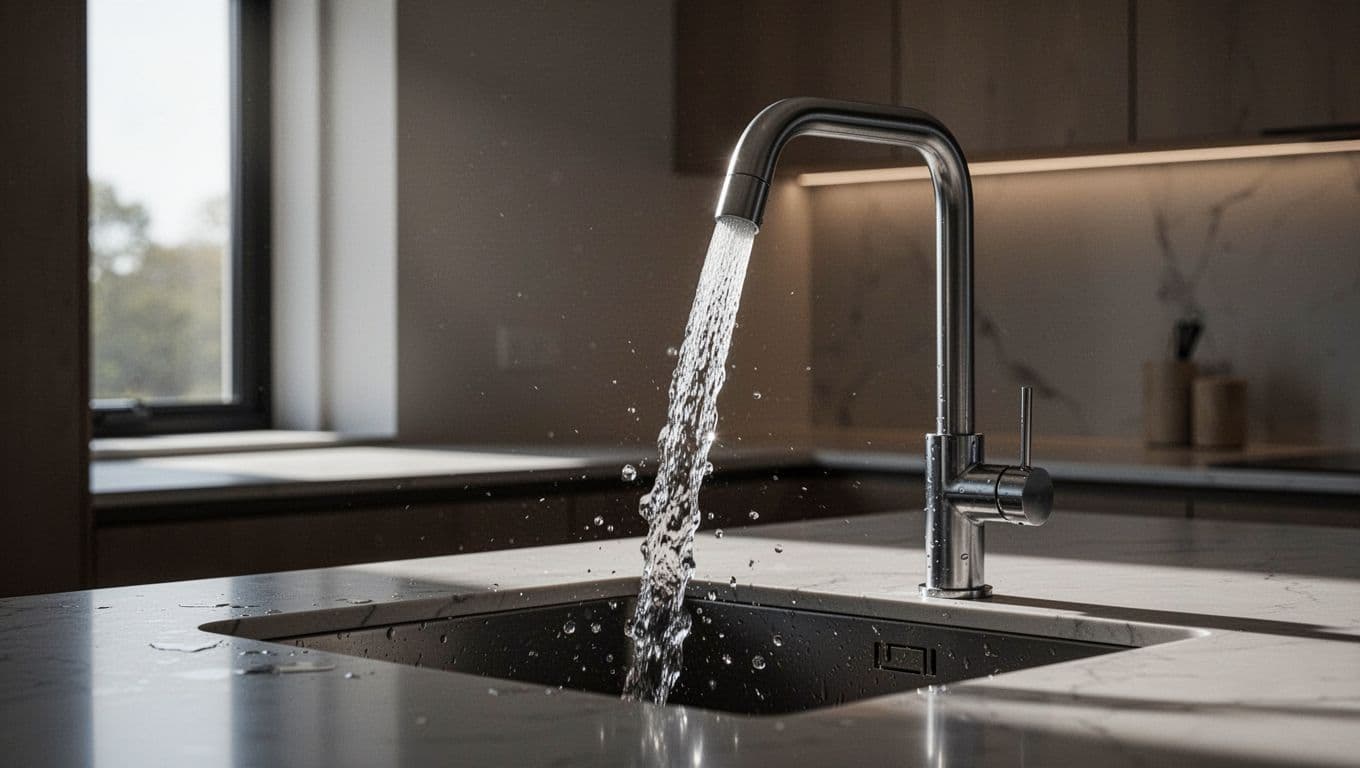
Remineralization adds selected minerals back into RO water. A calcite cartridge, for example, can dissolve calcium carbonate into the water. This may increase calcium hardness and alkalinity while raising pH. A blended cartridge may add magnesium as well, depending on the media formulation.
The goal is not to make RO water as mineral-rich as untreated water. The goal is to create water that tastes good and behaves properly in the home without reintroducing unwanted contaminants.
That distinction matters in Southwest Florida, where private wells and municipal supplies can have different levels of hardness, sodium, iron, chloride, and other dissolved substances. A water test should guide the design instead of relying on a standard cartridge size or a general pH target.
Whole-House Remineralization or a Drinking-Water Line?
A whole-house RO system treats water before it travels through the home's plumbing. Every shower, toilet, washing machine, outdoor spigot, and faucet may receive the treated water. Remineralizing after the membrane can help condition that water, but it also adds minerals to every gallon used in the home.
That can be useful when the water's chemistry creates a plumbing concern. However, increasing calcium and alkalinity throughout the home can promote scale on fixtures, glass, heating elements, and appliances. The effect depends on the final hardness, temperature, pH, and flow conditions.
A dedicated drinking-water line takes a different approach. The RO system may supply only the kitchen faucet, refrigerator, or beverage station. In that setup, a small post-RO remineralization cartridge can improve taste without changing the chemistry of water used for bathing or laundry.
| System arrangement | Main advantage | Main concern |
|---|---|---|
| Whole-house RO with post-treatment | Consistent treated water at most fixtures | Higher equipment cost and more water use |
| Whole-house RO with a mineral tank | Adds contact time for mineral adjustment | Can increase hardness and require media service |
| RO for drinking water only | Limits treatment to water used for consumption | Other household fixtures receive separate water |
| RO with a blending valve | Allows controlled mixing with treated source water | Untreated water can reintroduce contaminants |
For many homes, the best setup is a whole-house conditioning system paired with RO at the drinking tap. A professional water conditioning system installation can separate those jobs and match treatment to each use.
Blending deserves special caution. If a valve mixes RO water with untreated or partially treated water, the blend can raise mineral content, but it can also bring back nitrate, arsenic, bacteria, PFAS, or other substances the membrane removed. Only blend with a verified, suitable water source, and test the final water.
Practical Ways to Remineralize RO Water
The most common method is a calcite filter. Calcite is a calcium carbonate media that dissolves into acidic or low-alkalinity water. It can raise pH and add calcium, but the outcome changes with flow rate, contact time, water temperature, and the water's starting chemistry.
A calcite tank usually needs enough empty-bed contact time for the media to work. If water moves through too quickly, mineral addition may be limited. If the system adds too much calcium, hardness and scale can become problems.
Small inline cartridges are common on drinking-water systems. They are compact and easy to install after the RO storage tank or final carbon filter. Cartridge life depends on water use and the manufacturer's capacity. Replace the cartridge before the media is exhausted, since taste and mineral performance can change over time.
Some systems use a blend of calcite and magnesium oxide. These media can add both calcium and magnesium, but magnesium oxide often has a stronger pH effect than calcite. The blend must match the water chemistry and equipment design. More mineral content is not automatically better.
A controlled mineral dosing system adds a measured solution through a chemical feed pump. This approach can provide more precise adjustment for a whole-house application, but it requires proper calibration, potable-water-rated components, safe chemical handling, and regular service.
Another option is a bypass or blending valve that combines RO water with a suitable treated stream. This can raise TDS and hardness without adding a mineral tank, but it requires careful control. A bypass should never pull water from a source that has not been tested for the contaminants relevant to your home.
Remineralization should correct a measured water-quality issue, not replace water testing.
The right media depends on what the RO system removes, what the incoming water contains, and how much water the household uses. Review the membrane rejection rate, storage tank condition, flow rate, and post-treatment equipment together.
Check Sodium, Hardness, Alkalinity, and pH
Sodium needs separate attention. A remineralizer may add calcium or magnesium, but it does not remove sodium already present in the RO permeate. Sodium can enter water through the source supply, seawater influence, or a water softener that exchanges hardness minerals for sodium.
If a softener treats the RO feed, test sodium before and after the RO system. RO rejection of sodium varies with membrane condition and operating pressure. Homeowners on sodium-restricted diets should discuss the results with a healthcare professional rather than assuming that RO or remineralization provides a specific sodium level.
Hardness and alkalinity should be tested separately. Hardness measures calcium and magnesium, while alkalinity measures the water's ability to resist pH change. Calcite can raise both, but the increase is not always equal or predictable without testing.
pH alone doesn't tell you whether water is corrosive or scale-forming. A water professional may review pH, alkalinity, hardness, TDS, chloride, temperature, and copper or iron results. For a whole-house system, the final water should also be checked at a representative fixture after it has traveled through the plumbing.
Test the water in three stages:
- Test the source water before treatment.
- Test the RO water before remineralization.
- Test the final water after the post-treatment equipment and plumbing.
Use a certified laboratory when the results affect drinking safety or treatment design. Field meters are useful for tracking trends, but they don't replace laboratory analysis for contaminants such as nitrate, arsenic, lead, or PFAS.
The final test should verify that the system improved the intended characteristics without reintroducing a contaminant. Keep the results with the equipment records so future service providers can see how the system was set up.
Maintenance Protects the Final Water Quality
A remineralization tank or cartridge is part of the treatment system, not a set-and-forget accessory. Media can become depleted, fouled, or channelled. Carbon filters can lose capacity. A cartridge housing can also develop a sanitation problem if seals, fittings, or replacement procedures receive little attention.
Follow the manufacturer's replacement schedule, but adjust it when testing or water use shows a need. High water demand, sediment, iron, and unusual source chemistry can shorten service life. A whole-house system may require more frequent inspection than a drinking-water cartridge because it handles much higher flow and volume.
During service, inspect the prefilters, membrane, storage tank, flow restrictor, pressure, and drain line. A failing membrane can change the load placed on the remineralizer. Low pressure can reduce membrane performance and alter the final water chemistry.
Sanitize components according to the equipment instructions. Use only treatment media and replacement parts approved for potable water. After service, flush the system and test the water again before relying on it for drinking.
Homeowners can find qualified help through professional water treatment services, especially when the system treats all household water or serves a private well. Local conditions can affect equipment selection, maintenance intervals, and corrosion control.
Conclusion
Whole-house RO can remove unwanted dissolved substances, but the finished water still needs the right chemical balance. Calcite, blended media, dosing, and controlled blending each affect calcium, magnesium, alkalinity, hardness, and pH in different ways.
For many homeowners, a dedicated drinking-water remineralizer is the simplest choice. Whole-house remineralization may fit when plumbing protection and consistent water chemistry require it, but the design should follow verified testing.
The safest way to remineralize RO water is to measure the source, membrane output, and final water, then maintain the equipment that keeps those results stable. Clean water should also be predictable water.
Latest posts
Read Our Blog
Tips, guides, industry best practices, and news.

Contact us
Get in touch
Our friendly team is ready to chat.