
Water Softener vs Salt-Free Conditioner for Florida Homes
Florida hard water shows up fast. It leaves white spots on glass, crust around faucets, and a dull film on shower doors that feels like it never quite leaves.
If you're comparing a water softener vs salt-free conditioner for your home, the main difference is simple. A softener removes calcium and magnesium, while a salt-free conditioner helps reduce scale without truly softening the water.
That distinction matters a lot in Florida, where mineral content, humidity, and appliance wear all show up in daily life. The right choice depends on how hard your water is and what problem you want to solve.
Key Takeaways
- A traditional water softener removes hardness minerals through ion exchange.
- A salt-free conditioner does not remove calcium and magnesium, it helps reduce scale buildup.
- Florida homes often notice the difference in shower doors, fixtures, dishes, and water heaters.
- Well water usually brings more hardness, while municipal water can still cause scale.
- If you want softer-feeling water and less soap scum, a softener usually fits better.
Why Florida hard water feels worse at home
Hard water is common across much of Florida because groundwater often picks up calcium and magnesium as it moves through limestone and other mineral-rich layers. That water reaches your home carrying the same minerals that create scale on fixtures, glass, and appliance parts.
Humidity makes the mess more annoying. Water spots do not dry and disappear as cleanly as many homeowners expect, so mineral residue can hang around on shower doors, mirrors, and sinks. In a Florida bathroom, a small splash can turn into a spotted ring before the day is over.
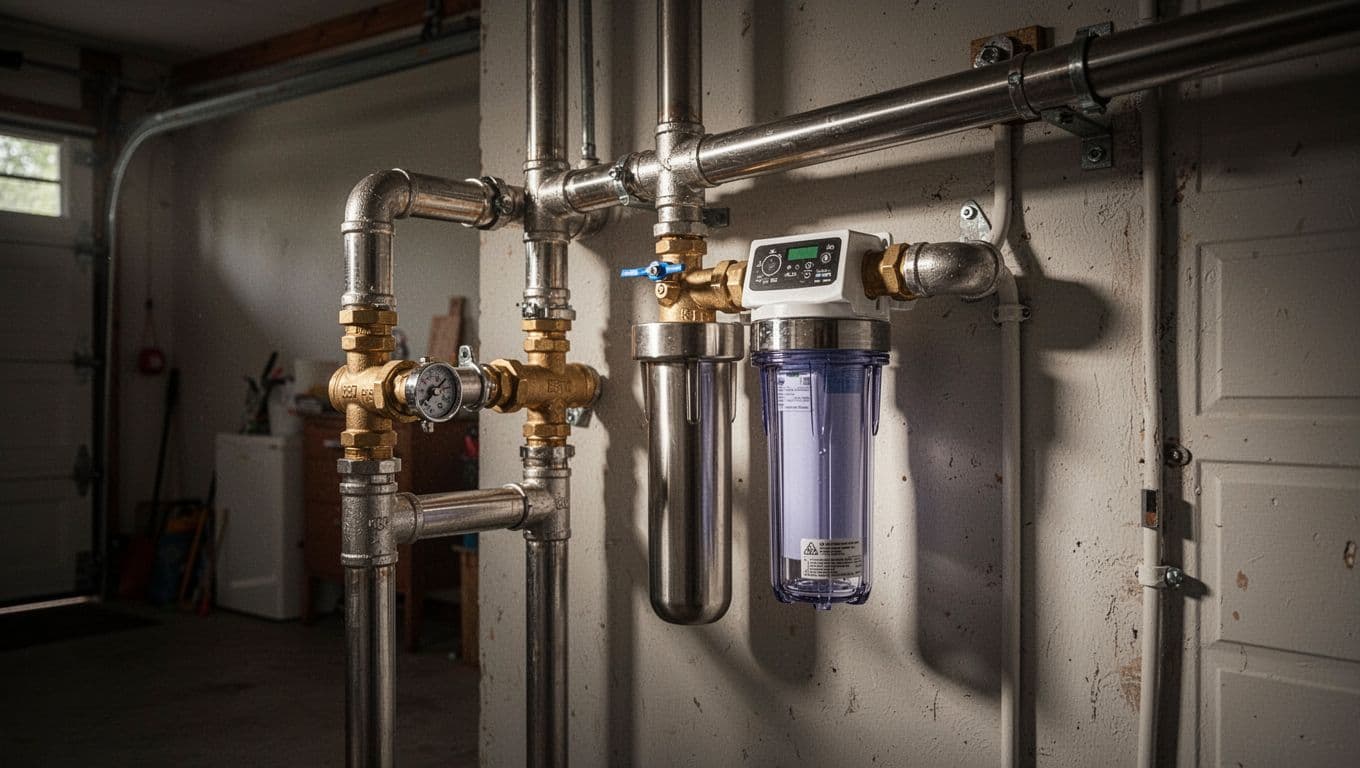
The source of the water matters too. Well water often carries higher hardness, and it may also bring iron or sediment. Municipal water is treated, but treatment does not always remove hardness minerals, so you can still end up scrubbing scale from showerheads and glass.
That is why many Florida homeowners start looking for a real fix instead of another bottle of cleaner.
How a traditional water softener works
A traditional water softener uses ion exchange. Hard water passes through a resin bed, and the resin swaps calcium and magnesium for sodium or potassium ions. The result is water with the hardness removed, not just reduced on surfaces.
That difference shows up quickly in daily use. Soap lathers better, dishes rinse cleaner, and shower glass usually stays clearer for longer. Less scale also means less buildup inside plumbing, water heaters, washing machines, and dishwashers.
For homeowners worried about appliance longevity, that matters. Scale can coat heating elements, restrict flow, and add strain to valves and fixtures over time. A softener helps reduce those problems at the source.
The tradeoff is maintenance. Most softeners need salt added to the brine tank, and the system regenerates on a schedule. It also produces some wastewater during that cycle, so it needs proper installation and occasional service.
What a salt-free conditioner actually does
A salt-free conditioner does not remove hardness minerals from the water. Instead, many systems use template-assisted crystallization or a similar media to change how those minerals behave so they are less likely to stick to pipes and fixtures.
That makes it a scale-control system, not a true softener. The water still contains calcium and magnesium, so it may still feel hard on your skin and leave some soap scum behind. However, it can help reduce the crusty buildup that frustrates so many homeowners.
The appeal is obvious. There is no salt to haul, no brine tank to refill, and no regeneration cycle in the same sense as a softener. For some homes, that lower maintenance is a major advantage.
If the goal is softer-feeling water and easier rinsing, a conditioner will not match a real softener.
Salt-free systems can be a good fit when the main concern is scale reduction and the household prefers a low-maintenance setup. They are less convincing when the water is very hard or when the family wants a noticeable change in soap performance.
Side-by-side comparison for Florida homes
A quick comparison makes the choice easier to see.
| Feature | Water softener | Salt-free conditioner |
|---|---|---|
| Main job | Removes calcium and magnesium | Helps reduce scale buildup |
| Water feel | Soft, slicker feel in showers and sinks | Water still feels hard in many homes |
| Soap and cleaning | Less soap scum, easier rinsing | Some scale control, but hard-water cleaning issues may remain |
| Appliance protection | Stronger protection against scale | Helps limit scale, but does not remove hardness |
| Maintenance | Add salt, check regeneration, occasional service | Lower upkeep, but media may need replacement later |
| Wastewater | Uses regeneration water | Usually no brine discharge |
| Best for | Homes wanting true soft water | Homes mainly wanting scale control |
The table shows the real split. A softener changes the water itself, while a conditioner mostly changes what happens after the water enters your home.
If your biggest complaint is the feel of the water, soap scum, and scale on everything from fixtures to glass, the softener is usually the stronger answer. If your main goal is simpler maintenance and some scale control without salt, the conditioner may fit better.
Which option makes sense for your home
Start with the water source. Homes on well water often see stronger hardness, so a softener usually delivers the clearer improvement. Homes on municipal water can still benefit too, especially if you notice film on shower doors, buildup on faucets, or a water heater that seems to work harder than it should.
Next, look at your habits. If you want laundry that rinses cleaner, dishes that dry with fewer spots, and showers that do not leave skin feeling coated, true soft water has a real edge. If you mostly want to cut down on scale and you do not care much about the feel of the water, a salt-free conditioner can make sense.
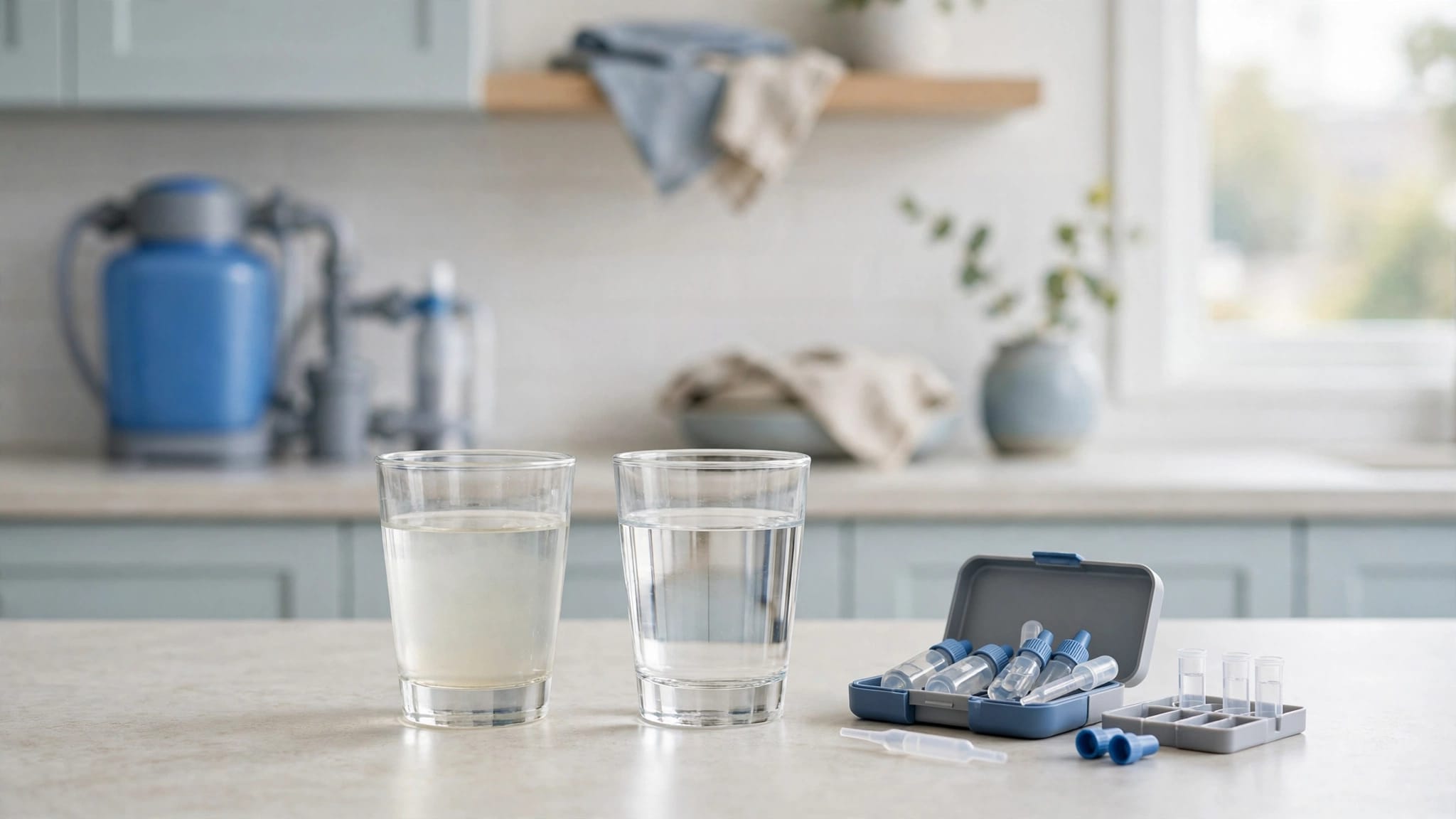
A water test from professional water treatment services gives you the numbers instead of guesses. That matters because two homes on the same street can have different water quality, especially when one uses a well and another uses city water.
Budget matters, but so does upkeep. A softener costs more to maintain because it needs salt and periodic attention. A conditioner often asks less from you day to day, although the media and fittings still need inspection over time. If you want help matching the system to the water in your house, expert water conditioning services can point you in the right direction.
Installation and maintenance expectations
A water softener needs space for the tank, access to power, a drain connection, and room for the brine tank. Once installed, the main job is keeping salt in the tank and watching for issues like bridging, low salt levels, or resin wear.
Salt-free conditioners are often simpler to live with, but they still need the right setup. Flow direction, pipe size, and water chemistry all matter. If the unit is undersized or poorly matched to the home, the results can disappoint fast.
Both systems benefit from periodic checkups. Florida water can change seasonally, and homes that use irrigation wells, private wells, or older plumbing may see more debris, iron, or sediment than expected. A good installation should account for that reality instead of assuming every house is the same.
For many homeowners, that practical part matters as much as the hardware. A system that fits the water, the plumbing, and the household routine is easier to live with for years.
Conclusion
Florida hard water is more than a small nuisance. It leaves spots, scale, and extra wear behind, and humidity makes the cleanup feel endless.
A traditional water softener removes the hardness minerals that cause most of those problems. A salt-free conditioner can still help with scale, but it does not give you truly soft water.
If your goal is better soap performance, less buildup, and more protection for appliances, a softener usually makes more sense. If your priority is low maintenance and scale control without salt, a conditioner may be enough. The best choice is the one that matches your water, your home, and the way you want the water to feel every day.
Latest posts
Read Our Blog
Tips, guides, industry best practices, and news.


Contact us
Get in touch
Our friendly team is ready to chat.