
UV vs Reverse Osmosis for Private Wells
Private wells can hide two very different water problems: germs in the water and dissolved material in it. That is why UV purification and reverse osmosis get compared so often, even though they solve different issues.
If your water test shows bacteria, UV may be the better fit. If your drinking water has dissolved salts, nitrates, or a metallic taste, RO may make more sense. The right answer usually starts with a test, not a guess.
Key Takeaways
- UV disinfects water, but it does not remove sediment, metals, salts, or chemicals.
- Reverse osmosis reduces many dissolved contaminants, but it does not disinfect the whole house.
- Private wells often need testing first, then prefiltration before either system.
- UV is often installed at point-of-entry, while RO is usually installed at point-of-use.
- Many homes use both systems because they solve different problems.
What UV Purification and Reverse Osmosis Actually Do
UV purification and reverse osmosis are both useful for well water, but they work in very different ways. UV uses light to inactivate microorganisms as water passes through a chamber. RO uses pressure to push water through a fine membrane that reduces many dissolved contaminants.
Here is the simple comparison:
| Factor | UV Purification | Reverse Osmosis |
|---|---|---|
| Main job | Disinfects water with ultraviolet light | Reduces many dissolved contaminants through a membrane |
| Best use | Whole-home or point-of-entry disinfection | Point-of-use drinking water at one tap |
| What it does not do | Does not remove sediment, metals, salts, or most chemicals | Does not disinfect the whole home on its own |
| Water conditions needed | Clear enough water for light to reach microbes | Prefiltered water and enough pressure |
| Maintenance | Lamp changes and sleeve cleaning | Filter and membrane changes, plus tank upkeep |
That side-by-side view is the heart of the decision. UV handles microorganisms, while RO handles many dissolved contaminants. Because of that, they often belong in the same house, but not in the same spot.
UV can disinfect water, but it won't clear cloudy water or remove dissolved contaminants.
Know Your Well Water First
A private well can look fine and still have water issues that you won't see by eye. A basic water test helps identify the real problem before you spend money on the wrong system. That matters because UV and RO do not solve the same things.
Well water tests often check for bacteria, nitrates, hardness, iron, manganese, and total dissolved solids. Those results point you toward the right treatment path. If the sample shows cloudy water or visible sediment, prefiltration moves to the front of the list right away.
Prefiltration is often the quiet part of the system that keeps everything else working. A sediment filter can protect a UV chamber from shadowing and help stop RO filters from clogging too fast. In other words, clean water before treatment is often easier to treat.
How UV Purification Fits a Private Well
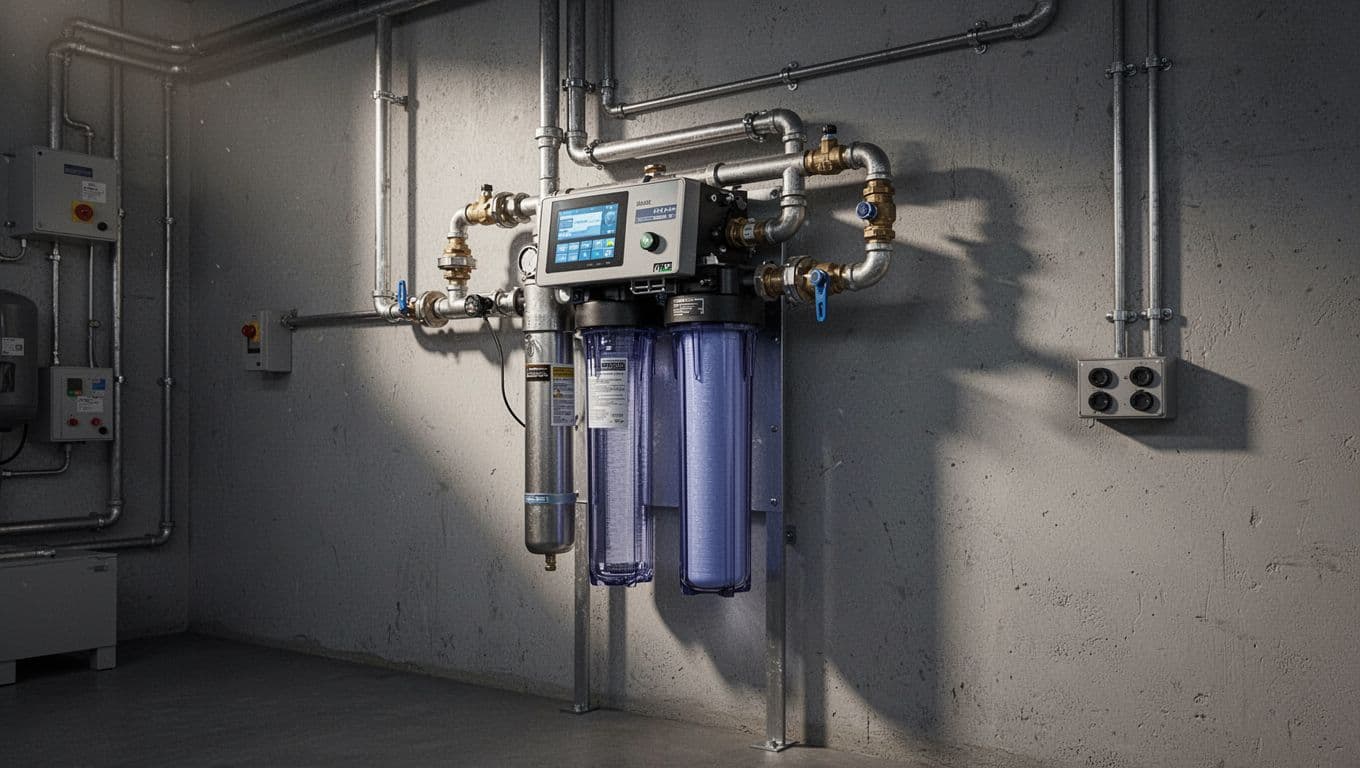
UV purification is a strong match when the main concern is microorganisms in otherwise clear water. It is often installed at the point where water enters the home, so it can treat all the water that feeds the house. That makes it a common point-of-entry choice for private wells.
The UV chamber does one job well. It exposes flowing water to ultraviolet light, which damages the ability of bacteria, viruses, and some other microorganisms to reproduce. It does not add chemicals, and it does not change the taste of the water. It also does not remove sediment, hardness, metals, or dissolved chemicals.
That limitation matters. If the water is cloudy, the light has a harder time reaching what it needs to treat. For that reason, UV systems usually sit after a sediment filter or another prefilter. The cleaner the water going in, the better the UV unit can do its job.
Maintenance is simple, but it is not optional. UV lamps lose output over time, and the quartz sleeve needs cleaning. If the lamp is old or the sleeve is dirty, the system can still run while doing less than it should.
How Reverse Osmosis Changes Drinking Water
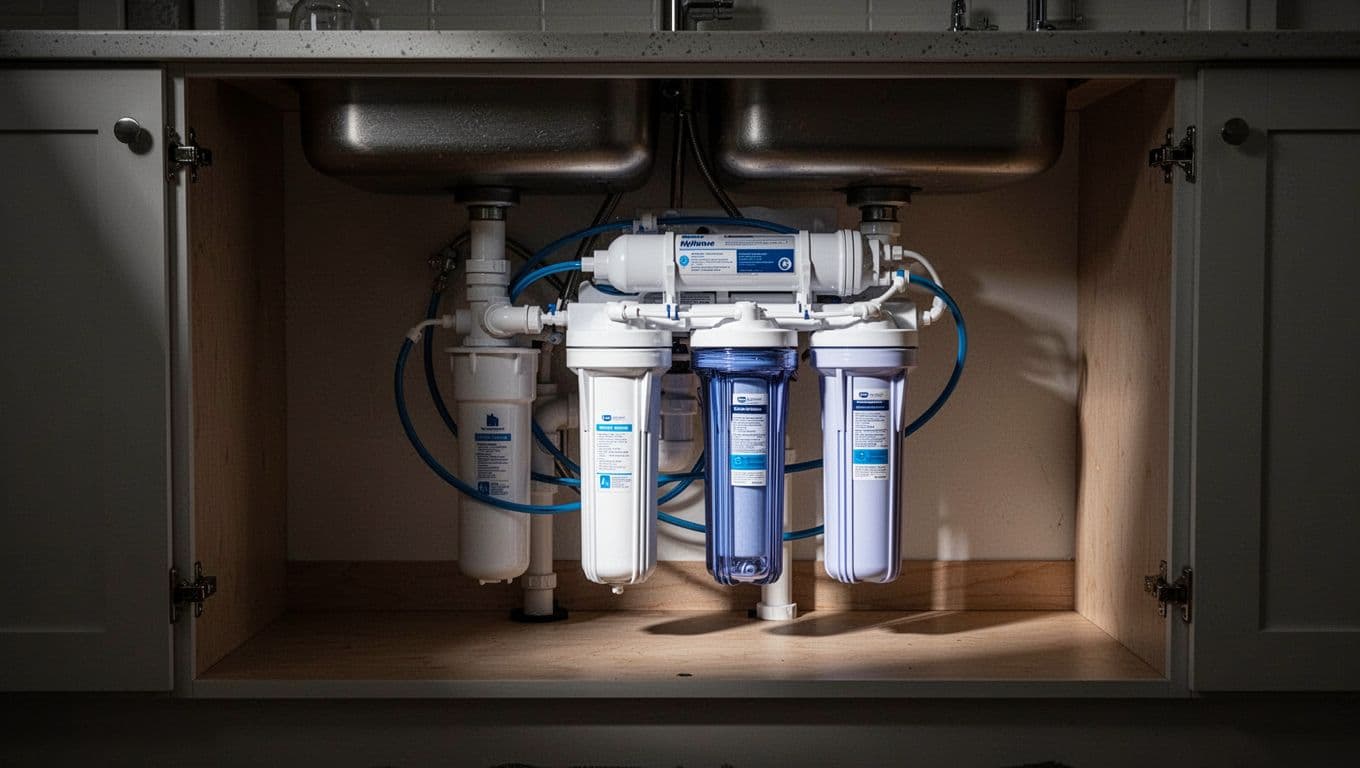
Reverse osmosis is usually the better fit when the goal is cleaner drinking water at one tap. It is commonly installed under a kitchen sink, where it treats water for cooking, ice, and a glass at the faucet. That point-of-use setup keeps the system compact and practical.
RO works by forcing water through a membrane that reduces many dissolved contaminants. It is often used when well water has elevated total dissolved solids, a salty or mineral taste, or other dissolved issues that show up on a test. It can also include prefilters that help catch sediment and protect the membrane.
RO does have limits. It does not disinfect the whole home, so it is not a replacement for UV when bacteria are the concern. It also creates wastewater during the filtration process, which is one reason it is usually better for a single tap than for the entire house.
RO can make excellent drinking water, but it should not be the only barrier if the well has a microbial problem.
When One System Isn't Enough
Many private wells need more than one layer of treatment. A well can have bacteria and sediment, or dissolved minerals and a microbial risk at the same time. In those cases, the systems work best as a team.
A common setup is sediment filtration first, UV at the point of entry, and RO at the kitchen sink. That layout gives the house disinfection where it matters and gives the drinking water an extra polishing step. If the test also shows hardness or iron, another piece of equipment may belong upstream as well.
For homeowners who want one plan instead of a patchwork of fixes, professional water conditioning services can line up the equipment around the test results. That matters because a private well is not a one-size-fits-all water source.
The best systems are built around the water you actually have, not the water you hoped for.
Choosing the Right Setup for Your House
Start with the goal. If you want safer water at every tap, UV is usually the stronger whole-home option, provided the water is clear enough for the light to work. If you want better-tasting drinking water at the sink, RO is often the smarter point-of-use choice.
Then look at the practical details. UV needs electrical power and enough room for the chamber and prefilter. RO needs cabinet space, a drain connection, and a place for the storage tank. Both systems need regular service, so easy access matters more than many homeowners expect.
Flow rate is another factor. A UV system has to match the home's peak water demand, or it can fall short. RO does not need that kind of whole-house capacity, because it treats a single faucet. That is one reason the two systems fit different jobs so well.
Private wells also benefit from a simple maintenance plan. Filter changes, lamp replacement, membrane service, and periodic water testing keep the system on track. When the equipment is easy to service, it is easier to keep using it the right way.
The Right Setup Depends on the Water
UV and reverse osmosis solve different problems, so the better choice depends on your test results. UV protects against microorganisms when the water is clear enough for light to work. RO improves drinking water when the issue is dissolved contaminants.
For many private wells, the cleanest setup is a chain of treatment, starting with sediment prefiltration, then UV at the point of entry, and RO at the kitchen sink. That combination handles more of what well water can bring in.
When a private well needs both disinfection and drinking-water treatment, one system usually isn't enough. The right setup puts each piece where it does the most good.
Latest posts
Read Our Blog
Tips, guides, industry best practices, and news.


Contact us
Get in touch
Our friendly team is ready to chat.