
PFAS Filtration Options for Florida Homes
PFAS can turn a simple water choice into a long-term headache, especially in Florida, where water sources vary from one neighborhood to the next. A filter that improves taste may do almost nothing for PFAS, and the wrong system can leave you paying for convenience instead of protection.
If you're sorting through PFAS filtration Florida options, the real questions are practical. What water do you have, where do you want it treated, and how much maintenance fits your household?
Key Takeaways
- Point-of-use systems like under-sink reverse osmosis are often the strongest match for drinking and cooking water.
- Whole-house systems can treat every tap, but only when they have a real PFAS reduction claim and enough capacity.
- Florida homes on municipal water and private wells face different risks, so testing should match the source.
- Heat, humidity, septic setups, and limited cabinet space can affect how well a system works in daily use.
- Always check certifications and the exact contaminant list before you buy, because broad marketing claims are not proof.
Why PFAS Filtration Matters in Florida
Florida homeowners do not all start from the same place. Some rely on municipal water, while others use private wells that can change with the season, rainfall, and local geology. That matters because PFAS concerns can show up differently in each setup.
Public water systems are treated, but treatment does not automatically mean PFAS is removed. If you get water from a utility, why city tap water still benefits from filtration is a useful topic to understand before you choose a system. For private wells, the picture can be even less predictable, because the water is coming straight from the ground and may carry PFAS along with iron, hardness, sediment, or bacteria.
Florida also has plenty of places where PFAS concerns make sense to check closely, including areas near airports, firefighting sites, industrial zones, and landfills. That does not mean every home has a PFAS problem. It does mean testing is smarter than guessing.
PFAS filtration for Florida homes starts with source awareness. A filter should match the water you actually have, not the water you hope you have. That is especially true if your household uses a lot of drinking water, ice, coffee, or cooking water every day.
Point-of-Use or Whole-House?
The first big decision is where you want treatment. For many homes, the cleanest answer is to treat the water you drink and cook with. For others, it makes sense to treat every tap.
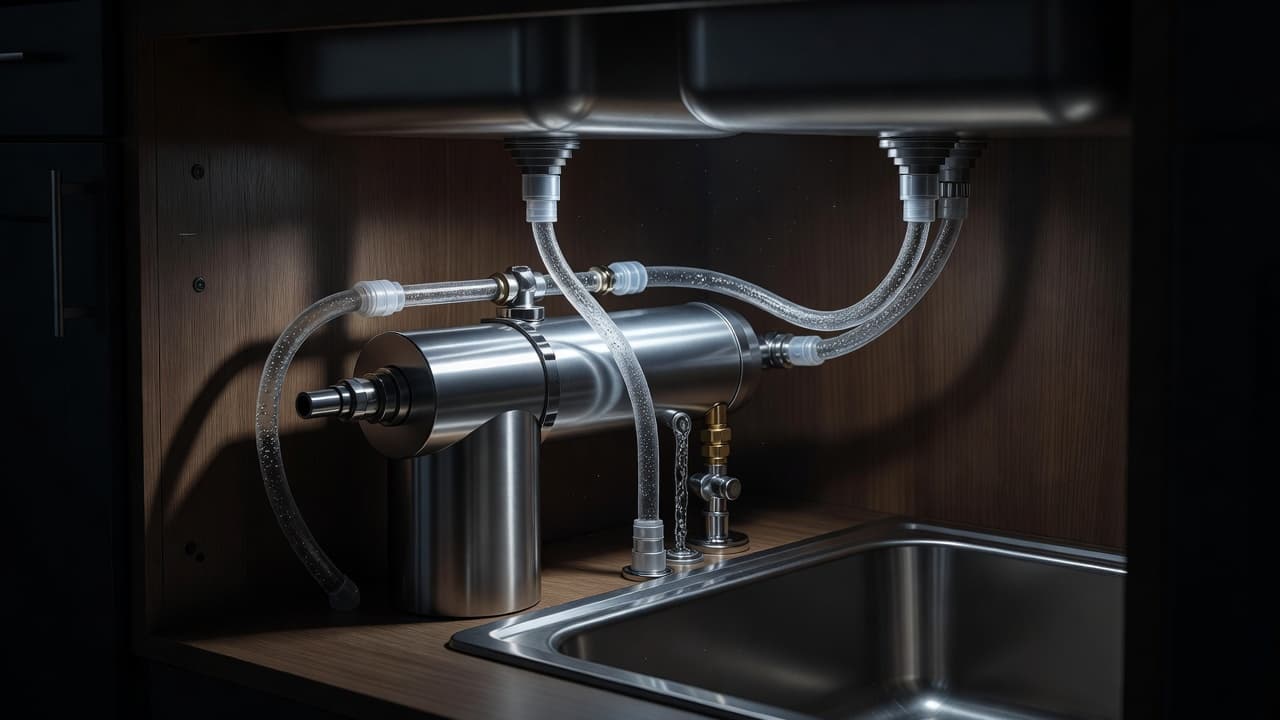
Point-of-use systems sit at one faucet, usually under the kitchen sink. Whole-house systems sit where water enters the home, so they treat every outlet. If you're weighing those two paths, comparing carbon filtration and reverse osmosis systems can help you narrow the choice.
| System type | What it treats | PFAS fit | Main tradeoff |
|---|---|---|---|
| Under-sink reverse osmosis | Drinking and cooking water at one tap | Often the strongest point-of-use option when certified for PFAS reduction | Slower flow, filter changes, and some waste water |
| Countertop or faucet-mounted carbon filter | One tap | Can help if the model has an actual PFAS claim | Smaller media capacity, so certification matters even more |
| Whole-house carbon tank | Every tap | Can work when the media, flow rate, and claim are designed for PFAS | Bigger footprint and higher maintenance |
| Whole-house ion exchange | Every tap | Available in some systems with the right media | Needs exact sizing and verified performance |
The table shows the basic tradeoff. Point-of-use systems usually give you better performance per dollar for drinking water. Whole-house systems make more sense when you want treated water at every faucet, or when you want one system to cover bathing, laundry, and all kitchen use.
For many Florida households, a hybrid approach is the sweet spot. A whole-house system can handle general water treatment, while an under-sink unit handles the water you ingest most. That gives you coverage without forcing one device to do every job.
Which Filtration Technologies Work Best for PFAS?
Not every filter media handles PFAS well. That is where many buyers get tripped up. A filter can be good at reducing chlorine taste and still be weak on PFAS reduction.
Activated carbon is one of the most common options. It can work well, but only when the media volume, contact time, and certification support the claim. A small cartridge that fits under a sink may be enough for taste improvement, yet too limited for serious PFAS reduction. Larger carbon tanks can do more, but they still need the right design and service schedule.
Reverse osmosis is the most familiar point-of-use option because it uses a membrane that removes a wide range of dissolved contaminants. It is often the strongest practical choice for a kitchen sink, especially when you want clean drinking water and cooking water. It also comes with real tradeoffs, including waste water, slower flow, and periodic membrane replacement.
Ion exchange is another option in some systems. It can target dissolved contaminants, including PFAS, but the exact resin and certification matter. If the media is not designed and tested for PFAS, the label does not mean much.
| Technology | Where it fits | What to verify |
|---|---|---|
| Activated carbon | Point-of-use and some whole-house setups | PFAS-specific certification, media volume, and replacement schedule |
| Reverse osmosis | Under-sink or dedicated drinking station | Exact contaminant list, flow rate, and drain connection |
| Ion exchange | Some whole-house or specialty systems | The resin type, certified reduction claim, and service plan |
| Softener or sediment filter | Support treatment only | Useful for hardness or grit, but not a PFAS solution |
If you already have a water softener, keep using it for scale control if it helps your home. Just do not count it as PFAS treatment. Softening and PFAS reduction are different jobs, and Florida homes often need both.
City Water, Private Wells, and Household Use Shape the Choice
The right system depends on how your home gets water and how your household uses it. City water owners often care most about drinking, cooking, and ice. Private well owners often need a broader plan because the water may bring several concerns at once.
For municipal water, a point-of-use unit is often enough if your main goal is clean drinking water. That works especially well in homes where the kitchen does most of the heavy lifting. If you fill water bottles, make coffee all day, and cook often, the kitchen sink sees a lot of use. A well-sized under-sink system fits that pattern well.
Private well owners usually need to test first, then build the system around the results. PFAS may be only one part of the picture. Florida wells can also carry iron, sediment, hardness, or odor issues that affect how long a PFAS filter lasts. In those homes, prefiltration is often important because it protects the main filter from early clogging.
Household size matters too. A couple who wants clean drinking water may be fine with a compact point-of-use RO. A larger household, or one that fills pitchers and uses filtered water throughout the day, may need a bigger tank or a whole-house setup. The more water you use, the more you should pay attention to flow rate, recovery time, and replacement cost.
Florida condos and smaller homes add one more layer. Cabinet space can be tight, and some utility rooms are tucked into warm spots. In those cases, a compact RO system is often easier to live with than a bulky whole-house tank.
Florida Installation Details That Can Change the Outcome
A good system can underperform if the installation environment is poor. Florida heat and humidity are part of that conversation.
Under-sink cabinets often hold more than plumbing. They may also contain cleaning supplies, garbage disposals, and limited air circulation. That matters because filter housings, tubing, and fittings all need room. A cramped cabinet can turn a simple cartridge change into a chore.
Garages and outdoor closets create another challenge. They can get hot, damp, and dusty, which is hard on equipment and replacement filters. Salt air near the coast can add wear to metal parts and fittings. If the system will live in a harsh spot, ask about materials and corrosion resistance.
Septic systems deserve attention too. Reverse osmosis produces reject water, and some whole-house systems need backwash or service water. Those flows have to fit your plumbing and drain setup. A system that looks fine on paper can be awkward if the drain route is poor or the discharge volume is too high for your setup.
Water pressure also matters. If pressure drops too far, flow suffers and the system may not perform the way the label suggests. That is why installation should account for prefilters, valves, shutoff access, and future service.
A few simple checks help before buying:
- Make sure the cabinet or utility space has enough room for the tank, housings, and tubing.
- Check whether the spot stays cool enough for long filter life.
- Confirm that your drain and plumbing layout can handle the system you want.
- Ask how easy it will be to change cartridges without moving half the cabinet.
Those details do not sound glamorous, but they decide whether the system feels easy or annoying after the first month.
How to Read PFAS Claims Before You Buy
This is where many homeowners save themselves trouble. Marketing language can be vague, and vague is not enough when you want PFAS reduction.
A filter that improves taste can still miss the contaminant you care about most.
Look for the exact contaminant claim on the model sheet, not just a brand promise. If the label says it reduces "forever chemicals," ask which compounds are actually listed. PFAS is a large family, and a claim for one compound does not automatically cover the others.
Certification matters just as much. For point-of-use systems, look for a model-specific certification such as NSF/ANSI 53 or 58 when PFAS reduction is claimed, then confirm the exact contaminants covered. The model number matters because certification applies to specific configurations, not to every product the brand sells.
Before you buy, ask these questions:
- Which PFAS compounds are included in the certified claim?
- Is the certification for the exact model and configuration being installed?
- What is the expected flow rate after installation?
- How often will filters or membranes need replacement in a Florida home?
- What will annual replacement cost look like?
That last question matters more than many people expect. A filter that is cheap to buy can become expensive to maintain if cartridges are hard to find or need frequent replacement. In Florida, where water use can be heavy and installations often sit in warm spaces, replacement schedules are not a side note. They are part of the real cost.
If the product sheet is clear, that is a good sign. If it stays vague, keep looking.
Conclusion
PFAS filtration works best when it matches the water source, the home layout, and the way your family actually uses water. A certified under-sink RO system is often the strongest fit for drinking and cooking water, while a whole-house system makes sense only when you want coverage at every tap.
For Florida homeowners, the practical details matter just as much as the technology. Heat, humidity, well water conditions, septic systems, and household size all change how a filter performs over time.
The safest path is simple. Test first, verify the exact PFAS claim, and choose the system that fits your home instead of the sales pitch.
Latest posts
Read Our Blog
Tips, guides, industry best practices, and news.

Contact us
Get in touch
Our friendly team is ready to chat.