
Can a Pond Fountain Contribute to Shoreline Erosion?
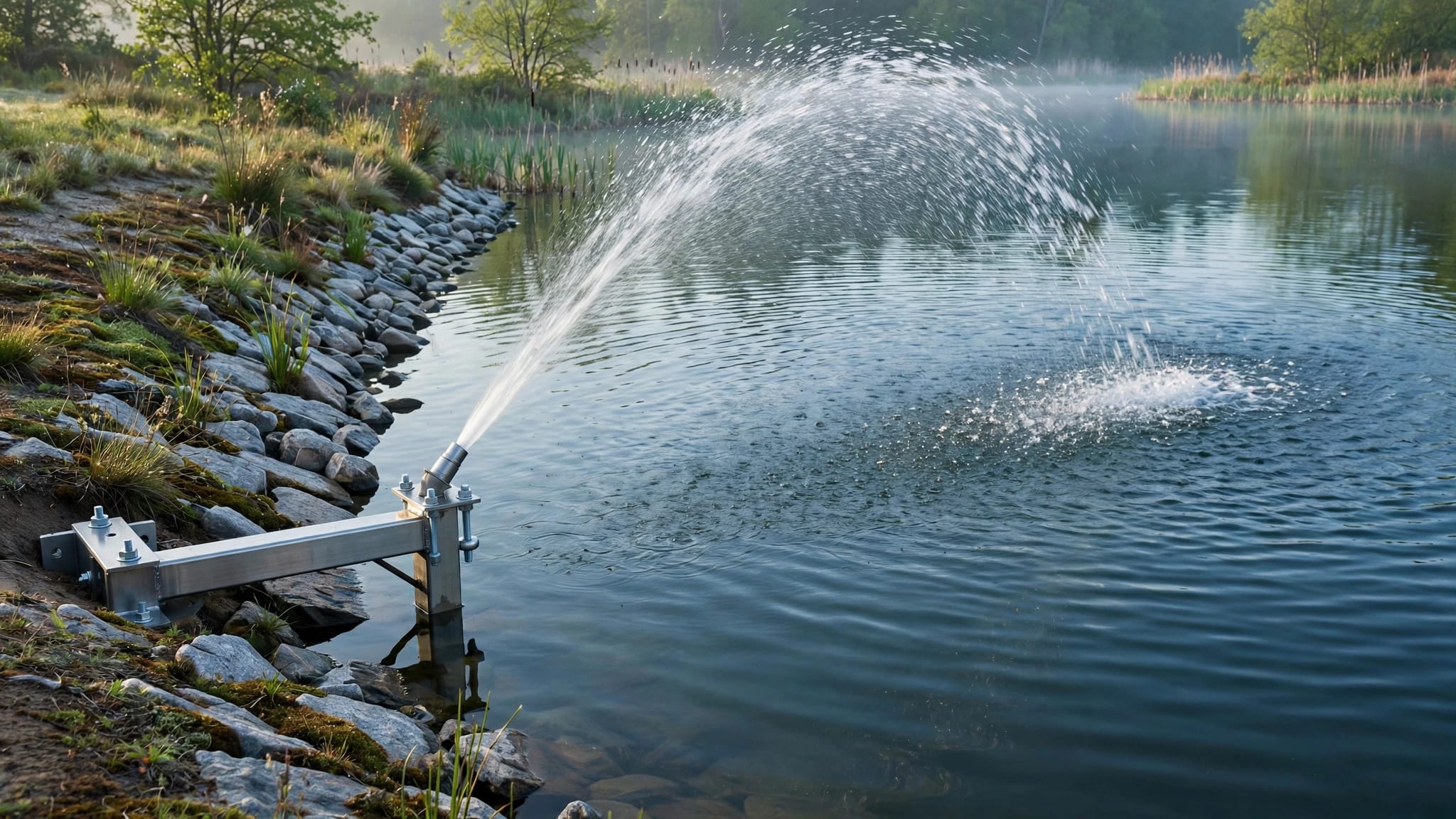
A pond fountain can contribute to shoreline erosion when its spray or repeated waves strike a vulnerable bank. However, a fountain doesn't automatically cause erosion, and other conditions often explain a changing shoreline. The useful first step is to separate water movement from actual soil loss, then look at the pond's layout and the bank's condition.
How fountain waves and splash affect a bank
Waves can disturb exposed soil
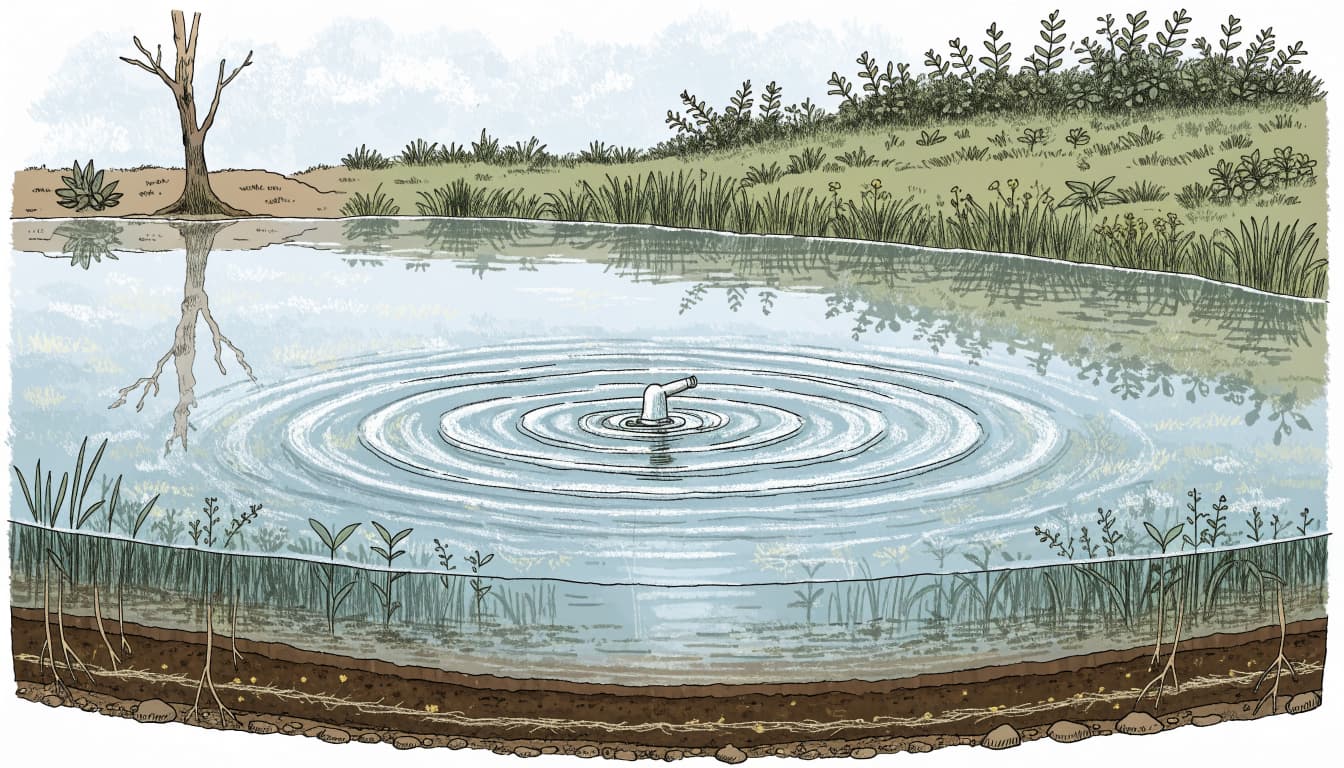
A fountain pumps water above the surface, where it falls back and sends ripples outward. If those ripples reach an exposed or shallow bank repeatedly, they can disturb loose soil and move fine sediment. Wind may also push spray toward one side, concentrating the effect rather than spreading it evenly.
The risk depends on the site. Gentle ripples reaching a well-rooted, stable bank are different from persistent splash striking bare soil. Signs of possible erosion include fresh sediment in the water, exposed roots, or a bank edge that is receding.
Splash can affect nearby ground
Wind-driven droplets can land on the bank, landscaping, pavement, or a walkway. Repeated wetting may soften exposed soil, while splash-out can lower pond water levels over time, especially during dry weather. That water loss is separate from erosion, though changing water levels can affect the shoreline.
Separate fountain effects from other causes
Runoff and water-level changes matter
Retention ponds collect stormwater, so heavy rain can send fast-moving runoff into the pond. Water flowing through an inlet or across a slope may carry soil and mulch to the waterline. After storms, changing water levels can also leave banks exposed or increase movement against them.
A fountain doesn't replace proper grading, inlet maintenance, stormwater inspections, or sediment management. If erosion appears near a drain or along a path where rainwater concentrates, runoff may be a stronger cause than fountain waves.
Bank stability can be the main issue
Bare or loose soil is more vulnerable to water movement than a bank supported by healthy roots or stable shoreline materials. Poor grading, previous disturbance, and sediment buildup can also affect how the edge holds together. In Florida, heavy rain can reveal weaknesses that weren't obvious during dry periods.
Look for a pattern. Damage concentrated downwind of the fountain may point to spray or waves, while a channel of sediment below an inlet suggests runoff. A broad change along the waterline may relate to water-level shifts or bank stability.
Which pond and fountain conditions raise risk?
Size, placement, and depth shape the effect
A larger or higher spray pattern can send water farther than a lower, tighter display. Yet size alone doesn't determine risk. Placement matters too: a unit near the shore may disturb bottom sediment or direct waves toward the bank. If it sits in shallow water, its intake may pull in mud or debris.
Depth should be considered at the pond's lowest normal level, not only after rain. A fountain needs suitable clearance from the bottom to operate as intended. No single distance from shore fits every pond, because depth, bank shape, and fountain pattern vary.
Wind and shoreline material change exposure
Prevailing wind can carry droplets and surface movement toward a particular shore. A spray that falls back into the pond on calm days may reach a path, lawn, or bank when the wind shifts. Tall patterns may be more exposed to drift, so the intended viewing angle shouldn't be the only placement consideration.
The shoreline itself matters. Rooted vegetation can help hold soil, while bare sand or loose fill may move more readily. Hard edges can limit soil loss in one spot, but they may redirect water movement elsewhere. For Florida communities, our Florida lake fountain placement guide covers placement considerations such as wind, depth, and shoreline access.
Practical ways to reduce shoreline risk
Match the display to the site
Choose a fountain pattern suited to the pond's size and the viewing distance. A compact pond may need a lower, tighter spray instead of a tall plume. Position the unit so typical spray falls into the pond, away from exposed banks, walkways, homes, and landscaped areas.
Observe wind direction and water movement at different times. Also account for shallow shelves, inlets, outfalls, and coves. A central location isn't automatically best, and a fountain shouldn't obstruct drainage or maintenance access.
Protect the bank and watch for change
Keep appropriate shoreline vegetation in place, and avoid disturbing the bank during fountain installation or service. Don't strip protected vegetation or alter a pond's edge without approval. If you see repeated wetting, sediment movement, or new bare patches, adjust the spray pattern or placement before the problem spreads.
After heavy rain, inspect the shoreline as well as the fountain. Note where sediment appears and whether the unit has shifted. Keep the intake clear, since a clogged intake or uneven spray can change how water returns to the pond. If the fountain's position, flow, or spray has changed, a qualified fountain technician can assess the equipment safely.
Key takeaways
- Fountain waves and splash can affect a bank, especially when they repeatedly reach bare or loose soil.
- Runoff, changing water levels, and unstable banks can cause similar or greater shoreline problems.
- Fountain size, placement, pond depth, wind direction, and shoreline materials all influence exposure.
- A suitable spray pattern, careful siting, rooted shoreline cover, and routine observation help reduce risk.
Conclusion
A pond fountain can contribute to shoreline erosion, but the spray alone doesn't prove it's the cause. Consider where the water is moving, how the bank is built, and whether runoff or changing water levels better explain the damage. Good placement protects the shoreline while allowing the fountain to do its job.
Latest posts
Read Our Blog
Tips, guides, industry best practices, and news.


Contact us
Get in touch
Our friendly team is ready to chat.