
Lake Fountain Placement Guide for Florida Shorelines
A fountain can look perfect from the road and still be placed badly. Wind may blow spray onto a sidewalk, a shallow intake can pull mud, and a storm can shift an unsecured unit. Smart lake fountain placement protects the shoreline while keeping the fountain visible and performing well.
Florida adds its own demands. Warm water supports algae growth, heavy rain changes water levels, and tropical weather tests every cable, anchor, and control box. The right site balances appearance, circulation, safe access, and local rules. Start with the lake itself.
Why placement matters on a Florida shoreline
A lake fountain does more than create a central view. Moving water increases surface exchange and can improve circulation around the operating unit. That may help reduce stagnant pockets, but a fountain doesn't remove excess nutrients or replace an algae and vegetation management plan.
Location also affects your property. Persistent spray can wet pavement, fences, windows, and turf. Water landing on fertilized grass can carry nutrients back into the lake during rain. A fountain set too close to a bank may stir bottom sediment, while a unit near an inlet can collect floating debris or interfere with drainage.
For an HOA or property manager, placement affects many people at once. A fountain should look attractive from common areas without creating slippery paths, glare into homes, or hazards for swimmers and boaters. Service crews also need a safe route to the equipment.

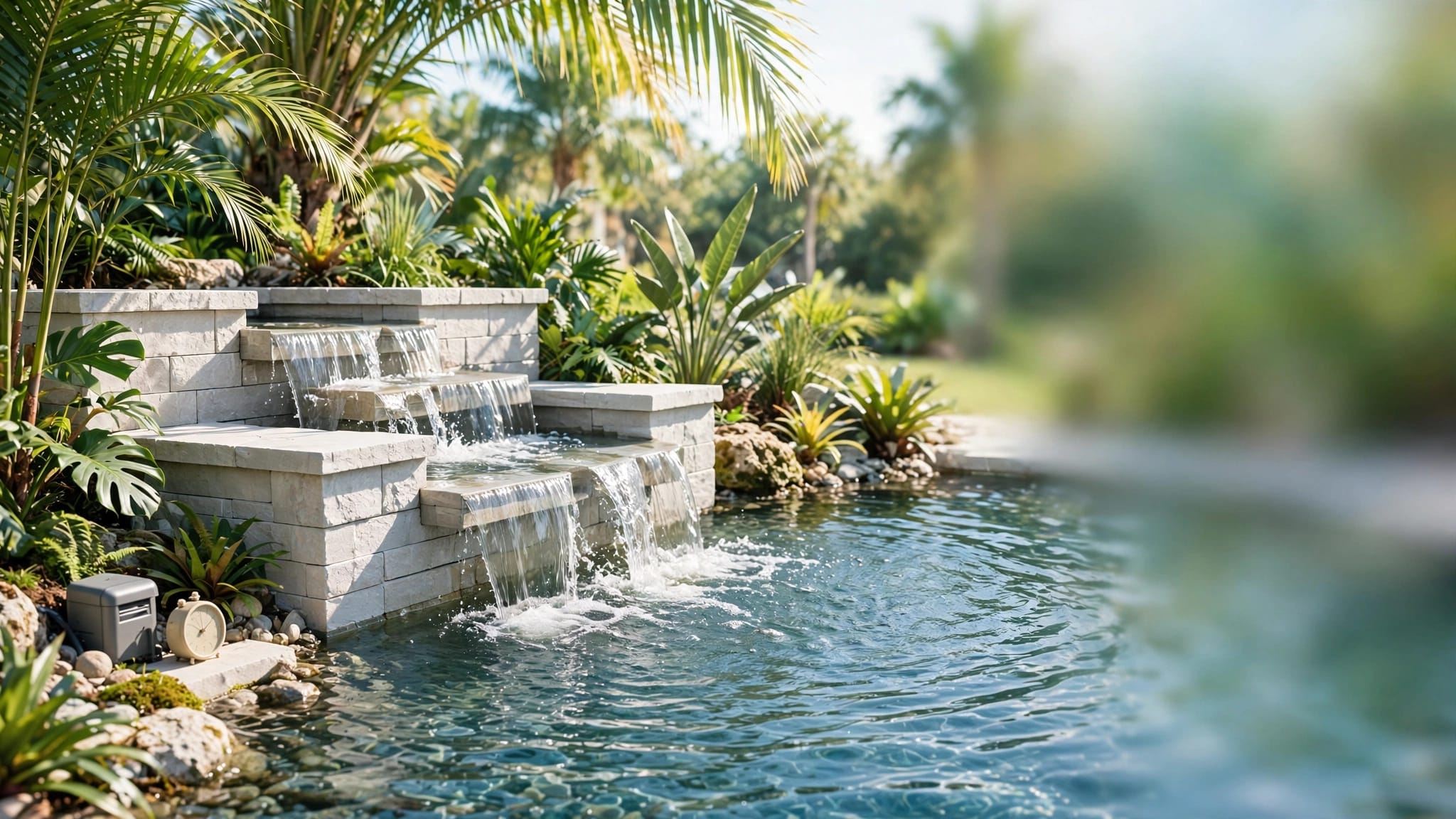
Photo by Mehmet Turgut Kirkgoz
Choosing the right spot for lake fountain placement
Begin with a site survey before buying a motor or nozzle. Walk the shoreline at different times, inspect the waterline, and note where people, wildlife, drainage, and utilities interact.
If the lake is part of a subdivision stormwater system, review the pond plans and approval process with the HOA, property owner, engineer, or responsible local agency. A fountain shouldn't block an outfall, sit in an access path, or alter a protected bank without approval.
Mark these areas on a sketch or aerial image:
- Swimming, fishing, boating, docks, and walking paths that need clear separation from the spray.
- Storm drains, inflow pipes, outfalls, and areas where rainwater enters the pond.
- Utility routes, electrical service locations, and possible equipment access points.
- Dense aquatic vegetation, submerged roots, soft sediment, and shallow shelves.
- Homes, roads, windows, outdoor seating, and other surfaces that wind-driven water could reach.
A central location isn't automatically the best. It may provide a balanced view, yet a bank-side position can reduce cable length and improve maintenance access. Moving too close to shore can wet the bank, disturb sediment, or allow roots and vegetation to reach the intake.
Good lake fountain placement usually means choosing the point that provides the best balance, not the geometric center.
Let wind guide the spray
Observe wind direction over several days, especially when residents use outdoor areas. Florida breezes can change with storms, open water, buildings, and tree lines. Select a fountain pattern and location so normal spray falls back into the lake instead of landing on sidewalks or neighboring lots.
A tall pattern may drift farther during gusts. A lower, wider pattern can fit an exposed frontage better, depending on the manufacturer's specifications. Keep spray away from power equipment, light fixtures, seating, and roadways. If an HOA wants a view from its entrance, check the sightline from that location before final anchoring.
Check depth, bottom conditions, and seasonal water levels
Water depth is a placement requirement, not a detail to check after delivery. A floating fountain needs enough clearance beneath the intake for the pump to draw water without pulling sediment. Measurements should include the dry-season level, not only the depth after a summer storm.
Use the manufacturer's minimum operating depth and intake-clearance requirements. A shallow shelf may be unsuitable when the lake appears full. Soft muck, leaf buildup, and submerged roots can foul the intake or complicate retrieval. Aquatic vegetation around the float can also restrict flow, especially in warm water.
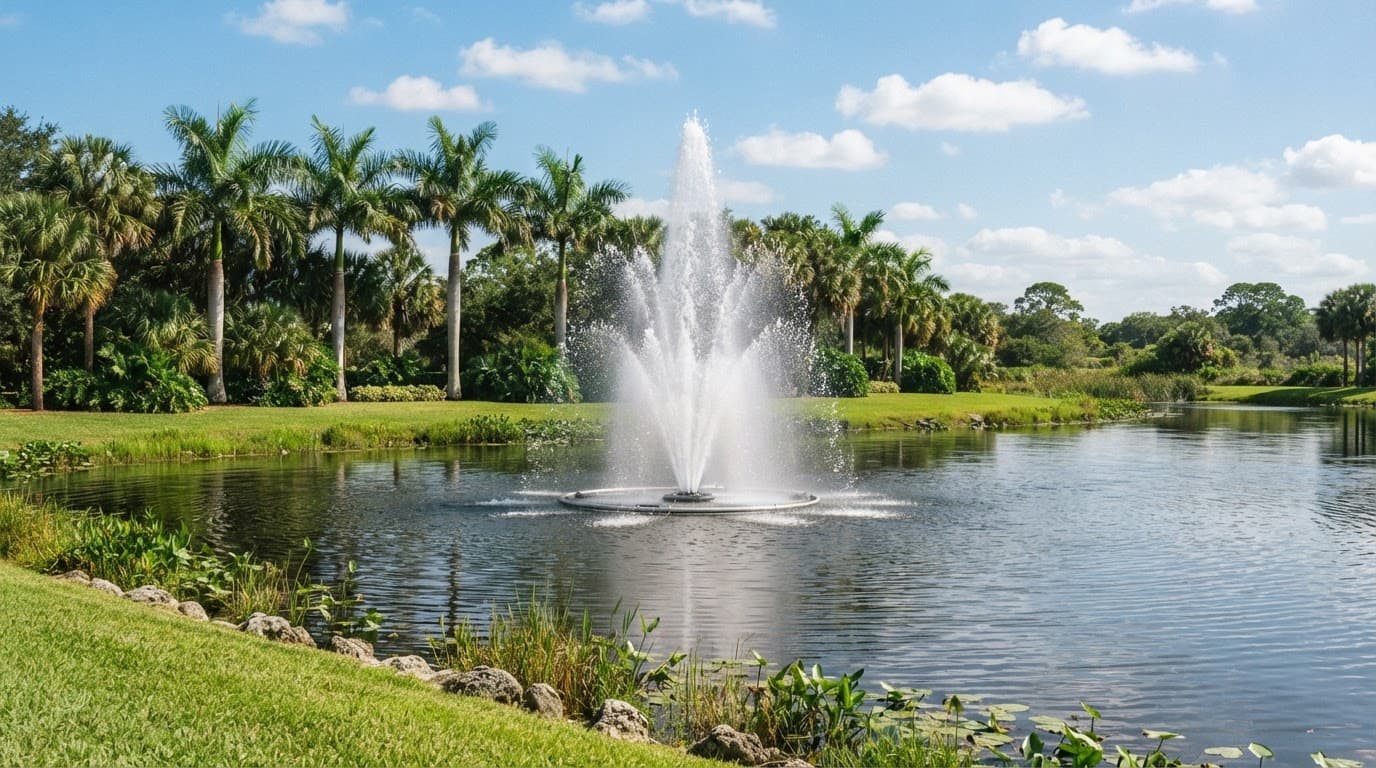
A fountain needs enough water below the intake at the lake's lowest normal level, not only after a rainstorm.
If the shoreline has a gradual slope, consider how far water could recede during a dry spell. If heavy rain raises the lake quickly, verify that mooring lines and electrical arrangements can accommodate movement without pulling the unit toward shore.
Keep the intake away from dense plant beds and obvious sediment deposits. Don't place the unit where a maintenance worker must stand in unstable mud or wade near hidden obstacles. For a community pond, record the selected location so future service crews can find it without guessing.
Plan electrical safety and hurricane-ready anchoring
Water and electricity require a site-specific plan. Have a licensed electrician review the power source, grounding, disconnect, GFCI protection, conduit, and cable route under current requirements. Confirm local permits, inspections, utility rules, and HOA or stormwater approvals before work begins.
The control panel should sit where technicians can reach it without walking through standing water. Keep it outside the fountain's splash zone and away from areas that flood during heavy rain. Never use a loose extension cord across a lawn, driveway, or shoreline. Protect buried wiring from landscape work, vehicles, and future drainage projects.
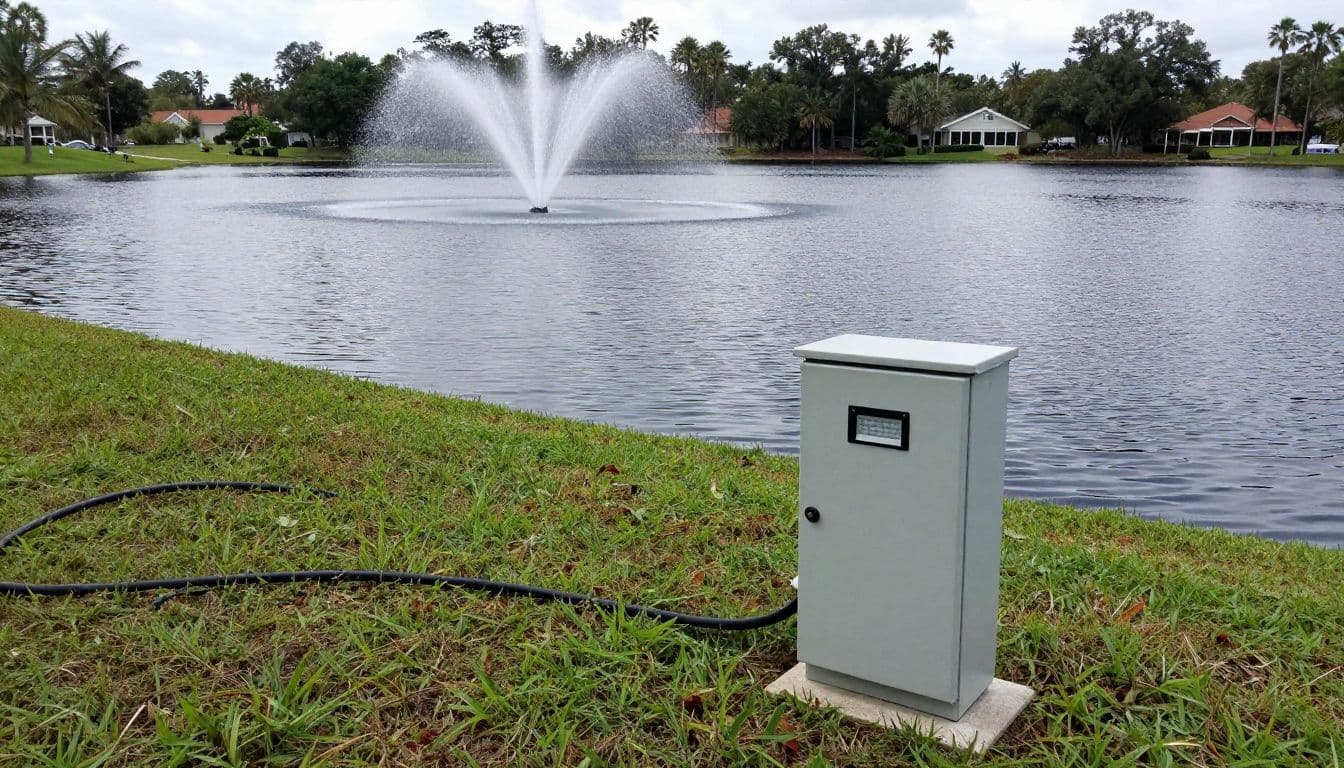
Anchor for Florida wind and storms
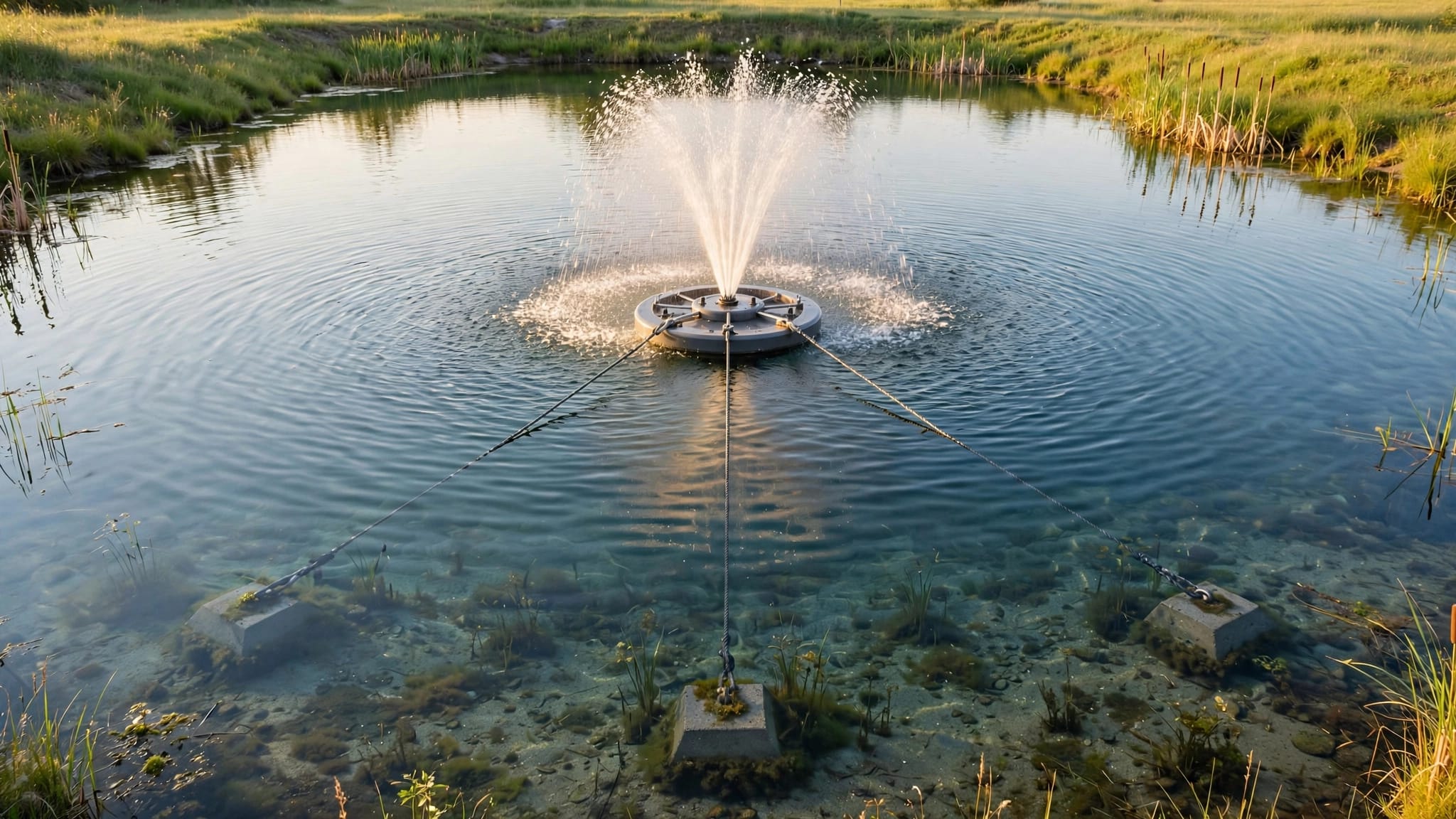
Mooring is part of placement. Anchor points need stable soil or an approved structure, and the lines must match the fountain manufacturer's design. Avoid tying a fountain to a tree, fence, dock rail, or lightweight landscape feature. Those anchors can move or fail before the fountain does.
Allow enough line movement for normal water-level changes while keeping the unit within its intended operating area. Check every connection for abrasion, corrosion, and looseness. Open-water locations face more wind than protected coves, so the anchoring plan should reflect the site's actual exposure.
Create a storm procedure before hurricane season. Follow the equipment manual for shutdown or removal, and decide who will act when a tropical storm or hurricane approaches. After severe weather, inspect the float, motor, lines, anchors, cable, and spray pattern before restoring power.
Match the fountain to the lake, not only the view
Nozzle height and pattern should fit the lake's size, wind exposure, and nearby uses. A large plume can be a poor choice if it drifts onto a pedestrian route. A smaller unit may suit a compact retention pond, but it still needs enough capacity for the circulation goal and the manufacturer's operating conditions.
Use the site condition to guide the initial selection:
| Site condition | Practical placement response |
|---|---|
| Open, wind-exposed water | Choose a pattern that keeps spray inside the lake, and position it away from the downwind bank. |
| Shallow or fluctuating water | Verify minimum depth at the lowest normal level before selecting the unit. |
| Dense vegetation or leaf load | Keep the intake clear and choose a location that allows regular cleaning. |
| Homes, walkways, or roads nearby | Check spray drift, glare, and slippery-surface risk from those viewing points. |
| Large lake with coves | Treat one fountain as one circulation zone, and assess isolated areas separately. |
The fountain should match the water around it, not only the appearance in a catalog photo. Review available lake water fountains with the actual depth, shoreline, and viewing angle in mind.
A fountain can improve circulation near its operating zone, but it can't reach every cove. It also can't replace management of runoff, nutrients, or invasive growth. In warm Florida water, those factors continue to affect algae pressure even when the spray looks strong.
Build service access into the installation plan
The easiest unit to maintain is the one technicians can reach safely. Leave a clear path from the bank to the control equipment, and identify how the float will be retrieved. If the lake requires a boat for every inspection, the owner needs an approved access plan and proper safety procedures.
Position the fountain away from constant leaf fall when possible. Trees over the water can add debris, while shoreline plants can grow into mooring lines. Don't clear protected vegetation or alter the bank without approval. Florida shorelines may include drainage features, conservation areas, or planting requirements.
Inspect the system on a schedule suited to the lake. Look for a weaker or uneven spray, unusual vibration, clogged intake, damaged lines, mineral deposits, and algae buildup. Warm water and high sunlight can shorten the time between cleanings. The service interval depends on nutrient levels, debris, sunlight, and water chemistry.
Read about lake fountain maintenance when setting a service plan. If the fountain trips a breaker, loses flow, or shifts position, shut it down and arrange lake fountain repair.
For HOAs, keep a simple site record with the fountain model, anchor locations, electrical shutoff, normal spray direction, and maintenance dates. That information helps new property managers and service crews respond without guesswork.
A safer fountain starts with the shoreline
Good lake fountain placement begins with a site survey, not a visual guess. Check depth at low water, observe wind, protect inlets and vegetation, plan safe electrical access, and use anchors rated for the site and fountain.
Florida conditions reward regular attention. When the intake stays clear of sediment and vegetation, the spray remains consistent, and the owner has a storm plan, the fountain can support a healthier-looking lake without creating new shoreline problems.
Before installation, confirm local permitting, utility, electrical, and stormwater requirements with the appropriate authorities and qualified professionals. The best location is the one that looks good, stays in the lake, and can be serviced safely.
Latest posts
Read Our Blog
Tips, guides, industry best practices, and news.
Contact us
Get in touch
Our friendly team is ready to chat.