

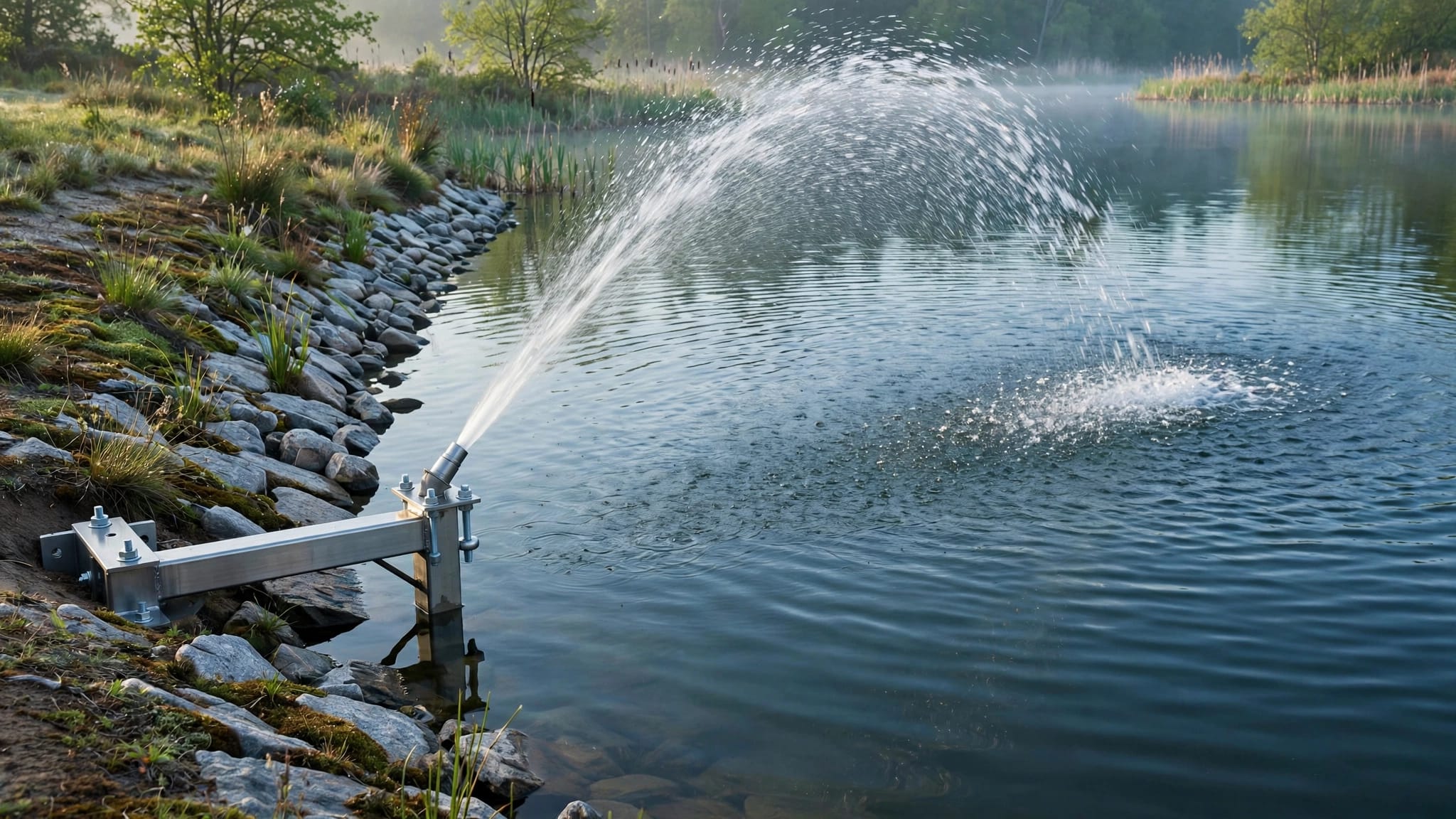
Is It Safe to Run a Pond Fountain During Algaecide Treatment?

Trademark Water Systems • October 18, 2026

Share this article

A fountain can support pond circulation during algae treatment, but whether it should run depends on the product label and the pond's condition. Some directions call for aeration; others focus on mixing or warn that treated algae can lower oxygen as it decomposes.

During a pond algaecide treatment , fish health matters as much as product directions. Use the label's instructions for your specific product and pond, then consider how much algae is present and whether fish may be stressed.

Should you run a pond fountain during treatment?

There's no universal on-or-off rule. A fountain moves water and can add oxygen near the surface, but its role depends on the treatment instructions, pond depth, algae growth, and aquatic life.

Follow the product's instructions

Read the label for directions on fountains, aeration, circulation, application timing, and the water bodies where the product may be used. Follow those directions over general advice. If the label restricts use in a particular pond type or around certain fish, operating a fountain doesn't change that restriction.

For example, an EPA-hosted Cutrine-Plus label from November 18, 2019, warns that treated algae and weeds can consume oxygen as they decay. A separate EPA-hosted Cutrine-Plus label from 2010 calls for an available aeration or fountain system to operate during treatment in its hatchery and aquaculture directions. That instruction applies to the specified use, not automatically to every home or community pond. ( Cutrine-Plus label; aquaculture directions)

Distinguish circulation from aeration

A fountain agitates the surface and can improve circulation around the unit. However, surface movement doesn't guarantee enough oxygen throughout a deep pond. Placement, pond shape, and depth all affect how well water circulates. ( How to position a fountain for better lake circulation)

Why treated algae can stress fish

When algae dies, bacteria break down the organic material and use oxygen in the process. A large bloom dying at once can increase that demand, especially when warm water already holds less dissolved oxygen.

Watch the size of the bloom

A heavy treatment can leave a large amount of dying vegetation in the water. The 2019 Cutrine-Plus label advises treating no more than half the water body at a time and leaving at least 14 days between treatments. Those are product-specific directions, not a schedule for other algaecides.

Treating a portion at a time can limit how much material decomposes at once. In Florida's hot weather, that caution matters because warm water can hold less oxygen. Trademark Water Systems' Florida lake fountain maintenance checklist also notes that decomposing plants and algae can add oxygen stress.

Respond quickly to fish distress

Fish gathering at the surface, gasping, or acting unusually can signal oxygen stress. Don't assume the fountain's visible spray means the entire pond has adequate dissolved oxygen. If fish appear distressed, seek help from a qualified lake-management professional. Dissolved oxygen testing for lakes and ponds can help assess oxygen conditions.

A practical way to make the decision

Start with the exact product directions, then account for the pond's conditions. A small ornamental pond with fish, a large HOA retention pond, and an aquaculture pond may have different product restrictions and oxygen needs.

Check the product and pond use

Product formulations can differ, even when they target algae. An EPA-hosted label for Cutrine-Plus Granular Algaecide , dated July 7, 2014, warns about oxygen loss during decomposition and states that the product shouldn't be used in waters with koi or hybrid goldfish, or in small-volume garden pond systems. Those restrictions apply to that granular formulation, not to every algaecide. ( Cutrine-Plus Granular label)

Labels can also differ in their aeration directions. The retrieved GreenClean Liquid 2.0 label warns about fish toxicity and oxygen loss, and describes application around aerator turbulence to support mixing during whole-volume treatment. That is a product-specific mixing direction, not a blanket instruction for other products or ponds. ( GreenClean Liquid 2.0 label)

Don't treat fountain operation as a cure-all

A fountain may help move surface water, but it doesn't remove the algae or prevent oxygen loss as that algae decays. Nor does every fountain circulate the full depth of a lake. If a community pond has recurring blooms or fish stress, the fountain setup, water depth, and overall pond conditions may need assessment alongside treatment. Our lake fountain care and maintenance tips cover routine equipment considerations.

Key takeaways

  • Run the fountain only as directed for the specific algaecide and pond use.
  • Treating a large algae bloom can reduce dissolved oxygen as the biomass decomposes.
  • Surface aeration may help, but it doesn't guarantee adequate oxygen at depth.
  • Product restrictions vary. Don't transfer one label's directions to another formulation.

Frequently asked questions

Should I turn off the fountain while applying algaecide?

Follow the product's directions for circulation and aeration. Some labels may call for a fountain or aerator during a particular use; others may specify different mixing instructions. There isn't one setting that applies to every product.

How long should the fountain run after treatment?

There's no standard run time for all algaecides. Follow the label's treatment and equipment directions, and consider the pond's oxygen conditions and amount of decaying algae. A fountain's operating schedule alone can't guarantee safe oxygen levels throughout the pond.

Make the choice based on the label and pond

A fountain can support circulation, but the right decision during treatment depends on product directions and pond conditions. Pay particular attention to fish, bloom size, and oxygen risk as algae breaks down. Treat the label as the operating rule , and don't mistake surface movement for proof that the whole pond has enough oxygen.

Latest posts

Read Our Blog

Tips, guides, industry best practices, and news.

By Trademark Water Systems • October 17, 2026
A fixed mount pond fountain needs a shoreline support that suits the bank, water conditions, and equipment. If the ground shifts or water levels change, the fountain can move out of position, putting strain on its support and affecting performance. The right setup depends on t...

By Trademark Water Systems • October 16, 2026
A fountain motor nameplate can narrow down the right replacement parts, but it can't identify every compatible component on its own. Read it as one part of the equipment record, alongside the pump model and the fountain's complete specifications. Voltage, phase, horsepower, RP...
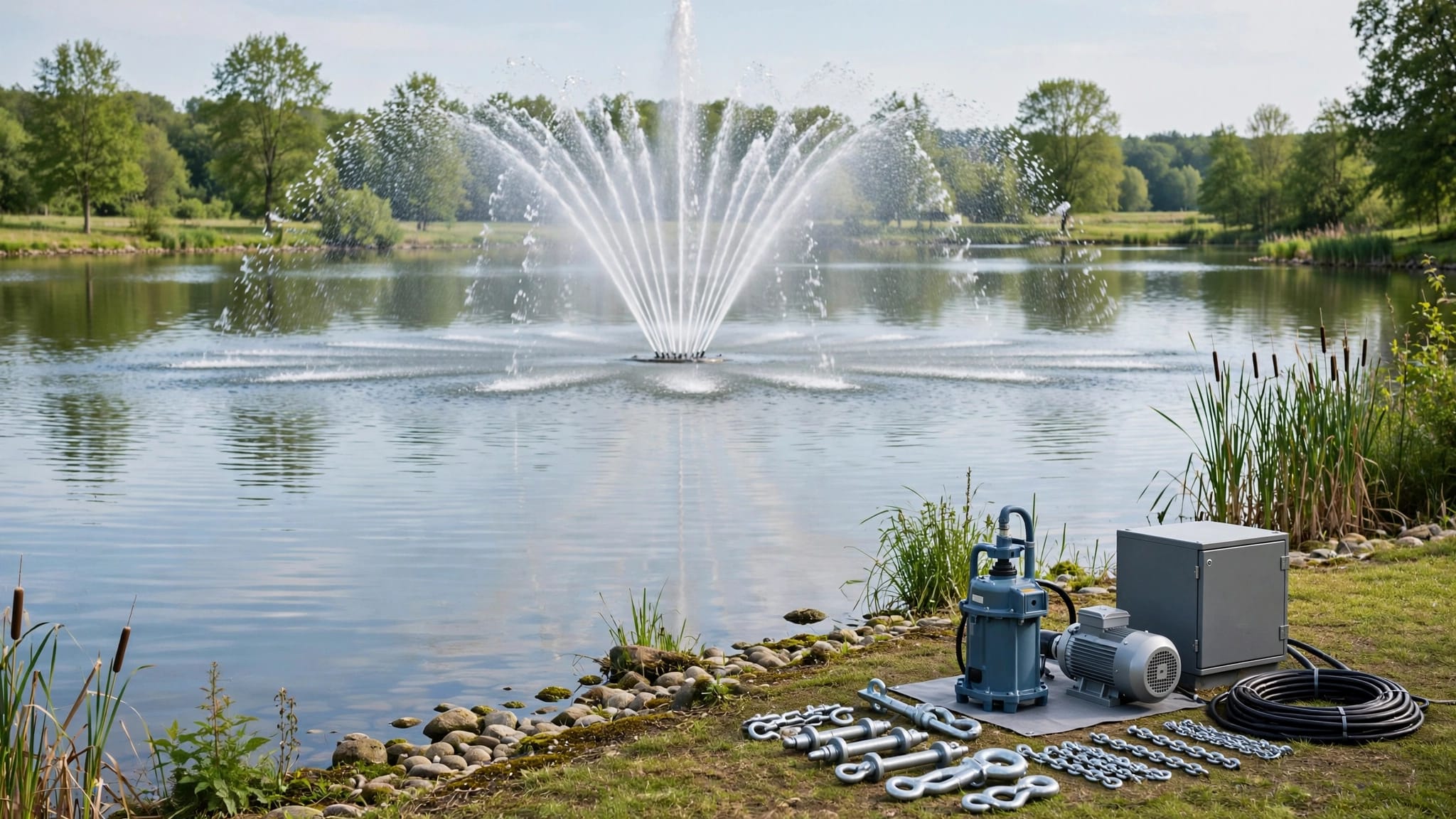
By Trademark Water Systems • October 15, 2026
A fountain installation bid is only useful when you can tell what the price covers. Two totals may look comparable while one excludes electrical work, anchor installation, or removal of old equipment. Compare the written scope line by line, including the expected fountain perf...

Contact us

Get in touch

Our friendly team is ready to chat.

Black outlined envelope icon on a white background

Email

Our friendly team is here to help.

Black outline of a telephone handset icon on a white background

Phone

Office Hours: Mon-Fri from 8am to 5pm.

Black location pin icon with a circular center on a white background

Office

Locally owned and operated.