
When Fountain Motor Bearings Start to Fail: Noise and Inspection
A rough or newly loud lake fountain deserves attention, but sound alone can't confirm that its bearings have failed. A worn bearing can create grinding, squealing, humming, or rattling as the motor shaft turns. Similar noises can also come from debris, restricted water flow, loose mounting parts, or other motor problems.
The safest first step is to observe the fountain from shore, note changes in its sound and spray, then disconnect power before any inspection. Here's how to recognize warning signs, check what you can safely see, and know when a qualified technician should take over.
Key Takeaways
- Bearing wear is one possible cause of new grinding, squealing, humming, or rattling. None of these sounds proves a bearing has failed.
- A change in spray height or pattern can point to a clogged intake, nozzle problem, debris, or internal pump wear.
- Observe the fountain from shore. Before inspecting accessible equipment, disconnect power at the appropriate disconnect.
- Don't enter the water, touch submerged cables, or open the motor housing. Get qualified service for electrical issues, persistent noise, or unusual vibration.
How Fountain Motor Bearings Can Change the Sound
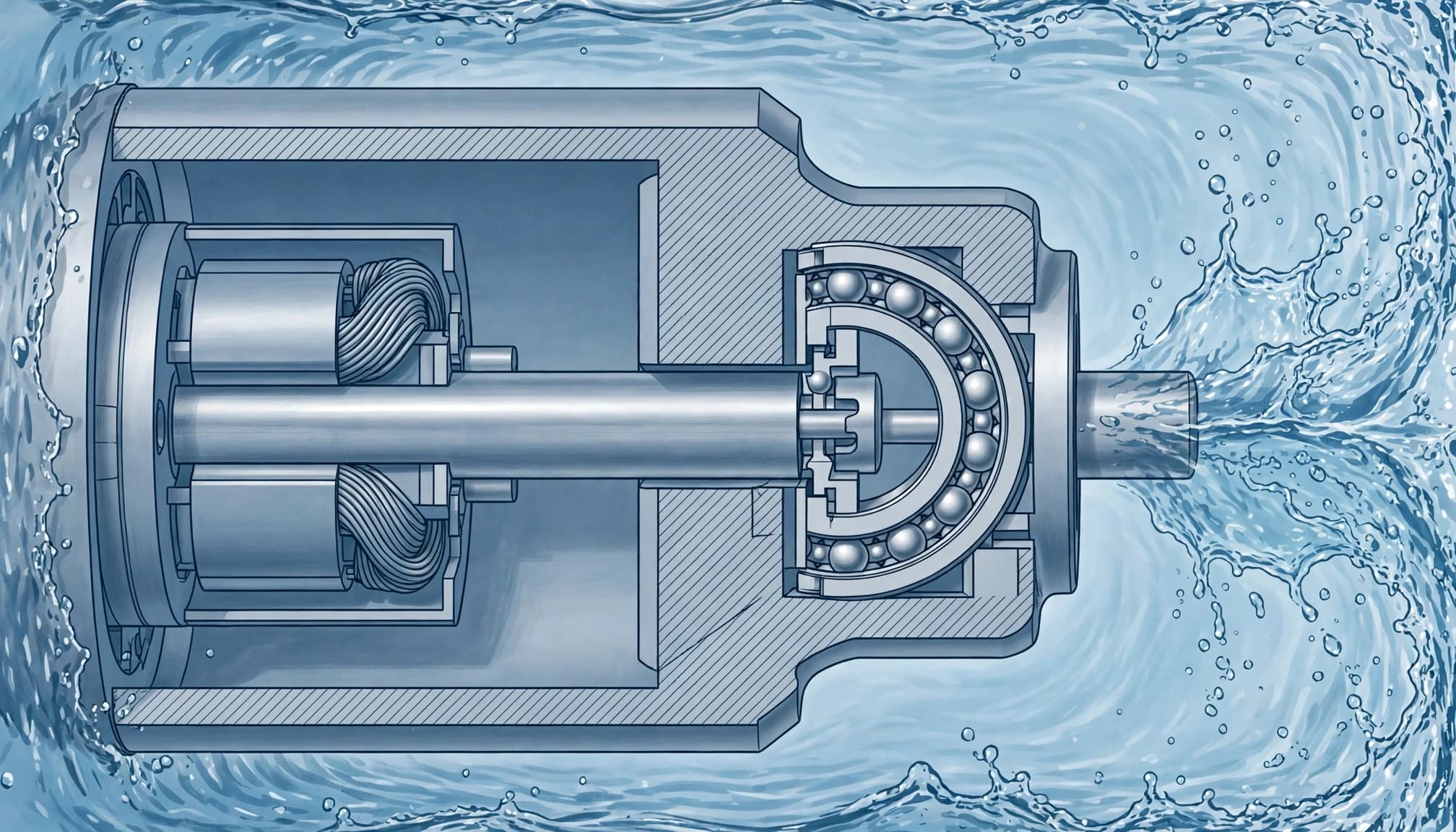
Motor bearings support the rotating shaft and help it turn smoothly. As a bearing wears or becomes rough, friction and vibration can increase. That change may be heard as a new sound, especially when the motor starts or runs under load.
A fountain may use a motor and pump in an integrated assembly, or a configuration with different access points. The bearing's location and construction depend on the equipment. On many units, you can't see or assess the bearing from shore.
What different sounds may suggest
A grinding sound can occur when rotating parts no longer move smoothly, including when a bearing is damaged. A squeal may be related to friction, while a hum can accompany a motor or pump that is struggling to operate normally. Rattling may come from vibration or loose parts.
These descriptions are clues, not diagnostic rules. Sound can travel across water and be difficult to locate, so a noise that seems to come from the motor may originate elsewhere in the fountain or nearby.
Why sound alone isn't enough
Grinding, vibration, and reduced flow warrant attention, but they don't identify a specific failed part. A technician may need to inspect the pump and motor assembly to distinguish bearing wear from other mechanical or electrical causes. Avoid opening the motor or trying to test its shaft yourself.
Read Noise Alongside Fountain Performance
Listen for changes, then compare them with what the fountain is doing. A new sound paired with a weaker spray, irregular operation, or unusual vibration is more useful information than sound by itself. It still doesn't establish that the bearings are the cause.
Grinding or squealing with a changed spray
If grinding or squealing appears at the same time as reduced spray height or flow, the pump may be under strain. However, an obstructed intake, blocked nozzle, algae, leaves, sediment, or mineral buildup can also interfere with water movement. A fountain that runs but moves little water may have an intake blockage, an impeller issue, or internal wear.
Watch for a sound that persists or grows louder, especially if the fountain's usual spray changes too. Don't keep running a unit that makes a harsh new noise in hopes that it will clear itself.
Humming or rattling with vibration
A steady hum isn't enough to identify bearing trouble. It may come from a motor or pump operating under difficult conditions, while rattling can point to vibration, debris, or loose accessible hardware. A fountain that shifts position or vibrates unusually should be treated as a service concern.
From shore, note whether the noise begins at startup, continues throughout operation, or comes and goes. If the fountain repeatedly trips a breaker, shut it down rather than restarting it to reproduce the sound.
Rule Out Common Causes Before Suspecting Bearings
Lake conditions can affect a fountain's flow and noise. In Florida, algae and mineral buildup can accumulate, while storms may leave debris near the intake. A partially blocked nozzle can break up a smooth spray or make its sound seem harsher.
Check for visible flow restrictions
From the shoreline, look for leaves or floating debris near the intake, an uneven spray, or a noticeable drop in height. These signs may point to a flow restriction or nozzle problem rather than a bearing. Don't reach into the water or remove parts while the fountain is powered.
For more context on changes in sound and water pattern, see our guide to causes of unusual fountain noise. It describes how debris and buildup can affect flow and make a fountain sound different.
Consider mounting, water, and nearby sounds
A rattle can come from a loose or shifting support, while a rough pump sound may have a cause elsewhere in the water-moving system. Water level changes can affect fountain position and put strain on supports. Noise from nearby equipment, boats, traffic, or wildlife can also be mistaken for a fountain problem.
A leak near the motor is a separate clue, not proof of bearing failure. Water may escape at a seal, fitting, gasket, housing, or damaged line. Note where the water appears and whether the fountain's spray has changed.
Inspect Safely From Shore
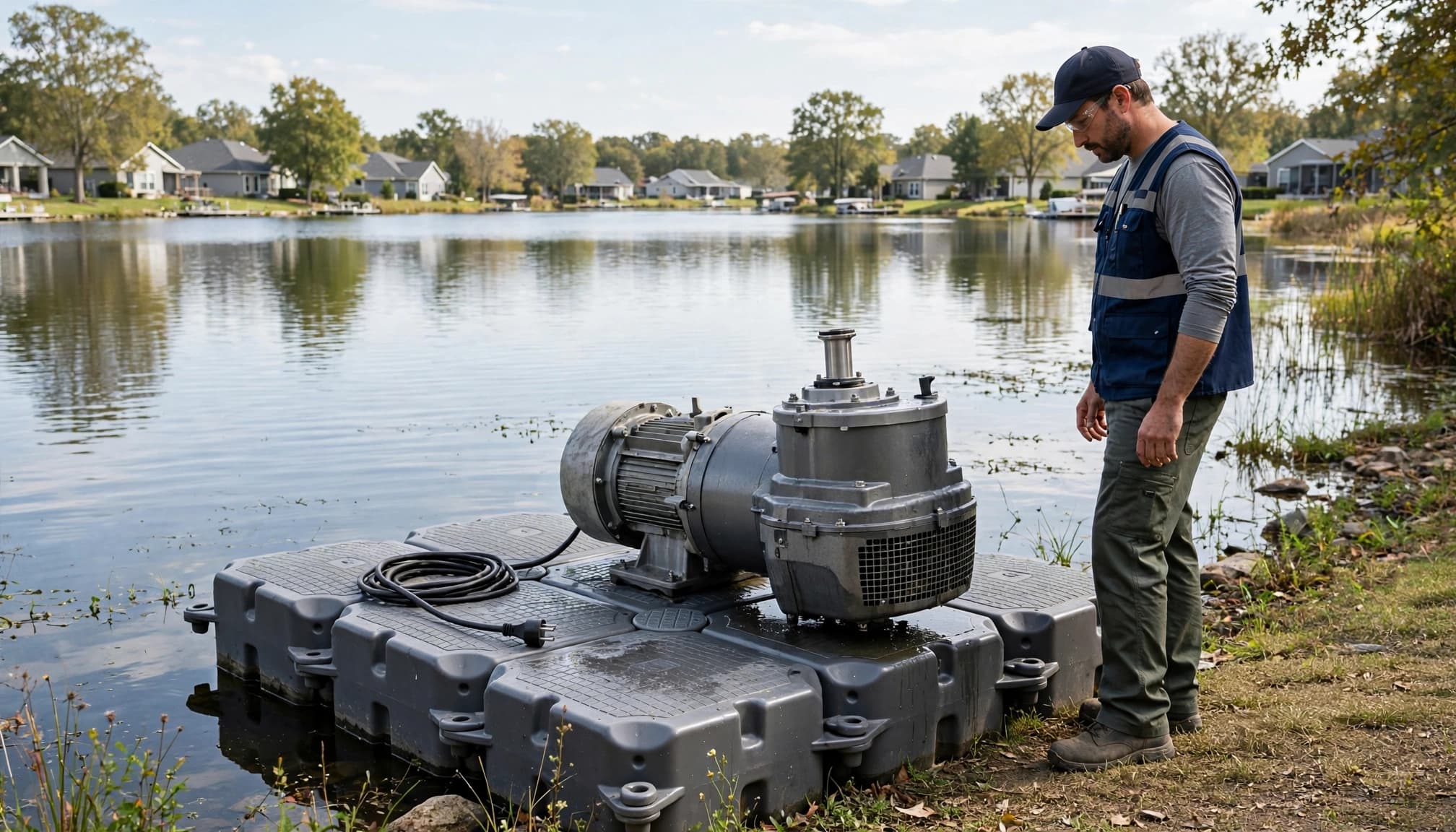
Begin with observation, not a close approach. Compare the fountain's current sound and spray with its usual operation. During heavy leaf fall or algae growth, a weekly look from shore can help catch visible changes early.
Record what has changed
Write down when the noise began and whether it happens at startup or during continuous operation. Note changes in spray height, spray shape, vibration, visible debris, water level, or fountain position. A short recording made from the same safe shoreline spot can help a technician compare the sound over time.
This record can also prevent a sound from being confused with a nearby pump or other source. If the fountain suddenly sounds much rougher or loses its usual spray, shut it down instead of running it to collect more examples.
Keep hands away from powered equipment
Disconnect power before inspection. Use the appropriate power disconnect, not only a normal operating control, and keep away from exposed electrical parts. Never enter the lake to reach the fountain or handle submerged components while the system is powered.
Once power is off, limit a visual check to equipment you can safely see from dry ground. If a unit is already on a stable, dry service surface, look for obvious external damage or loose visible fittings without opening the motor housing, tugging cables, or trying to turn the shaft. Don't haul a floating unit out of the water unless you're equipped and qualified to do so.
When to Stop Troubleshooting and Call for Service
A persistent grinding sound, unusual vibration, reduced flow, repeated breaker trips, or a fountain that shifts position calls for professional attention. If there's a damaged cable, exposed wiring, or an electrical fault, keep clear and leave the repair to a qualified technician.
Shut down for serious warning signs
Turn off the fountain if it makes a sudden harsh noise, loses flow, or trips a breaker. Don't repeatedly reset a tripped breaker or restart the unit to see whether the problem disappears. If the fountain has moved, avoid approaching it in the water.
Our lake fountain inspection and repair planning guide covers concerns such as a fountain shifting position and the need to shut it down when performance or placement changes.
Leave internal diagnosis to a technician
Bearing condition may require access to internal motor or pump parts, and the correct approach depends on the fountain's design. A qualified technician can assess whether the noise points to a bearing, impeller, obstruction, mounting issue, or another fault. Avoid buying replacement parts based on sound alone.
For additional warning signs and service guidance, see when to call for lake fountain repairs. We provide lake fountain installation, repair, and maintenance in Naples and Southwest Florida.
Frequently Asked Questions
Does grinding mean the fountain motor bearings have failed?
No. Grinding can be consistent with bearing wear, but it can also come from other pump or fountain problems. A technician needs to inspect the equipment to identify the cause.
Can I check the bearings by turning the shaft?
Don't try to access or turn the motor shaft yourself. The bearing may be inside a sealed assembly, and opening or handling the motor can create electrical and mechanical hazards. Disconnect power before any safe external inspection, and leave internal checks to a qualified technician.
What else can make a fountain sound rough?
Debris, a clogged intake, a blocked nozzle, mineral or algae buildup, vibration, or a pump problem can change the fountain's sound. Nearby equipment may also be the source. Compare the sound with changes in spray, flow, and vibration, but don't treat the combination as a definite diagnosis.
Should I keep the fountain running while I listen?
Only observe normal operation from a safe distance if the unit has no serious warning signs. If it begins grinding sharply, loses flow, vibrates unusually, or trips a breaker, shut it down. Don't approach the water or touch submerged equipment to investigate.
Conclusion
A new grinding, squealing, humming, or rattling sound can be an early warning, but it can't confirm that fountain motor bearings have failed. Look for changes in spray and vibration, rule out visible debris from shore, and disconnect power before inspecting accessible equipment.
When noise persists or comes with reduced flow, a breaker trip, or unusual movement, stop troubleshooting and arrange qualified service. Safe observation gives a technician useful clues without putting you near powered equipment in the water.
Latest posts
Read Our Blog
Tips, guides, industry best practices, and news.



Contact us
Get in touch
Our friendly team is ready to chat.
