
Can Whole-House RO Reduce Ammonia in Well Water?
Yes, whole-house reverse osmosis can reduce ammonia in well water, but the amount removed depends on the water's chemistry and the system's design. Ammonium, one form of ammonia in water, is generally easier for an RO membrane to reject than uncharged ammonia.
For a private well, the answer starts with water testing , not a guaranteed removal percentage. The right system also has to fit your home's water use, plumbing, and budget.
Key Takeaways
- RO may reduce ammonia, but results depend on pH, temperature, membrane selection, and operating conditions.
- A laboratory should test for ammonia explicitly and report the units and form measured.
- Under-sink RO can be a practical choice when treated water is needed for drinking and cooking. Whole-house RO treats a larger volume and requires more equipment.
- Pretreatment, storage, wastewater disposal, and ongoing maintenance all affect a whole-house installation.
- Testing water before and after treatment shows how the system performs on your well.
How Reverse Osmosis May Reduce Ammonia in Well Water
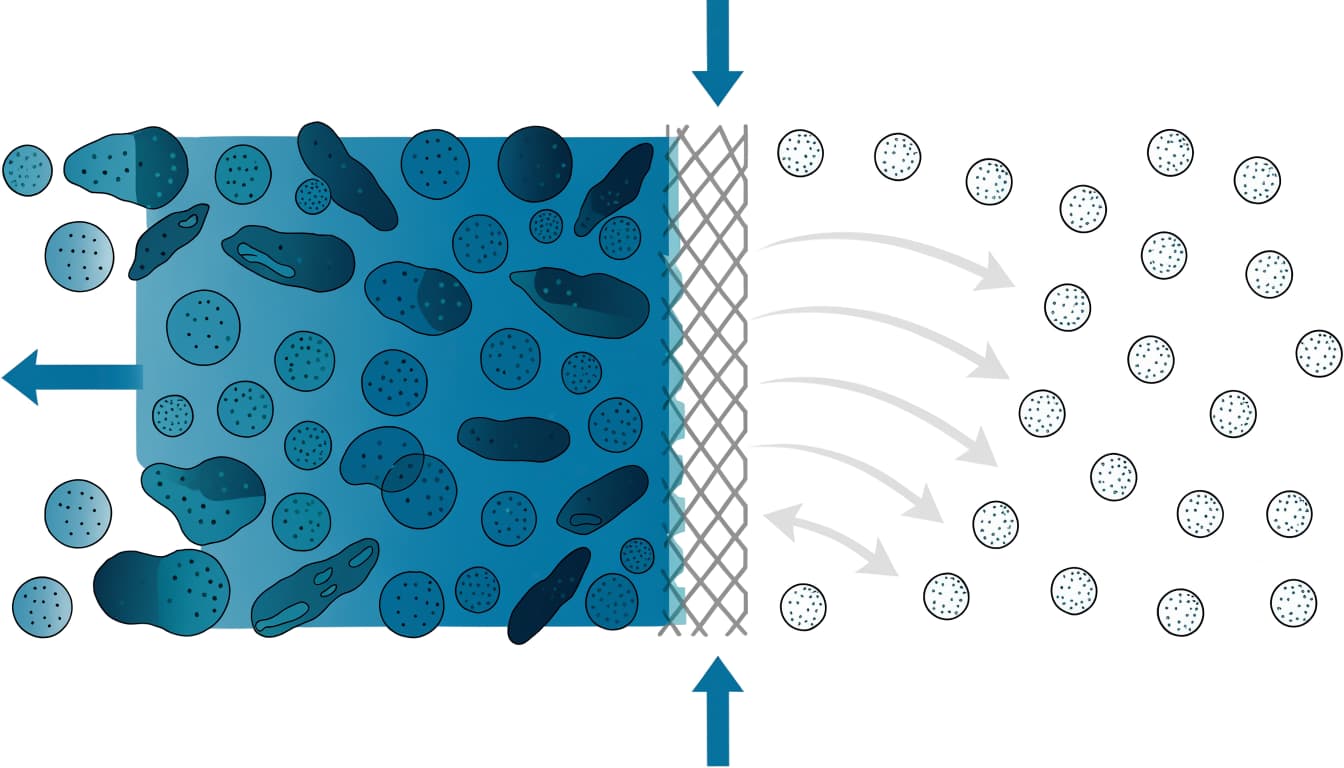
Reverse osmosis uses pressure to push water through a membrane. Some dissolved substances remain in a concentrated stream that leaves through a drain, while treated water passes through the membrane.
Ammonia and ammonium behave differently
Ammonia in water exists in two related forms: uncharged ammonia, written as NH3, and ammonium, written as NH4+. A laboratory may report them together as total ammonia nitrogen.
The balance between the two forms depends mainly on pH and temperature. Near room temperature, ammonium predominates below a pH of about 9.2. As pH rises, the share of uncharged ammonia increases.
RO membranes can reject charged ammonium, while uncharged ammonia can pass through more readily. That distinction helps explain why two wells with similar total ammonia results may respond differently to treatment.
Laboratory results aren't household guarantees
In a 2021 membrane study, researchers reported peak total ammonia nitrogen rejection of 99.8% with an ESPA membrane at pH 6. Rejection declined under other tested pH conditions.
That result shows what's possible under the study's conditions. It doesn't predict what a residential system will remove from a particular well. Membrane type, source-water chemistry, and system operation all matter.
Test the Well Before Choosing a System
A water report gives you a starting concentration and helps identify other issues that may affect treatment. Ammonia can be associated with natural organic material or contamination sources, so a result can also guide a discussion about the well and its surroundings.
Ask a qualified drinking-water laboratory for an ammonia test rather than assuming it's included in a standard well panel. The University of Iowa State Hygienic Laboratory lists ammonia among its private-well tests.
Read the result and the units together
The lab may report ammonia as nitrogen or use another reporting basis. Those numbers aren't interchangeable without conversion. Keep the original report so you can compare later samples using the same analyte and units.
Other useful measurements for RO planning include pH, hardness, iron, manganese, sediment, and total dissolved solids. Nitrate and bacteria tests can identify separate concerns that an ammonia result doesn't answer.
The CDC recommends annual nitrate testing for private wells. Local conditions and the property's history can support additional testing.
Compare untreated and treated water
After installation, collect a treated-water sample using the laboratory's instructions. Compare it with the raw well-water result on the same reporting basis.
Repeat testing as part of the service plan or when well conditions change. A total dissolved solids meter can show a change in dissolved material, but it can't tell you how much ammonia remains.
Whole-House RO vs. Under-Sink RO
The right location depends on where you need treated water. A kitchen system treats water at a selected faucet, while a whole-house system treats the supply feeding the home's plumbing.
| Consideration | Under-sink RO | Whole-house RO |
|---|---|---|
| Water supplied | A dedicated faucet, and sometimes a connected appliance | Household fixtures connected after treatment |
| Equipment | Smaller unit and storage tank | Larger treatment train, storage, and pumping equipment |
| Water demand | Drinking and cooking | Showers, laundry, appliances, and other connected uses |
| Main trade-off | Untreated water remains at other fixtures | Higher cost, space needs, and wastewater volume |
For many homes focused on drinking and cooking, an under-sink unit treats less water and takes less space. Its ammonia performance still needs to be established for the well and the selected system.
Whole-house RO may fit when you want treated water at multiple fixtures or have broader dissolved-water concerns. Our comparison of point-of-use and whole-house filtration explains how the two approaches differ.
How a Whole-House RO System Is Sized
A whole-house unit needs to produce enough water over the day and deliver it when several fixtures are running. Those are related but separate requirements.
Daily production and peak flow
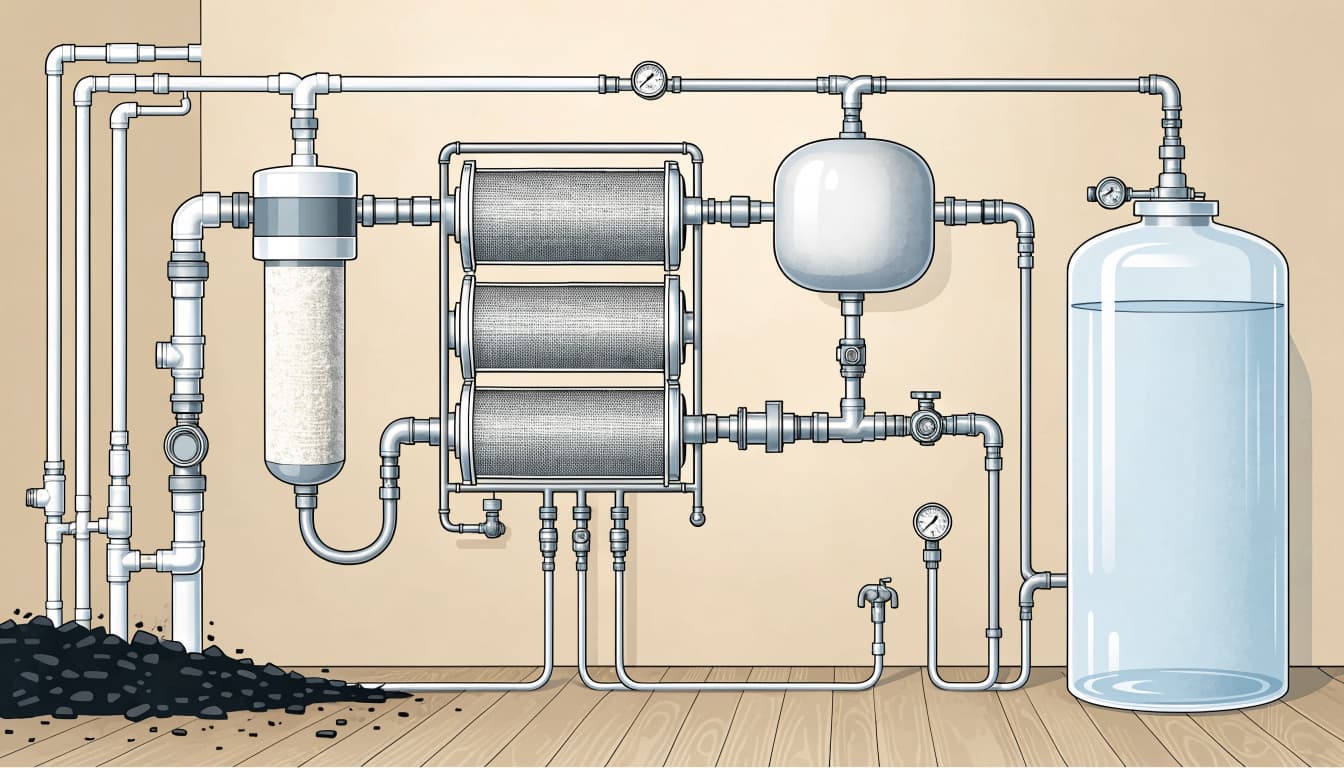
RO membranes produce water over time. If the household uses water faster than the membrane produces it, a storage tank can hold treated water for busy periods. A delivery pump can then provide pressure to the house.
Sizing should account for daily use, simultaneous showers and appliances, available space, and the well's ability to supply the system. Outdoor irrigation can add substantial demand if it's connected to the treated supply.
The well pump and existing pressure tank also matter. Some designs need a booster pump to provide the pressure required by the membrane.
Pretreatment protects the membrane
Well water often needs treatment before it reaches RO. Sediment filters can capture particles, while a softener may reduce hardness that would otherwise form scale on the membrane.
Iron, manganese, and other water conditions may call for additional treatment. The sequence depends on the laboratory results, since an unsuitable pretreatment stage can leave the membrane exposed to fouling.
Some systems also include treatment after storage to adjust the water or address microbial safety. The complete design should account for the condition of the well and plumbing.
Plan for Wastewater and Drainage
RO divides incoming water into treated water and a concentrate stream. The concentrate carries substances that the membrane has rejected, and it needs a suitable discharge location.
A whole-house system generally processes more water than a kitchen unit, so its total wastewater volume is also a larger planning issue. The amount depends on the system's recovery rate, which is the share of incoming water collected as treated water.
Higher recovery can reduce the volume sent to drain, but it also concentrates rejected substances. That can increase scaling or fouling risk if the system isn't designed for the well water.
Drain capacity, local plumbing requirements, and septic-system considerations should be addressed before installation. The well must also be able to supply both the water the household uses and the water discharged during treatment.
Other Ways to Address Ammonia
RO isn't the only possible approach. The choice depends on the measured concentration, the form of ammonia, other contaminants, and how much water needs treatment.
Ion exchange and softening
Certain cation-exchange systems can remove ammonium from water. Their performance depends on the resin, the water chemistry, and competition from other dissolved ions.
A conventional water softener primarily targets hardness minerals. Although ammonium can interact with cation-exchange resin, a softener shouldn't be assumed to provide the ammonia reduction your household needs. A treatment professional can determine whether an ion-exchange design fits the lab results and explain its regeneration and discharge needs.
Other treatment stages
Oxidation or biological treatment may be considered in some situations, but each needs a design suited to the water and the treatment goal. Chlorination, for example, requires attention to ammonia because the two can react.
Carbon filtration can help with certain taste or disinfectant concerns, but it shouldn't be treated as a reliable stand-alone ammonia solution. Likewise, UV can address microorganisms under suitable conditions; it doesn't remove dissolved ammonia.
If nitrate is also present, it needs its own treatment assessment. Our guide to RO for nitrate in private wells explains that separate issue.
Costs and Maintenance to Expect
Whole-house RO costs more than a kitchen system because it handles a larger water supply and may require storage, pumps, pretreatment, and plumbing work.
HomeGuide's 2025 estimates put installed whole-house RO at $4,800 to $8,000 and point-of-use RO at $300 to $950. These are general estimates, not ammonia-specific quotes. The equipment and work included in an individual installation can differ.
Budget for more than the installation
Operating costs can include replacement filters, membrane service, electricity, and the water sent to drain. A system that needs extensive pretreatment may also have additional media, salt, or service costs.
For a whole-house project, the useful comparison is the complete treatment plan rather than the membrane alone. Storage and pumping can be necessary to make treated water available at normal household demand.
Keep performance measurable
Prefilters need replacement, and membranes need service or replacement as their condition and the manufacturer's schedule require. Storage and associated plumbing also need appropriate sanitation.
Changes in pressure, flow, or water quality can indicate a problem. Still, only an ammonia test can show the concentration remaining after treatment.
Keep the initial lab report and subsequent results with the system's service records. That history helps identify changes in the well or treatment performance over time.
Frequently Asked Questions
Does ammonia in well water always smell?
No. Smell alone can't establish whether ammonia is present or how much is in the water. A laboratory result is more useful for choosing treatment.
Will boiling water remove ammonia?
Boiling isn't a dependable household treatment for a measured ammonia problem. Use a treatment method selected for the water chemistry, then test the treated water.
Does RO remove nitrate as well as ammonia?
RO can reduce nitrate, but nitrate and ammonia are different substances. Their results should be evaluated separately, and performance for one doesn't establish performance for the other.
Choose Treatment Based on Your Well
Whole-house RO can reduce ammonia, especially when a meaningful share is present as ammonium. The actual result depends on your well and the system installed.
Start with a laboratory test, then compare the treated-water result after installation. At Trademark Water Systems, we help Southwest Florida homeowners assess their water and choose treatment suited to their homes.
Latest posts
Read Our Blog
Tips, guides, industry best practices, and news.

Contact us
Get in touch
Our friendly team is ready to chat.
