
Why Your Pond Fountain Spray Pulses
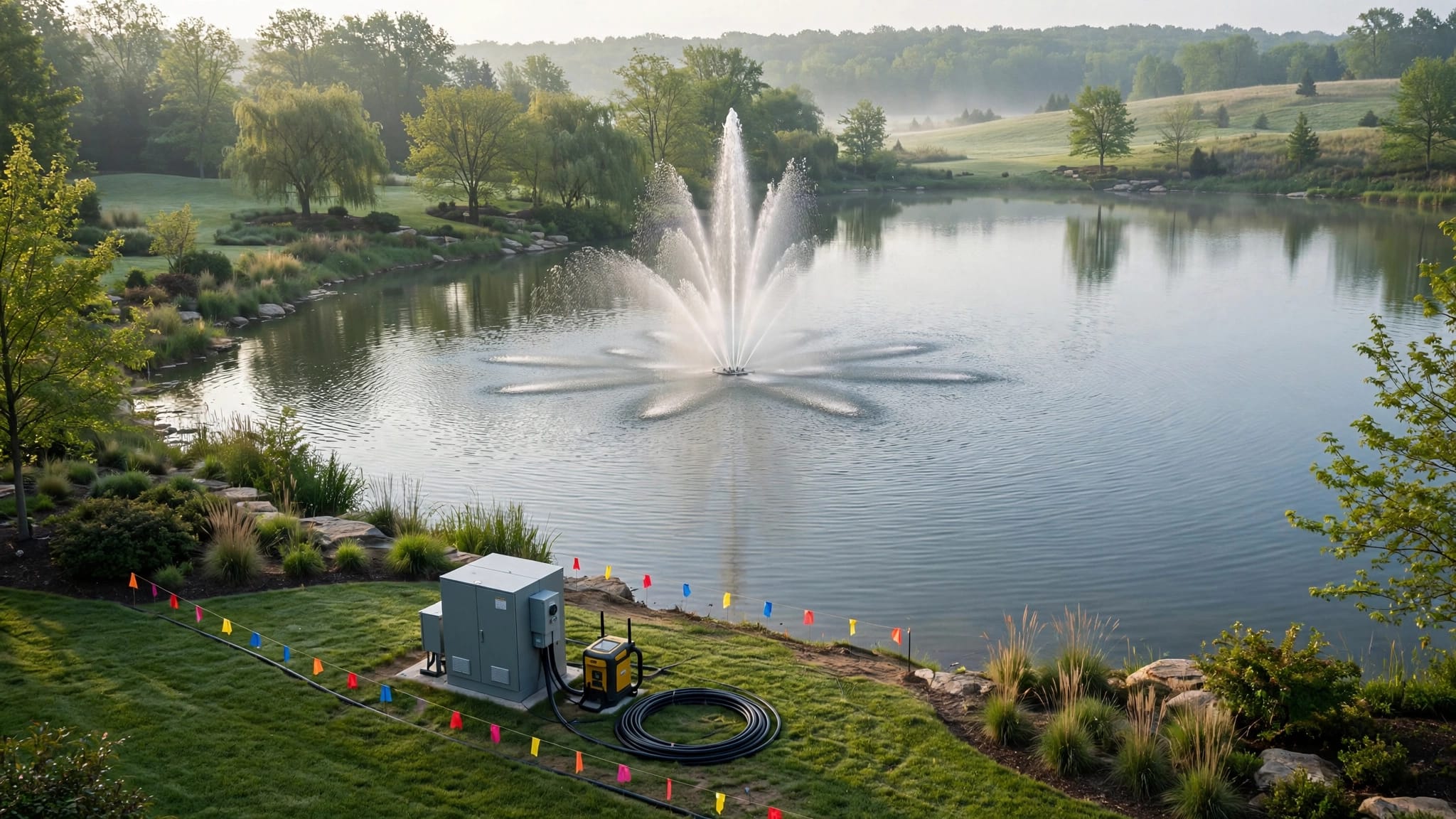
Pond fountain pulsing while the pump keeps running can point to an intake blockage, debris in the pump, a clogged nozzle, or another flow restriction. The motor's sound tells you it's running, but it doesn't tell you how much water is reaching the spray head.
Start with what you can safely observe from shore , then inspect accessible components with the power disconnected. The spray pattern, surrounding debris, and condition of the intake can help narrow down the problem.
What pond fountain pulsing tells you
A pulsing fountain rises and falls repeatedly rather than holding a consistent height. The entire display may weaken at once, or individual streams may sputter and break apart.
A clogged intake can limit the water reaching the pump. Debris in the impeller chamber can interfere with water movement, while a blocked nozzle can distort the spray after water leaves the pump. A kinked hose or obstructed fitting can also restrict flow.

Watch the fountain for a few minutes from a safe place. Note whether the whole pattern changes together, whether one side looks different, and whether the sound changes with the spray. These observations are clues, not a diagnosis.
Wind deserves a look, too. Gusts can bend the display or make it appear shorter from shore. Compare the fountain's behavior during calmer conditions before assuming every change in height comes from the pump.
Start with a safe inspection
Water and electricity demand caution, even when the problem appears minor. Never enter the water or handle submerged equipment while the fountain has power.
Observe before shutting it down
Look for leaves or algae collecting around the float. Note whether the fountain has shifted, tilted, or changed position. A tilted float can make one side of a pattern rise higher than the other, which can look like a nozzle problem.
Listen from shore for rattling, grinding, or unusual vibration. Also note whether the fountain loses spray height steadily or cycles between strong and weak output. If you're responsible for a community pond, record when the problem occurs so the service team has a useful starting point.
Disconnect power before touching components
Use the fountain's designated disconnect before inspecting, cleaning, or retrieving equipment. Keep swimmers, pets, and boats away from the unit and its anchored equipment.
Don't pull a fountain toward shore by its electrical cable. Large floating units may require a boat, lifting equipment, or trained service personnel. If the equipment isn't safely accessible, leave the inspection to a professional.
Exposed cable, a tripped breaker, or an unstable float is also a reason to stop. Don't open electrical panels or attempt wiring repairs as part of a routine cleaning.
Look at water level and signs of air
Compare the pond's water level with its usual appearance. A fixed-mount fountain and a floating fountain respond differently as the shoreline changes, so look at the position of the equipment as well as the waterline.
After disconnecting power, inspect the intake area only if you can safely reach it. Look for an intake close to the surface, a tilted float, or equipment that has moved toward a shallow shelf. Also look for accumulated sediment or vegetation near the intake.
Bubbles around the intake and a sputtering discharge are worth recording. They don't identify the source of the problem on their own. If accessible fittings appear loose or damaged, note their location for service rather than tightening submerged connections while the fountain is operating.
A floating fountain also needs adequate clearance below its intake. When a pond recedes, equipment near a shallow area may sit closer to sediment and plant growth. If the unit has shifted or is difficult to reach, arrange service rather than wading out to reposition it.
Clean the intake screen and filter
The intake is a useful place to start because it collects water directly from the pond. Leaves, algae, grass clippings, and other material can gather against a screen and reduce the opening available for water flow.

Recognize a restricted intake
A dirty screen is especially plausible when the spray weakens after heavy leaf fall, an algae bloom, or debris movement following a storm. The whole display may lose height rather than showing a problem in only one stream.
Some obstructions collect out of sight on the underside of the pump. A screen that looks clear from shore may still have a mat of vegetation against it. Likewise, sediment can build up around an intake positioned too close to the bottom.
Remove debris without damaging the screen
Once the power is disconnected and the unit is safely accessible, remove loose material by hand or with a soft brush. Rinse the screen and any removable prefilter according to the equipment instructions. Avoid damaging mesh or forcing debris through it.
Reinstall every part securely before operating the fountain. If the spray improves after cleaning but weakens again soon afterward, look for a continuing source of debris or algae. The intake may need more frequent attention, or its position may need professional review.
Inspect the impeller and nozzle
The impeller moves water through the pump. The nozzle shapes that water into the visible display. Debris at either point can affect performance, but the spray may offer different clues.
Debris in the impeller chamber
Twigs, stringy vegetation, or other debris can reach the pump if they pass through an opening in the intake protection. A fouled or damaged impeller may produce weak flow, rattling, or unusual vibration. Internal wear can also reduce performance while the motor continues running.
With power disconnected, inspect the impeller only if the pump is safely accessible and designed for owner service. Remove debris you can reach without forcing parts. If the chamber won't open easily, the impeller looks damaged, or the pump makes a grinding sound, stop and arrange a repair.
Don't run the fountain with protective covers removed. Reassemble it fully before testing.
A clogged or damaged nozzle
A nozzle obstruction often changes the shape of the spray. One stream may break apart, spray sideways, or sit lower than the others. Algae, fine sediment, and mineral deposits can collect in small openings.
After disconnecting power, remove an accessible nozzle if the equipment permits it. Rinse away loose debris and use a soft brush on the openings. Avoid enlarging them with a drill or sharp tool, since changing an opening can alter the pattern.
Persistent mineral buildup or a damaged nozzle may need professional attention. Our guide to lake fountain nozzle patterns and spray heights explains how the nozzle and pump work together.
Follow the path for flow restrictions
If the intake and nozzle are clear, inspect the visible path between them. Some fountains have a hose, pipe, or fitting between the pump and the discharge. Others have a more compact assembly, so the accessible parts will vary.
Hoses, pipes, and fittings
With the system disconnected, look for a kinked hose, crushed section, loose connection, or material caught in an accessible fitting. A hose may bend sharply where it meets the pump or where equipment has shifted.
Remove an obvious kink without pulling on the cable or moving a heavy float. If a line is damaged or a blockage is out of reach, leave it for service. Don't pinch a hose or add homemade restrictions to change the spray height. The pump and nozzle need a suitable flow path to operate as designed.
Pump and nozzle compatibility
A fountain that has pulsed since a nozzle or pump was changed may have a mismatch between components. The pump's output depends on resistance in the system, including the nozzle and any pipework. Horsepower alone doesn't establish how much water reaches the spray head.
Record the equipment model and any recent changes for the technician. A professional can assess the pump and nozzle together rather than replacing parts based on appearance alone.
Use a step-by-step troubleshooting sequence
Work through accessible checks in order, and make one change at a time. That makes it easier to see which action helped.
- Observe the spray from shore. Note the pattern, sound, surrounding debris, fountain position, and weather.
- Disconnect power. Keep everyone clear of the water and don't handle submerged equipment until the system is off.
- Inspect the waterline and intake area. Record changes in the fountain's position, nearby vegetation, sediment, or visible bubbles.
- Clean the accessible intake screen and prefilter. Remove collected debris, then reinstall the parts securely.
- Examine the nozzle and visible flow path. Clean accessible openings and look for kinked hoses or obstructed fittings.
- Inspect the impeller chamber only if it's designed for owner access. Stop if you find damage or can't safely reach the part.
- Reassemble the fountain and run a test. From shore, compare the spray height and sound with your observations before cleaning.
If the fountain runs smoothly after one cleaning, you have a useful clue. If it pulses again, note how long it operated before the problem returned and whether debris has collected at the intake. Avoid repeatedly restarting a fountain that makes grinding sounds, vibrates strongly, or trips its breaker.
For additional context on common faults, see our guide to lake fountain troubleshooting and repair.
Know when to schedule fountain repair
A service visit makes sense when the spray remains uneven after accessible cleaning, or when the same restriction returns quickly. A technician can inspect components that are difficult to reach and assess the pump for wear.
Stop using the fountain and arrange help if you notice a damaged cable, repeated breaker trips, strong vibration, grinding, or a float that has moved out of position. These issues may involve more than the visible spray and shouldn't be treated as routine cleaning.
For HOA and community ponds, keep a record of the fountain model, recent maintenance, and changes in performance. Include photographs taken from shore if they show the altered pattern. Our Florida lake fountain maintenance checklist covers other signs to watch for.
At Trademark Water Systems, we provide lake fountain installation, repair, and maintenance in Naples and Southwest Florida.
Keep the spray consistent
A running motor doesn't guarantee a steady supply of water through the fountain. Start with the intake, then inspect the nozzle and other accessible parts along the flow path.
Regular observation helps you notice a weak or uneven pattern before debris builds up further. When cleaning doesn't restore a consistent spray, leave the fountain off if it shows signs of damage and arrange a professional inspection.
Latest posts
Read Our Blog
Tips, guides, industry best practices, and news.
Contact us
Get in touch
Our friendly team is ready to chat.
