
Can a Fountain Operate Safely Near a Pond's Drainage Outfall?
A pond fountain can operate safely near a drainage outfall if it leaves the drainage structure clear and the site provides safe electrical service, stable anchoring, and room for maintenance. The right location depends on how water moves through the pond, especially during heavy rain.
For homeowners and communities, the key is to assess storm conditions , not only how the pond looks on a dry day. Start by identifying what the drainage structure does.
Identify How Water Moves Through the Pond
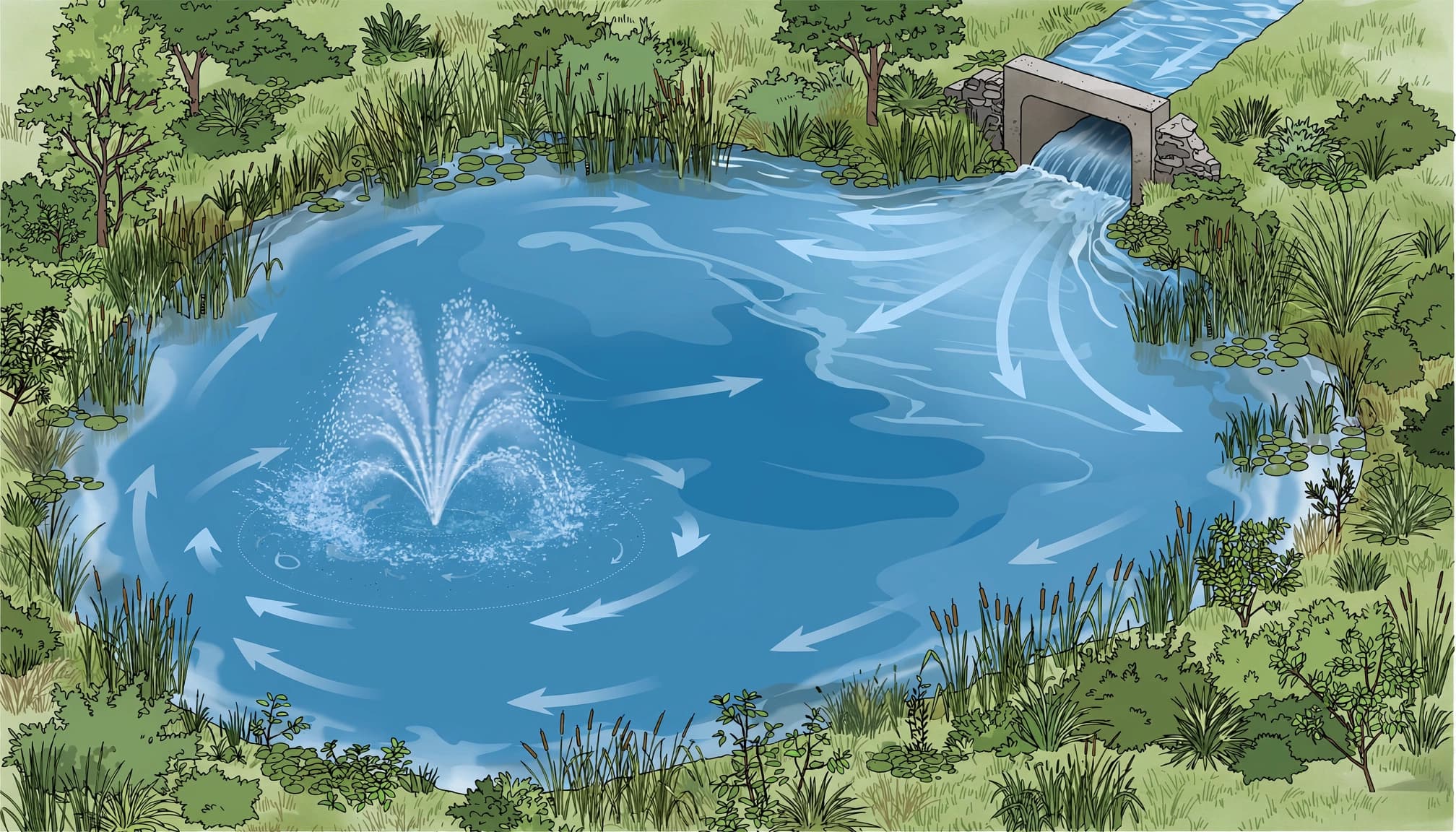
A drainage outfall may discharge stormwater into a pond, while an outlet structure carries water out when the pond reaches a certain level. Some ponds have both. Their locations affect where a fountain, its anchors, and its power cable can go.
Review the pond's drainage plan and observe the site from a safe place after rain. Look for the direction of moving water, floating debris, and changes in water level. Avoid approaching steep banks or active flows.
In a community stormwater pond, the HOA or property manager should involve the pond engineer or responsible drainage authority before approving a location. Our Florida lake fountain placement guide covers other shoreline features to include in that review.
Keep the Drainage Path and Fountain Clear
Allow Room for Water and Equipment
The fountain should stay clear of pipes, grates, weirs, and the routes crews use to maintain them. Its float, mooring lines, and anchors shouldn't obstruct the drainage structure, even when wind or rising water shifts the unit.
A strong inflow can push debris toward a fountain or strain its moorings. Near an outlet, floating material or loose equipment could interfere with drainage. Choose a position where the fountain remains stable and the structure can pass water as designed.
Account for Spray and Circulation
A fountain moves water around its operating area, but it won't necessarily circulate the whole pond. A long cove or deep section may need a separate aeration assessment.
Keep the spray's landing area inside the pond, accounting for wind. Repeated spray against a bank can wet paths or contribute to shoreline wear. A pump in shallow water can also disturb sediment, particularly when water levels fall.
Plan Electrical Equipment for Wet Weather
Position Controls Above Flood-Prone Areas
Place the control panel and disconnect where a technician can reach them without walking through standing water. Keep equipment outside the fountain's splash zone and away from areas that flood during heavy rain.
A licensed electrician should plan the power source, grounding, bonding, GFCI protection, disconnect, and cable route under applicable requirements. Use equipment listed for its intended application, including any submerged lights. Our guide to lake fountain lighting safety covers these considerations in more detail.
Protect Cables and Connections
Route wiring so it won't rub against mooring lines or be damaged by mowing, vehicles, or drainage maintenance. Buried conduit also needs to fit the site's utility routes and any drainage easements.
Never run a loose extension cord across the shoreline. GFCI protection is important, but it doesn't make a damaged cable or flooded enclosure safe. Keep people away from damaged equipment and have a qualified electrician assess it.
Watch for Sediment and Debris
Stormwater can carry leaves, grass clippings, branches, and sediment into a pond. A fountain positioned directly in that path may collect material at its intake, reducing flow and increasing cleaning needs.
Choose a location with adequate water depth for the fountain at the lowest expected operating level. Keep the intake away from soft sediment and dense vegetation. After heavy rain, inspect from shore for cloudy water, debris around the float, or a changed spray pattern.
If the fountain shifts or appears damaged, shut it down and arrange service. Don't enter the water or handle submerged components while the system is powered. Our lake fountain repair guide explains other signs that equipment may need attention.
Leave a Safe Route for Maintenance
A workable site gives crews access to the controls, shoreline, and fountain without crossing unstable mud or stepping around hidden obstacles. Plan how the unit will be retrieved for intake cleaning, nozzle service, or repair. Larger floating systems may require a boat and trained personnel.
Anchors need to hold the fountain in place while allowing for normal water-level changes. They should also remain clear of the outfall and its maintenance area. Avoid attaching lines to trees, fence rails, or other features that aren't designed to hold the load.
For a community pond, record the fountain's location, cable route, and access plan so future service crews can find them.
When Should You Relocate the Fountain or Outfall?
Move the proposed fountain location when runoff repeatedly carries debris into its intake, currents pull it toward a structure, or safe service access isn't available. A different position may also provide deeper water and keep spray away from an eroding bank.
Relocating an outfall is a larger drainage change, not a routine fountain adjustment. It may affect how the pond handles stormwater and can require engineering and approvals. If the drainage structure itself needs modification, the responsible pond engineer and drainage authority should plan that work.
Before installation, complete the applicable HOA, property, electrical, and stormwater approvals. Avoid reshaping banks or clearing protected vegetation without permission.
Choose a Location That Works in Storms
A fountain can share a pond with a drainage outfall when water can move freely and crews can reach both systems safely. The selected location also needs enough depth, protected electrical equipment, and moorings suited to changing water levels.
At Trademark Water Systems, we help Southwest Florida communities with lake fountain installation and repair. A site assessment is a practical first step when drainage features limit the available space.
Latest posts
Read Our Blog
Tips, guides, industry best practices, and news.


Contact us
Get in touch
Our friendly team is ready to chat.