
Can Whole-House RO Reduce Perchlorate in Drinking Water?
Yes, whole-house reverse osmosis can reduce perchlorate in drinking water. Its performance depends on the membrane, source water and system operation, so laboratory testing matters more than a general removal claim.
If perchlorate is your main concern, an under-sink system may treat the water you drink with less equipment. Here's how to decide when a whole-house system is worth considering.
Key Takeaways
- RO can reduce perchlorate, but results from one system don't guarantee the same reduction in another.
- Point-of-use RO treats selected drinking water; whole-house RO supplies a larger plumbing network.
- Whole-house treatment needs capacity, pretreatment, storage and a plan for wastewater.
How Reverse Osmosis Reduces Perchlorate
Perchlorate is a dissolved chemical that can enter groundwater through sources such as rocket propellants and certain fertilizers. It can interfere with the thyroid's ability to use iodine, which is especially concerning during pregnancy and infancy.
RO pushes water under pressure through a semipermeable membrane. Much of the perchlorate stays in the water that leaves as concentrate, while treated water passes through.
What the Evidence Shows
In pilot work cited by the U.S. Environmental Protection Agency, RO reduced perchlorate by up to 98%. The EPA also reported certified point-of-use RO devices reducing a test concentration of 130 micrograms per liter to 4 micrograms per liter or less.
What That Means for Your Home
Those results show that RO can work, but they don't predict the exact performance of your installation. Source-water concentration, membrane condition, pressure and other operating conditions matter.
A laboratory test of the treated water tells you how the system performs at your home. A total dissolved solids meter alone can't measure perchlorate.
What the EPA's Perchlorate Numbers Mean
As of November 2026, the EPA has proposed a federal perchlorate drinking-water regulation but hasn't finalized one. Its proposed maximum contaminant level options are 20, 40 and 80 micrograms per liter. None is an enforceable federal limit yet.
The EPA's 2008 interim health advisory is 15 micrograms per liter . It's non-enforceable guidance, rather than a drinking-water standard. Some states have their own limits; the Water Quality Association lists 6 micrograms per liter for California and 2 for Massachusetts.
Whole-House RO vs. Point-of-Use RO
An under-sink RO system usually supplies a dedicated kitchen faucet and, in some installations, a refrigerator line. It's a practical choice when you want perchlorate reduction for drinking and cooking without treating water for toilets or laundry.
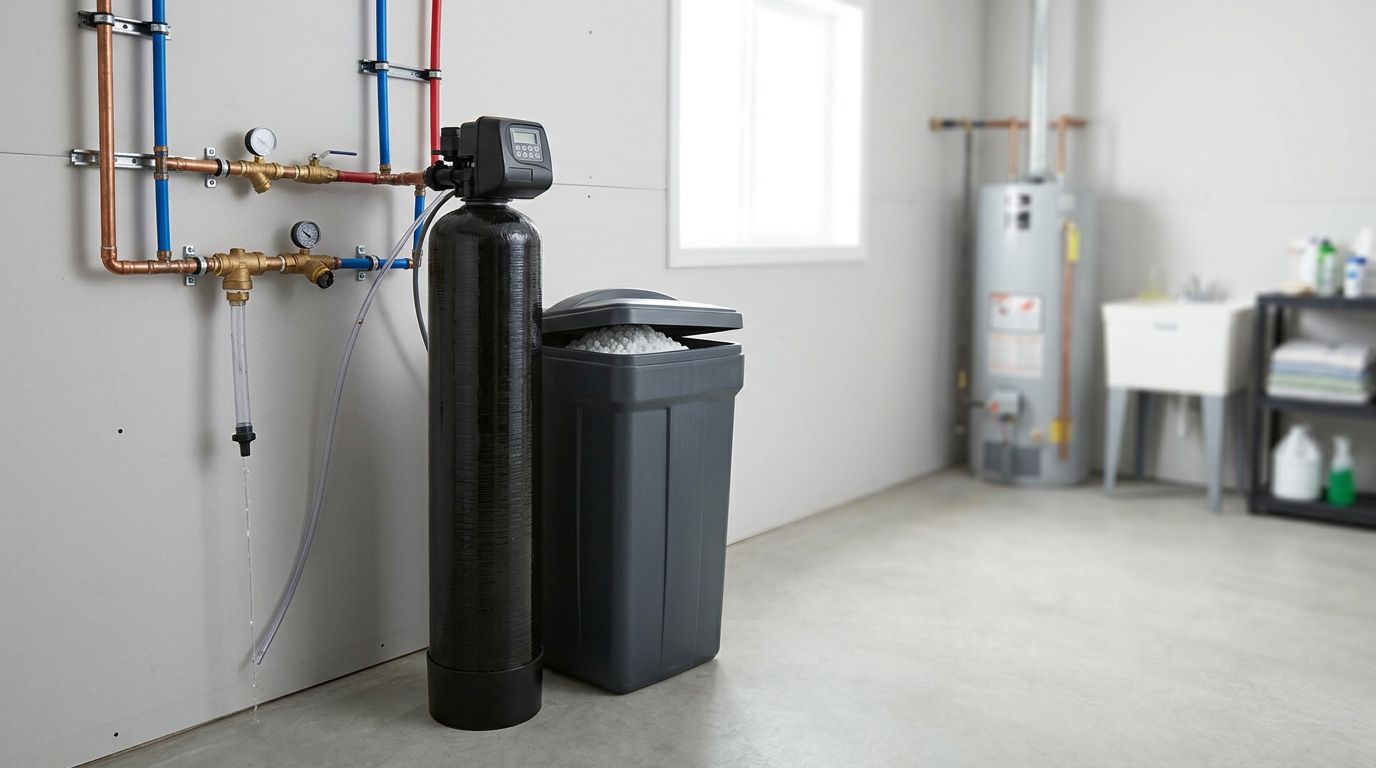
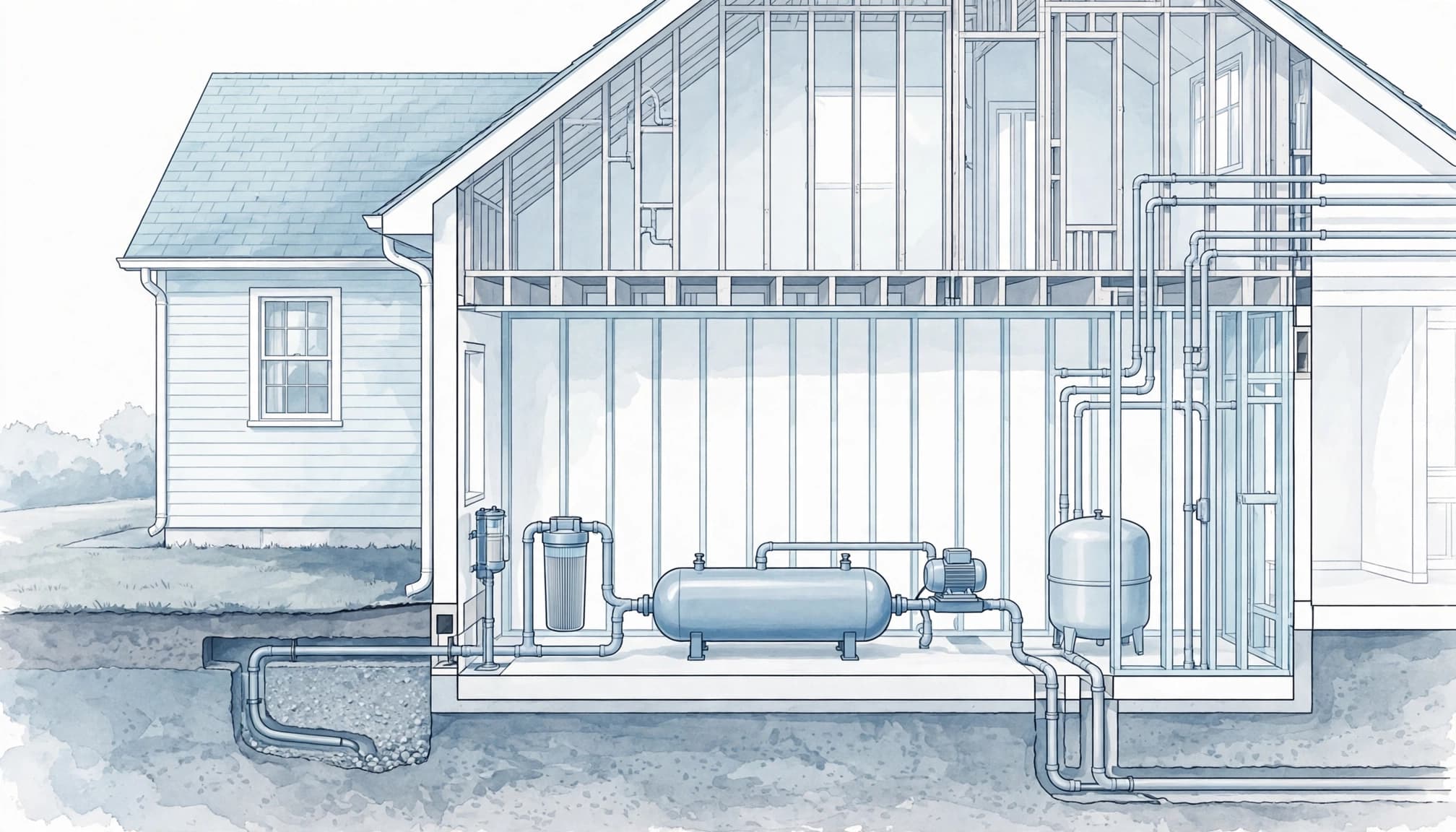
A whole-house system treats water near its entry to the home's plumbing. It can supply multiple fixtures, although some outdoor lines or other connections may bypass it.
Whole-house treatment can make sense when you want treated water at several taps or have other dissolved-contaminant concerns. Our comparison of point-of-use and whole-house filtration explains how their coverage differs.
Sizing a Whole-House RO System
A whole-house system has to make enough treated water over the day and deliver it when several fixtures run at once. That calls for more planning than an under-sink unit.
Capacity, Storage and Pressure
Membrane production and household demand don't always happen at the same rate. A storage tank can hold treated water for busy periods, while a pump can restore pressure for showers and appliances.
The design should account for the fixtures receiving treated water, available space and service access. Keeping irrigation on a separate line, when appropriate, can reduce the volume the RO system must supply.
Pretreatment and Wastewater
Sediment, hardness, iron and manganese can foul or scale a membrane. Depending on the water analysis, pretreatment may include sediment filtration, softening or specialized media. Our guide to RO pretreatment for well water covers how water chemistry affects equipment selection.
RO also sends a portion of incoming water to a concentrate stream. A professional installation needs an appropriate disposal route, with attention to drain capacity, local plumbing requirements and any septic-system concerns.
Maintenance and Testing
Replace filters and membranes according to the equipment's service plan. Storage tanks, pumps and controls also need attention, and sanitization should follow the procedure for the installed system. Our whole-house RO sanitization guidance covers the equipment considerations.
Test untreated water before installation, then test treated water after the system is operating and during routine service. Keep the lab reports so changes are easier to spot. A new source-water result or a drop in membrane performance may call for adjustments.
Alternatives to Whole-House RO
For drinking and cooking, an under-sink RO unit with a perchlorate-reduction claim can be a smaller-scale option. NSF/ANSI 58 covers point-of-use RO systems, but perchlorate reduction is an optional claim, not a promise made by every system certified to that standard.
Anion exchange is another treatment option. It uses a selected resin to remove perchlorate, though performance depends on the resin and water chemistry. The treatment plan must also address spent resin or regeneration waste.
Frequently Asked Questions
Does a whole-house RO system remove all perchlorate?
RO can reduce perchlorate, but complete removal shouldn't be assumed. A contaminant-specific lab test is the way to measure the water your system delivers.
Is an under-sink system enough?
It may be enough when drinking and cooking are your only treatment goals. Whole-house equipment is worth considering when you want treated water at multiple fixtures or need broader treatment.
Choose Treatment Based on Your Water
Whole-house reverse osmosis can reduce perchlorate, but the system needs to match your water and household demand. Testing provides the starting point and shows how well treatment works after installation.
At Trademark Water Systems, we offer custom RO systems for well water in Naples and Southwest Florida. We can help you plan treatment around the water you use.
Latest posts
Read Our Blog
Tips, guides, industry best practices, and news.


Contact us
Get in touch
Our friendly team is ready to chat.