
Can Whole-House RO Reduce Mercury in Well Water?
Whole-house reverse osmosis may reduce mercury in private well water, but a general RO claim doesn't establish how a particular installation will perform. Mercury-specific testing before and after treatment is needed to measure the result.
For homeowners, the decision also involves water chemistry, maintenance, and which fixtures need treated water. Start with a laboratory analysis rather than choosing equipment based on a broad contaminant-removal claim.
Key Takeaways
- Treat whole-house RO as a possible mercury-treatment option, without assuming a particular removal percentage.
- Compare untreated and treated water using mercury-specific laboratory tests.
- Whole-house equipment costs more and requires more maintenance than an under-sink system, which treats only connected fixtures.
How Whole-House RO Treats Well Water
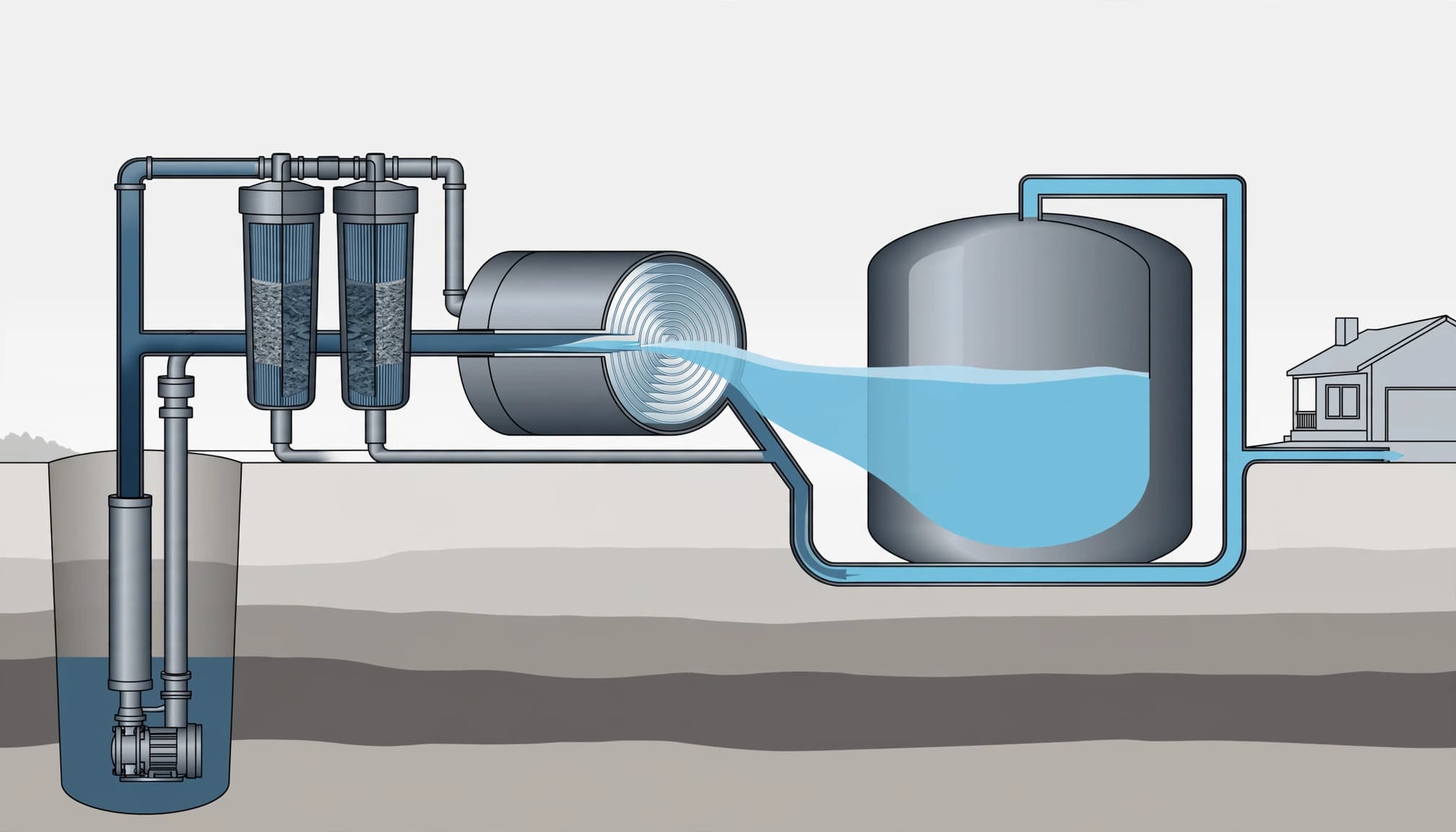
Reverse osmosis uses pressure to move water through a semipermeable membrane. Part of the incoming water becomes treated water, while another portion carries rejected substances into a concentrate stream.
The membrane is one part of treatment
RO can reduce many dissolved contaminants that ordinary sediment filters don't capture. However, performance on nitrate, arsenic, or another substance doesn't establish mercury reduction. Mercury removal from well water needs its own treatment target and laboratory results.
The concentrate also needs a planned disposal route. Rejected contaminants leave with that water; they don't disappear. Drain capacity, plumbing requirements, and septic-system concerns belong in the installation design.
Well conditions affect the complete system
Sediment, iron, manganese, and hardness can clog filters, foul membranes, or reduce water production. Suitable pretreatment protects the RO equipment, while adequate pressure supports operation.
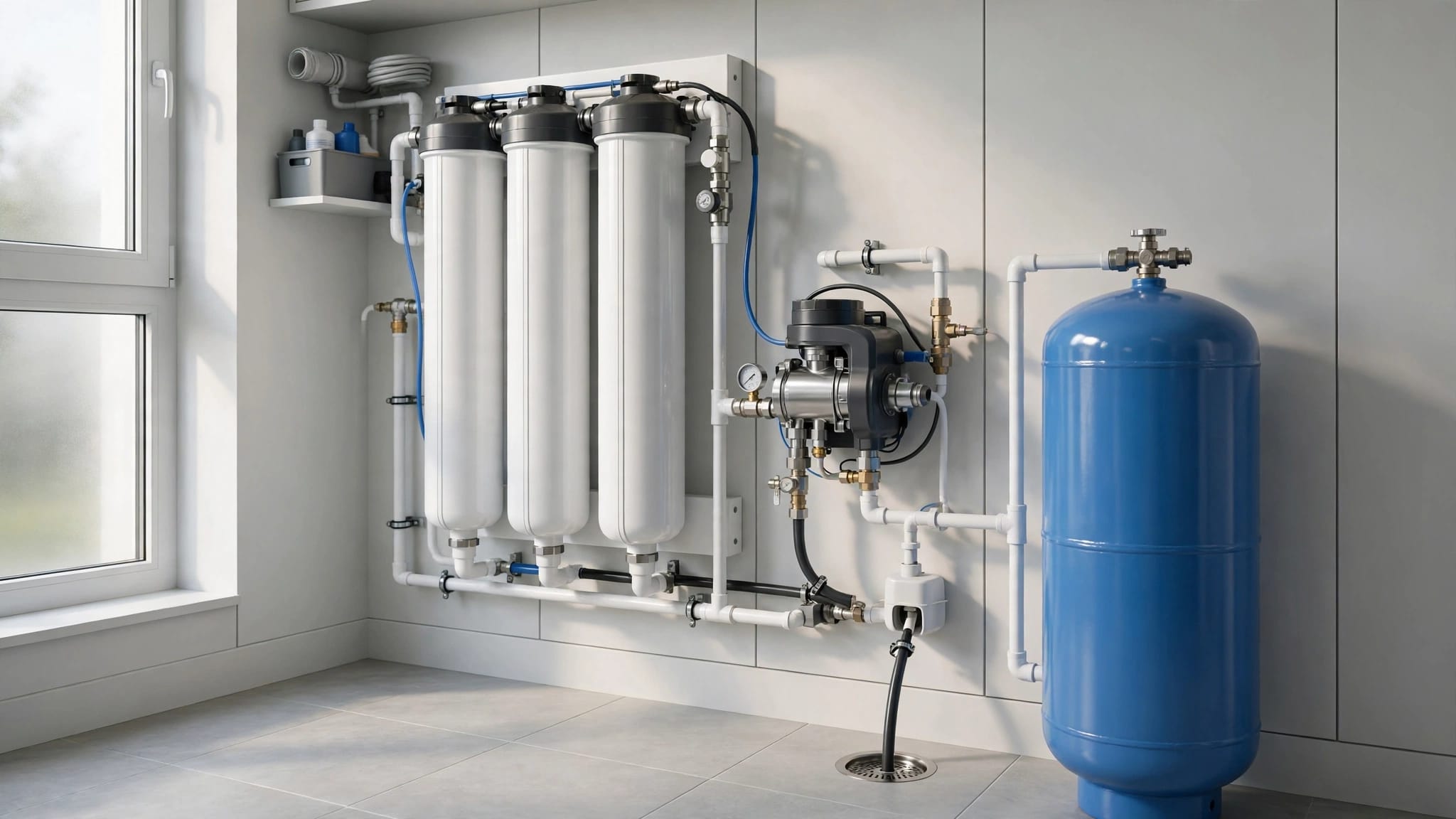
Whole-house installations may also need treated-water storage and a repressurization pump. Household demand, available space, well output, and plumbing layout all affect the design. Separating irrigation can avoid processing large volumes that don't need the same treatment.
These factors explain why the equipment must match the well. They don't establish a mercury-removal percentage.
How to Verify Mercury Reduction With Water Testing
Testing needs to answer two separate questions: what's entering the treatment system, and what's reaching your drinking-water tap?
Establish the untreated-water baseline
Use a state-certified drinking-water laboratory and request mercury analysis. A basic water-quality screening or handheld meter doesn't replace a mercury-specific laboratory test.
Follow the laboratory's collection instructions and use its supplied containers. Sample untreated water before the treatment equipment so the result describes the source water.
A broader well-water analysis also helps identify pretreatment needs. Hardness, iron, manganese, sediment, and other measured conditions can affect equipment selection, even though they aren't substitutes for a mercury result.
Test the water you actually use
After startup, flushing, and normal operation, collect a treated sample at the kitchen cold-water tap. For whole-house treatment, a second fixture can help assess distribution through the home.
Our guidance on water testing after treatment explains why sampling under actual operating conditions matters. Compare the untreated and treated mercury results, including their units and laboratory reporting limits.
A lower TDS reading doesn't prove mercury reduction. TDS measures overall dissolved material, not an individual contaminant.
Likewise, "not detected" means below the laboratory method's reporting limit, rather than absolute zero. Keep both reports as a baseline for later testing.
What Whole-House RO Costs and Maintenance Involve
Whole-house RO has a higher upfront cost than an under-sink system because it treats substantially more household water. Pretreatment, storage, pumps, electrical access, drainage, and plumbing changes can all add to the installation expense.
At Trademark Water Systems, we build custom RO systems for well-water users. The equipment plan needs to reflect the measured water conditions and household demand.
Ongoing expenses include replacement prefilters, membranes, service labor, laboratory testing, and electricity. Concentrate production also increases the amount of well water needed to supply the home.
Maintenance should cover the complete installation. Filter condition, membrane production, operating pressures, reject-water flow, tank controls, and pump operation all deserve attention.
Replacement timing depends on the water and equipment. Follow the manufacturer's service instructions and track changes in production or pressure. Sanitizing may also be necessary after repairs or extended shutdowns, according to the system's procedure.
Budgeting for the first two years of operation gives a clearer comparison than considering installation alone.
When Point-of-Use Treatment Makes More Sense
An under-sink RO system can be more practical when the treatment goal centers on drinking and cooking water. It generally costs less, takes less space, and has fewer components to maintain.
However, it treats only the fixtures connected to it. A refrigerator, ice maker, or secondary kitchen faucet may remain untreated unless included in the plumbing plan.
Our under-sink versus whole-house nitrate treatment comparison illustrates this coverage difference. Its nitrate discussion doesn't establish mercury performance.
Whole-house treatment provides broader coverage when several fixtures need treated water. Either approach still requires mercury-specific results. Choosing a smaller system changes the volume treated, not the need to demonstrate that treatment works.
Frequently Asked Questions
Does clear, odor-free well water rule out mercury?
No. Appearance, taste, and odor can't establish whether mercury is present. Laboratory analysis is needed.
Does installing whole-house RO mean every outdoor faucet receives treated water?
No. Coverage depends on the plumbing layout. Irrigation and selected outdoor fixtures may remain on untreated or pretreated water.
When is additional testing useful?
Retesting is appropriate after treatment changes, significant repairs, or changes in source-water conditions. Keep results alongside service records so changes are easier to assess.
Let Mercury Test Results Guide Treatment
Whole-house RO is a possible option for reducing mercury in private well water, but its name alone doesn't establish the result. The strongest evidence is a paired laboratory comparison of untreated water and water at the tap.
Choose whole-house or point-of-use treatment according to the fixtures that need coverage. Then maintain the equipment and use mercury-specific testing to measure continued performance.
Latest posts
Read Our Blog
Tips, guides, industry best practices, and news.


Contact us
Get in touch
Our friendly team is ready to chat.