
Lake Fountain Repair Costs in Naples: Estimate Factors
Lake fountain repair costs in Naples depend on the failed component, the fountain's size, and the work required to reach it safely. A blocked intake and a damaged underwater power cable can interrupt the same display, but they require different repairs.
For homeowners and HOA boards, the most useful starting point is a diagnosis of the whole system , followed by an itemized estimate. Understanding what changes the scope helps you compare proposals without treating every weak spray or shutdown as a pump replacement.
Key Takeaways
- Fountain size, equipment type, damage, and access all affect the repair scope.
- An inspection separates cleaning or adjustment needs from pump, electrical, float, or mooring repairs.
- A useful quote identifies parts, labor, retrieval, testing, exclusions, and any work that needs separate authorization.
The lowest total doesn't necessarily cover the same work. For community lakes, compare what each proposal will restore and what problems it leaves outside the price.
Fountain Size and Type Shape the Work
A repair estimate starts with the equipment already in the lake. Horsepower matters, but the fountain's construction and configuration also affect service.
Larger equipment changes handling needs
A larger fountain assembly can require more substantial retrieval and lifting arrangements than a smaller unit. Its pump, motor, cable, and mounting hardware also need compatible replacement parts.
However, spray height alone doesn't establish the repair requirements. The technician needs the fountain model and equipment details to identify components and plan removal. An attractive, tall display doesn't reveal whether the underlying fault is minor or extensive.
The display and supporting equipment matter
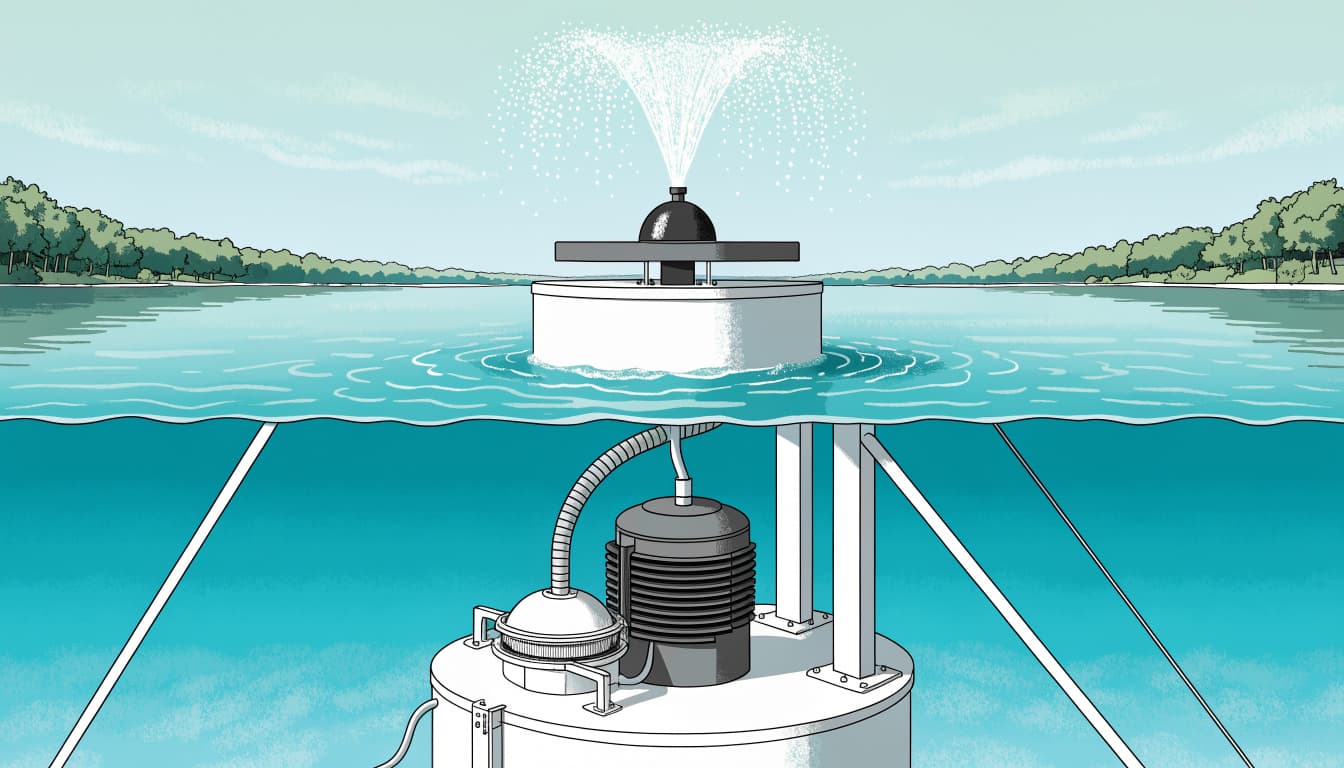
A floating fountain includes more than a pump and nozzle. Floats, mooring lines, anchors, and underwater cables all influence its position and operation.
Lighting introduces additional fixtures, cables, and controls. Therefore, a lighting fault should remain separate from a pump diagnosis unless testing establishes a connection. An estimate should identify which systems need attention rather than bundle every issue into one unexplained repair.
The Cause and Severity Matter More Than the Symptom
Two fountains with weak spray can need different work. The visible symptom gives the technician a starting point, not a complete diagnosis.
Cleaning and adjustment have a narrower scope
Leaves, algae, or mineral deposits can restrict an intake or nozzle. A shifted float or mooring problem can also change the display's appearance.
When inspection identifies an obstruction without related damage, the work may involve cleaning, adjustment, and operational testing. Our guide to the causes of weak fountain spray explains why reduced output doesn't automatically mean the pump has failed.
Damage can involve several components
Internal wear, damaged hardware, a cracked float, or cable deterioration can require parts and more extensive service. A recurring problem also deserves a broader investigation than a single isolated blockage.
For example, cleaning an intake won't resolve an impeller defect. Likewise, replacing a worn mooring line won't correct a damaged float. The estimate should connect the proposed work to the diagnosed cause and describe any related damage found during inspection.
Pump, Electrical, and Replacement-Part Requirements
Pump and electrical faults deserve separate attention because similar operating problems can originate in different parts of the system.
Pump repairs depend on the failed component
A pump that runs with little water movement may have an intake restriction, an impeller problem, or internal wear. Those possibilities don't justify ordering the same replacement part.
The repair scope depends on what failed, whether the component is serviceable, and the condition of the remaining assembly. A proposal should distinguish between cleaning, replacing a serviceable component, and replacing the pump or motor assembly. These are different recommendations with different parts and labor requirements.
Electrical diagnosis extends beyond the motor
The supply, protective devices, controller, underwater cable, and connections can all affect operation. A controller warning alone doesn't establish which component needs replacement.
Our explanation of fountain controller error codes covers why testing must follow the warning. Repeated breaker trips, damaged cables, or flooded electrical equipment call for professional assessment. Keep the fountain off rather than repeatedly restarting it.
Replacement parts must match the equipment's requirements. The quote should identify the component clearly enough to distinguish a cable repair, control replacement, or pump replacement.
Shoreline Access and Labor Affect Lake Fountain Repair Costs
Repair labor includes more than the time spent replacing a part. A floating fountain may need retrieval, disassembly, reinstallation, and adjustment before it can return to service.
A steep bank, limited shoreline access, difficult mooring connections, or a heavy assembly can complicate that work. The crew also needs safe access to the electrical disconnect and cable route. These conditions should appear in the scope when they affect how service will proceed.
For Naples communities, gates and landscaped shorelines add practical planning needs. Providing an authorized access contact and the equipment location helps the service visit proceed without unnecessary delays. Residents or maintenance staff shouldn't enter the lake to make the equipment easier to reach.
Labor should also include the work after installation. Returning the fountain to its intended position, adjusting the spray, and observing operation are part of establishing whether the repair solved the problem. A proposal covering removal and reinstallation is broader than a parts-only quote.
An Inspection Narrows the Estimate
An inspection reduces uncertainty by examining the fountain and its surroundings together. It should distinguish an equipment failure from a problem with placement, water level, or maintenance.
The assessment may cover the intake, nozzle, pump housing, floats, mooring lines, anchors, and cable condition. Electrical evaluation addresses the controls and supply as appropriate. Water depth, shoreline clearance, and the retrieval route help define access requirements.
In Southwest Florida, heat, algae, mineral deposits, and storm debris can change operating conditions. After severe weather, displacement or cable damage may expand the work beyond cleaning. Our guidance on post-storm fountain safety checks explains when equipment should remain out of operation.

For an HOA, a simple equipment record makes the findings easier to interpret. Include the model, normal spray appearance, anchor locations, electrical shutoff, and previous repairs. Photos showing how the fountain normally sits can help explain a recent change.
Some damage may become visible only after retrieval or disassembly. A useful estimate distinguishes confirmed repairs from additional work that would require approval.
What an Itemized Repair Quote Should Include
A useful quote connects the findings to the work, rather than presenting a total labeled "fountain repair."
These categories help homeowners and boards compare the scope.
| Quote item | What the description should establish |
|---|---|
| Diagnosis | The identified fault and supporting observations |
| Parts | Components, quantities, and compatible replacements |
| Labor | Cleaning, disassembly, repair, and reinstallation |
| Access and retrieval | Removal method and any lifting equipment |
| Electrical work | Whether supply, cable, or control repairs are included |
| Testing | Operational checks and spray adjustment after service |
| Exclusions | Work outside the quoted repair |
The takeaway is comparable scope . A proposal that includes retrieval, cable replacement, and testing can't be fairly compared with one that covers only a pump.
The quote should also distinguish necessary repairs from optional changes. A different spray pattern, upgraded lighting, relocation, or a larger fountain changes the project beyond restoring normal operation.
For community approval, identify any separate charges, the authorization process for newly discovered damage, and applicable warranty terms. An estimate shouldn't imply that lake-wide algae treatment, shoreline work, dredging, or electrical supply upgrades are included unless it names them.
Finally, the proposed completion checks should match the complaint. If the problem was intermittent shutdown, a restored spray alone doesn't address the operating history.
When Repair or Replacement Makes More Sense
A targeted repair deserves consideration when inspection identifies one serviceable fault and the remaining equipment is sound. Cleaning, nozzle work, or replacement of an isolated damaged component may restore dependable operation.
Replacement deserves a wider comparison when several major components show wear, compatible parts are unavailable, or recurring failures remain unresolved. However, age alone doesn't settle the decision. The system's condition and service history provide more useful evidence.
Our guide to fountain repair versus replacement considers the installation as a complete system. Compare both options on the same basis, including retrieval, electrical work, anchoring, reinstallation, and testing.
Also separate a breakdown from a mismatch with the lake's needs. A fountain supports surface aeration and circulation, but spray appearance doesn't establish adequate mixing throughout a deep pond. If the community's goal has changed, replacement planning should address pond depth, shape, and intended performance.
There isn't a universal percentage or age cutoff that makes replacement the right answer for every lake fountain.
Frequently Asked Questions
Can a weak spray mean an inexpensive repair?
Weak spray can result from debris or nozzle buildup that needs cleaning. However, impeller problems, internal wear, and float or mooring issues can produce similar changes.
The symptom alone doesn't establish the repair cost. Inspection determines whether cleaning will resolve it or whether parts and additional labor are necessary.
Does routine maintenance eliminate repair costs?
Maintenance helps identify restrictions, worn lines, and changing performance before problems become more extensive. However, it doesn't prevent every motor, control, or cable failure.
In Naples, service needs depend on debris, sunlight, algae, and water chemistry. Our Florida lake fountain maintenance checklist helps communities organize observations and service records around those conditions.
Should an HOA request repair and replacement estimates?
Both options are useful when inspection finds multiple deteriorating components or recurring failures. Each estimate should address the same site conditions and performance needs.
For an isolated, serviceable fault, a focused repair recommendation may provide enough information for a decision.
Start With the Fault, Then Compare the Scope
A sound lake fountain repair estimate explains what failed and what restoring operation requires. Equipment size, parts, electrical conditions, and safe access all belong in that decision.
At Trademark Water Systems, we provide lake fountain installation, repair, and maintenance in Naples and Southwest Florida. Start with an inspection and compare complete repair scopes before choosing the lowest total or replacing otherwise serviceable equipment.
Latest posts
Read Our Blog
Tips, guides, industry best practices, and news.
Contact us
Get in touch
Our friendly team is ready to chat.