
Whole-Home RO Drain Connections: Planning the Route
A whole-home RO drain needs a suitable wastewater destination, a secure route, and protection against drain water backing toward the equipment. Plan those pieces alongside the membrane system, storage tank, and pumps, before choosing the final installation location.
Unlike an under-sink unit, whole-house reverse osmosis treats water for many fixtures, so reject-water handling affects the entire installation. Start with the connection between equipment location and drainage , then build in room for inspection and service.
Key Takeaways
- Plan the reject-water destination before fixing the RO system's location.
- Account for normal production, flushing, and other equipment that shares the receiving drain.
- Keep the air gap, tubing connections, and drain receptor accessible throughout the system's service life.
The shortest route can simplify installation, but distance alone doesn't determine whether a connection works. Drain capacity, backflow protection, and service access all matter.
Coordinate the Drain With the RO System Location
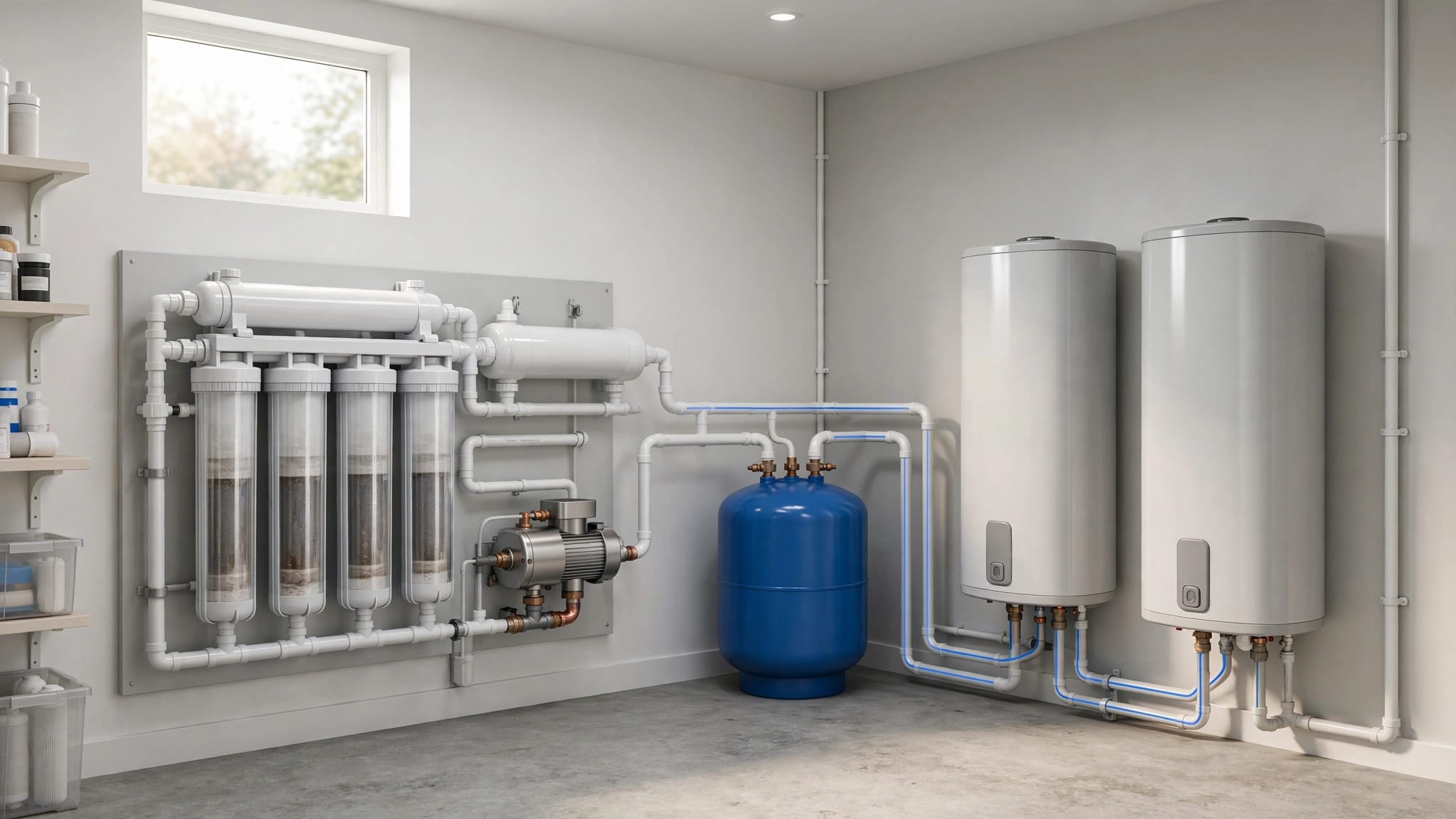
Whole-house RO can include pretreatment, a membrane assembly, treated-water storage, and a delivery pump. The drain route belongs on the same layout as those components.
Place the equipment around usable plumbing
A garage corner may have room for equipment yet lack a suitable wastewater connection. Meanwhile, a utility room may offer nearby drainage but insufficient space for tank access or filter changes.
Choose the location around the complete treatment train. Include the incoming supply, electrical connections, and a clear route to the receiving drain. Avoid placing equipment where the reject line must cross doorways or obstruct routine access.
Our guidance on planning water treatment plumbing explains how these connections fit into a remodel.
Preserve space around storage and controls
A storage tank and repressurization pump can occupy more space than the membrane equipment. Their placement also affects where technicians stand during service.
Keep the reject line away from removable filter housings, control panels, and tank inspection openings. Otherwise, a simple maintenance task may require disconnecting the drain tubing first.
Also distinguish the membrane's reject connection from storage-tank overflow protection. They address different operating conditions and need separate planning.
Anticipate Production and Flushing Discharge
RO separates incoming water into treated water and concentrate. The concentrate carries a higher concentration of rejected dissolved material toward the planned disposal connection.
Base the estimate on the complete system
Expected wastewater volume follows household treated-water demand and the conditions under which the membrane operates. Feed pressure, temperature, water chemistry, and operating settings all influence performance.
The design estimate should therefore reflect the selected equipment and source water. An under-sink system's wastewater behavior isn't a useful shortcut for a whole-house installation.
Our explanation of reverse osmosis wastewater covers why concentrate is a normal part of treatment.
Include operating cycles and shared discharge
Storage changes when the membrane produces water. A household may draw from the tank during a busy period while the RO equipment replenishes that supply afterward.
Drain planning must also account for any programmed flushing. In addition, a nearby softener or backwashing filter may discharge into the same receiving plumbing.
The combined operating sequence matters. A connection that handles ordinary RO production may still struggle when another appliance empties into the shared drain.
Compare Common Whole-Home RO Drain Layouts
A utility sink, purpose-built floor receptor, or properly designed standpipe arrangement may provide a receiving point. Each still needs a connection suited to the equipment and applicable plumbing requirements.
These common layouts have different installation and maintenance trade-offs.
| Layout | Practical advantage | Planning concern |
|---|---|---|
| RO beside a utility sink | Short route with visible discharge | Preserve sink use and secure the outlet above the receptor. |
| RO near a floor receptor | Keeps discharge close to equipment | Protect the opening from obstruction and maintain access. |
| RO near a laundry standpipe | Uses an existing plumbing area | Account for washer discharge and the connection arrangement. |
| RO distant from drainage | Allows more equipment-location choices | Adds routing, support, and service-access requirements. |
A nearby fixture is useful only when its receiving plumbing can handle the intended discharge. Sharing a location doesn't automatically make sharing a connection appropriate.
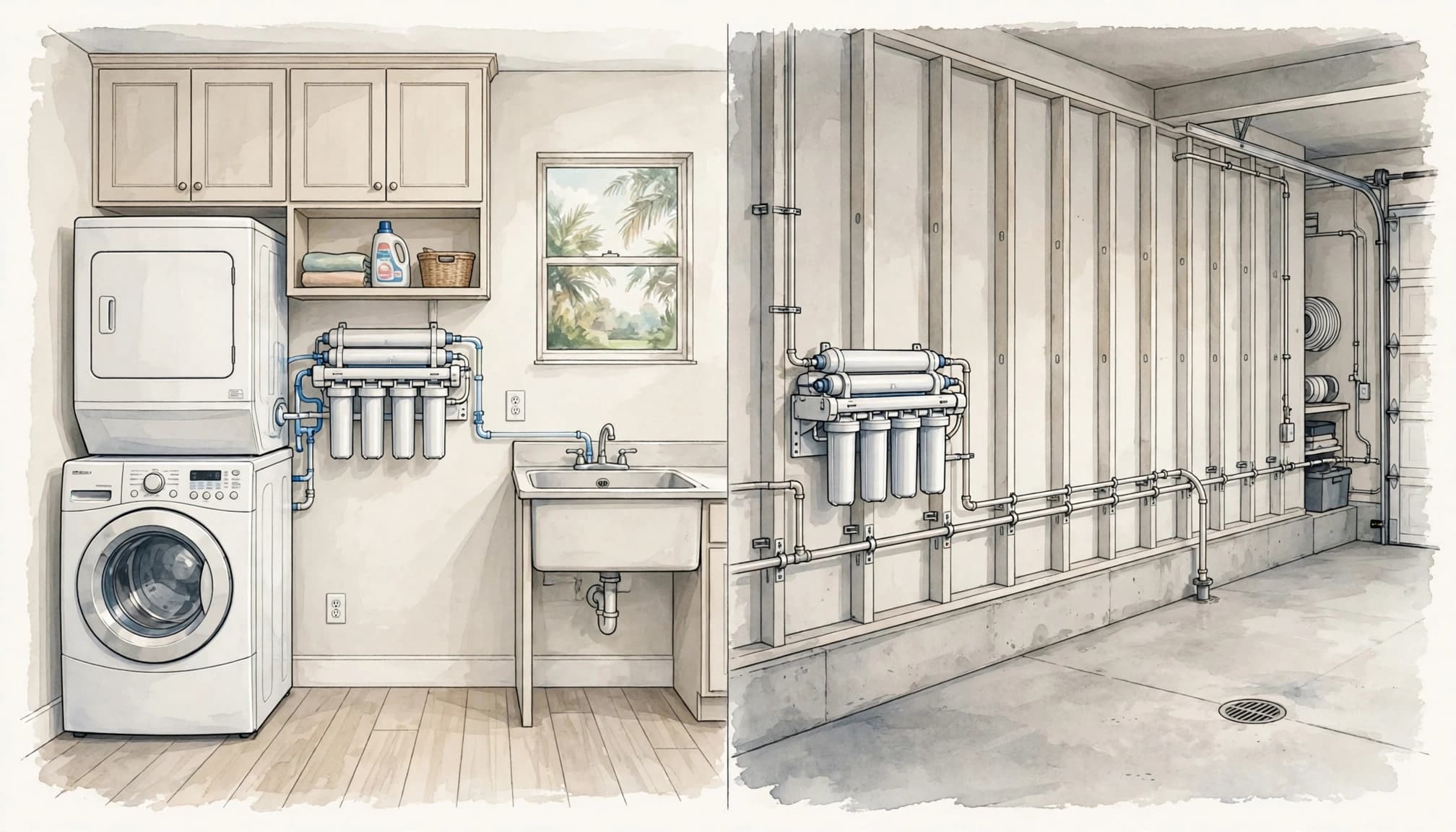
For a longer route, compare relocating the equipment with adding a purpose-designed receiving connection. Moving the system closer to drainage may reduce exposed tubing, although it must leave enough room for pretreatment and storage.
The receiving fixture's trap, venting, and downstream drainage belong in the plumbing design. An open pipe near the equipment isn't, by itself, a complete drain connection.
Separate the Air Gap From the Drain Connection
The air gap and the receiving drain perform different jobs. One interrupts a potential contamination path; the other carries wastewater away.
Keep a physical break above the receptor
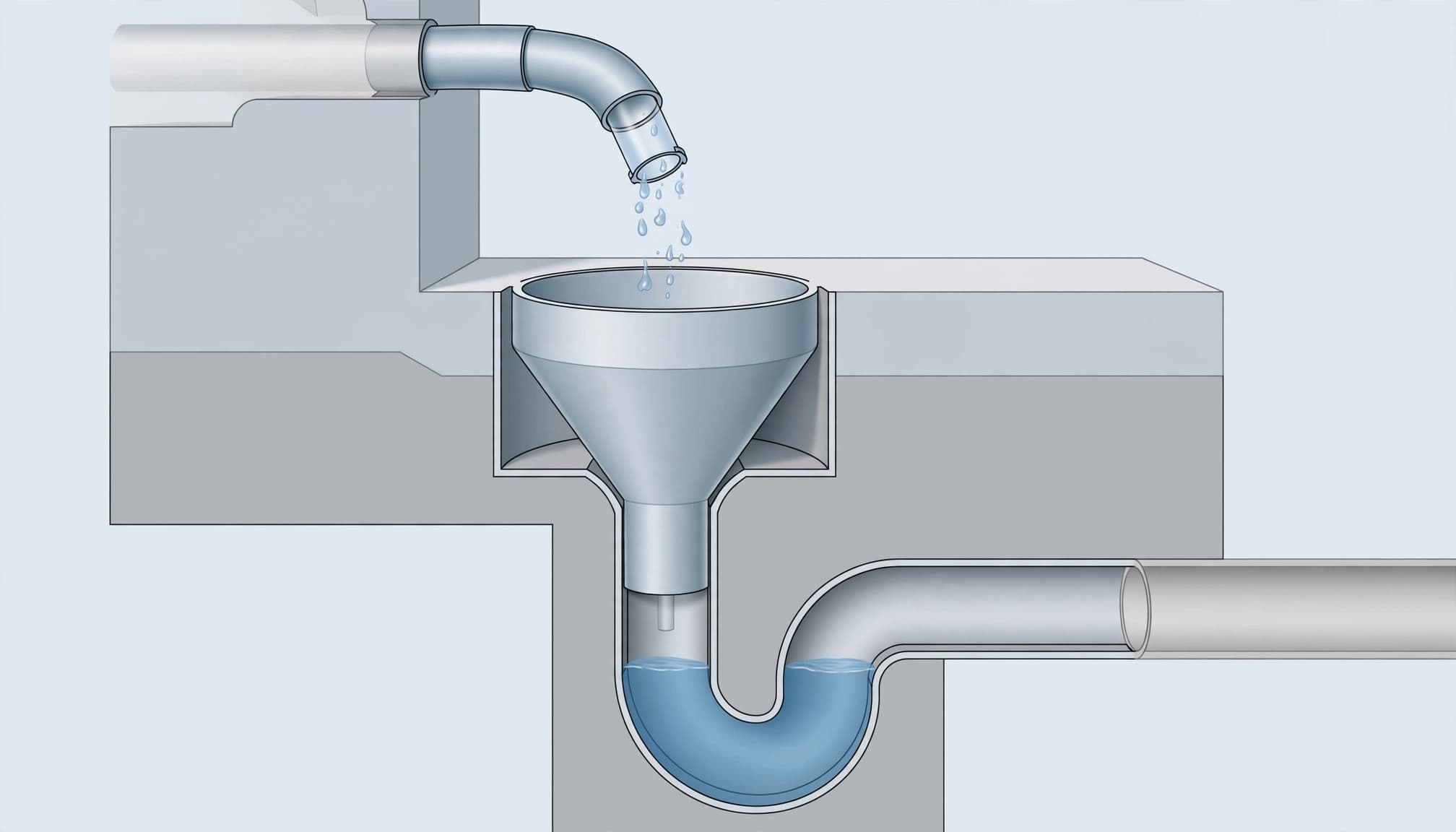
An air gap provides open separation between the discharge outlet and the receiving drain. The outlet must remain above the receptor's flood-level rim as required by the connection design.
That separation disappears if someone pushes the tube down into the opening or allows it to become submerged. Secure mounting therefore matters as much as the initial placement.
An air gap can interrupt a drain-backup path, but it can't make an undersized or blocked receiving drain carry more water.
Don't copy under-sink hardware automatically
Small drinking-water systems often use an air-gap faucet and a drain saddle on the sink tailpiece. Our explanation of how an RO air gap works describes that arrangement.
A whole-home installation needs its own connection design. Under-sink hardware isn't a template for larger treatment equipment.
Keep the receptor visible enough to spot splashing or backing-up water. Also preserve the required separation when adding shelving, replacing fixtures, or moving tubing during service.
Route and Secure the Reject Line
A dependable route protects the tubing and stays within the equipment's installation limits. Both the path and its supports affect long-term reliability.
Respect the difference between pressure and gravity
The line leaving the membrane equipment and any gravity-draining section after an air gap have different operating conditions.
A gravity section needs a continuous drainage path without uphill runs or low pockets that hold water. Meanwhile, the equipment-side line must stay within the manufacturer's limits for routing and discharge resistance.
Avoid sharp bends, crushed sections, and unnecessary fittings. Also keep the route clear of hot surfaces, sharp edges, vehicle traffic, and stored items.
Don't add a shutoff valve that can block reject discharge. The concentrate outlet is part of membrane operation.
Support the line without making it inaccessible
Use supports suited to the tubing and mounting surface. They should hold the line securely without flattening it or forcing a tight bend.
Protect wall penetrations against abrasion. Leave enough accessible tubing for planned service, but avoid loose coils that can snag or sag.
At the receiving end, secure the outlet independently so it can't slip into the receptor or pull free during discharge. Labeling the line also helps distinguish it from treated-water tubing and tank connections.
Make Inspection and Maintenance Practical
The best time to plan inspection access is before equipment fills the room. Keep the membrane's drain connection, exposed tubing, air gap, and receiving fixture reachable without moving heavy tanks.
During commissioning, the installer should observe normal production and any programmed flushing. Where equipment shares drainage, the commissioning plan should include relevant overlapping discharge conditions. This reveals splashing, movement, or backup that may remain hidden during a brief startup.
Record the finished route with photographs and a simple system diagram. Include the reject outlet, air gap, and receiving drain so future plumbing work doesn't accidentally alter their relationship.
After installation, watch for persistent gurgling, wet flooring, mineral deposits around joints, or a loose outlet. These symptoms can point to a restricted drain, leaking connection, or displaced tubing. A tube that has shifted downward also deserves attention because it may compromise the planned air gap.
Keep boxes and cleaning supplies away from the receptor. For equipment near finished living space, a water alarm can provide an additional warning of leakage or overflow, but it doesn't replace a sound drain connection.
If wastewater backs up or the reject line repeatedly leaks, arrange professional service rather than plugging the outlet.
Frequently Asked Questions
Can the RO system share a drain with other equipment?
Sometimes, but the shared arrangement needs to accommodate every connected discharge. A washing machine, softener, and RO system don't necessarily operate at separate times.
The receiving plumbing and connection method must suit their combined operation. Each outlet also needs the backflow protection required for its installation.
Does a larger storage tank eliminate drain concerns?
No. Storage helps meet household demand while the membrane produces water gradually. It doesn't eliminate concentrate.
Tank capacity changes the relationship between household use and production cycles. Our guide to whole-house RO storage tanks explains how storage fits into the complete system.
What should remain accessible after installation?
Keep the reject outlet, tubing connections, air gap, and receiving drain accessible. Technicians also need room to remove filters, reach controls, and service pumps without disturbing the wastewater connection.
Avoid burying serviceable joints behind permanent finishes or placing storage shelves directly over the receptor.
Plan the Drain as Part of the Treatment System
A reliable whole-home RO installation needs a complete wastewater route , including a suitable destination, secure tubing, and an accessible connection. Its layout should fit the equipment's operating cycles and the home's existing plumbing.
At Trademark Water Systems, we build custom reverse-osmosis systems for well-water users. Planning drainage alongside pretreatment, storage, and pumping gives every component room to operate and makes future service easier.
Latest posts
Read Our Blog
Tips, guides, industry best practices, and news.


Contact us
Get in touch
Our friendly team is ready to chat.