
7 Causes of Low Water Pressure After Whole-House Filtration
A whole-house filter should make water cleaner, not make showers feel weaker. When low water pressure shows up right after installation, the cause is usually inside the new setup, not in the city supply or the well itself.
The problem is often simple. A cartridge may be loaded with sediment, a valve may not be fully open, or the filter may be too small for the home's demand. Sometimes the plumbing layout and the treatment system never matched well in the first place.
The fastest path to a fix starts with separating true pressure loss from a simple flow restriction. Once you know which one you're dealing with, the likely cause gets much easier to narrow down.
Start by separating pressure from flow
Pressure and flow are related, but they are not the same thing. Pressure is the force in the pipes. Flow is how much water actually comes out at the tap. A shower can feel weak because the path is narrowed, even when the pressure in the line is still acceptable.
A quick comparison helps sort the symptom before the wrong part gets replaced.
| What you notice | More likely cause | What it means |
|---|---|---|
| One faucet is weak | Aerator or fixture issue | The filter may be fine |
| Every fixture feels weak | Filter, valve, regulator, or plumbing restriction | The problem is upstream |
| Flow drops during busy times | Undersized filter or system mismatch | Demand is higher than the system can handle |
| Pressure changed right after service | Installation, bypass, or cartridge issue | Start with the new equipment |
If the slowdown shows up at one sink, the fixture may be the culprit. If the whole house feels tired, look upstream first.
If every fixture feels weak, the problem is usually before the faucet. If only one is slow, the filter may not be the issue at all.
Seven common causes after whole-house filtration
The order matters here. Start with the most common and move toward the more system-wide issues.
1. Clogged filter cartridges
When a cartridge fills with sediment, carbon fines, or other debris, it starts to behave like a narrow straw. Water still moves through it, but much less of it gets through at once, so the result feels like weak pressure at every tap. If the drop showed up soon after installation, or after a period of dirty water, the cartridge may be loading faster than expected.
Regular maintenance for water treatment systems helps catch that kind of slowdown before it turns into a daily annoyance. A technician can check the cartridge, the housing, and the pressure difference across the unit without guessing. If a fresh cartridge clogs early, the water source may be carrying more sediment than the system was sized to handle.
2. The filter is undersized for the home
A clean filter can still be too small for the house. Every filter has a flow limit, and once the home asks for more than that limit, the water feels pinched. This usually shows up when showers, laundry, and sinks all run at the same time.
If the pressure drops only during busy periods, sizing is a likely suspect. Homes with multiple bathrooms, large tubs, long pipe runs, or heavy daytime use often need a higher-capacity housing or a different filter setup. The system may be doing its job on water quality while still falling short on flow.
3. Incorrect installation or restrictive plumbing
Installation mistakes can hide in plain sight. A reversed inlet and outlet, a kinked line, too many tight elbows, or reduced pipe size around the filter can all slow the water. Even a properly mounted system can create trouble if the surrounding plumbing is too restrictive.
That is where system installation and repair matters. A licensed plumber can look at the whole path, not just the cartridge, and correct a layout problem before it turns into repeated service calls. The timing matters here, because if the pressure drop started the day the system went in, the installation itself deserves a close look.
4. Partially closed valves or bypass settings
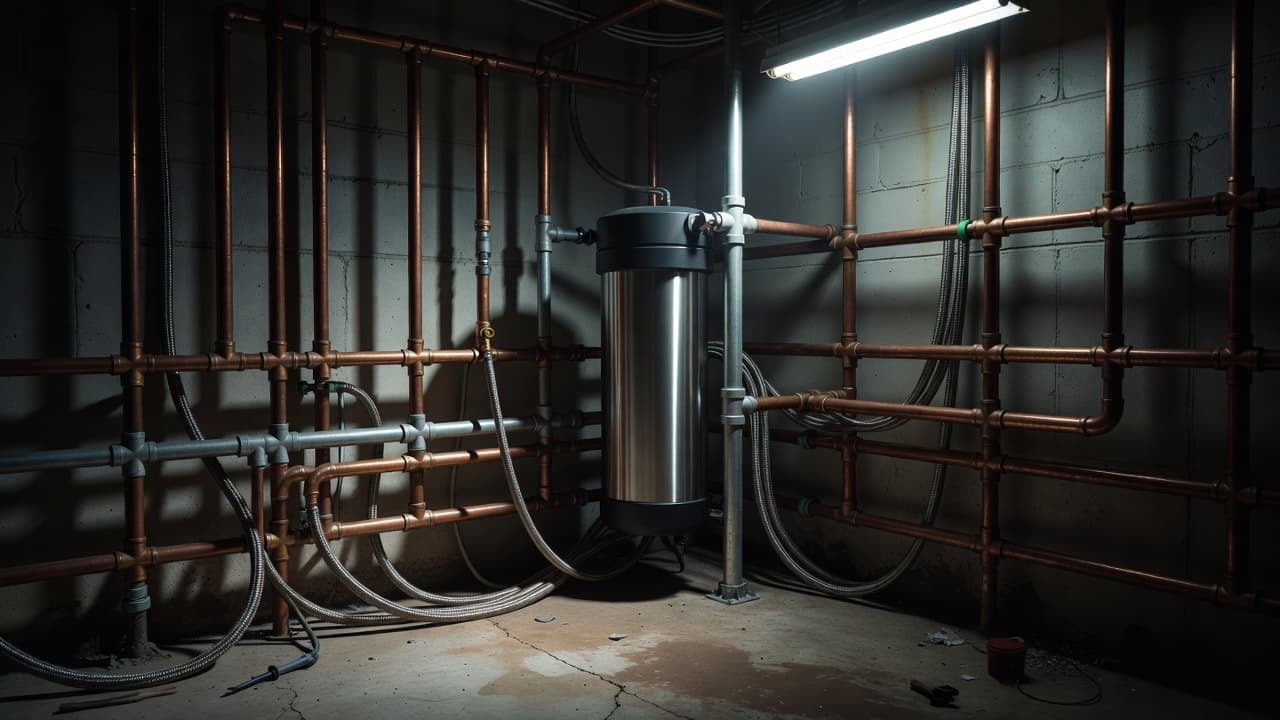
Partially open valves cause more trouble than people expect. A main shutoff that was not fully reopened, a service valve left half turned after maintenance, or a bypass lever in the wrong position can all choke flow. On quarter-turn valves, the handle should usually line up with the pipe when the valve is open.
If the system has a bypass, check that it is set where it belongs. A bypass left partly open can make the filtered water path feel weak and uneven. Stuck valves should not be forced. If a quick visual check does not solve it, the valve may need professional service.
5. Sediment buildup elsewhere in the plumbing
The new filter may be doing its job, while old buildup in the plumbing still slows the water. Sediment in showerheads, faucet aerators, water heaters, or older pipe runs narrows the passage long before the water reaches the room. After a whole-house filter starts trapping more debris, those weak spots can become obvious.
Cleaning an aerator is safe. Beyond that, the issue may sit deeper in the plumbing. If the home has galvanized pipe, scale, or years of mineral buildup, a professional diagnosis is the faster path. Otherwise, the filter gets blamed for a restriction it did not create.
6. Pressure regulator problems
A pressure-reducing valve, also called a pressure regulator, can create weak water pressure across the entire house when it wears out or is set too low. If the home already had modest incoming pressure, the extra resistance from a new filter can expose the problem.
This is one of the most common reasons a shower feels worse after filtration even when the filter itself is working. The regulator sits near the service entry, so every fixture feels the drop. A plumber can test the pressure before and after the valve and decide whether adjustment or replacement makes sense.
7. Plumbing system mismatch
Sometimes the filter is fine, but the plumbing plan is not matched to the home's demand. A house with multiple baths, long runs to exterior spigots, or a busy laundry setup needs enough capacity everywhere, not just at the point where the filter sits. If the system was chosen for water quality alone, it may not match real-world use.
That mismatch is easy to miss during installation and hard to ignore later. When the home has the right filter on paper but still feels slow in daily use, the answer is usually a full-system review. The fix may involve a different filter size, a plumbing change, or a pressure control adjustment around the system.
When the system needs a closer look
If the easy checks do not solve the problem, stop guessing. A licensed plumber or water treatment professional can test pressure at the entry point, compare it to pressure after the filter, and see whether the restriction comes from the cartridge, the regulator, or the piping itself.
That kind of diagnosis matters because more than one issue can stack up. A slightly undersized filter, a borderline pressure regulator, and a bypass set wrong can all create the same complaint. Fixing one part without checking the rest often leaves the house feeling weak.
A careful inspection is also the safer path when the plumbing was modified during installation. The goal is not to remove the filter. The goal is to get the filtration system and the home's plumbing working together again.
Conclusion
Low water pressure after whole-house filtration usually has a plain explanation. A clogged cartridge, an undersized filter, a valve position problem, sediment in the plumbing, a pressure regulator issue, or a system mismatch can all make the house feel weaker than it should.
Start with the symptom, then move upstream. If the pressure drop shows up everywhere, or if it began the day the system was installed, the setup deserves a careful look from a pro.
Clean water should not come with a weak shower. When it does, the system is telling you something useful.
Latest posts
Read Our Blog
Tips, guides, industry best practices, and news.
Contact us
Get in touch
Our friendly team is ready to chat.