
What to Expect on Whole-House RO Installation Day
A whole-house RO installation usually feels easier once you know the sequence. The crew arrives with tools, parts, and a plan, but they still need access to your water lines, a clear work area, and a few decisions from you before they begin.
Water may be shut off for part of the visit, and the system may need to sit near plumbing, power, and drain access. That can sound disruptive, yet the day is usually more orderly than most homeowners expect. Here is how installation day typically unfolds.
Preparing Your Home for the Crew
The first part of the day is usually a walkthrough. The installer looks at your plumbing, checks the location for the new system, and confirms where the water will enter and leave the unit. If you're still comparing options, a page on RO system installation and repair shows the range of residential work a crew may handle.
That walk-through helps the team spot small issues before they become delays. A tucked-away shutoff valve, a crowded garage wall, or a tight drain connection can change the plan quickly. If you know about pressure swings, past leaks, or a water taste you want corrected, say so early.
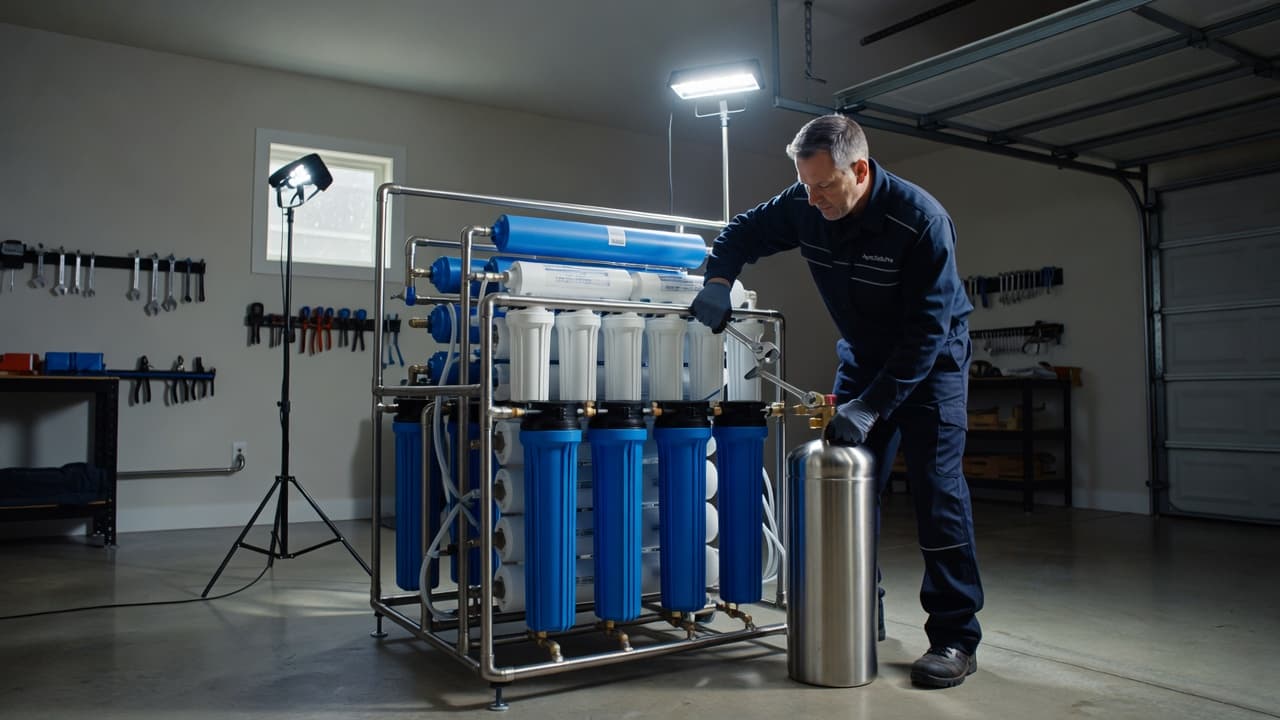
A little prep at home helps too. Clear boxes, bikes, or stored tools away from the work area. Move fragile items off nearby shelves. Keep pets out of the room, and leave enough driveway or garage space for the crew to unload equipment. In Southwest Florida, garage installs are common, so a clean wall and open floor space make a real difference.
The best installations start with clear access. That lets the crew work without moving extra furniture, stepping around clutter, or stopping every few minutes to make room.
Where the System Usually Goes
Most whole-house RO systems are placed where the plumbing is easy to reach. Garages, utility rooms, mechanical closets, and protected outdoor areas are all common, depending on the home. The right spot gives the crew room to install the equipment and enough space to service it later.
The location also needs to work with the rest of the plumbing. The installer looks for a reliable water source, a drain, and, when needed, power for pumps or control equipment. Some homes also need a storage tank or pretreatment equipment, so the system can take up more room than homeowners expect at first glance.
A good spot is not just about the first day. It also matters when filters need changing or a part needs service. If the unit is wedged into a corner, every future visit becomes harder. If it sits where a technician can reach valves, housings, and connections, maintenance is much simpler.
Local code can affect placement too. Some jobs need additional fittings, backflow protection, or drainage changes. That does not always mean a long delay, but it does mean the installer may need a little extra time to get the layout right.
Water Shutoff, Plumbing Work, and Cleanup
Once the crew is ready to start, the water is usually shut off for at least part of the job. Sometimes the whole house loses water briefly. Other times, the installer isolates only the section being worked on. The exact setup depends on the plumbing and the system design.
After the shutoff, the crew drains the line, makes the plumbing connections, and sets the new equipment in place. That often means cutting into the main water line, fitting new valves, and connecting the RO components so water flows in the right direction. If the home already has equipment in place, the old unit may need to come out first.
You may hear some normal work sounds during this stage. Sawing, drilling, and the short rush of water through test lines are common. Those sounds usually come in bursts, not all day.
A good installation day should feel organized, not rushed. If the plumbing needs extra changes, the crew should explain that before they move ahead.
Cleanup matters too. Good crews protect the floor, wipe fittings, and remove leftover debris before they leave the area. Small details add up. A tidy work space usually means fewer worries about loose fittings, stray water, or missed parts.
How Long the Job Usually Takes
A straightforward whole-house RO installation may finish in a single visit, but the schedule depends on the home. Easy access, simple plumbing, and a clear drain connection keep the job moving. Older plumbing, hard-to-reach lines, or code-related changes can stretch the timeline.
Several things tend to slow a project down:
- Tight access to the main water line or the mounting area
- Drain routing that needs extra plumbing work
- Electrical work for pumps, controls, or other equipment
- Removal of an old system before the new one can go in
- Permit or code-related adjustments that the home requires
The more a home matches the installer's plan, the smoother the day usually goes. Even so, a good crew should not rush past a problem just to finish faster. A clean installation is better than a fast one.
If the job ends up taking longer than expected, that does not always mean something went wrong. It often means the installer found a detail worth fixing now instead of leaving it for later. That saves time and trouble down the road.
Startup, Testing, and Questions to Ask
After the plumbing is finished, the crew starts the system and tests it. This part usually includes checking for leaks, confirming pressure, and flushing the new equipment so it runs properly. If the system has a tank or pump, the installer may watch a few cycles to make sure everything behaves as it should.
The first water may look or taste a little different while the system settles in. That is normal during startup and flushing. The installer should tell you what is expected and what is not.
The final walkthrough matters just as much as the plumbing. This is when you learn how to use the system and what to watch for next. The goal is to leave with clear answers, not guesses.
Questions worth asking before they leave
- Where is the shutoff or bypass valve?
- When should the first filter change happen?
- What sounds are normal during operation?
- What should I do if the water pressure changes?
- Who do I call if I notice a leak or taste change later?
If the crew answers those questions before they pack up, you start with a much clearer picture. You also know what should be checked again after the first day or two.
For future reference, signs your RO system needs service is a useful page if pressure drops, taste changes, or leaks show up later.
Conclusion
Installation day goes better when you know what the crew needs, where the system will sit, and how the water shutoff will work. Most of the visit is about access, plumbing, testing, and cleanup, not guesswork.
The real goal of a whole-house RO installation is simple, clean water with as little hassle as possible. When the system is installed in the right place and tested before the crew leaves, you get a smoother first day and a much easier routine after that.
Latest posts
Read Our Blog
Tips, guides, industry best practices, and news.


Contact us
Get in touch
Our friendly team is ready to chat.