
Brown Water After Hydrant Flushing: What It Can Mean
Iron, rust particles, and other materials can give tap water a brown color. When brown water appears after hydrant flushing, the timing alone doesn't identify the material or establish whether it came from the water main or your home's plumbing.
The distinction matters because different sources need different solutions . A neighborhood-wide change, a rusty hot-water supply, and recurring orange stains aren't the same problem.
Understanding the color starts with separating what you can observe from what requires water testing.
Key Takeaways
- Brown water can contain rust particles or other materials, but appearance alone doesn't identify the cause.
- The pattern across hot water, cold water, and different fixtures helps distinguish supply concerns from household plumbing problems.
- Sediment filters, softeners, and reverse osmosis systems address different water-quality issues.
- Recurring stains, unusual deposits, and treatment-equipment problems deserve more than a cosmetic fix.
What Brown Water After Hydrant Flushing Tells You
A change that appears around the time of hydrant flushing provides useful context. However, the sequence of events isn't a water analysis.
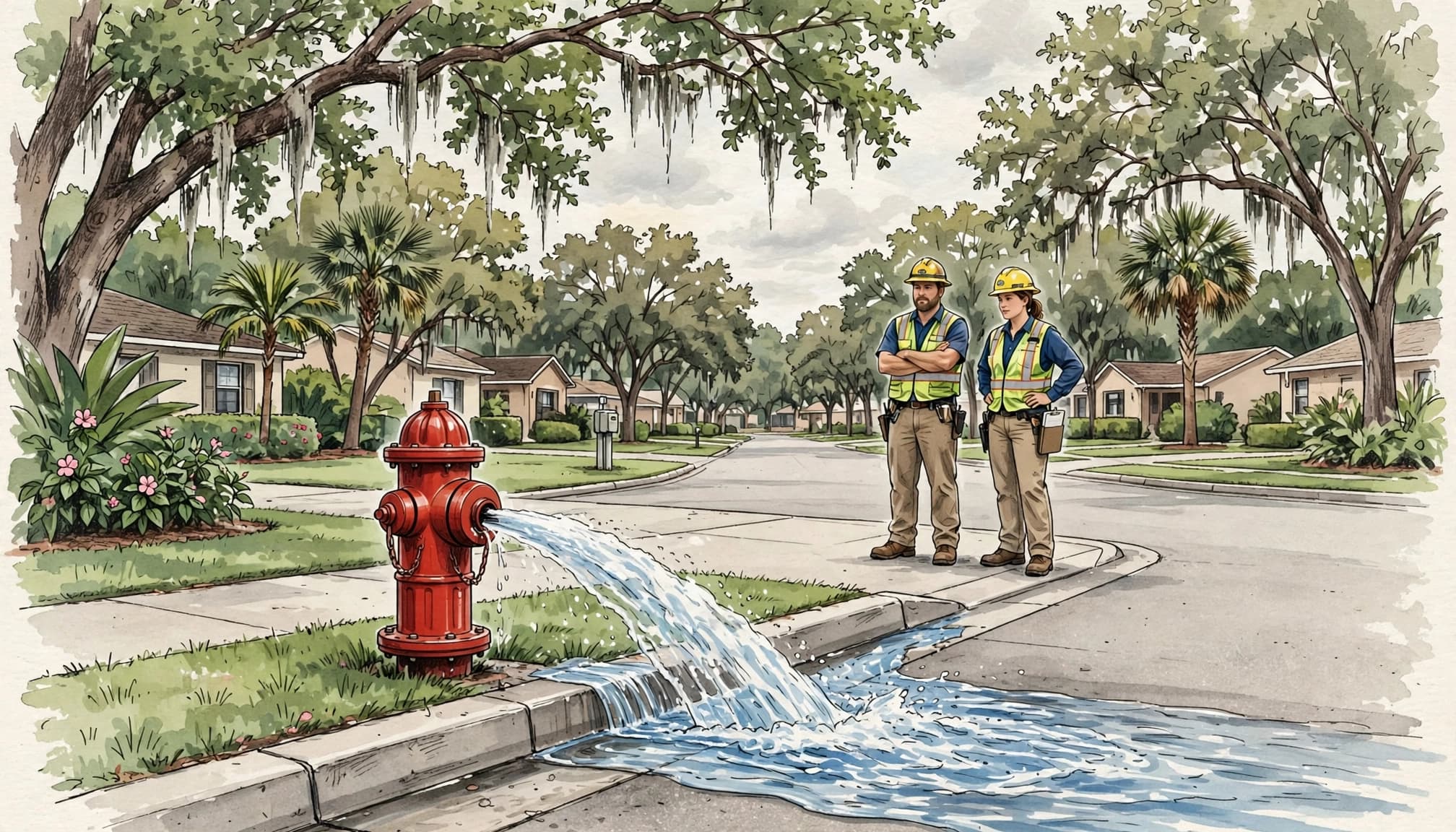
The water main is only part of the route
City water travels through distribution mains, a service connection, and household plumbing before reaching a faucet. Each part of that route matters when evaluating discoloration.
Water can change after entering a property because of aging pipes, fixtures, or building storage equipment. Therefore, an issue at the kitchen sink doesn't automatically describe the water throughout the municipal system.
The utility handles distribution-system concerns. Household piping, water heaters, and treatment equipment involve a different set of components.
Timing is one clue among several
A single observation provides less information than a consistent pattern. Discoloration across several fixtures has a different meaning than residue at one faucet.
Similarly, water that looks brown immediately differs from water that starts clear and develops an orange tint later. The first observation describes the water's appearance at delivery; the second suggests a change after collection.
Neither pattern identifies every substance present.
What Gives Tap Water a Brown or Orange Color?
Brown water isn't one condition with one explanation. The color can come from particles, dissolved substances, or a combination.
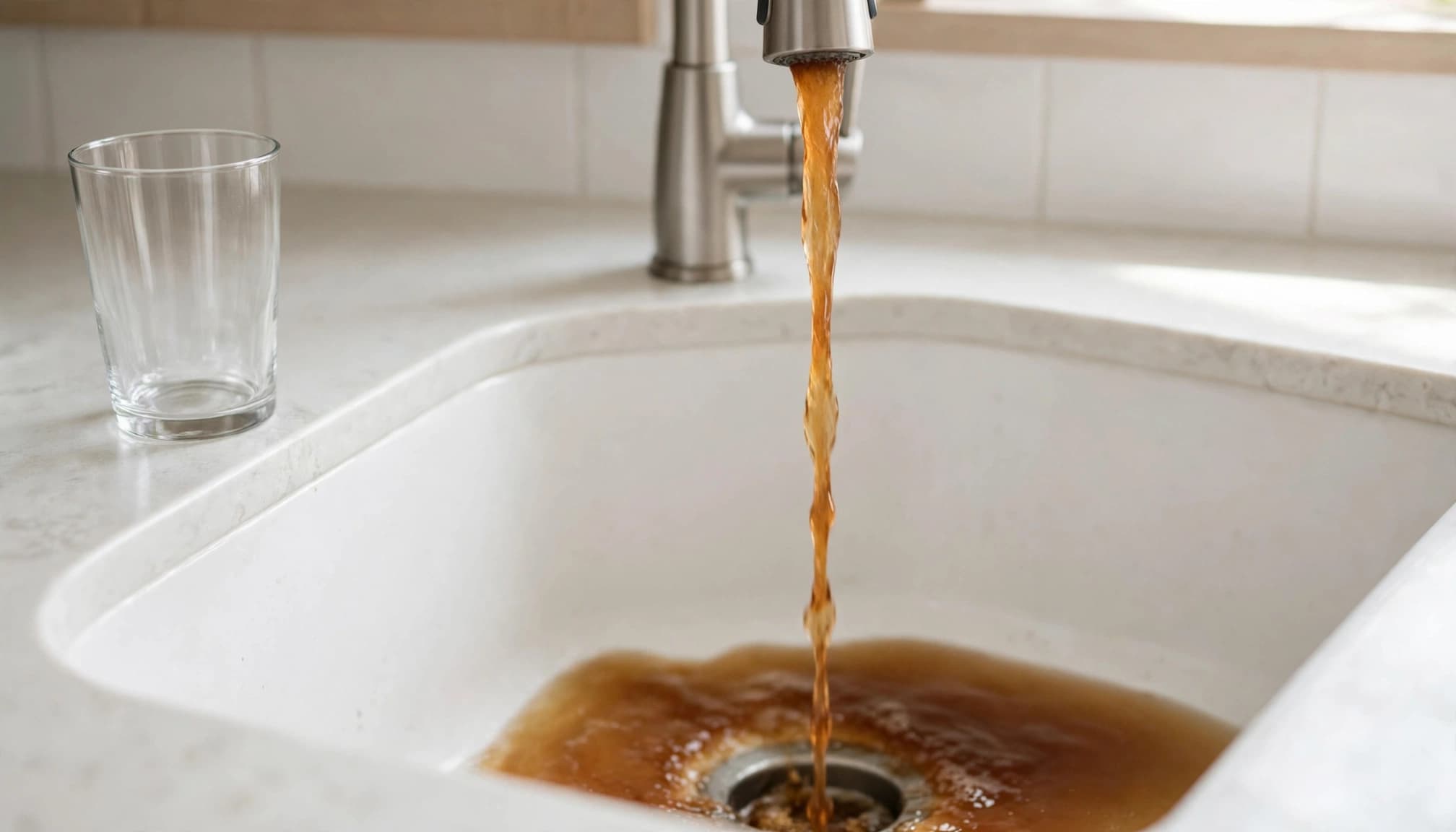
Iron can be dissolved or particulate
Iron is a common explanation for orange and reddish-brown staining. However, dissolved iron behaves differently from visible rust particles.
Water containing dissolved iron may look clear at first. After exposure to oxygen, the iron can oxidize and form small particles that leave rusty deposits.
Particulate iron is already present as solid material. It may appear as brown specks, flakes, or sediment rather than a uniform tint.
This distinction affects treatment. A filter designed to capture particles doesn't automatically remove iron that remains dissolved.
Other materials can produce similar colors
Manganese can create dark deposits and brownish staining. Tannins, which come from decomposing organic material, can give water a yellow, amber, or tea-colored appearance.
These possibilities are especially relevant when discussing private-well water. They shouldn't automatically become the explanation for a city-water change.
Texture also matters. Grit, flakes, and a smooth amber tint describe different observations, even when residents call all three "brown water."
A metallic taste can accompany iron, but taste doesn't establish its concentration or rule out other substances. Color narrows the possibilities; testing separates them.
How the Pattern Helps Locate the Problem
Where discoloration appears can be as informative as its shade. The strongest clues involve temperature, location, and whether the condition keeps returning.
Hot water and cold water tell different stories
Discoloration limited to hot water points attention toward the water heater or hot-water piping. A water heater can contain sediment, and corrosion can contribute rusty material.
That pattern differs from discoloration affecting cold-water fixtures throughout the home. In that case, incoming water, the service line, shared piping, or whole-house equipment may be involved.
A color change at one temperature still doesn't prove a specific component has failed. It identifies which part of the system deserves closer evaluation.
One fixture differs from a whole-house pattern
A single faucet can have localized corrosion, deposits in its aerator, or an aging supply connection. Meanwhile, similar discoloration at several fixtures suggests a shared source.
In a condominium or community building, storage tanks and shared plumbing add another layer between the municipal connection and individual homes.
Recurring episodes also matter. A problem that repeatedly appears after water sits unused differs from staining that develops continuously throughout normal use. Those patterns help distinguish a localized plumbing concern from an ongoing water-quality issue.
Why Rust Stains and Slime Need Different Explanations
Orange rings in toilets, streaks below faucets, and reddish residue on laundry can indicate iron. As water dries, mineral deposits remain on the surface.
Repeated splashing adds more material. Dripping fixtures, damp surfaces, and rough finishes can make staining more noticeable.
However, rust-colored staining doesn't establish iron bacteria .
Iron bacteria can produce orange, brown, or reddish slime in private-well systems. The material may appear stringy or gelatinous and can collect in toilet tanks, filters, and plumbing.
Dissolved iron can cause staining without producing that slime. Therefore, a rusty toilet bowl and a recurring slimy deposit aren't interchangeable symptoms.
Well-water explanations also shouldn't be transferred automatically to municipal water. A home's water source changes which causes deserve attention. A nearby city-water event doesn't, by itself, explain a change in an independently supplied private well.
Persistent deposits may involve more than one issue, including iron, manganese, hardness, or biological growth.
What Home Water Treatment Can and Cannot Do
A treatment system's purpose matters more than the label on its housing. Different equipment addresses different forms of material in the water.
Sediment filtration captures particles
A sediment filter can capture particles such as sand and rust flakes, depending on its rating and design. It can also help protect downstream fixtures and equipment.
However, particle filtration doesn't automatically address dissolved iron, dissolved salts, or microorganisms.
Heavy particle loading can shorten cartridge life and reduce flow. A cartridge that darkens rapidly offers a maintenance clue, but its color doesn't identify everything it captured.
The same limitation applies to water that looks clearer after filtration. Better appearance describes one result, not the complete treatment performance.
Softeners, carbon, and RO have separate jobs
Water softeners primarily reduce hardness minerals. Carbon filtration can address chlorine taste and odor, although performance depends on the media and system design.
Reverse osmosis reduces many dissolved substances, but its effectiveness depends on the membrane, operating conditions, pretreatment, and maintenance.
An under-sink system treats a drinking-water outlet. Whole-house equipment addresses water entering the home's broader plumbing network. Our comparison of point-of-use and whole-house filtration explains that difference.
We provide water conditioning for homeowners in Naples and Southwest Florida. The appropriate equipment depends on the water problem, rather than the color alone.
What Water Testing Adds to the Picture
Laboratory testing can distinguish substances that look similar and identify concerns that have no visible color. It also helps separate a source-water issue from a treatment-performance problem.
Total iron and dissolved iron answer different questions
Total iron measures iron across dissolved and particulate forms. Dissolved iron testing focuses on the portion remaining in solution under the laboratory's method.
The difference matters because a basic sediment cartridge and an iron-treatment system don't perform the same task.
Other useful parameters may include manganese, hardness, pH, and bacteria, depending on the water source and symptoms. Recurring discoloration, unusual odors, or corrosion can require a broader analysis than iron alone.
Sample location matters, too. Water collected before treatment answers a different question from water collected at the kitchen faucet.
A TDS reading doesn't explain everything
A handheld total dissolved solids meter provides an estimate related to dissolved ionic material. It doesn't identify individual contaminants or measure visible rust as a complete water-quality assessment.
Likewise, clear water can still contain substances such as nitrate, lead, or bacteria.
Comparing untreated and treated samples can help evaluate equipment performance. Our guide to water testing after treatment describes why appearance and a single meter reading provide only part of the picture.
Frequently Asked Questions
Does brown water always mean the pipes are rusting?
No. Iron particles can produce a rusty appearance, but other materials can also discolor water. The source may involve incoming water, household plumbing, a water heater, or treatment equipment.
The distribution of the problem across fixtures helps narrow the investigation. Laboratory results provide information that appearance cannot.
Will a whole-house filter solve every discoloration problem?
A whole-house sediment filter can reduce particles within its design limits. However, it doesn't automatically remove dissolved iron, tannins, manganese, or every other cause of color.
Treatment works best when the equipment matches the identified substance and the household's water demand. Recurring discoloration after filtration can indicate a mismatch, maintenance issue, or additional problem.
Does orange staining prove there are iron bacteria?
Orange staining alone doesn't establish iron bacteria. Dissolved iron can oxidize and leave similar marks without bacterial slime.
In private-well systems, recurring stringy deposits, slime, and associated odors provide additional clues. Even then, the appearance doesn't replace an appropriate water analysis.
Understand the Source Before Choosing the Fix
Brown water after hydrant flushing deserves an explanation grounded in the home's water source, plumbing, and treatment equipment. Timing and color provide clues, but neither identifies the complete problem.
The strongest distinction is between visible symptoms and measured water quality . A filter that catches rust, a softener that reduces hardness, and a repair to corroded plumbing solve different problems. Matching the response to the actual cause avoids treating the same symptom repeatedly.
Latest posts
Read Our Blog
Tips, guides, industry best practices, and news.

Contact us
Get in touch
Our friendly team is ready to chat.
