
Protect Water Treatment Equipment From Garage Flooding
Protect water treatment equipment from garage flooding with a raised, secure installation, clear drainage, and a safe electrical shutdown plan. If water reaches electrical components, stay out of standing water and leave inspection and restart to qualified professionals.
For Naples and Southwest Florida homeowners, water treatment equipment protection also means keeping potentially contaminated systems out of service. A softener, filter, or reverse osmosis system can look intact while hiding electrical damage or contamination.
Start with the equipment's location and the paths water could take into your garage.
Key Takeaways
- Arrange professional elevation and securing of vulnerable equipment without compromising plumbing or service access.
- Keep runoff paths clear and protect electrical components before flooding begins.
- Never handle plugs, controls, or disconnects while standing in water.
- Have flood-exposed systems assessed before use, and address source-water contamination separately from equipment damage.
Plan Water Treatment Equipment Protection Before Storms
Identify every vulnerable component
Look beyond the tallest tank. A garage treatment system may include a softener, carbon filter, ultraviolet unit, reverse osmosis equipment, storage tank, and delivery pump. Low-mounted power supplies and controls can be more vulnerable than the equipment they operate.
Before storm season, photograph the installation and record model numbers. Include tubing connections, valve positions, and electrical controls in those photos.
Also note previous water-entry points and visible flood marks. This information helps professionals plan improvements without assuming that every component needs the same protection.
Make access part of the plan
Keep a clear route to the treatment equipment, water shutoff, and electrical disconnect. Don't stack paint cans, lawn equipment, or storage boxes against tanks.
Access matters during routine maintenance, too. Technicians need room to remove filter housings, inspect fittings, add salt, and work around pumps.
Store manuals and service records somewhere dry and accessible outside the garage. Include your treatment provider's contact information and the location of the household water shutoff. That preparation reduces confusion when weather conditions deteriorate.
Elevate and Secure Equipment Without Straining Plumbing
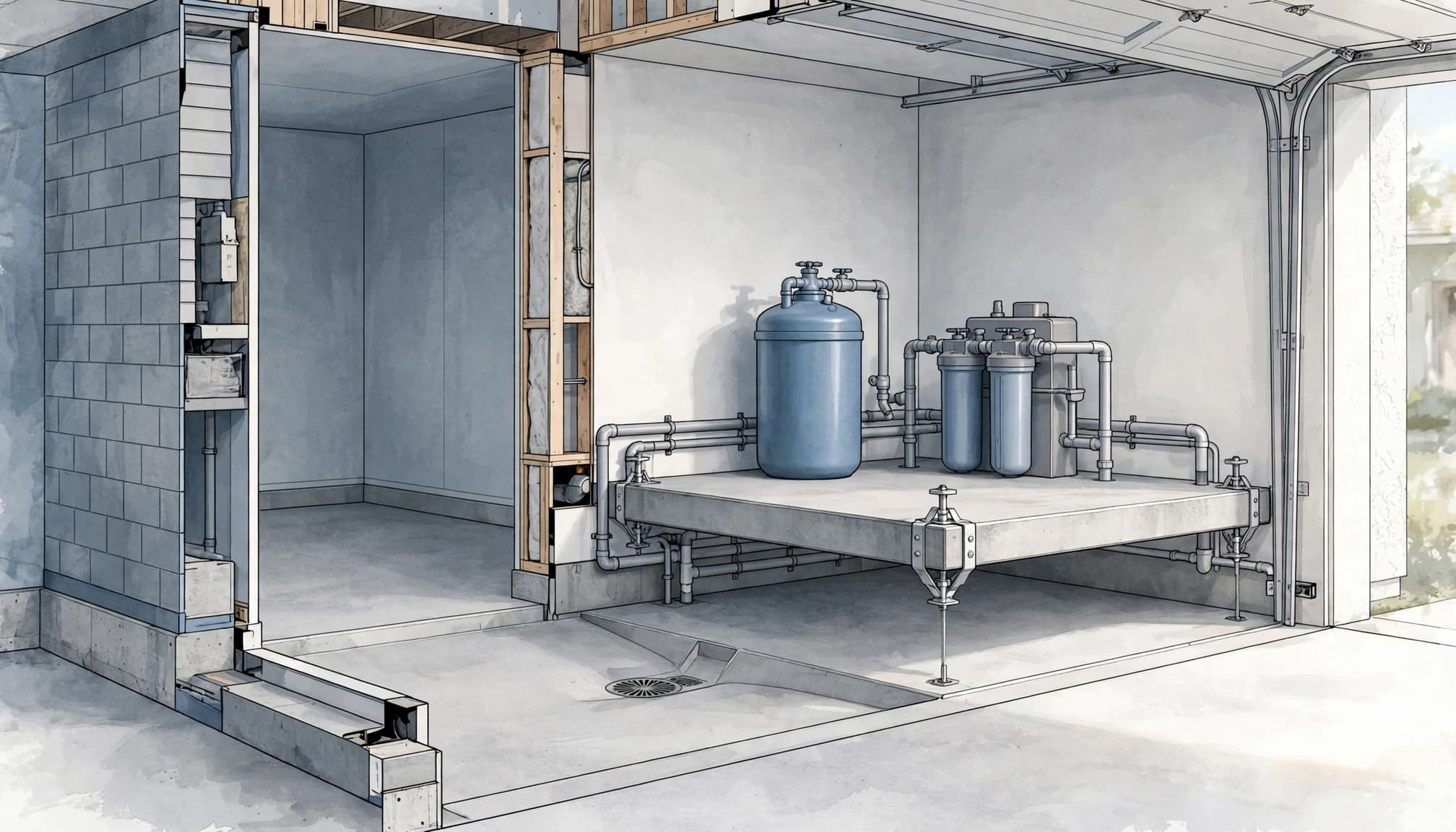
Use a professionally planned raised installation
Moving vulnerable equipment above floor level can reduce exposure, but elevation needs proper planning. A full tank is heavy, and its support must remain stable during operation and maintenance.
Have an installer assess the equipment's weight, available space, support, and securing needs. Don't improvise with loose blocks, stacked materials, or furniture.
Keep the whole system in view. Raising a tank while leaving its controller, power supply, or pump near the floor leaves important components exposed. Elevation also cannot guarantee protection against every flood.
Preserve connections and service clearance
Relocating treatment equipment changes its relationship with supply piping, drains, and electrical connections. Those connections shouldn't carry the tank's weight or remain under tension.
A qualified installer should handle changes to the treatment layout. Use appropriately licensed professionals when the work involves plumbing or electrical wiring.
Our guidance on planning water treatment plumbing covers another important consideration: leaving enough room to service the finished installation. Protection that blocks cartridge removal or salt loading creates maintenance problems later.
Keep Runoff Moving Away From the Garage
Water treatment equipment protection starts outside the equipment area. Before heavy rain, remove leaves and debris from gutters, downspouts, and accessible drainage inlets. Keep discharge paths unobstructed.
Look for soil or landscaping that directs runoff toward the garage opening. Correct recurring drainage problems before storm season, with professional help when grading or drainage changes are needed. Keep water moving away from the wellhead, too.
If the garage has a floor drain, keep its inlet clear of stored items and debris. However, don't assume an interior drain can handle rising water outside the building.
Treatment discharge lines have a separate purpose. Softener regeneration drains, filter backwash lines, and reverse osmosis reject lines aren't stormwater drains. Don't repurpose them or change their connections as a flood response.
Finally, keep fuel, pesticides, paints, and solvents away from treatment equipment and wells. Floodwater can spread these materials beyond their storage area.
Protect Electrical Controls and Plan Shutdowns
Address vulnerable electrical components early
Controllers, plugs, power supplies, pump controls, and ultraviolet ballasts all deserve attention. Have a qualified electrician assess low-mounted electrical components and any relocation needed for a safer installation.
Ground-fault circuit interrupter protection adds an important safety layer near water. However, it doesn't repair damaged insulation or make submerged equipment safe to touch.
Don't wrap energized controls in plastic or improvise sealed coverings. Electrical equipment needs an installation suited to its environment, including its ventilation and access requirements. Leave electrical modifications to the appropriate professional.
Prepare a shutdown plan while conditions are dry
Know which breaker or disconnect supplies the treatment system before a storm arrives. Household members should also know that operating it requires dry, safe access.
Review the equipment's shutdown instructions in advance. Different systems may include pumps, storage tanks, UV treatment, and controls with different operating requirements.
If flooding is expected, an orderly shutdown may be appropriate while conditions remain safe. However, don't enter a wet garage or reach across water to shut equipment off.
Document the plan before an emergency. During flooding, nobody should need to trace wires or guess which control operates a pump.
During Flooding, Stay Out of the Equipment Area
Standing water around electrical equipment is an immediate safety concern. Don't enter it to unplug a softener, retrieve tools, move a tank, or inspect a controller.
A dry-looking control panel doesn't make the surrounding floodwater safe. Damaged wiring or another electrical source may still create a shock hazard.
Keep children, pets, and other household members away. Never handle cords, plugs, control boxes, or disconnects while standing in water.
If the shutdown point is wet, submerged, or inaccessible without entering water, leave it alone. Get qualified electrical or utility assistance instead.
Don't turn a pump on to see whether it survived. Wet equipment can cause injury or start a fire when energized.
Also avoid moving connected tanks during the flood. Besides the electrical risk, damaged piping and unstable equipment can create additional hazards. Equipment recovery can wait until people can enter safely.
After the Flood, Separate Inspection From Cleanup
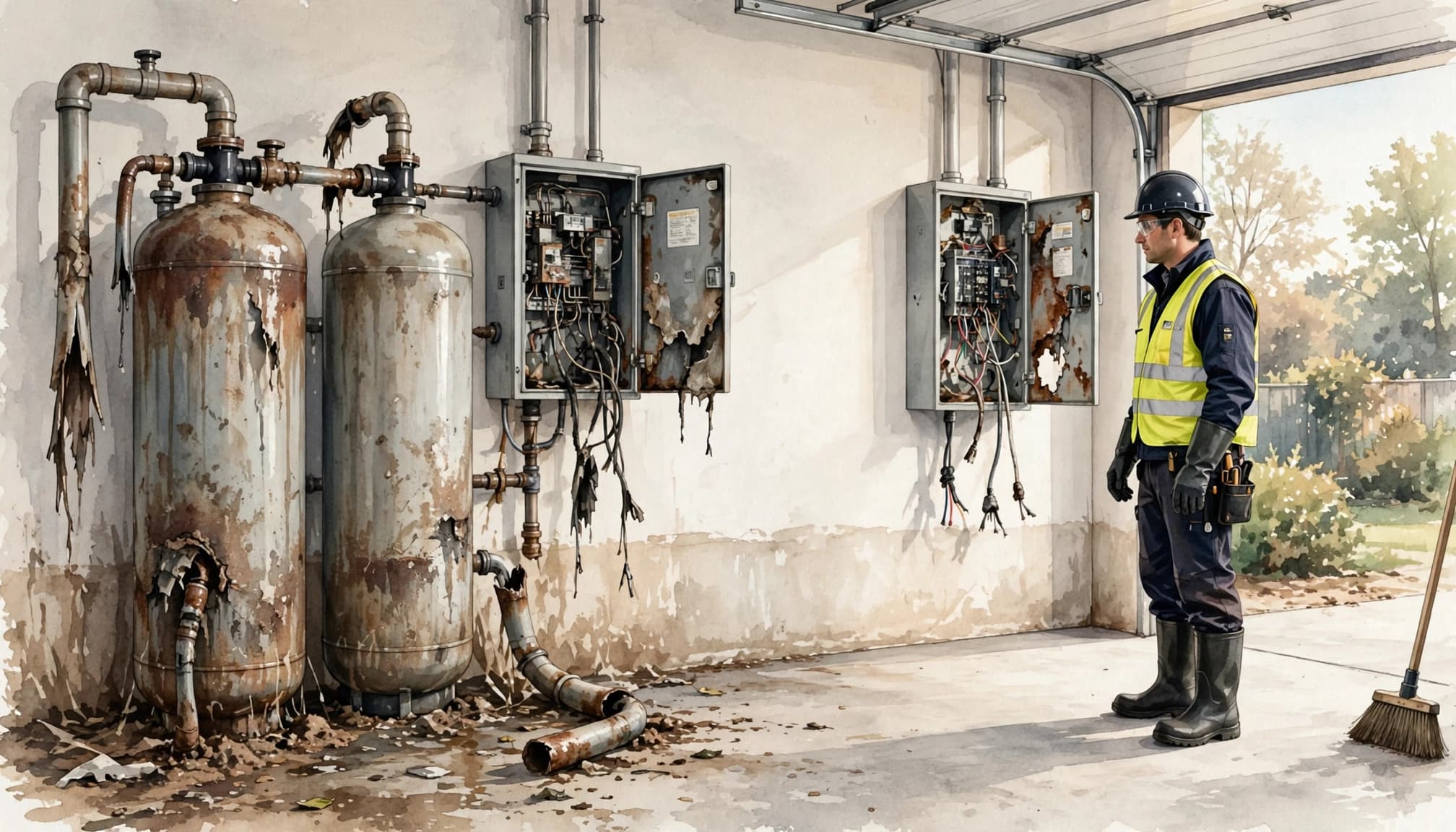
Have qualified professionals assess submerged systems
Water receding doesn't mean equipment is ready for use. Keep flood-exposed systems out of service until qualified professionals assess them.
An electrician should evaluate affected electrical components. A treatment professional should assess tanks, valves, housings, tubing, media, and other treatment stages. Well equipment may also require a qualified well contractor.
Once the area is safe to enter, photograph visible water lines and damage without opening controls or disturbing equipment. Note shifted tanks, cracked housings, loose connections, and sediment deposits.
Drying alone doesn't establish electrical safety or remove contamination.
Clean safely without damaging treatment components
Floodwater can carry sewage, chemicals, and debris. Begin cleanup only after electrical and other access hazards have been addressed. Use suitable protective equipment, and keep contaminated materials away from clean supplies.
Don't pressure-wash controls or spray water into electrical enclosures. Likewise, don't open filter housings or disconnect plumbing while the system remains pressurized.
Treatment components may need sanitation, new cartridges, replacement media, membrane work, or electrical repairs. The correct response depends on the exposure and equipment.
Avoid pouring household bleach through the entire system. Sanitizers and procedures must suit the specific equipment, especially reverse osmosis membranes. Leave complicated treatment layouts and flood recovery work to qualified professionals.
Restore Water Safety Before Returning to Routine Use
Equipment condition and source-water safety require separate attention. A functioning softener doesn't make contaminated water safe, and no single household filter removes every pollutant.
If floodwater affected a private well, stop using the water for drinking, cooking, brushing teeth, making ice, or preparing infant formula. Use bottled water until appropriate inspection, treatment, and laboratory testing establish that the supply is safe.
Our guidance on protecting a flood-affected private well explains the connection between well damage, disinfection, and testing.
A contaminated cartridge can retain bacteria and spread contamination through plumbing. Replace affected cartridges according to manufacturer instructions after the well and plumbing receive clearance.
Well disinfection also needs coordination with treatment recovery. Chlorine can damage many reverse osmosis membranes, so don't improvise a whole-system disinfection procedure.
Qualified professionals should determine the sanitation, repairs, and restart sequence for submerged systems. Clear water, normal pressure, or an illuminated controller doesn't establish safe operation.
Frequently Asked Questions
Can I restart a water softener once it dries?
Drying doesn't establish that controls are electrically safe or that the system is sanitary. Have flood-exposed equipment assessed before restarting it. The required work depends on which components went underwater and whether contamination entered the system.
Does an elevated tank protect the entire system?
Elevation reduces exposure only for the components it keeps above water. Controls, pumps, tubing connections, and power supplies can remain vulnerable. A protective layout needs to account for the complete system, including service access and stable support.
Must every flooded treatment system be replaced?
Replacement isn't automatic for every system. Qualified professionals need to assess the exposure, physical damage, electrical condition, and sanitation requirements. Some components may be serviceable, while others may require replacement. A homeowner's visual inspection can't settle those questions.
Can I bypass the treatment system after flooding?
A bypass doesn't make an unsafe source safe. Don't use it to restore drinking water from a potentially contaminated well. Treatment isolation and return to service should follow the recovery plan for the equipment and water supply.
Build Protection Around Safe Access
A raised, secure layout and clear drainage can reduce flood exposure. The strongest plan also preserves service access and addresses vulnerable electrical components before a storm.
After flooding, professional assessment comes before restart. Keep people away from standing water, address contamination separately, and return equipment to service only through the appropriate recovery process.
Latest posts
Read Our Blog
Tips, guides, industry best practices, and news.

Contact us
Get in touch
Our friendly team is ready to chat.
