
Can Existing Anchors Support a Replacement Lake Fountain?
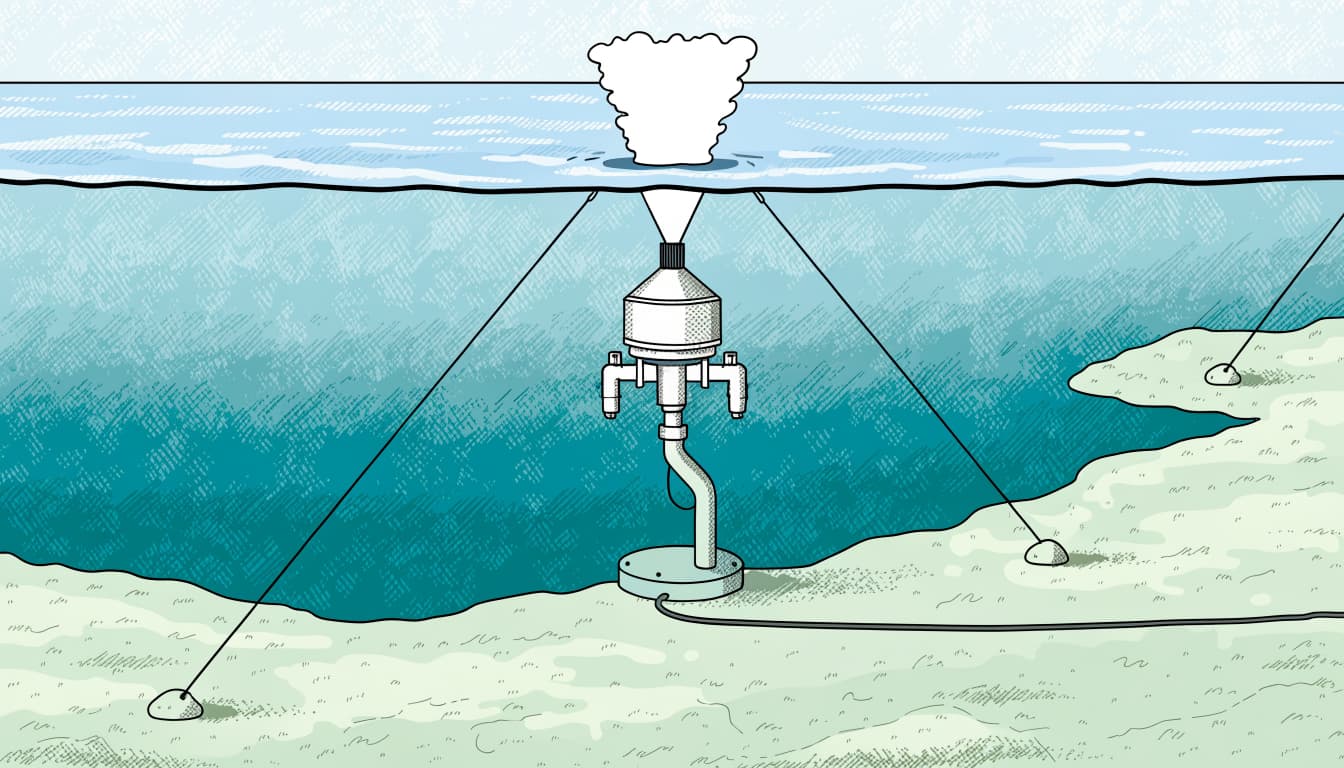
Existing lake fountain anchors can sometimes support a replacement fountain, but the old unit's performance doesn't prove they're suitable for the new one. The decision depends on the condition and compatibility of the entire mooring system .
A larger or differently designed fountain may put different forces on the anchors. Before installation, assess the anchors, lines, connections, water depth, and lakebed together.
Key Takeaways
Existing anchors may be reusable if they're sound, properly placed, and suitable for the replacement fountain's mooring requirements. Anchor weight alone doesn't establish holding capacity, especially in soft sediment.
Drifting, damaged lines, corrosion, and unknown underwater conditions call for closer inspection. Electrical and underwater work should be left to qualified professionals.
Inspect the Condition of Lake Fountain Anchors
A fountain can appear secure from shore while its submerged hardware has deteriorated. Start with the installation records, if available, then arrange an inspection of the anchors and their connections.
Look for Damage and Movement
Cracks, severe corrosion, deformation, and loose fittings can make an anchor unsuitable for reuse. A shifted anchor or a fountain that no longer holds its usual position also deserves attention.
Some anchors are buried or difficult to reach. When their condition or location can't be established safely, a professional inspection may be needed before deciding whether to reuse them.
Consider the Anchor Material and Lakebed
Concrete deadweights rely on their mass and contact with the lakebed. Embedded anchors transfer pulling forces into the surrounding bottom material. Soft muck, uneven sediment, or erosion can affect how either arrangement holds.
Metal fittings also need to suit the lake's water chemistry. Corrosion at a shackle or attachment point can weaken the system even when the anchor itself looks intact. Our guide to floating fountain anchoring methods covers how pond conditions affect the choice.
Match the Old Anchors to the New Fountain
The replacement fountain's mooring requirements are the starting point. A similar appearance or horsepower rating doesn't establish that two units place the same demands on their anchors.
Account for Thrust and Weather
Pump operation can create forces on the mooring system, while wind and waves add loads at the surface. The replacement unit's float, spray pattern, and operating characteristics may change those forces.
The assessment should consider the fountain's specified mooring arrangement alongside the lake's exposure and bottom conditions. An old anchor that held a smaller unit may need to be replaced or supplemented for a different design.
Review the Complete Load Path
Holding capacity depends on more than the anchor. Lines, shackles, attachment points, and the lakebed all carry part of the load.
Adding a line without reviewing its angle and attachment point can create uneven tension. Follow the replacement fountain's mooring design rather than assuming the previous layout will work.
Assess Anchor Placement and Water Depth
The old anchors need to hold the new fountain in a useful location. That includes keeping it clear of shallow water, drainage structures, shorelines, and areas where spray could reach walkways or property.
Compare Anchor Locations With the New Layout
Existing anchors may be too close together, too far from the desired position, or poorly placed for the new attachment points. The fountain also needs a practical retrieval route for future cleaning and repairs.
A lake fountain site survey can identify unstable lakebed areas, drift risks, and access concerns before installation.
Allow for Changing Water Levels
Measure depth at the proposed fountain position and consider normal high and low water levels. The new unit needs adequate clearance beneath its intake and underwater components, including when water is low.
Mooring lines also need enough movement for changing levels without allowing excessive drift. As sediment accumulates or an anchor shifts, conditions can differ from those of the original installation.
Examine Ropes, Cables, and Connections
An anchor may be reusable even when its line or hardware needs replacement. Assess each component as part of the proposed system.
Inspect Lines and Fittings
Look for frayed or stretched rope, worn cable, corrosion, loose shackles, and missing retaining hardware. Areas where a line rubs against a hard edge need particular attention.
Thimbles, swivels, and other fittings must work with the replacement fountain's attachment points. Mixed metals and improvised connections deserve review as an assembly rather than a quick replacement of one visible part.
Keep Mooring Lines Away From Electrical Cable
Mooring lines should stay clear of the intake, pump housing, floats, and electrical cable. The cable needs a protected route and appropriate strain relief; it should never act as a tow line.
Repeated cable abrasion can point to a routing or anchor problem. If a cable appears damaged, stop operating the fountain and arrange professional service.
When to Replace Anchors or Call for Inspection
Replace an anchor or component when damage or movement makes it unsuitable for the proposed system. Unknown holding conditions, unstable sediment, difficult access, and major storm exposure also warrant professional assessment.
From shore, watch for a fountain that drifts, tilts, vibrates unusually, or changes spray direction. These symptoms can have several causes, so they don't prove an anchor has failed.
Don't enter the lake or pull on an unidentified line to test it. After severe weather, arrange an inspection of the float, moorings, anchors, and cable before restoring power if damage is suspected.
Questions to Ask Before Installation
Can the Existing Layout Hold the Replacement Fountain?
Ask how the old anchor locations and holding conditions compare with the new fountain's mooring design. Also ask whether any anchors, lines, or fittings need replacement.
How Will the System Handle Water-Level Changes?
Ask how the planned line lengths will accommodate normal water-level changes while keeping the intake clear and the fountain in its intended position.
How Will the Fountain Be Serviced?
Ask where the electrical shutoff is located and how the unit will be retrieved. Request a record of anchor locations and the fountain's normal position for future maintenance.
Make the Reuse Decision Before Installation
Reusing lake fountain anchors can be practical when the full system fits the replacement unit and the lake. A sound anchor still needs compatible connections, suitable placement, and enough holding capacity for the expected forces.
At Trademark Water Systems, we provide lake fountain installation, repair, and maintenance in Naples and Southwest Florida. An assessment before installation helps identify what can stay and what needs to change.
Latest posts
Read Our Blog
Tips, guides, industry best practices, and news.


Contact us
Get in touch
Our friendly team is ready to chat.