
What Technicians Check in a Lake Fountain Site Survey
A lake fountain site survey helps prevent costly surprises before installation or repair begins. Technicians inspect the water, shoreline, electrical access, equipment location, and future service needs before recommending a solution.
The goal isn't only an attractive spray. A properly planned fountain can improve circulation and add aeration, but performance depends on site conditions. Here's what a technician may inspect and document during the visit.
Key Takeaways
- Water depth, low-water conditions, wind, sediment, and debris affect fountain placement.
- Technicians identify a practical location for the fountain, anchors, electrical cable, and service access.
- Floating and fixed systems have different installation and maintenance requirements.
- Electrical planning must account for the power source, shutoff access, cable route, and local requirements.
- Environmental conditions, including algae, sunlight, mineral-heavy water, vegetation, and storms, can affect maintenance.
- Requirements for permits, approvals, drainage, electrical work, and environmental protection vary by site and jurisdiction.
What a Lake Fountain Site Survey Covers
A lake fountain site survey gives the technician a complete view of the property instead of relying on the lake's appearance from shore. The visit may support a new installation, a replacement, or a repair where the existing system has lost flow or developed electrical or mechanical problems.
The technician may take measurements, inspect visible equipment, photograph the shoreline, and mark proposed locations. These details help the installer recommend equipment that fits the site rather than forcing the lake to fit a standard layout.
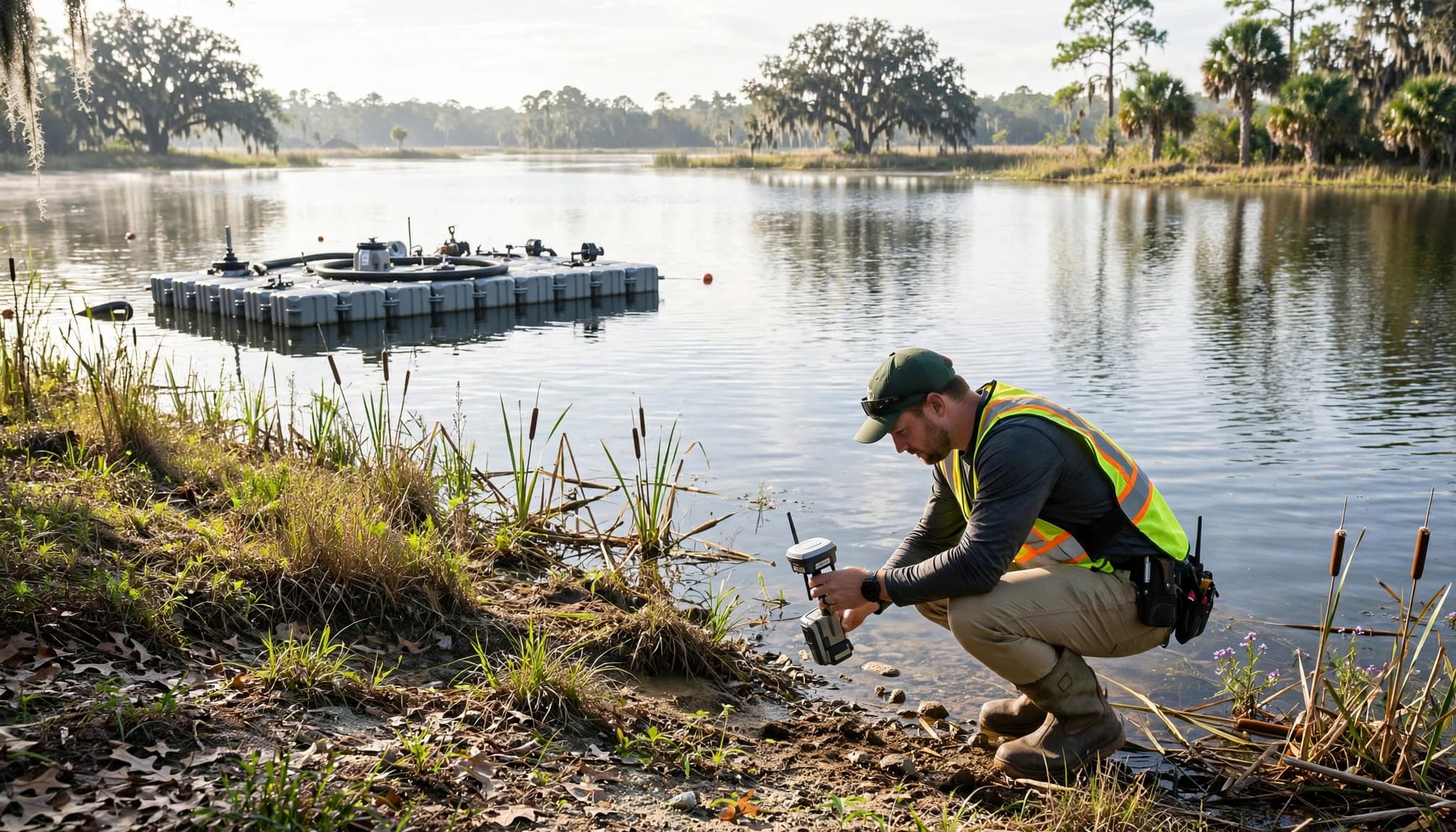
Water conditions and shoreline features
The survey usually begins with the water and the surrounding property. The technician may inspect the shoreline slope, access points, nearby structures, drainage features, inlets, outlets, vegetation, and areas where debris collects.
Water depth matters because a floating fountain still needs enough clearance for its intake, motor housing, anchors, and cable. Depth can also change as water levels rise or fall. For that reason, technicians may consider low-water conditions instead of measuring only after heavy rain.
Wind direction and exposure also affect the display. Strong or shifting wind can push spray toward walkways, homes, roads, electrical equipment, or planted areas. A technician may recommend a different position or spray pattern when the first location could create overspray or maintenance problems.
The lake fountain site survey recommendations can help property owners understand why water depth, wind, inlets, vegetation, and electrical access belong in the same planning discussion.
Existing equipment and visible problems
For a repair, the technician may inspect the intake screen, floats, mooring lines, nozzle, motor housing, and underwater cable. Low flow, an uneven spray, unusual vibration, algae buildup, mineral deposits, or repeated breaker trips can point to different problems.
The technician may also check whether the fountain has shifted, whether an anchor line has loosened, or whether debris is restricting the intake. These observations help separate a cleaning issue from a damaged pump, cable, anchor, or control component.
How Site Access Affects the Recommendation
A fountain can look simple from the shore, but technicians need a safe way to bring equipment to the water and reach it later. Site access affects installation time, repair methods, lifting needs, and long-term service costs.
Shoreline access for equipment
During the survey, the technician may check gates, driveways, slopes, retaining walls, docks, fences, and narrow shoreline paths. A large fountain, pump, anchor, or cable may require more room than a routine inspection.
The technician may document where tools, replacement parts, lifting equipment, or a small watercraft can enter the property. If the shoreline is soft, steep, heavily landscaped, or blocked by structures, the recommendation may include a different installation point or a more careful retrieval plan.
Homeowners and community managers should point out any access restrictions during the visit. Locked gates, irrigation lines, private docks, and scheduled landscape work can affect installation and future service.
Access for floating and fixed systems
Floating fountains typically require water-based service access. Depending on the lake, technicians may need a boat, waders, or another safe way to retrieve the unit. They may inspect the float, intake, nozzle, motor, cable, and anchor lines offshore.
A fixed fountain can place more equipment near the bank, which may make routine access easier. However, the site may require a suitable base, stable shoreline conditions, and careful placement around changing water levels.
The choice between systems depends on the lake, the desired display, available access, and future maintenance needs. A comparison of floating fountain maintenance requirements can help explain why service planning belongs in the initial survey.
Water Depth and Fountain Location
The technician uses water conditions to identify a location that supports the equipment and produces the intended display. The most visible position isn't always the easiest or safest place to maintain.
Measuring depth and the lakebed
Depth measurements help identify whether the proposed location has enough room for the fountain's intake and underwater components. The technician may also look for soft sediment, rocks, heavy vegetation, submerged debris, or other conditions that could interfere with anchors or cable placement.
A single measurement may not describe the whole lake. Depth can vary near the shoreline, across a retention pond, or around drainage features. If the water level changes often, the technician may consider how the system will perform during both lower and higher conditions.
For an existing fountain, depth checks can also explain a change in performance. A unit that once operated normally may have a restricted intake, shifted position, or reduced clearance after sediment or water-level changes.
Choosing the display position
The survey considers visibility from homes, roads, pool areas, clubhouses, walking paths, and common gathering spaces. The technician may also study the normal wind direction and the location of nearby trees, lights, drainage structures, and utilities.
The recommended position should support the desired appearance without sending spray onto property or creating an avoidable maintenance hazard. It should also protect inlets, outlets, shoreline plants, and other features that could be affected by moving water.
A lake fountain site survey may result in a marked fountain location, a proposed spray direction, and notes about conditions that could change the display. The final recommendation should match the property's goals, whether those goals center on appearance, circulation, aeration, or a combination.
Electrical Requirements and Safety
Water and electricity require careful planning. During the survey, the technician examines how power can reach the fountain and how someone can shut the system down safely for service.
Reviewing the power source
The technician may identify the nearest electrical service, control enclosure, disconnect, and cable route. They may also check whether the existing system shows signs of moisture, corrosion, physical damage, overheating, or repeated breaker trips.
The equipment's electrical needs depend on the selected fountain and motor. A technician may recommend an electrical evaluation when the available service isn't clearly suitable or when work may involve changes outside the fountain installation itself.
Local electrical rules and approval requirements vary by property and jurisdiction. A lake fountain site survey does not replace any required review by the appropriate authority or qualified electrical professional.
Planning cable routing
The cable route should avoid unnecessary abrasion, sharp edges, landscaping work, traffic areas, and locations where anchors or equipment could damage it. The technician may document where the cable enters the water and how it reaches the fountain.
For an existing system, visible cable damage, fraying, exposed sections, or unusual movement can point to a safety or anchoring problem. A lake fountain cable inspection guide covers why seasonal reviews and post-storm checks can be useful starting points, while the manufacturer's schedule still guides routine inspection.
The technician may also recommend a clearly identified shutoff and accurate records for the property manager. That information helps someone stop power before cleaning, retrieving, or inspecting the fountain.
Anchoring and Maintenance Access
Anchoring keeps a floating fountain near its intended position. It also helps control cable movement and protects the unit when wind, rain, water movement, or changing lake conditions affect the surface.
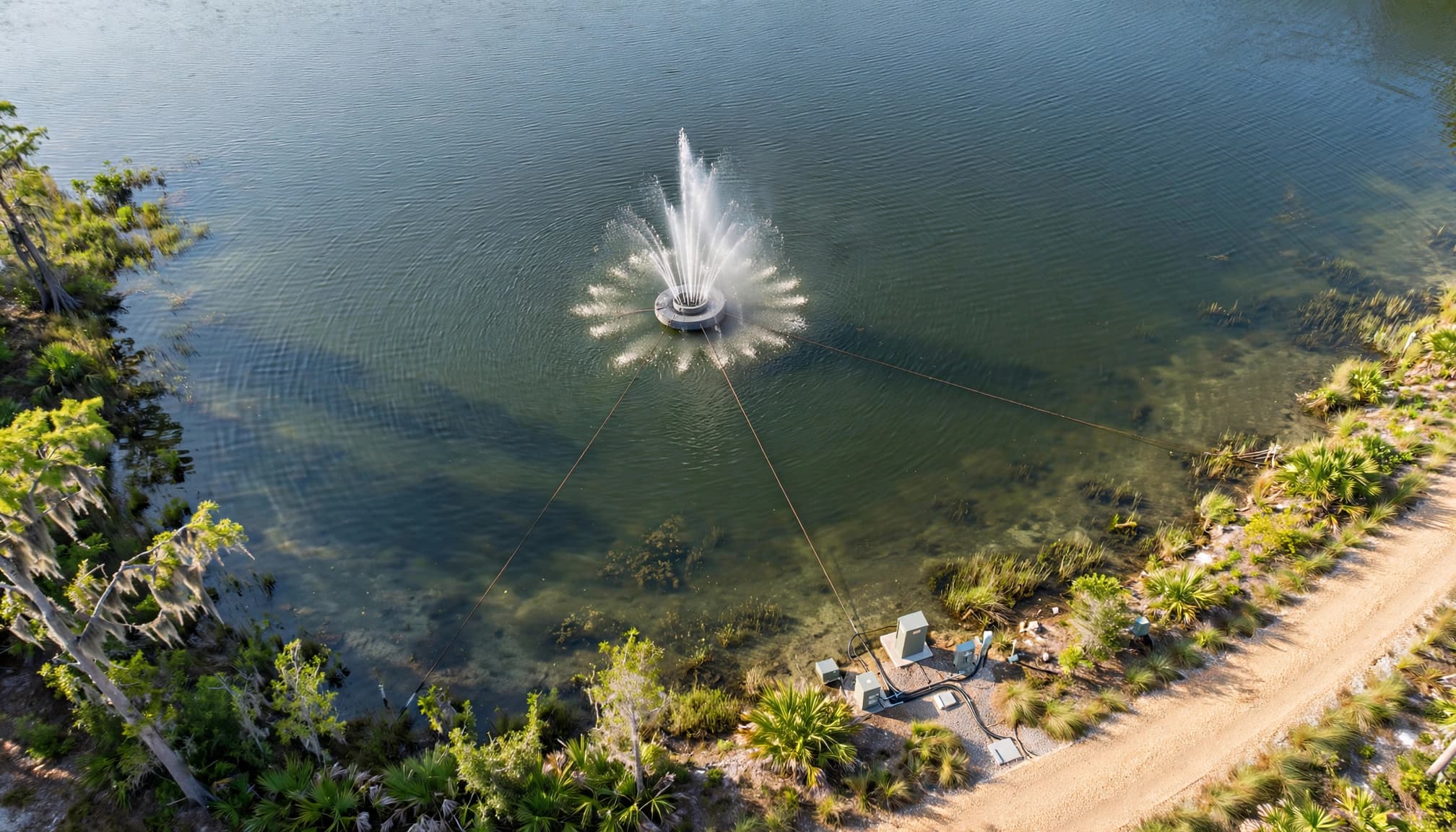
Selecting anchor points
The technician may mark the fountain's proposed position, anchor points, cable route, access path, and nearby structures. Anchor selection depends on the fountain, lakebed, water movement, and site conditions.
The anchor arrangement should hold the unit without placing unnecessary strain on floats, mooring lines, cables, or shoreline features. The floating fountain anchor installation guidance also emphasizes confirming local property, drainage, electrical, environmental, and community requirements before work begins.
A survey may recommend different anchor locations if the lakebed is unstable, the fountain could drift toward an inlet, or the planned position would make future retrieval difficult.
Planning routine service
Maintenance access should be practical throughout the year, not only on installation day. The technician may identify where a service vehicle can park, where equipment can be lifted, and how workers can reach the fountain without damaging landscaping or entering unsafe water.
A useful property record can include the fountain model, anchor locations, electrical shutoff, normal spray direction, and maintenance dates. These details help new property managers and service crews recognize when the fountain has moved or its performance has changed.
Environmental Conditions and Future Recommendations
The lake's environment affects both the fountain's appearance and its service needs. Florida heat, sunlight, rainfall, algae, debris, and mineral-heavy water can place different demands on equipment throughout the year.
Algae, debris, and water movement
Technicians may look for algae buildup, leaves, floating debris, sediment, and signs of poor circulation. A fountain can move water and add aeration, but its effect depends on the equipment, lake shape, water depth, and placement.
The survey shouldn't promise that a fountain will eliminate algae or solve every water-quality issue. Instead, it helps identify conditions that may affect intake cleaning, nozzle performance, spray appearance, and service frequency.
Weather and changing conditions
Storms can move floating equipment, add debris, damage cables, and change shoreline access. A technician may recommend documenting the normal fountain position and checking the system after severe weather.
The survey may also identify exposed equipment or anchor points that need closer attention before tropical weather. Any storm preparation plan should account for the specific fountain, property, manufacturer's instructions, and local conditions.
What the Technician Documents Afterward
After a lake fountain site survey, the technician may provide notes, photos, measurements, and a recommendation for installation or repair. The documentation may identify the proposed fountain position, depth observations, anchor points, cable path, electrical shutoff, service access, and nearby features.
For a repair, the report may describe symptoms such as low flow, uneven spray, unusual vibration, a clogged intake, damaged hardware, or a breaker that trips when the pump starts. Those details help the property owner understand whether the next step involves cleaning, adjustment, electrical work, replacement parts, or a larger repair.
Requirements for permits, approvals, drainage, environmental protection, and electrical work can vary. Property owners should ask which items apply to their location instead of assuming that another lake or community follows the same process.
FAQ About a Lake Fountain Site Survey
Does every lake fountain need the same survey?
No. A small residential pond, a community retention pond, and a large lake can have different access, depth, electrical, anchoring, and environmental conditions. A repair survey may focus on existing equipment, while a new installation requires more planning for location and infrastructure.
Can a technician survey the lake from the shoreline?
Some conditions can be assessed from shore, including access, visible equipment, wind exposure, vegetation, drainage features, and electrical service. However, a floating fountain may require a boat, waders, or another retrieval method for a complete inspection of the intake, motor housing, floats, cable, and anchors.
Will the survey confirm whether a permit is required?
The technician can identify site features and recommend that the owner confirm local requirements. Permit and approval rules may depend on lake ownership, county or municipal policies, drainage conditions, electrical work, environmental concerns, and community rules. They aren't identical at every property.
What should a property owner have ready?
Provide access to gates, electrical panels, control boxes, docks, and shoreline areas. Share information about breaker trips, spray changes, unusual noise, vibration, algae, storm damage, or past repairs. If available, bring the fountain model, maintenance records, and any documentation showing the normal spray direction or anchor locations.
Conclusion
A lake fountain site survey connects the fountain's appearance with the practical details that keep it operating safely. Depth, wind, access, electrical service, cable routing, anchors, vegetation, debris, and future maintenance all influence the recommendation.
The strongest installation plan is specific to the lake. For professional lake fountain installation and maintenance, a clear survey gives the property owner a better understanding of the work, the site conditions, and the care the system will need over time.
Latest posts
Read Our Blog
Tips, guides, industry best practices, and news.

Contact us
Get in touch
Our friendly team is ready to chat.