
Lake Fountain Motor Running Backward After Service?
A lake fountain motor that appears to run backward after electrical service should stay off until a qualified professional assesses the electrical supply and pump. Recent service is an important clue, but weak or uneven spray doesn't prove reversed rotation.
For homeowners and community managers, the immediate priorities are safe shutdown and a clear record of what changed. Repeated starts can expose people to electrical hazards and allow an unresolved equipment problem to continue.
Start by separating observations you can make from shore from work that belongs to an electrician or fountain technician.
Key Takeaways
- Keep the fountain disconnected until a qualified electrician assesses its wiring, rotation, and the manufacturer's operating requirements.
- Identify the motor and pump together, because the motor nameplate alone doesn't establish compatibility with every fountain component.
- Record changes in spray, noise, vibration, and breaker behavior without restarting the equipment to reproduce them.
- Treat damaged cables, water intrusion, and repeated protective-device trips as reasons to leave the system off.
Start With What Changed During Electrical Service
The service timeline helps narrow the inspection. However, it doesn't establish the cause by itself.
Describe the work and the first symptom
Give the service professional the date of the electrical work and any available work order. Useful details include whether the work involved the property's electrical service, fountain controls, a timer, or a replacement motor.
Also describe the first change you noticed. A lower spray, an unfamiliar sound, or a breaker trip gives the technician different information. Use plain descriptions rather than labeling every performance change as backward rotation.
For a community lake, identify who first noticed the problem and whether anyone restarted the fountain afterward.
Preserve observations without repeating the fault
Existing photos or videos can show how the display changed. Record whether the problem appeared immediately after service or developed later during normal operation.
Weather also matters. Rain-related trouble can direct attention toward outdoor connections and enclosures, while a persistent weak spray may require a pump inspection.
Don't turn the fountain on again to collect better evidence. A written account of what already happened is more useful than another uncontrolled test.
Identify the Lake Fountain Motor Before Choosing Repairs
The motor, pump, and controls form one system. Identifying only one component can leave important requirements out of the repair decision.
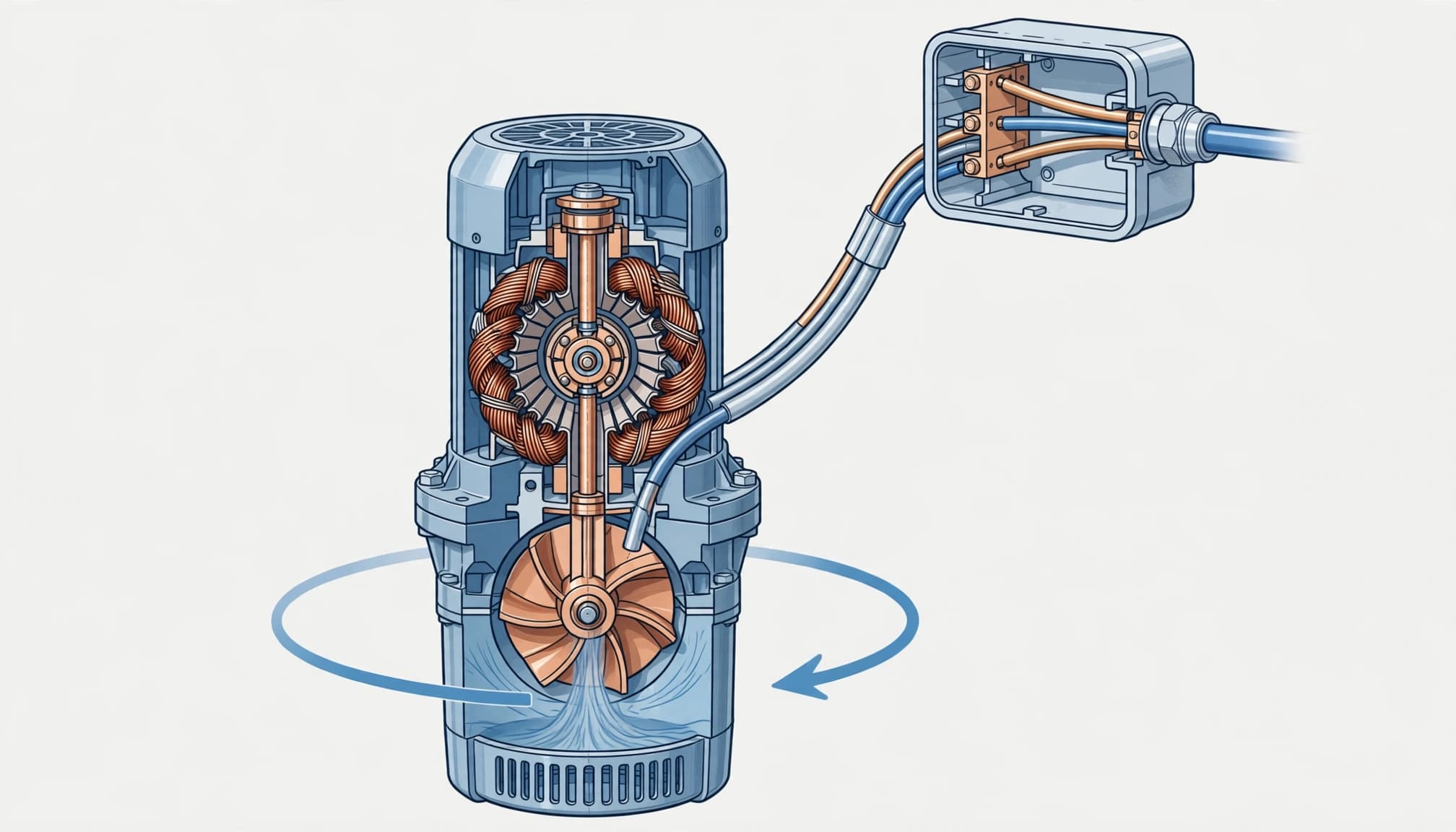
Single-phase and three-phase motors require different diagnosis
Single-phase and three-phase describe different electrical supply arrangements. They aren't interchangeable descriptions, and their controls and diagnostic procedures can differ.
An electrician needs the actual motor identification and wiring documentation before deciding how to proceed. Advice for another fountain, even one with a similar spray pattern, may not apply.
The number of visible wires isn't a reliable shortcut for an owner. Cables can include grounding conductors and other connections, so appearance alone doesn't identify the motor's electrical arrangement.
Read the nameplate alongside the fountain records
A motor nameplate commonly lists voltage, phase, horsepower, and rotational speed. Those details help identify the motor, but they don't establish every compatible pump part or control component.
The complete equipment record should also include the pump model and fountain manufacturer's specifications. Existing installation paperwork and accessible label photographs can help the technician prepare.
Don't retrieve a submerged unit to photograph its label. If identification requires lifting or opening equipment, leave that work to the service team after electrical isolation.
Weak Spray Doesn't Establish Backward Rotation
A fountain can run poorly for several reasons. The visible water pattern helps describe the symptom, but it can't replace a mechanical and electrical inspection.
Intake and nozzle problems can reduce performance
Algae, sediment, and other debris can restrict an intake or obstruct a nozzle. These conditions may reduce spray height or create an uneven display.
Internal pump wear and impeller problems can also reduce water movement. Therefore, a running motor with little visible output doesn't automatically identify the electrical cause.
Our lake fountain repair guide covers common pump, nozzle, and electrical problems. Cleaning or mechanical inspection still requires shutdown and manufacturer-approved procedures.
Rotation needs an equipment-specific assessment
A qualified professional should assess rotation using the method required for that fountain assembly. Spray direction alone doesn't show which way an enclosed motor shaft is turning.
Viewing direction also matters when interpreting rotation instructions. The equipment documentation must establish the correct reference point.
A motor that starts and moves some water hasn't necessarily passed a rotation or performance check.
Keep earlier photos of the normal display available. They can help compare performance after repairs without substituting for the required equipment checks.
Disconnect Power Before Any Inspection
Turn the fountain off using its normal disconnecting means only if you can reach it safely. If the enclosure is damaged, wet, or otherwise unsafe to approach, keep away and have an electrician isolate the supply.
A timer or remote command isn't a substitute for electrical isolation. Automatic controls can restart equipment unexpectedly.
Before anyone opens an enclosure or handles fountain components, a qualified professional should secure the supply against unintended restart and establish that the equipment is de-energized. Never handle a submerged pump, cable, plug, or float while power remains connected.
From a safe shoreline location, you can note visible cable damage, a displaced float, or unusual fountain positioning. Don't pull cables, open control boxes, or enter the water for a closer look.
Keep the system off if you notice cracked housings, unusual odors, damaged cords, loose anchors, or possible water intrusion. These conditions need attention before a restart, regardless of the suspected rotation problem.
For shared community lakes, tell the property manager that the fountain is awaiting service. This reduces the chance that someone else will restart it through a timer or control panel.
What Breaker Trips and Other Warning Signs Mean
Protective-device trips provide useful information, but they don't establish the direction of motor rotation. Treat them as a separate safety concern that the technician must investigate.
The timing of a trip helps guide diagnosis
An immediate trip can point toward a short circuit, ground fault, damaged cable, or motor fault. A trip after several minutes may involve overheating or an electrical load problem.
Rain-related trips direct attention toward outdoor receptacles, splice enclosures, timers, and connections that may admit moisture. Meanwhile, trouble limited to fountain operation makes the pump and its cable important inspection points.
Report the timing you already observed. Don't reset the breaker repeatedly to recreate it.
Noise and vibration deserve attention too
Grinding, unusual vibration, and persistent uneven spray can indicate problems beyond the electrical supply. A fountain technician should inspect the relevant mechanical components after safe isolation.
Also report whether a breaker or ground-fault circuit interrupter, commonly called a GFCI, operated. That distinction helps describe which protective device responded.
Our explanation of why fountain breakers trip covers damaged cables, moisture, motor problems, and circuit overloads. A trip is a warning to investigate, not an invitation to keep resetting.
What Professional Service Should Cover Before Restarting
An electrician should assess the supply, connections, controls, and protective devices. A fountain technician should inspect the pump assembly, impeller, intake, nozzle, floats, anchors, and submerged components as the situation requires.
The professionals should coordinate their findings. An electrical repair doesn't resolve a damaged impeller, and cleaning a nozzle doesn't establish that the electrical system is safe.
Before restarting, the service team should establish that the wiring, motor rotation, and operating conditions meet the manufacturer's requirements. Any required inspection or repair comes first.
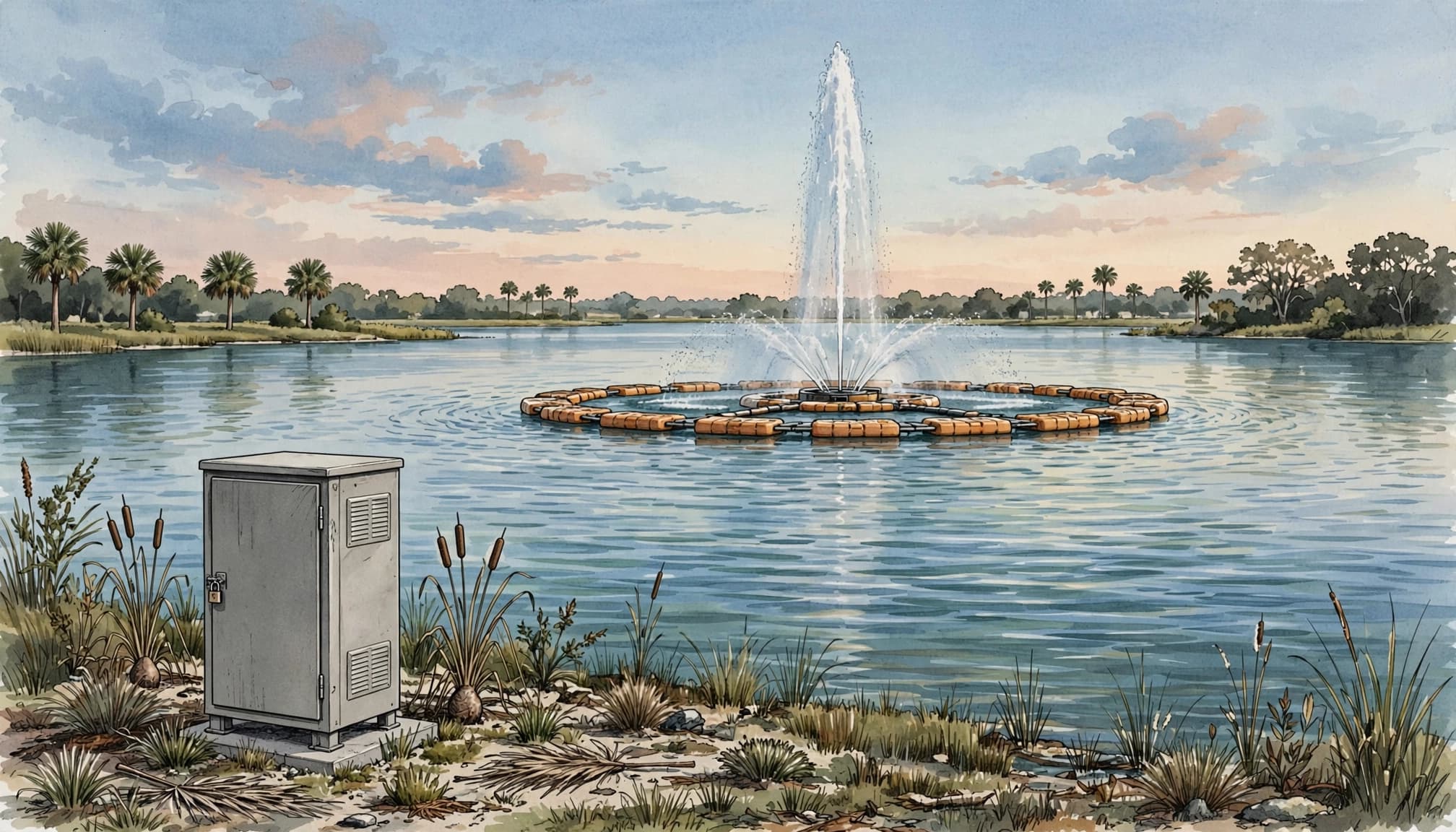
During the controlled return to operation, the team should watch for reduced flow, unusual noise, vibration, uneven spray, and protective-device trips. If those symptoms remain, the fountain should go back out of service.
The service record should document the equipment identification, findings, repairs, and operating observations. That gives future technicians a useful baseline.
At Trademark Water Systems, we provide lake water fountain services for Naples and Southwest Florida. After repairs, our lake fountain maintenance checklist can help owners recognize changes that warrant another service visit.
Frequently Asked Questions
Does suspected backward operation mean the motor needs replacement?
It doesn't automatically establish that a replacement is necessary. The repair decision depends on the motor's condition, the pump assembly, the electrical findings, and compatibility with the fountain system. Ordering a motor before diagnosis can leave the original problem unresolved.
Can I run the fountain briefly to see whether it improves?
Leave it off until the professional assessment is complete. Repeated starts don't establish safe wiring or correct operation. They also create additional opportunities for an unresolved electrical or mechanical fault to affect the equipment.
Do working fountain lights mean the motor circuit is safe?
Working lights don't establish that the motor supply, cable, or controls are sound. Lighting and pumping equipment can have different electrical arrangements. Describe which components still operate, but don't use that observation as permission to restart the pump.
Restore Safe Operation Before Restoring the Display
A lake fountain motor that behaves differently after electrical service needs a clear diagnosis before another start. The service timeline, equipment identification, and existing observations give the repair team a useful starting point.
Keep power disconnected until qualified professionals address the electrical and mechanical concerns. The fountain should return to service only after its wiring, rotation, and operating conditions meet the manufacturer's requirements.
Latest posts
Read Our Blog
Tips, guides, industry best practices, and news.

Contact us
Get in touch
Our friendly team is ready to chat.
