
Lake Fountain Maintenance Checklist for Florida Property Owners
A fountain can make a community lake look cared for, but Florida weather can turn small issues into expensive repairs. Lake fountain maintenance protects the pump, keeps the spray attractive, and supports better circulation in warm water.
Heat, rain, mineral-heavy water, algae, and storms all put pressure on equipment. A regular inspection routine helps homeowners, HOAs, and property managers spot trouble before the fountain loses flow or stops altogether.
Use this checklist as a working guide, then match service intervals to the fountain manufacturer, pond conditions, and your property's needs.
Build a Lake Fountain Maintenance Checklist Around Real Conditions
A calendar is useful, but the lake should set the pace. A fountain under oak trees, beside a golf course, or in a shallow sunny pond may need more attention than one in open water with little debris.
Start with a visual review from shore at least weekly during Florida's hottest and wettest months. Then inspect the system after major storms, landscaping work, or any change in water appearance.
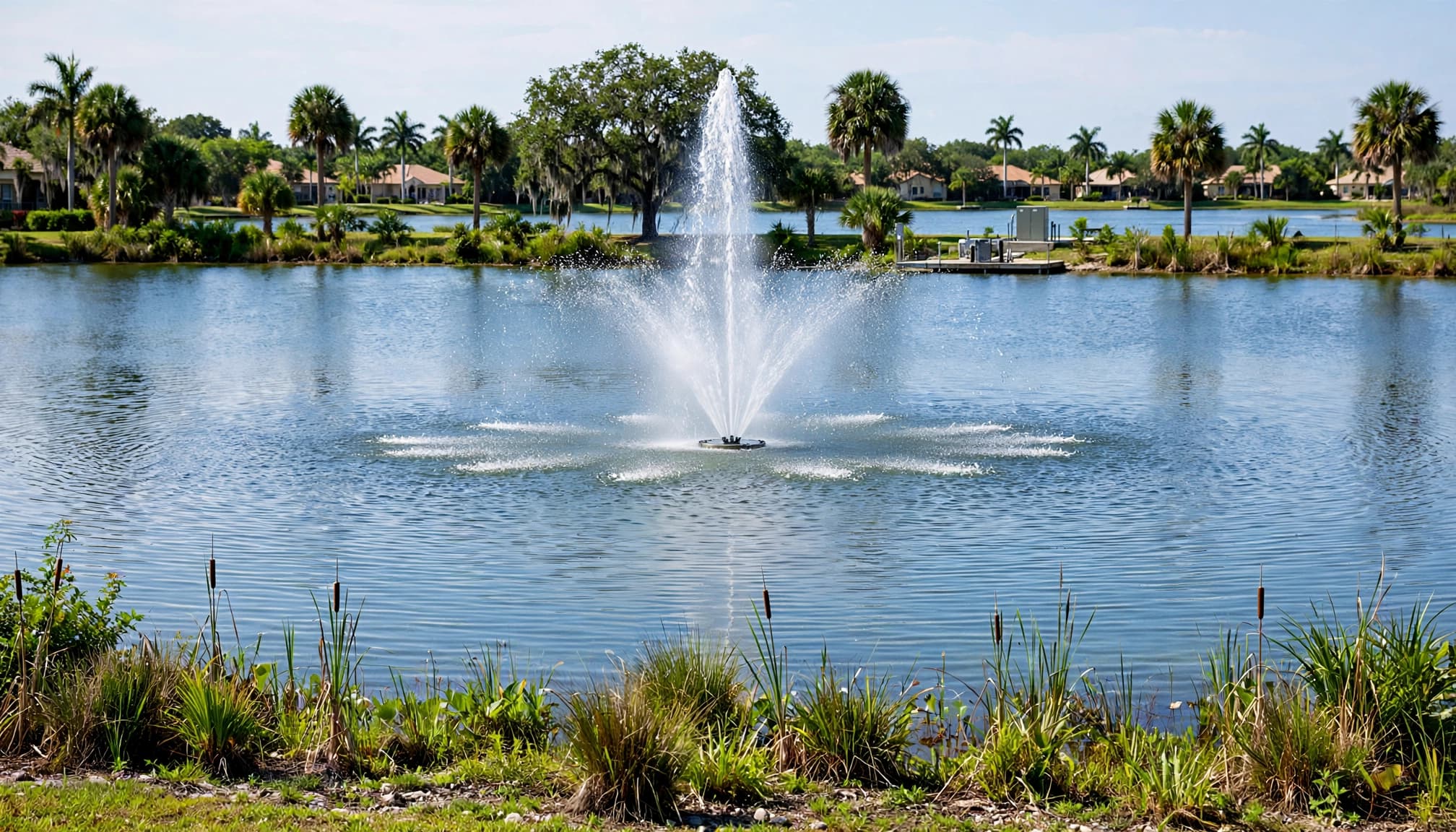
Watch the spray pattern and water level
Look for an even, full spray pattern. A low, sputtering, tilted, or broken-looking display can point to a clogged intake, nozzle buildup, low water, damaged float, or pump trouble.
Also compare the fountain's height with its usual operation. A sudden change matters more than an exact measurement. Keep the pump submerged according to the manufacturer's instructions, since a pump that runs dry can suffer permanent damage.
Keep a simple service record
HOA boards and property managers benefit from a short log. Record the inspection date, weather, water level, spray appearance, debris removed, and any breaker trips.
Photos taken from the same shoreline location can help. They make gradual changes in circulation, algae, or spray shape easier to notice. They also give a repair technician useful context if a problem develops.
Florida Heat, Humidity, and Rain Change the Routine
Florida's climate gives fountain equipment little downtime. High temperatures warm the water, while humidity and bright sun encourage algae and biofilm. At the same time, heavy rain can carry leaves, mulch, fertilizer residue, and sediment into a pond.
Increase checks during hot, dry weather
Warm, windy conditions can lower water levels faster than expected. Check the float and pump depth more often during dry stretches, particularly in smaller ornamental ponds.
Heat also speeds algae growth. If green film collects on floats, screens, or nozzles, clean it before it restricts flow. CDC guidance for decorative fountains calls for prompt cleaning and disinfection when algae, cloudy water, foul odor, visible debris, or biofilm appears.
Inspect after heavy rain and runoff
After a downpour, walk the shoreline and look for cloudy water, fresh sediment, branches, floating trash, or plants wrapped around mooring lines. Stormwater can change water clarity in hours.
Clear visible debris before it reaches the intake. Then check anchors, cables, and the fountain's position. If the unit has shifted, shut it down rather than trying to pull or reposition it while energized.
A fountain that looks normal from a distance can still have a partly blocked intake. Reduced flow often appears before a complete shutdown.
Make Electrical and Water Safety the First Priority
Lake fountains combine electricity, water, and moving equipment. Treat every inspection as electrical work until power is confirmed off.
Never enter the water to service a fountain. Keep swimmers, pets, and unauthorized visitors away from the unit, its power cable, and the control panel.
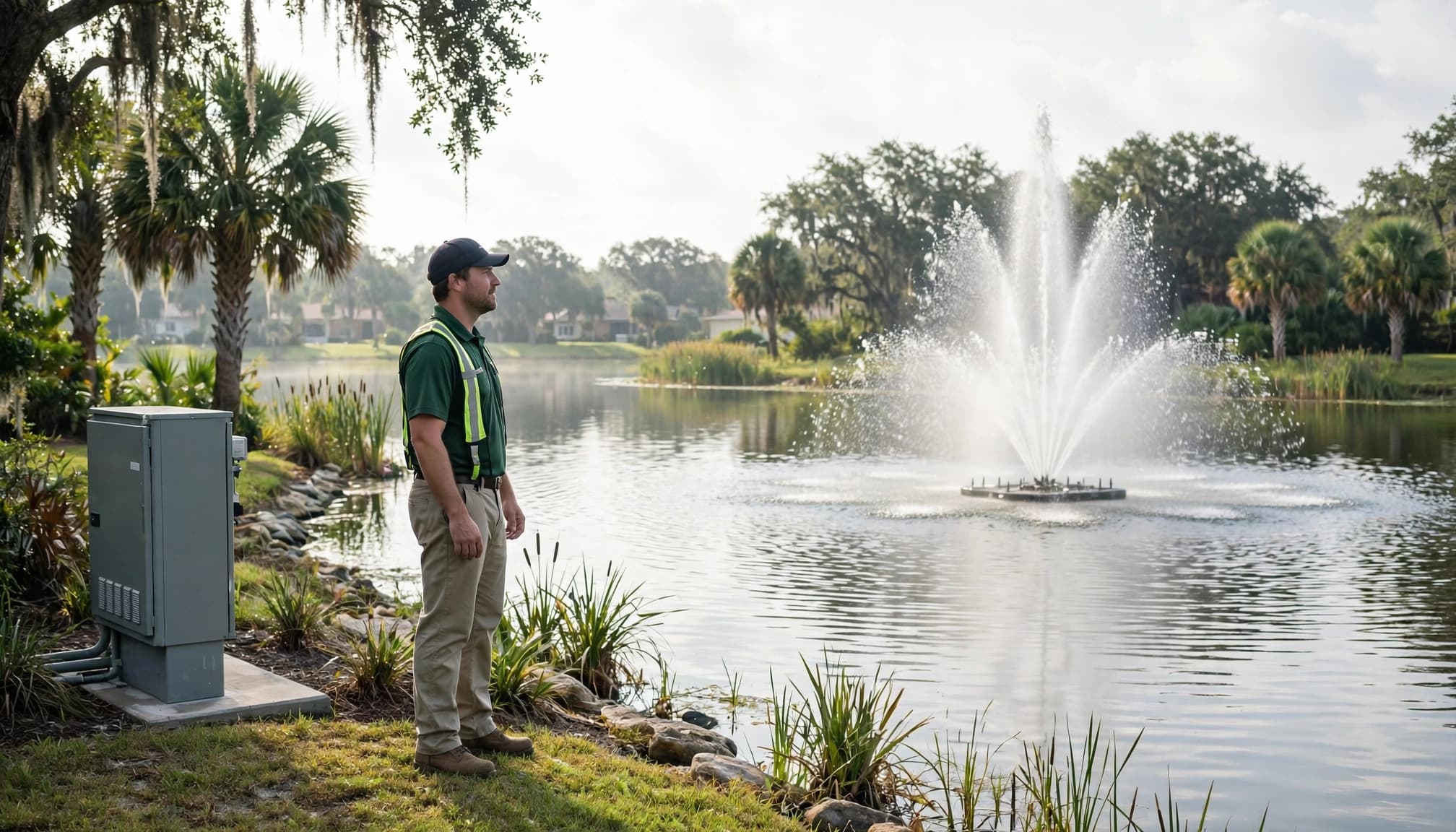
Shut off power before touching equipment
Turn off power at the proper disconnect or breaker before cleaning, moving, or inspecting the pump, intake, nozzles, float, or electrical connections. Confirm the equipment cannot restart while work is underway.
Fountain-pump guidance calls for a GFCI-protected circuit and warns against extension cords. If a breaker trips, don't keep resetting it. Water intrusion, a worn cable, or motor trouble may be present.
Use a qualified electrician for questions about grounding, GFCI protection, outdoor wiring, or control-panel faults. Electrical repairs belong in trained hands.
Check cables, anchors, and the control panel
From shore, inspect exposed cable sections for cuts, abrasion, cracking, or loose connections. Look for frayed mooring lines, worn shackles, cracked floats, and corrosion around hardware.
Keep vegetation trimmed away from the panel and access area. However, don't remove shoreline plants in protected areas or alter a bank without approval. Florida shoreline fountain placement guidance can help property managers assess access, anchoring, and debris risks before changes are made.
Clean Algae, Debris, and Intake Screens Before Flow Drops
Routine cleaning is the practical core of lake fountain maintenance. Organic debris and algae rarely stay on the surface. They work their way into screens, nozzles, impellers, and moving parts.
Follow the manufacturer's instructions for lifting or accessing the fountain. Large floating systems often need proper equipment and trained service personnel, not a shoreline improvisation.
Remove leaves, plant matter, and wildlife debris
Skim leaves, twigs, grass clippings, plastic, and nesting material from the water near the fountain. Check the intake screen for buildup when the system is safely powered down.
Florida wildlife also adds organic waste to ponds. Avoid handling nests, eggs, injured animals, or protected species without local guidance. Instead, document the concern and contact the appropriate wildlife authority or qualified professional when needed.

Photo by Chris The Island
Address algae without damaging the system
Don't rely on an algaecide as a substitute for cleaning. Physical debris removal, working circulation, and the right water treatment plan all matter.
Use only products approved for the exact water body and purpose. The label controls dosage, timing, personal protective equipment, and restrictions on irrigation, fishing, pets, or water use. Pool chemicals and household cleaners can damage pumps, finishes, fish, plants, and beneficial pond organisms.
Manage Hard Water, Mineral Scale, and Corrosion
Mineral buildup can mimic an algae problem. White crust on nozzles, floats, fittings, or decorative surfaces often comes from hard water. Iron can leave orange-brown staining, while mineral deposits restrict small openings.
In Southwest Florida, water chemistry can vary from one property to the next. Therefore, avoid guessing based on a neighbor's pond.
Use material-safe cleaning methods
Consult the fountain manual before choosing a cleaner. Mild soap, fresh water, or a manufacturer-approved descaling product may suit one unit, while it could damage another.
Copper, stainless steel, coated metal, fiberglass, resin, and stone each need compatible care. Avoid abrasive pads unless the manufacturer approves them. Rinse away any approved cleaner thoroughly before restarting the equipment.
Hard water isn't limited to lake systems. If mineral scale also appears on faucets, showerheads, and appliances, guidance on white scale from well water can help identify the broader water-conditioning issue.
Look beyond the visible deposits
Scale can collect inside nozzles and around pump components long before it becomes obvious. Watch for a spray pattern that becomes uneven over several weeks.
Humidity, salt air near the coast, and standing moisture can also corrode metal fittings and electrical connections. Replace damaged hardware with manufacturer-compatible parts. Mixing metals or using unsuitable fasteners can speed up corrosion.
Use Pond Chemicals With Care for People and Wildlife
A lake fountain improves movement and appearance, but it doesn't give every chemical a free pass. Florida's lakes, retention ponds, canals, and stormwater features can have different ownership, drainage connections, and management rules.
Check local requirements if the fountain is connected to a lake, pond, canal, or stormwater system. Also confirm whether the water body is regulated as a water of the state under Florida law.
Follow labels and verify treatment rules
University of Florida IFAS and the Florida Fish and Wildlife Conservation Commission identify aquatic-plant management as regulated work. Herbicide labels and Florida requirements can include use limitations and setbacks near potable-water intakes.
Before treating algae or aquatic vegetation, verify that the product label allows that use and that the application meets local and state requirements. A licensed aquatic-management professional can evaluate the water body, target growth, weather, and non-target risks.
Protect fish, plants, and shoreline habitat
Treating too much area at once can reduce oxygen as plant material dies and decomposes. That can stress fish, especially during hot weather when dissolved oxygen is already lower.
Use the least disruptive approach that fits the problem. Remove debris, maintain circulation, and correct nutrient sources where possible. Keep chemical containers away from the shoreline and never rinse tools or leftover products into the pond.
Prepare the Fountain Before Hurricane Season
Storm preparation starts before a named system appears on the forecast. Review the manufacturer's storm instructions, locate the electrical disconnect, and confirm who has authority to shut down and inspect the fountain.
For communities, assign a contact person and keep the service company's number with the maintenance log.
Power down before severe weather arrives
When high winds, flooding, or lightning are expected, turn off the fountain through the proper disconnect. Do not approach electrical equipment during a storm or while standing water surrounds the panel.
Secure loose shoreline items that could strike cables or the control panel. If the manufacturer permits it, reduce exposure by removing or securing accessories that may blow loose.
Inspect carefully after the storm
Wait until conditions are safe, then inspect the shoreline, panel, power cable, anchors, floats, and spray components. Check for shifted equipment, submerged debris, floodwater contamination, and damage from branches.
Don't restart a unit with a damaged cable, tripped breaker, unusual vibration, or visibly low water. Lake fountain repair guidance can help identify common failure signs, but electrical faults and major mechanical issues need professional diagnosis.
Know When a Fountain Needs Professional Repair
Some maintenance belongs on a regular property checklist. Other problems need a technician with the right lifting equipment, electrical knowledge, and replacement parts.
Call for service when the fountain repeatedly trips a breaker, loses flow after cleaning, makes grinding sounds, vibrates unusually, or develops a persistent uneven spray. A pump that runs but produces little movement may have an intake blockage, impeller issue, or internal wear.
Also schedule help when anchors drift, cables fray, hardware corrodes, or algae returns quickly after basic cleaning. Lake fountain maintenance services can include pump and nozzle cleaning, inspection, spray adjustment, and repairs suited to the property.
Keep the Fountain Working Through Florida Weather
Florida fountains need attention because their environment is demanding. Regular observation, safe shutdown procedures, debris removal, and manufacturer-approved care prevent many avoidable failures.
The strongest lake fountain maintenance plan responds to the actual pond, not a rigid one-size-fits-all schedule. When the spray changes, the breaker trips, or storm damage appears, address it before a small issue takes the fountain offline.
Latest posts
Read Our Blog
Tips, guides, industry best practices, and news.


Contact us
Get in touch
Our friendly team is ready to chat.