

Why a Lake Fountain Pump Keeps Tripping the Breaker
A breaker that trips when a fountain starts is a warning, not an inconvenience. Your display may stop, but the electrical system is reacting to a condition that could damage equipment or create a shock hazard.
A fountain pump tripping breaker often points to moisture, a damaged cable, a failing motor, or an overloaded circuit. Because the pump runs underwater and its wiring sits outdoors, don't treat repeated tripping as a reset-and-go problem. Start with safety, then narrow down the cause.
Fountain Pump Tripping Breaker: Common Causes
A breaker opens when it senses too much current, a short circuit, or a ground fault. A GFCI outlet or breaker trips when electricity takes an unintended path, including through water or damaged insulation.
Water intrusion in the pump or cable
A cracked cord jacket, worn pump seal, or loose underwater connection can let water reach electrical components. Even a small amount of moisture may create a ground fault.
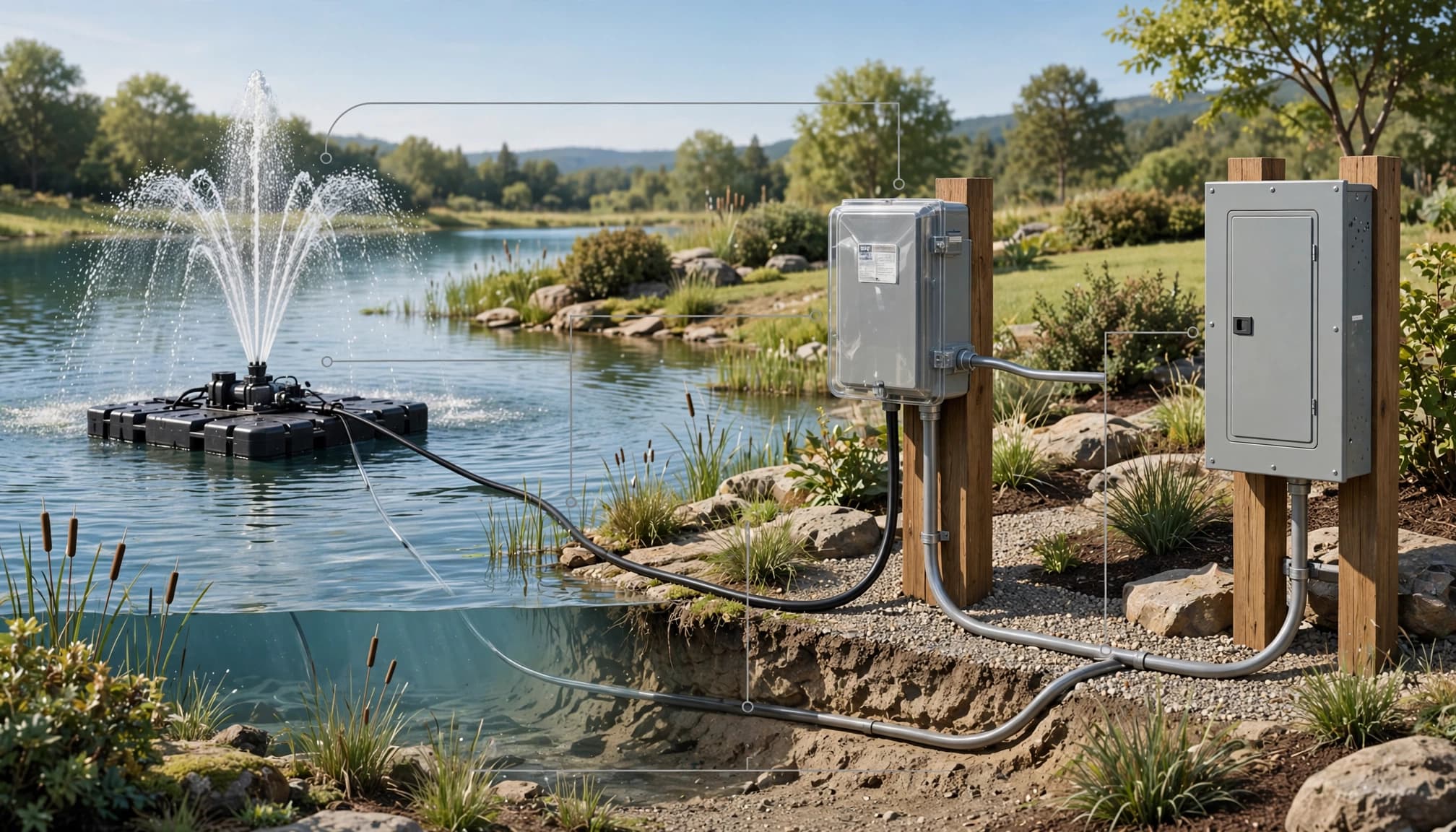
Inspect the entire visible cable for cuts, flattened areas, chew marks, or brittle insulation. Pay close attention where the cord leaves the water and where it enters protective conduit. Keep plugs, cord connections, timers, and outlet covers out of standing water .
A pump motor that is failing
Pump motors wear over time. Internal insulation can break down, bearings can seize, and windings can fail. When the motor draws abnormal current, the breaker trips to prevent overheating.
A pump that hums briefly, starts slowly, or trips the breaker immediately may have an internal motor problem. A clogged intake can also make the motor work harder, especially when algae, leaves, fishing line, or debris restrict water flow.
Circuit overloads and outdoor connection problems
A lake fountain should have the electrical supply recommended by its manufacturer. If the same circuit also powers landscape lights, dock equipment, refrigerators, tools, or other loads, the combined demand may exceed the breaker's rating.
Moisture inside a weatherproof cover, a corroded receptacle, or a worn extension cord can also cause trouble. Outdoor wiring has a hard job in Florida heat, rain, and humidity. Corrosion at a connection can raise resistance and create heat.
A breaker that trips only when the fountain starts can still indicate a damaged pump, even if other equipment on the circuit runs normally.
Shut Down Safely Before You Inspect Anything
Never handle a submerged pump, cable, plug, or fountain float while the system has power. Underwater equipment and outdoor wiring can create serious shock hazards when insulation or connections fail.
First, turn the fountain circuit off at the breaker. Then unplug the unit only after you confirm the circuit is off. Keep everyone away from the water until the source of the fault is identified.
Never keep resetting the breaker
Resetting a tripped breaker once after a known temporary overload may be reasonable. Repeatedly resetting it without finding the cause can damage the pump, wiring, or breaker.
Do not bypass a GFCI outlet or breaker. Don't replace it with a standard outlet, tape a reset button in place, or use an adapter to defeat the safety feature. The trip is giving you important information.
Check only what is safe to see
With power disconnected, inspect the dry, accessible parts of the system. Look for:
- A wet, cracked, or corroded outlet cover and receptacle.
- Damaged cord insulation, loose strain relief, or exposed wire.
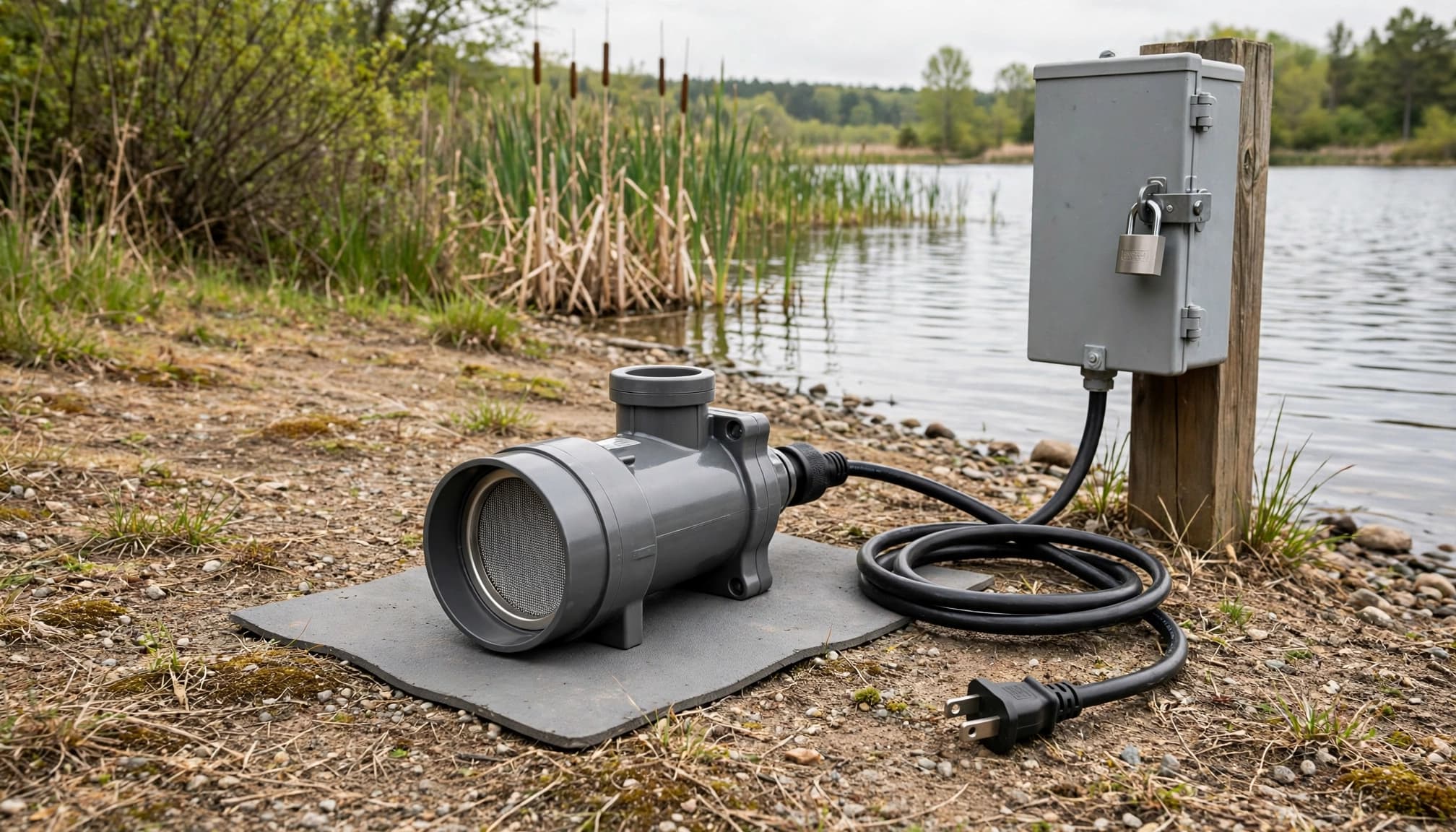
- A blocked intake screen, wrapped debris, or a bent impeller area.
- A pump housing with cracks, missing fasteners, or visible seal damage.
Don't perform live-voltage tests near the shoreline or water. A qualified electrician or fountain technician can test the circuit and pump safely with proper equipment.
Isolate the Source Without Taking Risks
A careful process can help you describe the problem clearly to a service professional. Keep the pump disconnected while you check the breaker and outlet area for obvious damage.
Notice when the trip happens
Timing offers useful clues. An immediate trip after reset often points to a short, ground fault, damaged cord, or failed motor. A trip after several minutes may suggest overheating, a clogged intake, or a circuit that becomes overloaded as other equipment turns on.
If rain triggers the problem, suspect an outdoor receptacle, splice enclosure, timer, or connection that isn't keeping water out. If the breaker trips only during fountain operation, the pump or its cable deserves close attention.
Separate pump issues from circuit issues
After disconnecting the fountain, leave it unplugged and restore power only to the empty circuit. If the breaker or GFCI still trips, stop there. The fault may be in the wiring, receptacle, breaker, or another connected device.
If the circuit holds with the pump removed but trips when the pump is connected, don't keep testing it. That pattern strongly suggests trouble with the fountain equipment or its cord.
Prevent Future Breaker Trips
Routine cleaning reduces strain on the pump. Remove debris from the intake screen according to the manufacturer's instructions, and check the fountain's float, mooring lines, and cable route during regular shoreline maintenance.
Keep every electrical connection raised above ground and protected by outdoor-rated covers. Avoid running fountain cords through puddles, across sharp edges, or where mowers and foot traffic can damage them.
For community lakes, document trip dates, weather conditions, run times, and recent maintenance. Those details help a repair technician find intermittent faults faster. Professional lake fountain maintenance can also catch worn components before they cause a shutdown.
When to Call for Fountain Pump Repair
Call a qualified electrician or lake fountain service professional when the breaker trips more than once, the cable shows damage, the GFCI won't reset, or the pump has been submerged during a storm or flood.
A technician can inspect the pump, cord, controls, receptacle, and circuit without exposing anyone to energized equipment near water. Replacing a compromised pump or cable is safer than trying to extend its service life.
Final Thoughts
A fountain breaker trip protects people and equipment from an electrical fault. Treat it as a signal to disconnect power, keep connections dry, and inspect only after the system is off.
The safest response to a fountain pump tripping breaker is never repeated resetting. Find the source of the problem before the fountain goes back in the water.
FAQs
Can a clogged fountain pump trip a breaker?
Yes. Heavy debris can restrict water flow and force the motor to work harder. However, a clog isn't the only possible cause, so disconnect power before cleaning and inspect the pump for other damage.
Why does my GFCI trip after rain?
Rain can expose a weak outdoor cover, corroded receptacle, damaged cord, or wet connection. Keep the fountain unplugged until a qualified professional finds and corrects the moisture source.
Should I use an extension cord for a lake fountain?
Use only the power connection and cord arrangement approved by the fountain manufacturer and local electrical requirements. A temporary or undersized extension cord can overheat, collect moisture, and create a shock risk.
Latest posts
Read Our Blog
Tips, guides, industry best practices, and news.


Contact us
Get in touch
Our friendly team is ready to chat.