
Why a Whole-House RO Storage Tank Becomes Waterlogged
A pressurized tank in a whole-house reverse osmosis system may seem waterlogged because of an air-charge problem or a failed internal bladder. However, weak flow and frequent pump starts alone don't establish that diagnosis.
Your system may also have a large atmospheric storage tank, which works differently from a pressure tank. Identifying which tank is involved helps you avoid unnecessary adjustments or replacement. Start with the storage layout, then separate tank concerns from problems elsewhere in the system.
Key Takeaways
- Air-charge loss and bladder failure are possible concerns in a pressurized tank, but similar symptoms have other causes.
- Atmospheric storage holds treated water, while a separate repressurization pump normally delivers it through the house.
- Low storage levels, weak flow, and frequent cycling can involve filters, pumps, valves, controls, or membrane performance.
- Keep homeowner troubleshooting non-invasive. Follow the manufacturer's instructions, and arrange professional service for persistent problems, leaks, or electrical concerns.
First, Identify Which RO Tank You Have
Whole-house RO equipment can include more than one tank. The large vessel holding treated water may operate differently from a smaller tank connected to the delivery pump.
Atmospheric storage holds the water reserve
An atmospheric tank stores treated water without maintaining household plumbing pressure inside the tank. Because the RO membrane produces water gradually, storage supplies the reserve needed during heavier use.
A repressurization pump normally moves that water to showers, faucets, and appliances. Therefore, a full storage tank doesn't automatically explain poor household pressure.
If the storage tank has water but faucets run weakly, the delivery pump, downstream restrictions, or controls deserve attention. A low tank level raises different questions, including whether production is keeping up with demand.
A pressure tank supports water delivery
A bladder-style pressure tank separates water and compressed air with a flexible internal barrier. Its air side helps the system deliver water between pump starts.
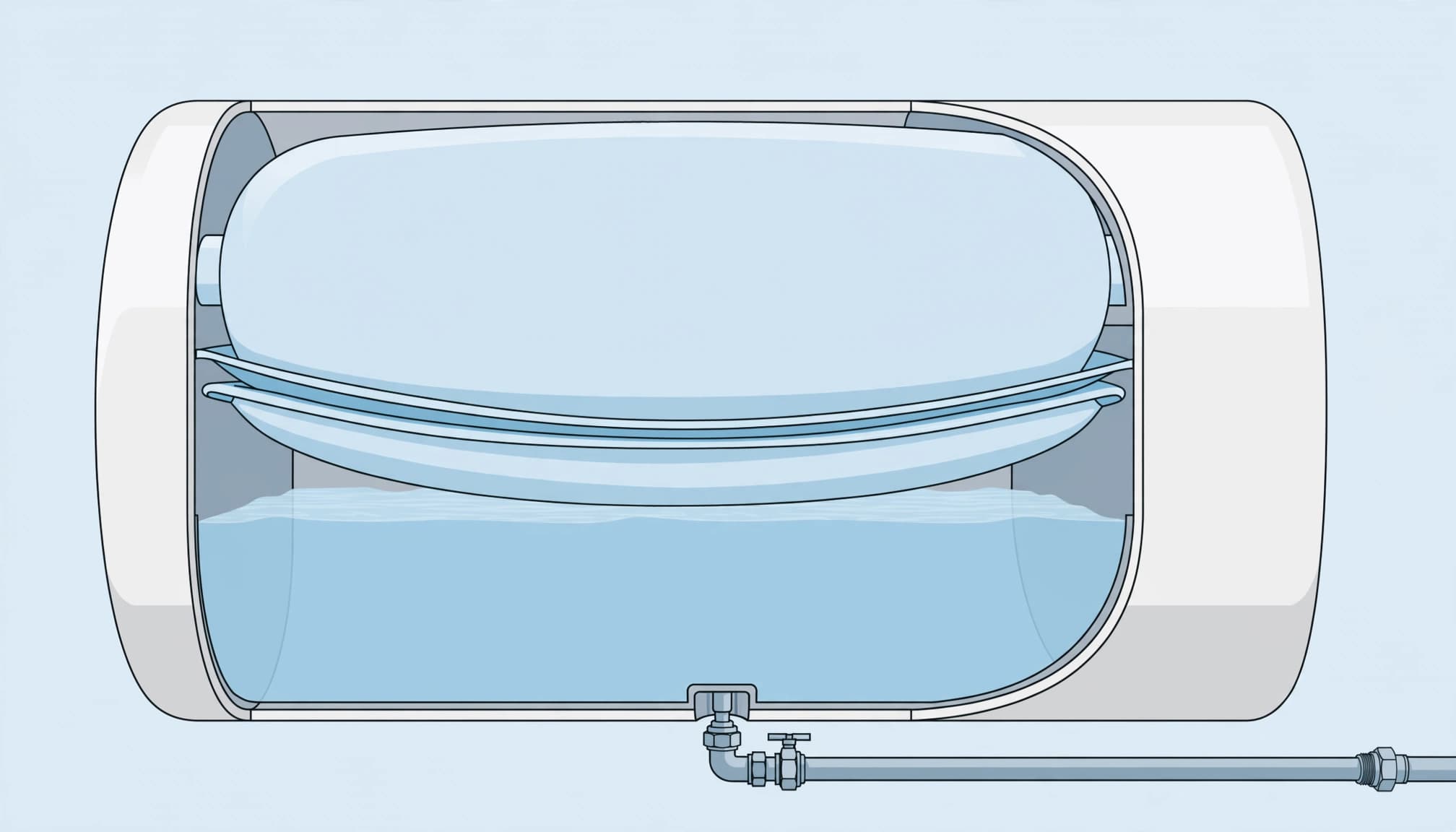
An installation may include both atmospheric storage and a pressure tank near the delivery pump. Their maintenance needs aren't interchangeable.
Our guide to whole-house RO storage tank sizing explains how storage capacity, membrane production, pumps, and household demand work together.
Air-Charge and Bladder Problems Need Different Repairs
When a pressure tank stops performing normally, the air charge and internal bladder are two areas a technician may assess. Neither should become the assumed cause before the complete system is evaluated.
An air charge that won't hold needs attention
A pressure tank depends on its air side working as intended. If the air charge won't hold, the tank may provide less useful water between pump starts.
However, repeatedly adding air without identifying the problem can leave the underlying fault unresolved. It also won't correct a separate pump, control, or flow restriction.
Pressure specifications and service procedures vary by tank and system design. Settings intended for a well pressure tank don't automatically apply to every RO installation. Follow the manufacturer's instructions rather than using a general pressure setting found online.
A failed bladder may require replacement
A damaged bladder can prevent the tank's water and air sections from functioning properly. Bladder failure is one reason a pressure tank may need replacement.
That possibility still requires professional evaluation. A technician can assess the tank alongside the pump and controls, rather than judging it from faucet performance alone.
Whether the bladder can be serviced depends on the tank's construction. Never open a pressurized tank , loosen its fittings, or attempt internal repairs while it remains connected under pressure.
Symptoms That Can Resemble a Waterlogged RO Tank
Household symptoms often overlap. The same weak shower or noisy pump can result from several different faults.
Frequent pump starts aren't proof of tank failure
A pump that starts repeatedly, runs in short bursts, or continues cycling after water use stops deserves attention. A pressure-tank problem is one possibility, but leaks and control problems can produce similar behavior.
Also distinguish the RO production equipment from the pump that supplies the house. They perform different jobs, and the sound alone may not identify which one is struggling.
For more background, our guidance on frequent RO system cycling explains why repeated starts warrant a broader system assessment. Persistent cycling shouldn't become normal background noise.
Weak flow may start outside the tank
A clogged prefilter, restricted valve, low feed pressure, or membrane problem can reduce the amount of treated water reaching storage. Meanwhile, a delivery-pump problem can leave the house with weak flow even when storage contains water.
One weak fixture suggests a different starting point than poor flow throughout the home. A restricted showerhead or faucet aerator may affect only that outlet.
Low storage level also doesn't prove the tank is undersized. Production, level controls, household demand, and the water path all matter. Replacing the tank before identifying the restriction may leave the original problem unchanged.
Safe Checks You Can Make Without Taking Anything Apart
Begin with observations rather than adjustments. You can gather useful information without touching the tank's air valve, disconnecting tubing, or changing pump controls.
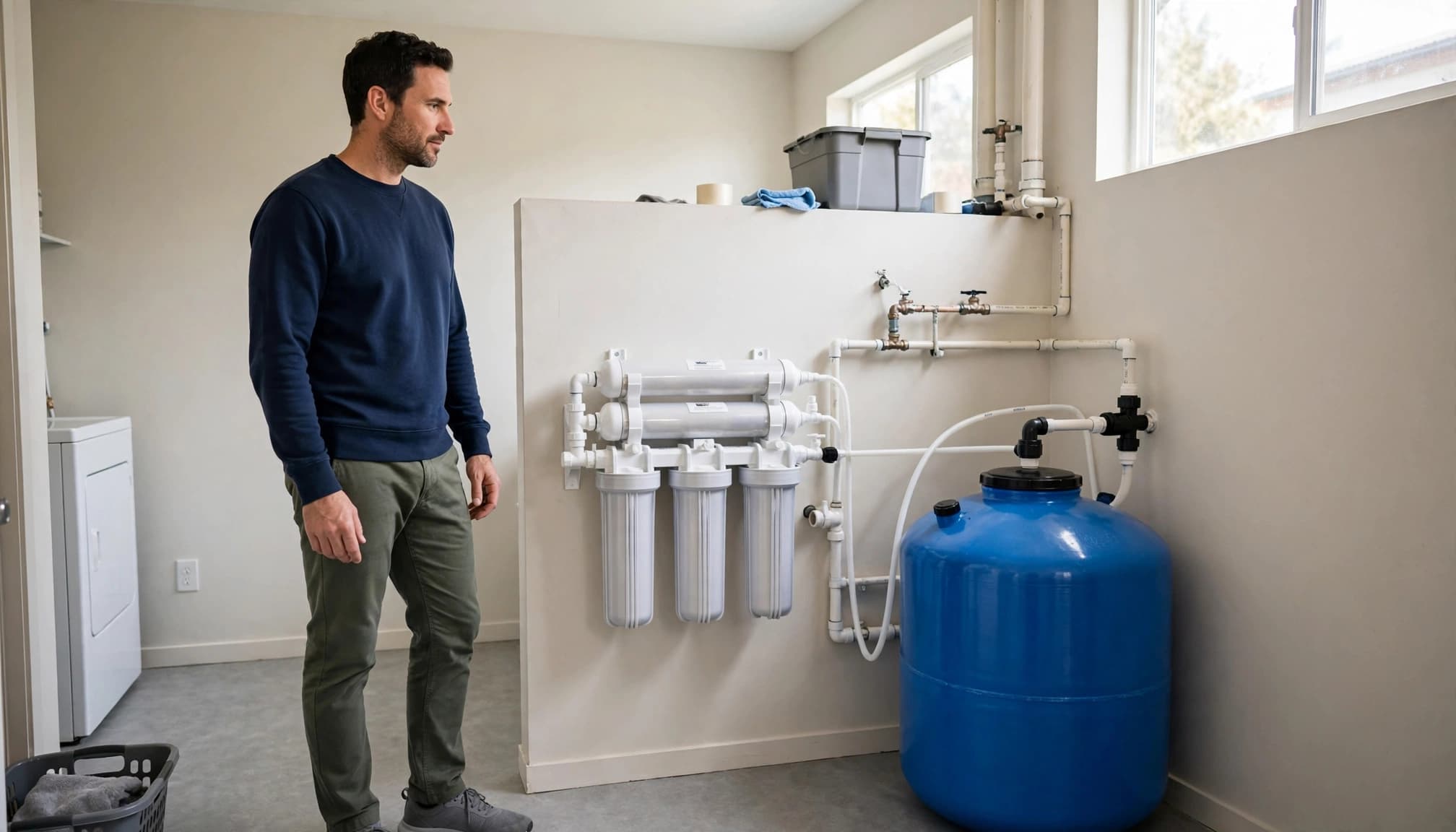
Notice whether poor flow affects one fixture or the whole house. Also note whether it appears during heavy use, immediately after startup, or even when little water is being used.
From a dry, accessible location, look for damp fittings, puddles, damaged tubing, or an obvious overflow. Our guide to RO tubing flow restrictions describes visual concerns that can help separate a restricted line from a tank problem.
If the storage level is visible through a gauge or viewing area, record what you see without removing covers. Note which pump starts and whether it continues after fixtures close.
Filter replacement dates and recent shutdowns are useful background, too. A problem that began after service or a long vacancy may involve more than the tank.
These observations help a technician narrow the possibilities. They don't establish that the tank is waterlogged, and they don't justify changing pressure settings.
When to Shut Off the System or Call for Service
An active leak, overflowing tank, cracked housing, or damaged tank calls for prompt action. Use the identified water shutoff and the manufacturer's shutdown procedure if you can reach the controls safely.
If water is near electrical equipment, keep away from wet switches, plugs, and wiring. Don't stand in water to disconnect equipment. Arrange qualified help instead.
Repeated breaker trips, burning odors, or damaged wiring also require professional attention. Don't keep resetting a breaker or restarting a pump that immediately develops the same problem.
Persistent pressure loss, unusual vibration, continuous pump operation, and repeated starts with no household water use warrant service. Our guide to whole-house RO service warning signs covers related concerns.
If taste or odor changes and the cause is unknown, stop using the treated water for drinking and cooking until the problem is assessed. A suspected pressure-tank fault doesn't explain away a water-quality concern.
Repair the Cause Before Replacing the Tank
Tank replacement makes sense when there is structural damage, persistent leakage, failed fittings, or an internal problem that can't be repaired appropriately. A bladder tank that can't retain its air charge may also need replacement.
However, a new tank won't restore membrane production lost to clogged pretreatment or correct a malfunctioning delivery pump. The repair should address the equipment responsible for the symptoms.
Sizing also matters. A tank's labeled volume doesn't necessarily equal the water available during household use. Bathrooms, laundry, guests, and outdoor uses affect demand, while membrane production determines how quickly storage recovers.
A qualified water-treatment professional can assess actual production, delivery performance, tank condition, and controls together. That approach helps avoid replacing a sound component or installing a tank that doesn't match the system.
We provide water-treatment installation, repairs, and maintenance in Naples and Southwest Florida. When recurring tank or pressure problems need service, the complete RO setup deserves attention rather than an isolated part swap.
Frequently Asked Questions
Does a full RO storage tank mean it's waterlogged?
No. An atmospheric storage tank is intended to hold a reserve of treated water. Its water level alone doesn't establish a pressure-tank problem.
If that tank contains water but the house has poor flow, the repressurization pump and downstream plumbing may need attention. Keep the storage vessel and pressure-support equipment separate when describing the symptoms.
Can I fix the problem by adding air?
Adding air without identifying the tank type and underlying fault can leave the problem unresolved. It won't repair a failed bladder or remove a plumbing restriction.
Because pressure requirements and procedures vary, air-charge service should follow the tank manufacturer's instructions. Arrange professional service if you're unfamiliar with the equipment or can't safely isolate it.
Does a suspected waterlogged tank mean the RO membrane failed?
No single tank symptom establishes membrane failure. A membrane production problem can reduce storage recovery, while a pressure-tank or delivery-pump problem can affect household flow.
Those faults occur in different parts of the system. A complete assessment separates inadequate production from inadequate delivery before recommending repairs.
Keep the Tank and the System in Perspective
A suspected waterlogged RO tank calls for careful diagnosis , especially when atmospheric storage and a separate pressure tank share the same installation. Air-charge problems and bladder failure are possibilities, but filters, pumps, valves, and controls can create similar symptoms.
Keep your checks visual and non-invasive. For persistent cycling, pressure loss, or leakage, a qualified water-treatment professional can identify the cause without exposing you to pressurized equipment.
Latest posts
Read Our Blog
Tips, guides, industry best practices, and news.

Contact us
Get in touch
Our friendly team is ready to chat.
