
What a Failed RO Solenoid Valve Looks Like
A leak, corrosion, damaged wiring, or a visibly burnt coil can point to a problem around an RO solenoid valve. However, RO solenoid valve failure can't be confirmed by appearance alone. A similar symptom may come from another part of the system, and some valve faults leave no visible mark.
A solenoid valve controls water flow in response to an electrical signal. Its location and role vary by system, so compare what you see with the owner's manual. Start with a safe visual inspection, then leave electrical and pressure testing to someone qualified.
Visible signs of a failed RO solenoid valve
A solenoid valve usually has a valve body connected to water tubing and a coil with electrical leads. Check the whole assembly, including nearby fittings, because a leak close to the valve may come from a connection rather than the valve itself.
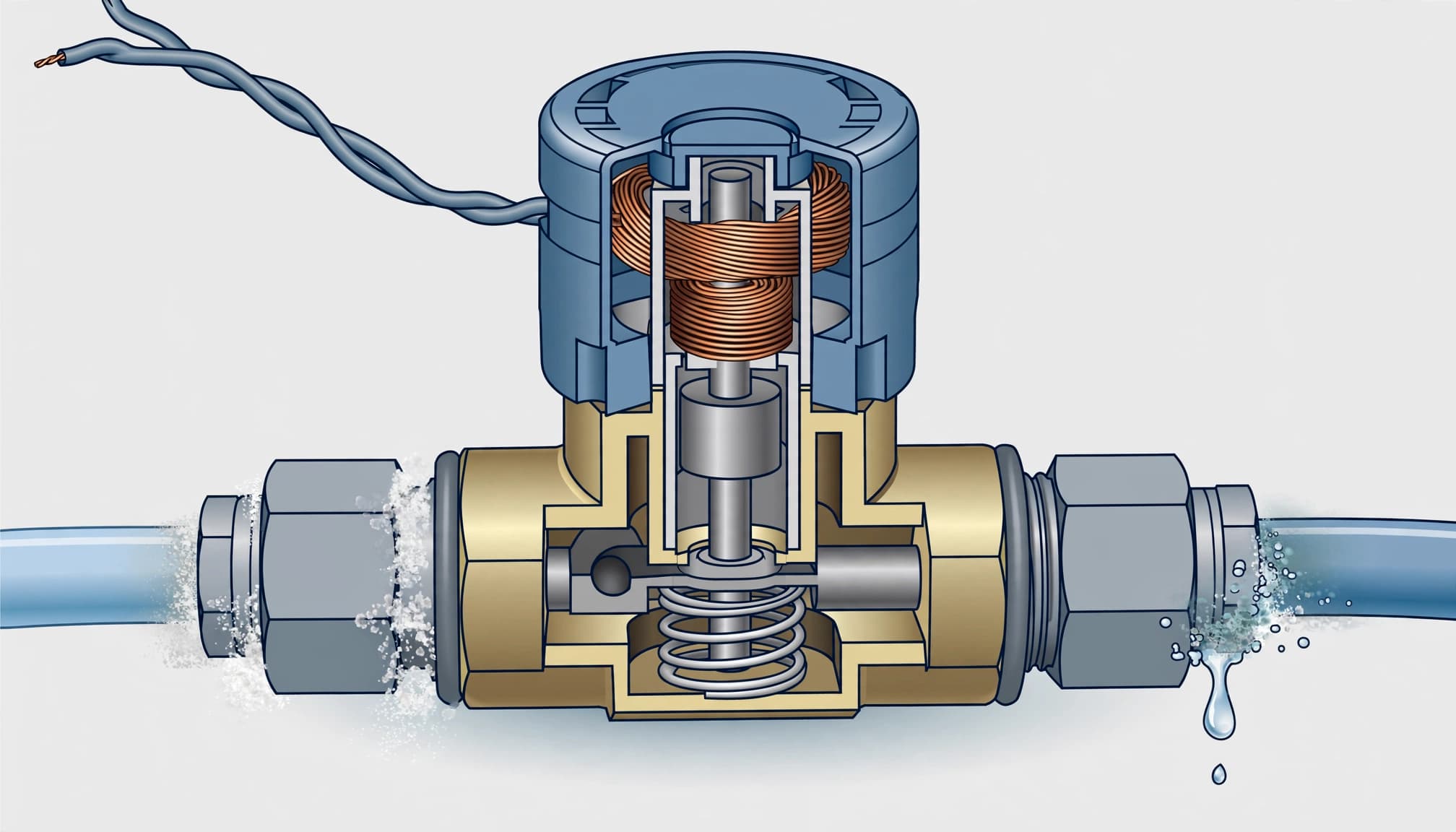
Leaks and corrosion
Look for water beads, damp tubing, mineral deposits, or rust-colored marks near the valve and its fittings. Deposits can form where water has repeatedly dried, but they don't identify the source by themselves. A loose fitting, damaged tubing, cracked housing, or worn seal can also cause a leak.
Corrosion on metal parts or electrical contacts is a reason to arrange an inspection. If water has reached the coil or wiring, don't handle or power the component. Shut off the system safely and get qualified help.
Damaged wiring or a burnt coil
Frayed insulation, exposed conductors, a loose connector, or a cracked coil casing are visible reasons to stop and arrange service. A coil that looks darkened, melted, or deformed may have overheated. Still, a coil can fail internally without obvious discoloration, and a damaged-looking part needs proper diagnosis before replacement.
Avoid touching wires to see whether they're loose, and don't remove the coil while the system is powered or pressurized. A visual check can identify damage, but it can't establish whether the valve operates correctly.
What the valve does, and what appearance can tell you
An RO solenoid valve opens or closes a water path when its control circuit signals it to do so. Systems use valves in different locations and configurations, so the same-looking component may serve a different purpose across two installations. The manual or system diagram can help identify the valve without moving it.
A visible flaw is a clue, not a diagnosis
A cracked body, active leak, or damaged wire is a real concern, but it doesn't prove that the solenoid mechanism itself has failed. The source could be a nearby connection or a different component. Likewise, a clean-looking valve may still have an electrical or mechanical fault that isn't visible from outside.
For that reason, note what you see and where it appears. A photo taken from a safe distance can help a technician understand the issue without requiring you to dismantle the assembly.
The symptoms don't point to one part
Low production, irregular operation, or water that continues flowing can have several causes. A solenoid might be among the parts a technician evaluates, but pressure, controls, pumps, filters, and other valves may also affect system behavior. The symptom alone doesn't identify the failed component.
Symptoms that need testing
When the system's behavior changes but the valve looks intact, testing is needed to narrow down the cause. Avoid repeated resets or attempts to force a valve into a different position. A system diagram and manufacturer instructions matter because the correct procedure depends on the installation.
Water flow changes
No water, reduced flow, or water that doesn't stop when expected may prompt an inspection of the valve and its controls. These are system symptoms , not proof of a solenoid failure. A restricted filter, a partly closed shutoff, or another flow problem can produce similar results.
If the change affects several taps, consider the whole treatment system rather than assuming the valve is responsible. Record when the problem began and whether it affects all treated-water outlets or only one.
Electrical operation
A technician can assess whether the valve receives the correct control signal and whether its coil and connections operate as intended. This requires equipment-specific knowledge and appropriate electrical testing. Don't probe a live circuit, energize an exposed coil, or open electrical components as a homeowner inspection.
A valve may look normal while an electrical fault prevents it from operating. Conversely, a visible defect may be present even when the main cause of poor water flow is elsewhere.
How to inspect the system safely
Before inspecting components, shut off power and water. Use the owner's manual to identify the right isolation points for your model. RO systems differ in their pumps, tanks, treatment stages, and valve arrangements, so don't turn random valves or rely on a generic shutdown sequence.
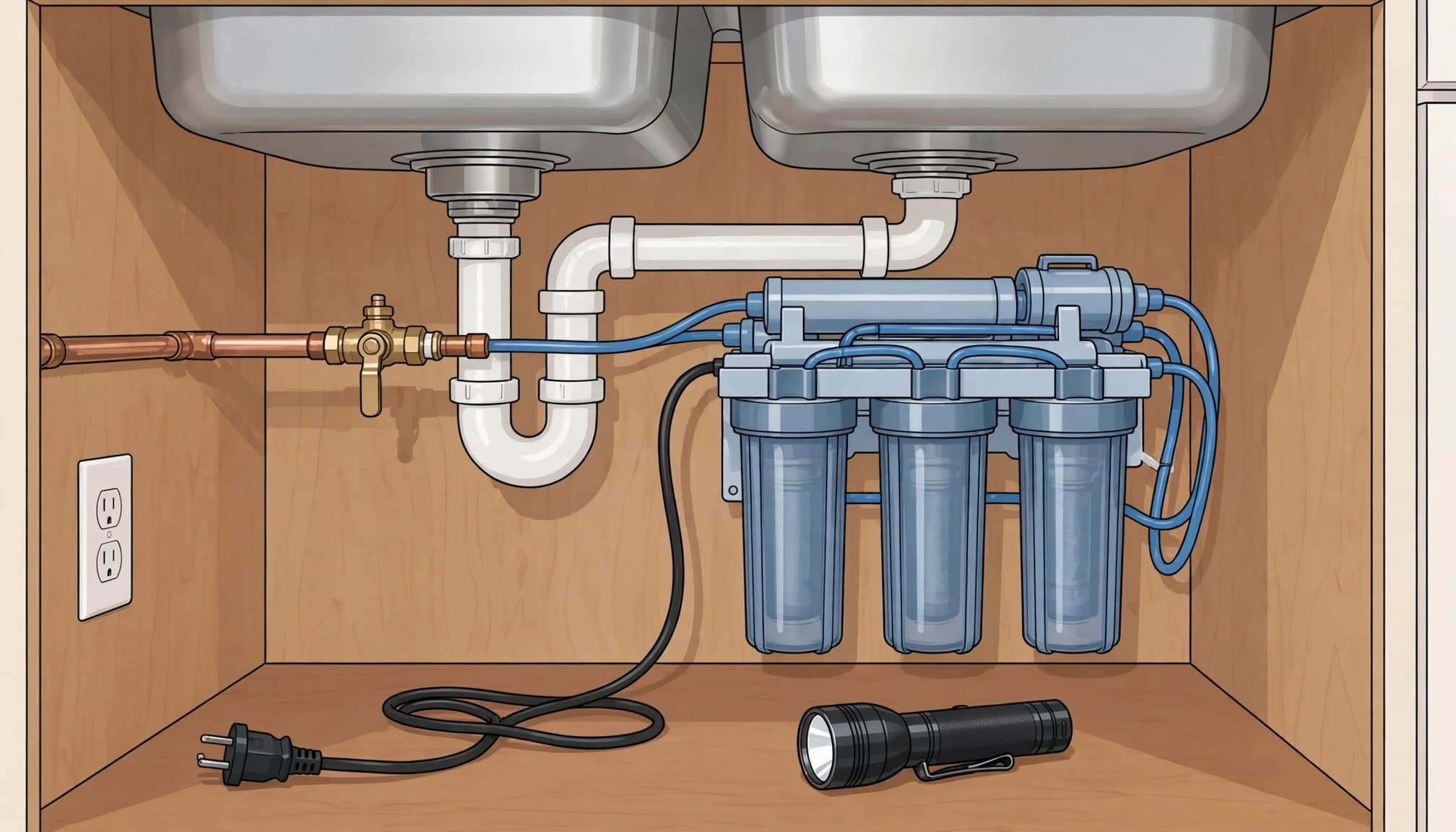
Look without dismantling
With power and water shut off according to the manual, use a flashlight to inspect the valve, tubing, nearby fittings, and floor or cabinet beneath the system. Look for active drips, dampness, corrosion, cracks, or visibly damaged insulation. Keep the area dry, and don't touch wet electrical parts.
Don't loosen fittings, open housings, or remove the coil during a basic visual check. Pressurized components can release water unexpectedly, and an incorrect valve position can affect the rest of the system.
Stop if the damage involves water or wiring
If you see a leak near electrical parts, a cracked housing, exposed wire, or a coil that appears burnt, leave the assembly alone. Keep the system isolated and arrange professional service. A technician can identify the component and test it without guessing from its appearance.
Other RO problems can look similar
Water-quality changes and leaks don't automatically point to a solenoid. Whole-system issues can come from several parts, so look at the pattern and the location of the symptom before drawing a conclusion.
Leaks and damp spots
A damp fitting may come from a loose connection, cracked housing, or worn O-ring. Shut off the feed water and observe the area from a safe position to see where moisture appears, as long as no electrical component is wet. For other signs that an RO system needs attention, see our guide to common symptoms of a failing RO system.
Pressure and water-quality changes
Slow flow, changing taste, or more frequent cycling may relate to filters, membrane performance, pressure, or controls. A dirty or debris-packed prefilter can restrict flow and make the system work harder. If a filter issue is possible, our guide to signs your RO prefilters need changing covers common clues.
A rising TDS reading or unusual taste also doesn't prove a solenoid fault. Those changes call for assessment of the treatment system as a whole.
When to arrange professional service
Get help if a leak continues, water reaches electrical parts, wiring is damaged, or the valve's role is unclear. Service is also appropriate when the RO system stops producing water, won't stop flowing, or shows a persistent change after a safe visual inspection.
A technician can examine the valve, control circuit, pump, pressure, and surrounding plumbing. This matters because a valve replacement won't correct a clogged filter, a pressure problem, or a leak at a nearby fitting. If your system includes a booster pump or other connected electrical equipment, don't open or test those components yourself.
For homes and communities in Naples and Southwest Florida, our team at Trademark Water Systems can help assess RO system concerns and determine whether the valve or another part needs attention.
Key takeaways
- Leaks, corrosion, damaged wiring, and a visibly burnt coil deserve attention, but none proves the solenoid valve has failed.
- Flow or water-quality changes can come from other parts of the RO system.
- Shut off power and water using the equipment's instructions before any visual inspection.
- Leave electrical testing, disassembly, and uncertain valve positions to a qualified technician.
Frequently asked questions
Can a solenoid valve fail without looking damaged?
Yes. A valve may have an electrical or mechanical problem without visible damage. Testing is needed to confirm whether it operates as intended.
Does corrosion mean the valve needs replacing?
Not by itself. Corrosion can appear on nearby fittings or other parts, and it doesn't establish the cause of a system problem. If it affects electrical connections or appears with a leak, stop and arrange an inspection.
Can I test the valve by turning the system on and off?
Don't use repeated power cycling or touch exposed electrical parts as a test. Follow the equipment manual for normal operation, and have a qualified technician test the valve and controls if the problem persists.
Conclusion
A failed RO solenoid valve may show visible damage, but it can also look normal. Treat leaks, corrosion, damaged wiring, and a burnt coil as warning signs, not a final diagnosis. Safe inspection starts with shutting off power and water; accurate diagnosis depends on checking the valve alongside the rest of the system.
Latest posts
Read Our Blog
Tips, guides, industry best practices, and news.
Contact us
Get in touch
Our friendly team is ready to chat.
