
Why Whole-House RO Systems Cycle On and Off
A whole-house reverse osmosis system needs to start and stop as it makes and delivers treated water. Some cycling is expected, but rapid repeated starts or operation when no water is being used can point to a problem.
The pattern matters. A pump that runs after showers or laundry may be responding to normal demand, while frequent short starts deserve attention. Understanding the tanks, pumps, filters, and pressure controls helps you spot the difference and choose safe next steps.
How a whole-house RO system cycles
Reverse osmosis makes treated water at a measured rate. A home can use water faster than the membrane produces it, so many whole-house systems store treated water and use pumps and controls to supply household fixtures.
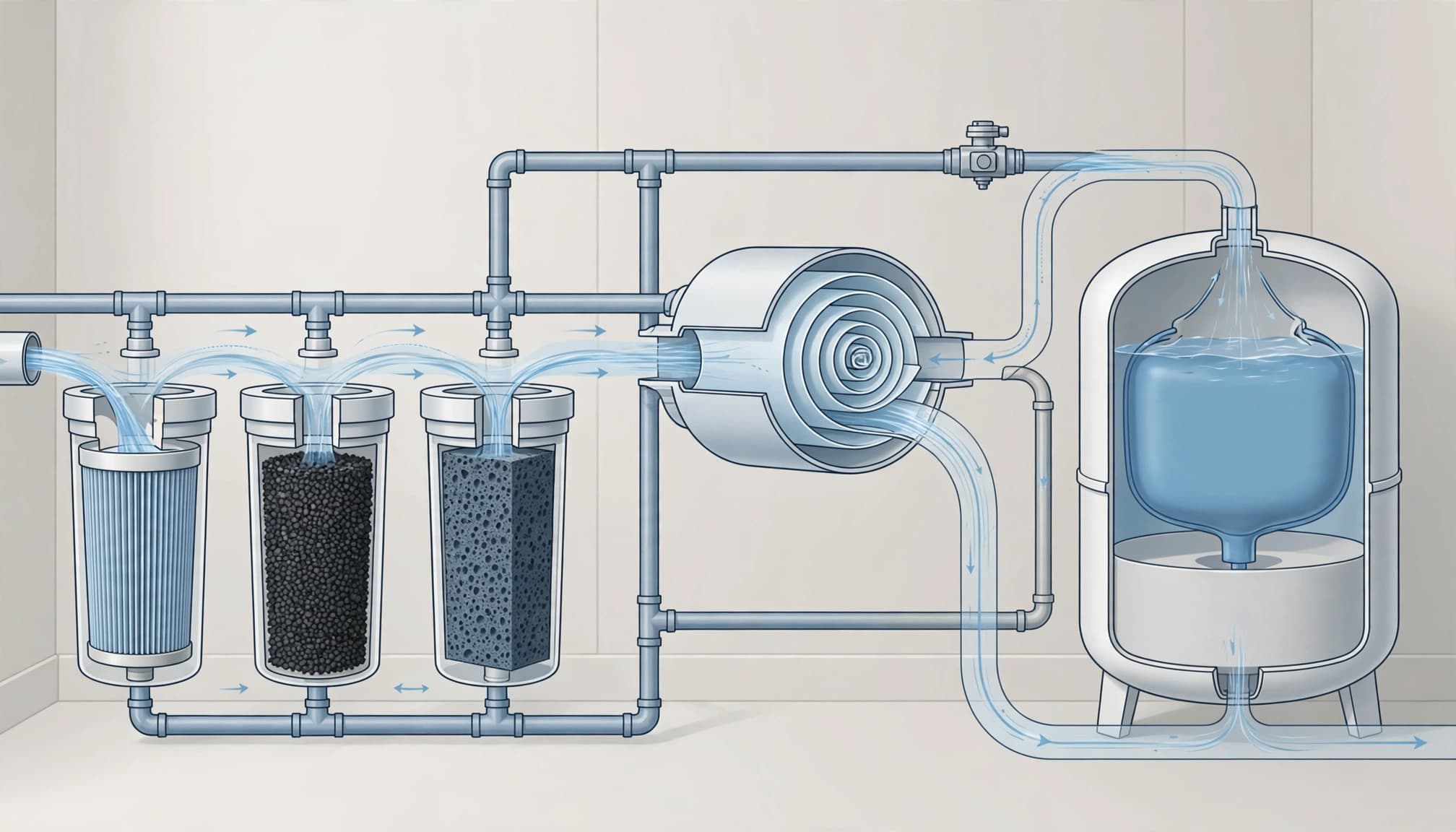
Production and delivery are separate jobs
The RO production side sends feed water through pretreatment and a membrane. The system then stores treated water, often in a larger atmospheric tank. A separate repressurization pump can move that stored water through the home's plumbing.
Some installations use different tank and pump arrangements. The control sequence depends on the equipment, so one system's normal sound or cycle may not match another's.
Controls respond to water use
When household use lowers stored water or delivery pressure, a pump or control may start to restore the supply. Once the system reaches its operating condition, it stops. A brief run after a large water draw can therefore be normal.
For more detail on storage and delivery equipment, see our guide to whole-house RO storage tank sizing.
What normal cycling looks like
Normal cycling usually has a clear relationship to water use or production. The system may run after several fixtures have been used, then remain quiet while storage and pressure recover.
A shower, laundry load, irrigation draw, or several taps used close together can increase demand. The pump may run longer as a result, especially if stored water has been depleted. That alone doesn't establish a fault.
Listen for whether the system stops after it restores supply. If starts and stops are brief and repeated while no one is using water, or if the pump keeps running without settling, the pattern is different and merits attention. There isn't one cycle duration that applies to every model.
Pressure tank and pressure switch issues
A pressure tank helps buffer water use so the pump doesn't need to respond to every small draw. If the tank can't provide its intended usable volume, the pump may start more often. A worn bladder, loss of air charge, or waterlogged tank are possibilities a technician may assess, not conclusions you can draw from sound alone.
The pressure switch tells equipment when to start or stop based on pressure. A faulty switch, poor connection, or unsuitable setting can affect operation. Because the switch and tank are pressurized or electrical components, don't open, adjust, or test them yourself.
Private-well homes may have a well pressure tank as well as RO storage and repressurization equipment. They have different functions, and changing well controls won't necessarily correct an RO delivery issue. Our overview of pressure tank settings for private wells explains why the system layout matters.
Leaks and plumbing flow restrictions
A leak can make a pump run even when the household isn't drawing water. Look for damp flooring, drops under fittings, water around housings, or a wet area near the storage tank, pump, or drain line. A small leak may also lower stored volume over time.
A partially closed valve or restricted line can affect water movement and pressure. Check only accessible valves that you can identify confidently, and observe whether the problem affects one fixture or the whole home. Weak flow at one faucet may come from a local fixture issue; weak flow everywhere may involve treatment equipment or distribution.
Don't tighten fittings, disconnect tubing, or open filter housings while the system is pressurized. If water is near electrical equipment, keep clear and arrange service rather than touching the equipment.
Clogged filters and changing RO performance
Sediment and carbon prefilters protect the membrane and help maintain flow. As cartridges load with particles, resistance can rise and the membrane may produce water more slowly. A clogged prefilter doesn't automatically explain short cycling, but it can change how quickly storage recovers and how the overall system behaves.
Many homes use a three-to-six-month prefilter interval as a starting point. Sandy well water or high use can shorten it, and the manufacturer's schedule and actual system conditions matter. Keep a simple record of replacement dates and changes in flow or pressure.
A membrane or pretreatment issue can also affect production. For background on upkeep and well-water conditions, read about well water silica and RO membrane maintenance.
Household demand can change the cycle
A pump may run more often when water use increases. Extra laundry, guests, longer showers, or irrigation can draw down stored water faster than usual. In that case, cycles should relate to use and settle once demand drops.
If the system has always struggled during busy periods, storage capacity, production rate, or pump arrangement may not match the home's needs. Weak flow with a normal pressure reading can point to limited water volume rather than low pressure. That distinction is useful, but it doesn't identify the exact component at fault.
A sudden change is more important than a familiar pattern. If the system used to stay quiet between normal household draws and now starts repeatedly, note when the behavior began and whether it coincides with a leak, filter change, power event, or change in water use.
Safe checks homeowners can make
Start with observation, not adjustment. Note when the pump runs, how long it runs, whether anyone is using water, and whether pressure or flow has changed. Write down unusual sounds and any recent filter service.
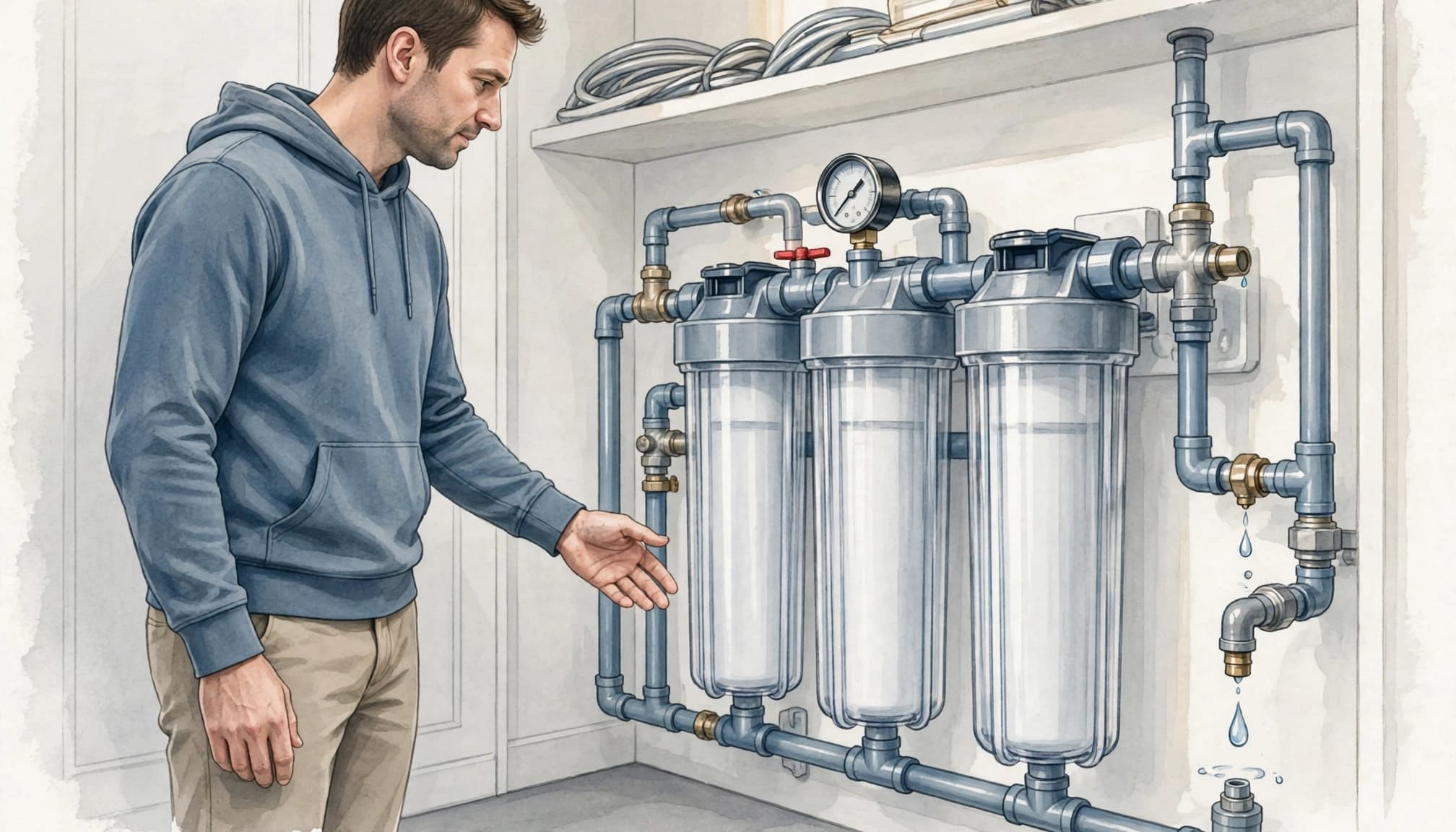
You can safely make a visual check around accessible equipment:
- Look for puddles, damp spots, drips, kinked tubing, or a drain line that appears out of place.
- Check whether an accessible shutoff valve is fully open, but don't force a stiff or unfamiliar valve.
- Compare flow at more than one faucet to see whether the symptom is local or throughout the home.
- Review filter dates and the owner's manual for normal operating sounds and maintenance timing.
Don't remove a housing, adjust a pressure switch, check a tank's air charge, or work on wiring. If you see an active leak, use a clearly identified shutoff only if you can reach it safely. Keep away from wet electrical components.
When frequent cycling needs service
Arrange service if the pump starts repeatedly with no water use, runs continuously, or cycles in short bursts that continue after demand ends. Persistent pressure loss, a visible leak, unusual vibration, a rising or changing TDS reading, or a change in taste or odor also calls for attention.
Stop using the system for drinking and cooking if water quality changes and the cause is unknown. A TDS meter can help track dissolved-solids changes, but a reading alone doesn't confirm that water is safe. A technician can test operating pressure, inspect the pump and controls, and assess storage, filters, valves, and membrane performance.
Repeated breaker trips or damaged wiring require professional attention. Don't keep resetting a tripped breaker. For homeowners in Naples and Southwest Florida, we provide water-treatment service and can help diagnose whole-house RO problems.
Key takeaways
- A pump that runs after substantial water use may be replenishing stored supply.
- Repeated starts without a clear draw, persistent operation, leaks, or changes in water quality deserve attention.
- Tanks, pressure switches, filters, plumbing restrictions, and changing demand can all affect system behavior, but symptoms alone don't pinpoint the fault.
- Observe and record what happens, then leave pressurized and electrical work to a qualified service professional.
Frequently asked questions
Should a whole-house RO pump run every day?
It may run whenever the system needs to produce or deliver water. How often depends on household use, storage, production, and the system's controls. Compare its behavior with your normal water-use pattern rather than applying a fixed cycle count.
Why does the pump start when no faucet is open?
A hidden leak, water loss, or control issue could be involved. Check for visible moisture around accessible equipment and fixtures. If the pump keeps starting with no apparent use, arrange a service visit.
Can a clogged filter cause short cycling?
A loaded filter can restrict flow and slow RO production. That may affect recovery and system behavior, though it doesn't prove the filter is the cause of repeated starts. Review service timing and have persistent cycling diagnosed.
Should I adjust the pressure switch?
No. Pressure switches and tanks involve electrical or pressurized components. Don't open or adjust them yourself; a technician can check their operation and settings safely.
Keep the cycle tied to the cause
Some on-and-off operation is part of making and delivering RO water. The warning sign is a new pattern, especially repeated short starts without household demand or cycling alongside leaks, pressure changes, or altered water quality.
Track what you observe and avoid adjustments to pressurized or electrical parts. That gives a service professional useful information and helps protect the system while the cause is diagnosed.
Latest posts
Read Our Blog
Tips, guides, industry best practices, and news.


Contact us
Get in touch
Our friendly team is ready to chat.
