Why a Lake Fountain Starts, Then Shuts Off
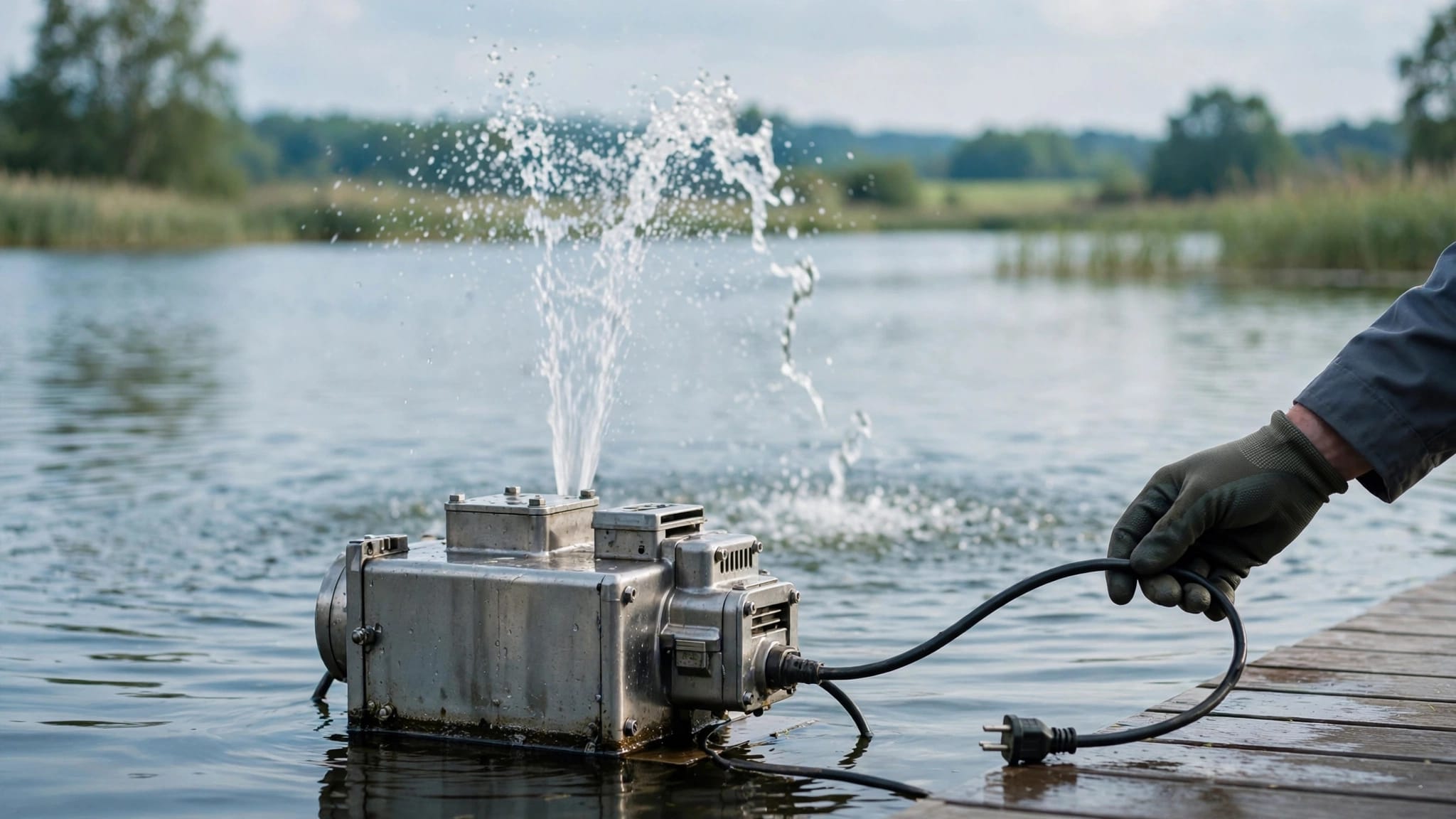
When a lake fountain shuts off soon after starting, the cause may be restricted water flow, an electrical fault, or a problem inside the pump. The timing and any change in spray, sound, or breaker behavior can help narrow down what's happening.
Because fountains combine electricity and water, safety comes first. Disconnect power before inspecting or cleaning equipment, and leave electrical repairs to a qualified professional. Here are the common causes and safe next steps.
Why a Lake Fountain Shuts Off After Starting
A pump may start normally, then stop when it can't draw water freely or when an electrical fault interrupts power. Notice whether the fountain's spray weakens first, whether the pump makes an unusual sound, and whether a breaker or GFCI trips. These clues help distinguish a flow problem from an electrical one.
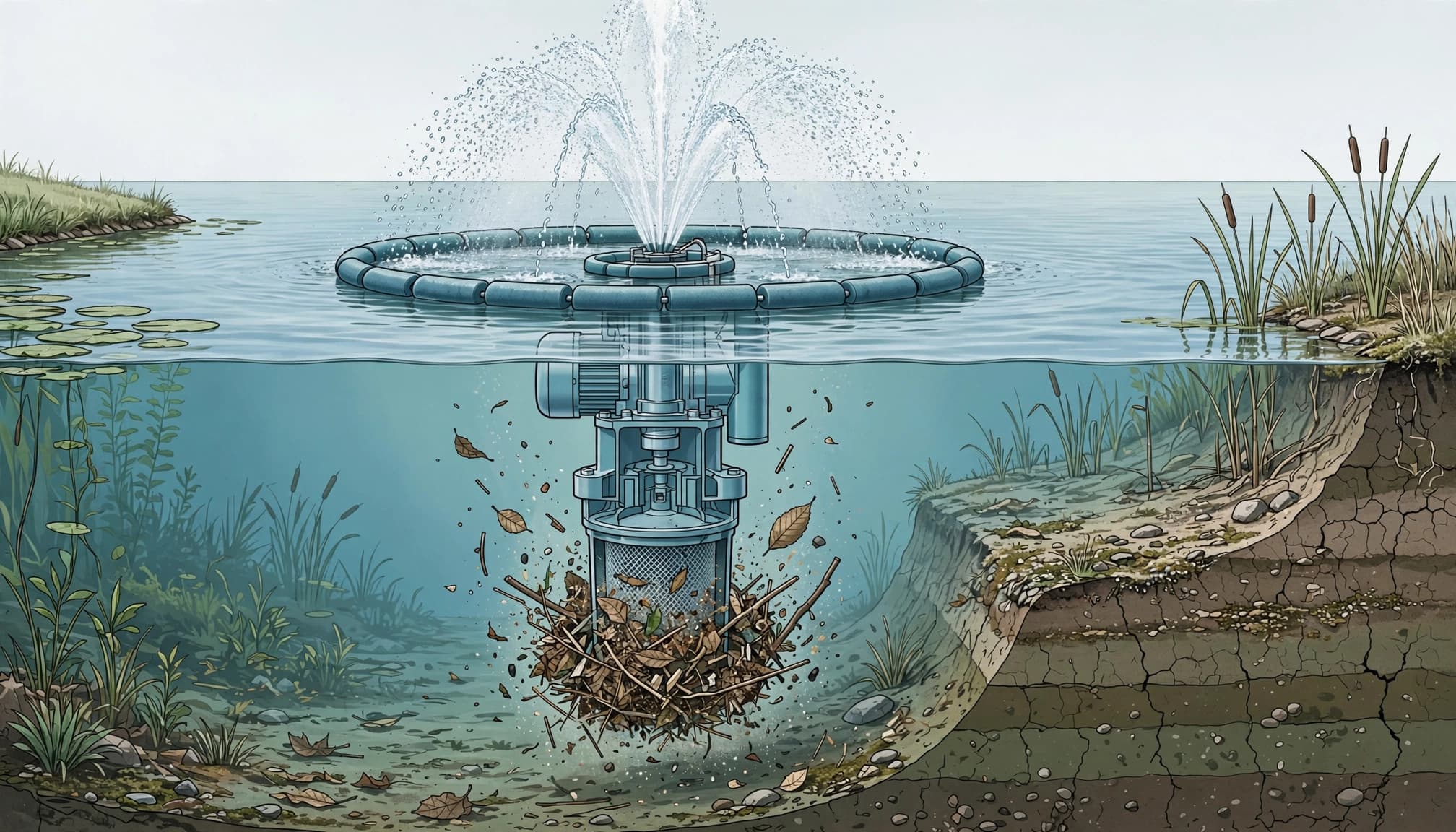
Clogged intake or restricted water flow
Leaves, algae, sediment, and other debris can cover the intake screen or block the pump housing. With less water moving through the system, the spray may sputter or weaken before the fountain stops. A clogged nozzle can also distort the spray or reduce its height, though it doesn't always stop the pump.
You can find more signs and possible fixes in our guide to troubleshooting common lake fountain problems.
Electrical or pump problems
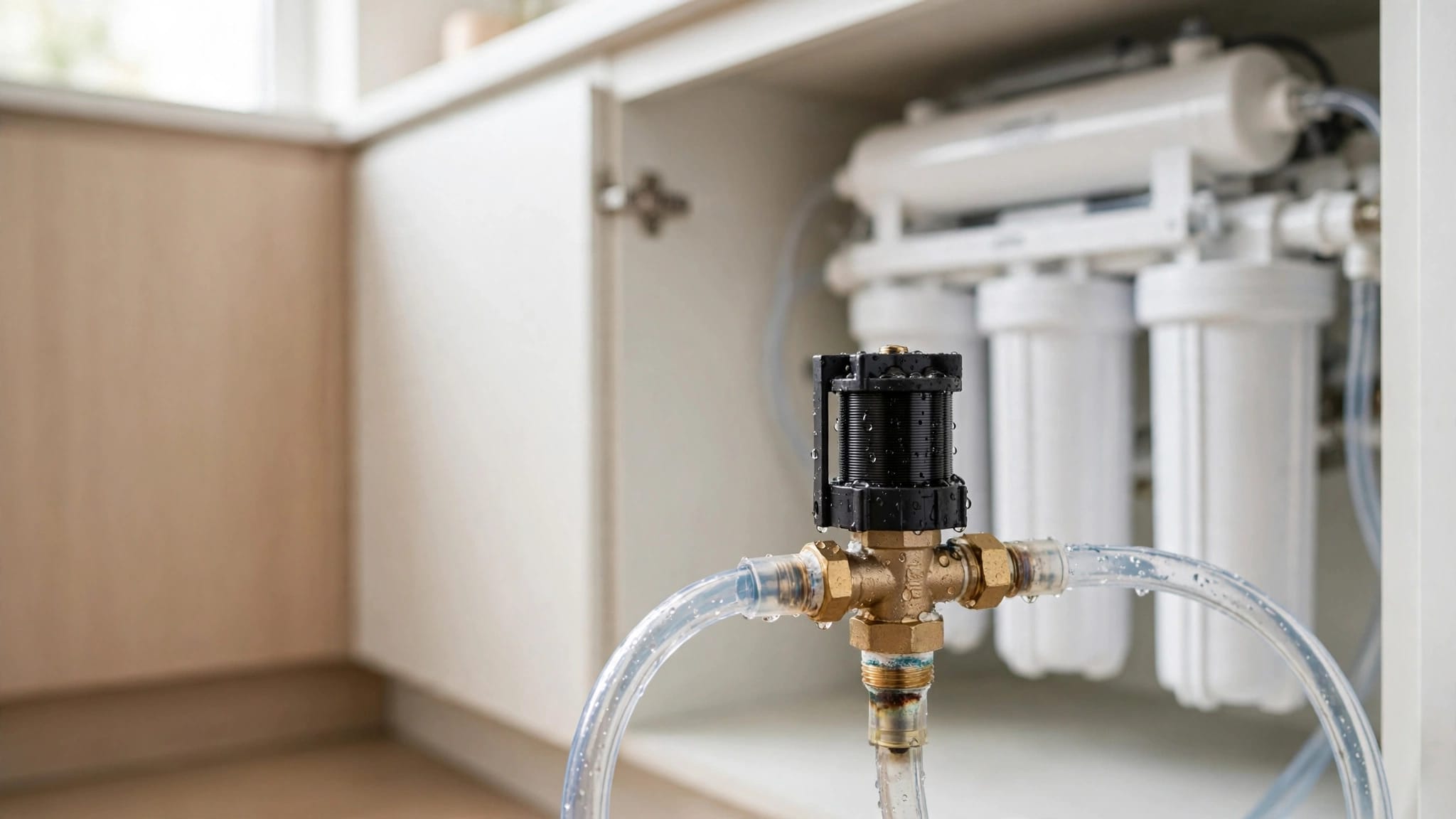
A breaker or GFCI that trips may be responding to a ground fault, short circuit, or excessive current. Moisture, a damaged cable, a corroded connection, or a failing motor can interrupt operation. If the pump starts but struggles to keep running, a worn motor or, on some models, a faulty capacitor may be involved. A qualified technician can test these components safely.
A Safe Troubleshooting Sequence
Start with observations from the shore. Record when the fountain stops, whether the spray changes first, and whether the problem follows rain or a storm. If the breaker trips, treat that as a warning. Don't keep resetting it to make the fountain run.
Disconnect power before inspecting
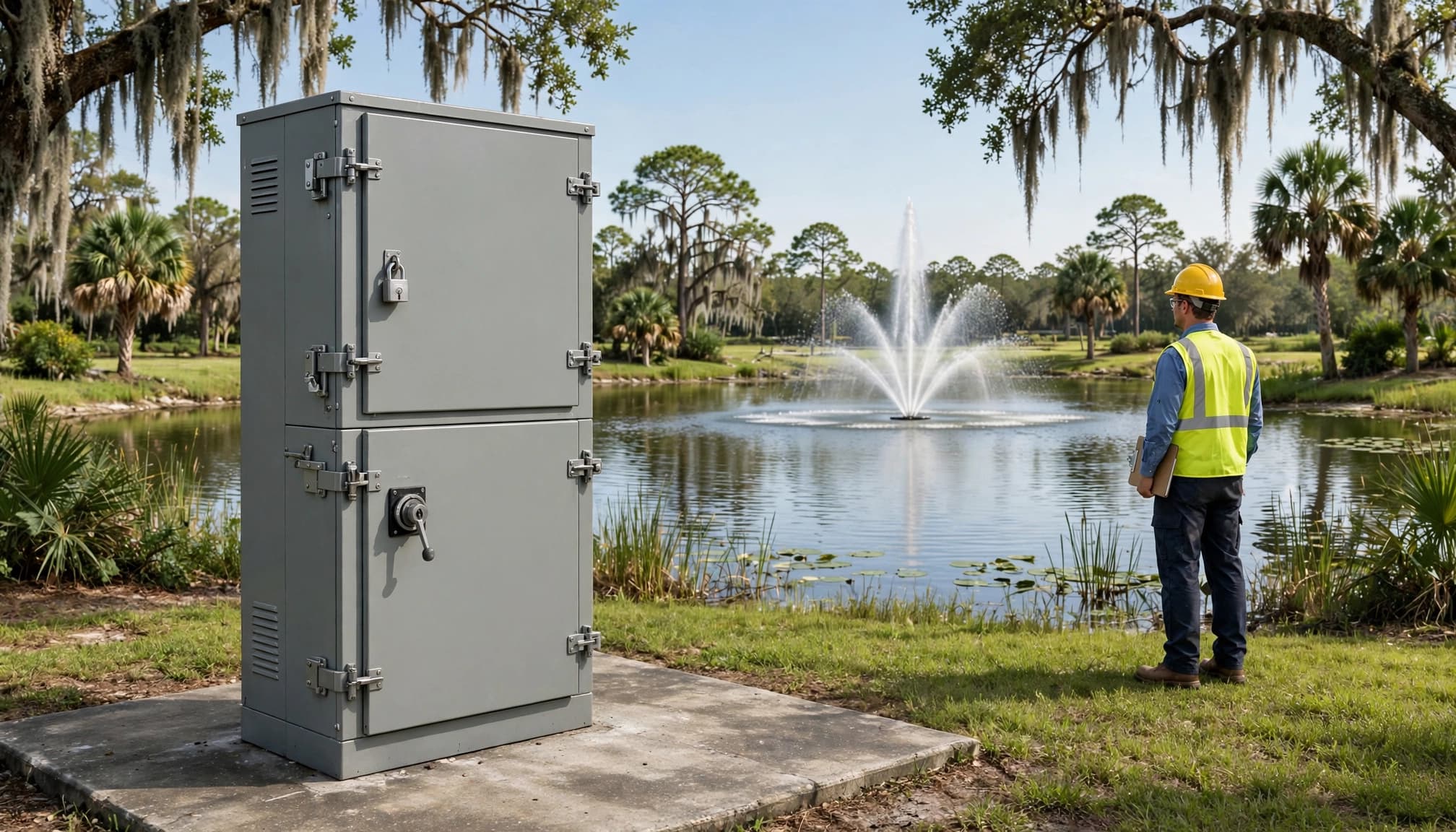
Turn off power at the proper disconnect or breaker before anyone approaches the pump, cable, intake, or float. Keep people and pets away from the water and equipment. Never enter the lake or handle submerged parts while the system has power.
Once power is off, inspect only accessible parts. Remove debris from an intake screen or nozzle if the manufacturer's instructions allow it. Don't open an electrical cabinet or handle damaged wiring.
Note the clues, then stop if the fault returns
After a safe visual inspection, note any visible cable damage, corrosion, grinding, or unusual vibration. If the breaker or GFCI trips again, leave the system off. Repeated trips can point to a fault in the pump, cord, outlet, or circuit. Our guide explains how to troubleshoot a lake fountain pump that trips the breaker, but electrical testing belongs with a professional.
When to Arrange Professional Service
Contact the fountain manufacturer or a lake fountain technician when the unit keeps shutting off after debris is cleared, or when it loses flow after cleaning. Also arrange service for repeated breaker trips, a GFCI that won't reset, a damaged cable, grinding sounds, unusual vibration, or an uneven spray that persists. If the fountain was submerged during a storm or flood, keep it off until a qualified professional has assessed it.
A technician can inspect the pump, cord, controls, receptacle, and circuit with suitable equipment. This is safer than handling electrical parts near water or repeatedly restarting a unit with a possible fault. Our lake fountain maintenance checklist covers additional signs that call for service.
Reduce the Chance of Another Shutdown
Regular observation can catch restricted flow before the pump stops. Look for a weaker or uneven spray, debris near the intake, algae buildup, and changes in vibration. In Florida, warm water and strong sunlight can shorten the time between cleanings. The right schedule depends on the pond's debris, sunlight, nutrients, and water conditions.
During routine shoreline maintenance, check visible screens and nozzles according to the manufacturer's instructions. Keep a simple record of shutdown dates, weather, symptoms, and maintenance. For an HOA or property manager, those details can help a technician identify an intermittent problem.
Frequently Asked Questions
Can a clogged intake make a fountain shut off?
Yes. Debris can restrict water flow and strain the pump. Turn off power before cleaning, and arrange service if the fountain still stops afterward.
Should I reset a breaker that trips when the fountain starts?
Don't repeatedly reset it. A trip can indicate an electrical fault or a problem with the pump or cord. Leave the fountain off and contact a qualified electrician or technician.
Who should I contact about a fountain that starts and stops?
Contact the manufacturer for model-specific operating guidance, especially if the unit is under warranty. For persistent flow, pump, or electrical problems, call a qualified lake fountain technician. Electrical repairs should be handled by a qualified professional.
Keep Safety Ahead of a Quick Restart
A fountain that starts and stops is showing a symptom, not identifying the faulty part. Restricted flow may be visible, but electrical and motor issues need proper diagnosis.
Disconnect power before any inspection or cleaning, and don't keep restarting a unit that trips its breaker. A careful, safe response can protect people and help prevent further equipment damage.
Latest posts
Read Our Blog
Tips, guides, industry best practices, and news.


Contact us
Get in touch
Our friendly team is ready to chat.