
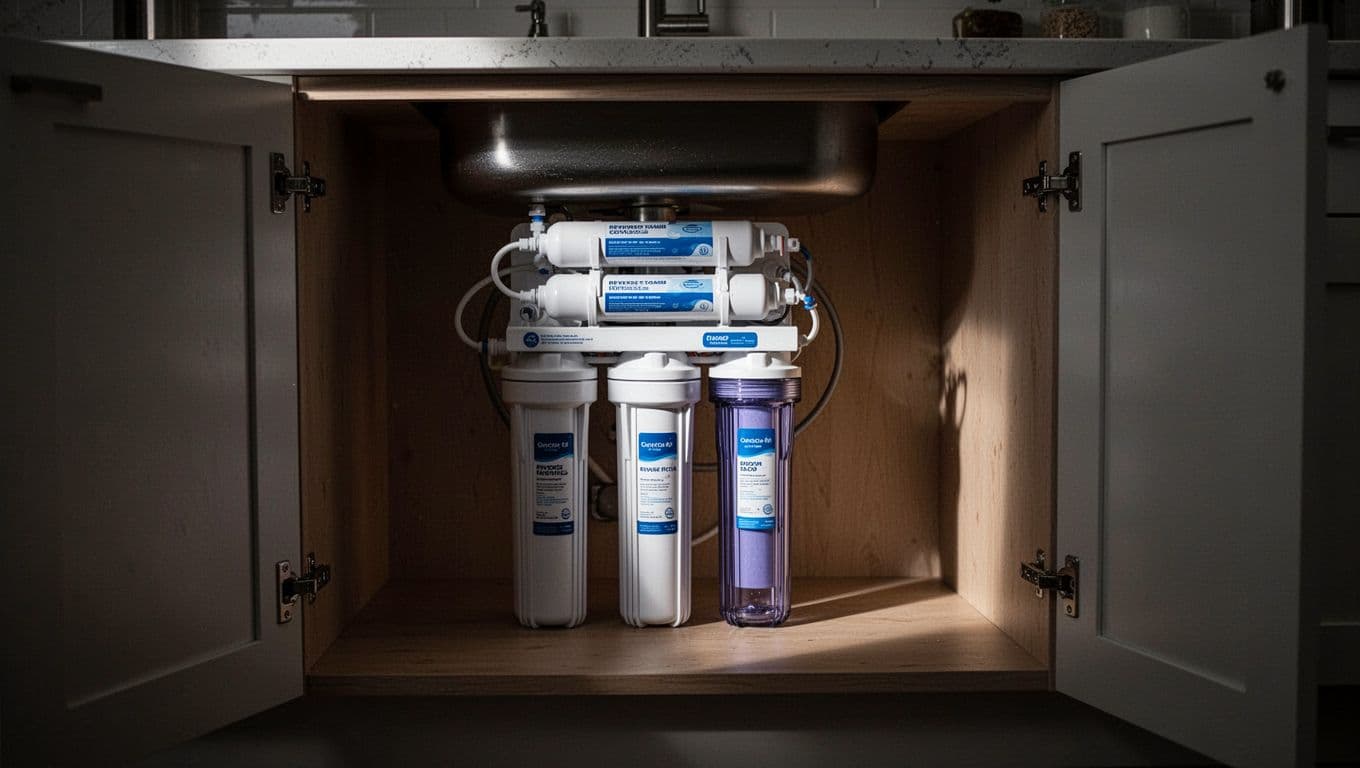

Reverse Osmosis System Cost Factors for Florida Homes
Two Florida homes can buy reverse osmosis systems at very different prices, even when the kitchens look alike. The gap usually comes from system size, water quality, and how much plumbing work the house needs.
For many homeowners, the sticker price is only part of the story. Filter changes, pretreatment, and future membrane replacement all shape the real reverse osmosis system cost .
If you're comparing options for a condo, a single-family home, or a well-water property, the details matter more than the brand name. Here's where the money goes.
What shapes the price before installation
A compact under-sink system usually costs less because it treats one faucet. A whole-house system costs more because it needs larger membranes, bigger storage, more plumbing, and sometimes a booster pump.
The parts included in the quote matter too. Some systems arrive with the faucet, tank, filters, and installation kit. Others need extra valves, a drain connection, or add-on pretreatment before they can work well.
| Cost factor | What it affects | Why it changes the bill |
|---|---|---|
| System type | Under-sink or whole-house | Larger systems need more capacity and more parts |
| Water production rate | How much clean water the system makes | Higher output usually means higher equipment cost |
| Included accessories | Faucet, tank, pump, valves, drain parts | More included parts can raise the upfront price |
| Pretreatment | Sediment, carbon, iron, softening | Poor water often needs extra protection before RO |
| Brand and build quality | Materials and warranty support | Better components often cost more at purchase |
The takeaway is simple, a lower equipment price does not always mean a lower total bill. Once you add the pieces needed for the house, the number can change fast.
If your home needs treatment at every tap, choosing the right reverse osmosis size matters as much as the brand. Oversizing adds cost. Undersizing can leave you with weak flow or a system that struggles on busy days.
Why Florida water quality can raise or lower the bill
Florida water is not one-size-fits-all. A city home with decent municipal water may only need a basic under-sink unit. A well-water home, especially one with iron, sulfur, hardness, or high dissolved solids, often needs more equipment before the RO membrane can do its job.
That extra equipment affects both the purchase price and the maintenance schedule. Sediment and iron can clog filters faster. Chlorine or chloramine can push you toward stronger carbon pretreatment. Brackish or coastal water can create a tougher job for the membrane and may call for a more robust setup.
A local water conditioning service can test the water before you buy, which helps you avoid paying for parts you do not need. That matters in Florida, where two homes a few miles apart can have very different source water.
The cheapest system on paper can become the most expensive one after you add the parts needed to protect it from your water.
This is where a water test pays for itself. If the test shows sediment, iron, or heavy scale, a simple RO unit may not be enough on its own. If the water is cleaner, the system can be smaller and easier to maintain.
Installation labor depends on the house, not just the system
Installation often separates a modest quote from a larger one. Some homes already have a clear spot under the sink, a nearby drain, and easy access to power. In that case, the job can be straightforward.
Other homes need more work. Tight cabinets, old shutoff valves, cramped utility rooms, and hard-to-reach drain lines can add labor. So can homes that need a new faucet hole, extra plumbing adapters, or a booster pump to handle low pressure.
Florida homes also vary a lot by layout. Condos, townhomes, and older houses may have less room for tanks and filter housings. Whole-house systems can need more space in a garage, utility closet, or equipment area, plus proper routing for the drain line and service access.
If the plumbing is dated, the installer may need to replace fittings or correct past work before the system goes in. That can add time, but it also protects the system from leaks and pressure problems later.
The best quotes break out labor clearly. They should show what is included, what is optional, and what changes the price if the installer finds a hidden issue once the work starts.
Ongoing maintenance changes the real reverse osmosis system cost
The first price gets attention, but maintenance shapes the true budget over time. A system that is cheap to buy can still cost more if it needs frequent filter changes or a membrane replacement sooner than expected.
Common ongoing costs usually include:
- Prefilters and carbon cartridges , which catch sediment and protect the membrane
- RO membrane replacement , which happens less often but matters more when water quality is rough
- Post-filter or polishing filter , which keeps taste clean at the faucet
- Sanitizing and service checks , especially after repairs or long shutdowns
Water quality has the biggest effect on how often those parts need to change. Hard water, iron, and heavy sediment wear a system down faster. High water use can do the same, especially in larger households.
A maintenance plan can make budgeting easier. It also keeps the system performing the way it should, which matters when you rely on it every day for drinking water and cooking water.
If you want a simple rule, look at the quote and ask what the next two years might cost, not just the first day. That gives you a better picture of the real price.
How to keep costs under control without buying the wrong system
The easiest way to overspend is to guess. A water test, a house review, and a clear look at the plumbing layout can save money before anyone installs anything.
Start with the water problem. If hardness and scale are the main issues, a reverse osmosis vs water softener comparison can help you avoid buying the wrong fix. RO treats dissolved contaminants well, while a softener handles hardness in a different way.
Then ask what the quote includes. Some prices cover the main unit only. Others include the faucet, tank, prefilters, and labor. Those differences make a big impact when you compare bids.
It also helps to match the system to real household use. A couple in a condo needs something different from a family in a larger home or a property with well water. The right fit keeps the system from working harder than it should.
A few smart questions can keep the budget in check:
- Does this quote include installation, or just the equipment?
- What pretreatment is needed for this water?
- How often will filters and the membrane need replacement?
- Will this system fit the available space without extra plumbing work?
That kind of comparison keeps you focused on value instead of just the lowest sticker price. In Florida, that usually leads to a better long-term result.
Conclusion
Florida homeowners have a lot of moving parts to think about when they compare reverse osmosis systems. Equipment size, water quality, plumbing layout, and maintenance all shape the final number.
The most useful quote is the one that explains why the price is what it is. Once you see the system, the labor, the pretreatment, and the future upkeep together, the real cost becomes much easier to judge.
Latest posts
Read Our Blog
Tips, guides, industry best practices, and news.


Contact us
Get in touch
Our friendly team is ready to chat.