
Whole-House Reverse Osmosis for Cadmium in Well Water
Whole-house reverse osmosis can reduce cadmium in private well water when the system is designed for the water and maintained properly. The amount removed depends on the membrane, operating conditions, and the rest of your water chemistry.
If a lab has found cadmium in your well, treated-water testing is the only way to know how your installed system performs. The first step is understanding your result and deciding where your household needs treated water.
Key Takeaways
- Reverse osmosis (RO) can reduce cadmium, but no single removal percentage applies to every system.
- EPA's cadmium drinking-water limit is 5 micrograms per liter. It applies to public water systems and provides a useful comparison for private well owners.
- An under-sink RO system may fit a drinking-water concern, while whole-house RO supplies multiple fixtures.
- Whole-house equipment needs a plan for pretreatment, storage, pressure, reject water, and ongoing testing.
How Whole-House Reverse Osmosis Reduces Cadmium
Reverse osmosis uses pressure to push water through a semipermeable membrane. The membrane separates much of the dissolved material from the water that passes through it. Cadmium can remain in the concentrated water that leaves through the reject line.
EPA lists reverse osmosis among the methods that can remove cadmium from drinking water. Still, that doesn't mean every RO installation will produce the same result.
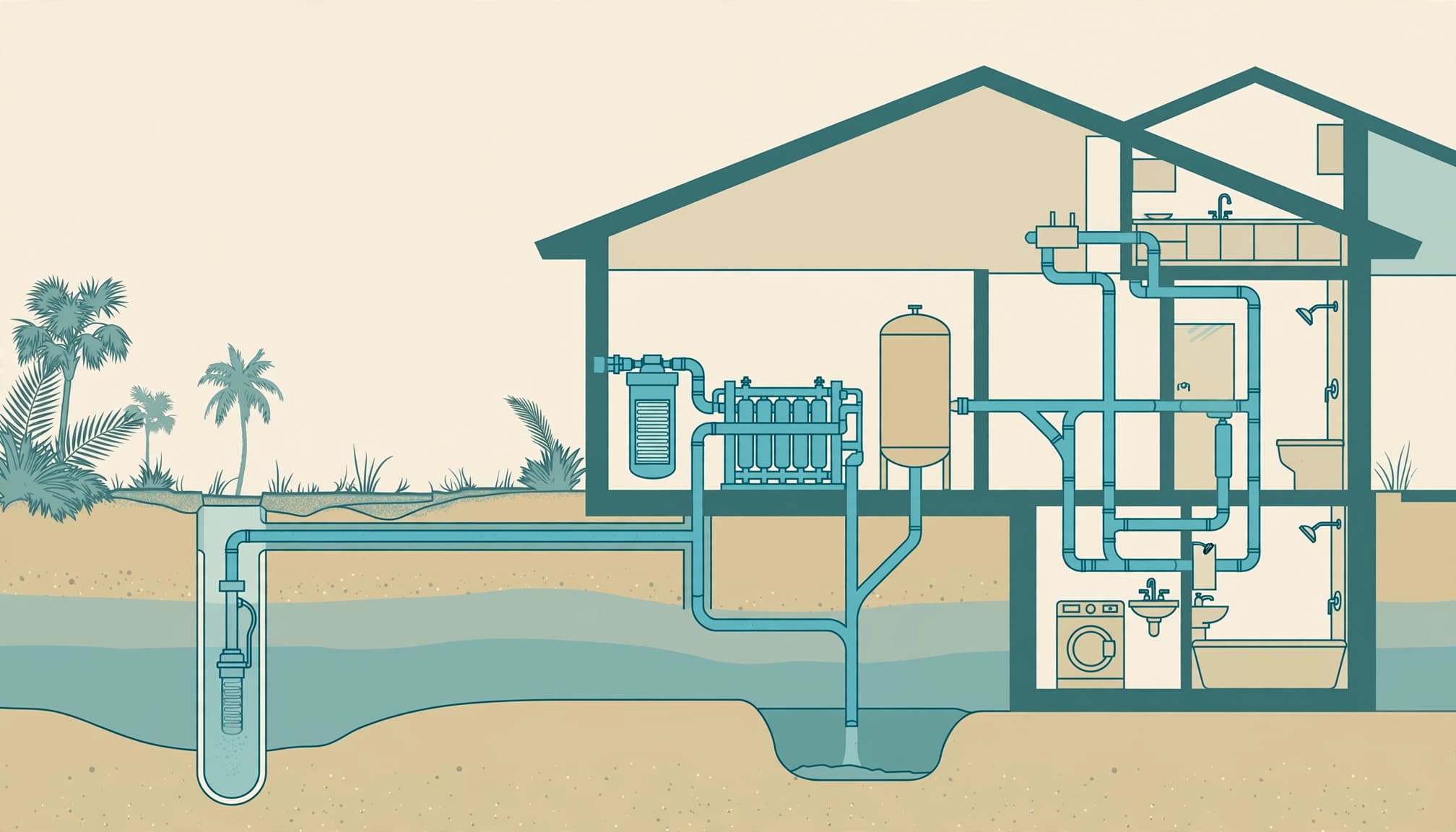
What affects cadmium reduction?
Membrane selection, feed pressure, water temperature, and source-water chemistry all affect RO performance. Fouling or scale can also interfere with operation over time.
For a whole-house system, the design must account for the complete treatment train, including any pretreatment, storage, and final plumbing. A laboratory result from the finished installation gives you a more useful answer than a general equipment claim.
What does certification tell you?
NSF/ANSI 58 applies to point-of-use RO systems , such as under-sink units. The standard requires testing for total dissolved solids reduction, while cadmium reduction is a separate, optional claim.
When choosing a point-of-use system for cadmium, look for a listing that names cadmium reduction. The NSF explanation of Standard 58 describes the standard and its optional contaminant claims.
Understand Your Well Water Test Result
Cadmium can enter groundwater through natural deposits or contamination associated with human activity. Plumbing components can also contribute metals to water, so a test at the well and one at a tap may help identify where the concern originates.
Use a state-certified laboratory and request cadmium analysis. The lab can provide the appropriate containers and sampling instructions. Keep the report with your water-treatment records.
Compare the result with EPA's benchmark
The EPA drinking-water standard for cadmium is 0.005 milligrams per liter , which is the same as 5 micrograms per liter or 5 parts per billion.
That limit regulates public water systems. It doesn't establish a compliance requirement for a private well, but it gives homeowners a benchmark for discussing a lab result and treatment target.
Long-term exposure above the limit can harm the kidneys. If your result is elevated, use a safe alternative for drinking, cooking, and preparing infant formula while you arrange treatment. Boiling water doesn't remove cadmium.
Test for conditions that affect treatment
Cadmium is only one part of the design. A useful well-water analysis may also include hardness, iron, manganese, pH, and total dissolved solids.
CDC recommends at least annual well testing for total coliform bacteria, nitrate, pH, and total dissolved solids, along with other contaminants relevant to local conditions. Cadmium isn't part of that basic list, so request it when it's a concern. Our guide to Florida private well water testing covers when to test and what to consider.
Whole-House RO vs. Point-of-Use RO
The choice depends on where you need treated water. A point-of-use unit typically supplies a dedicated kitchen faucet. Whole-house RO treats the water routed through the system before it reaches the home's connected plumbing.
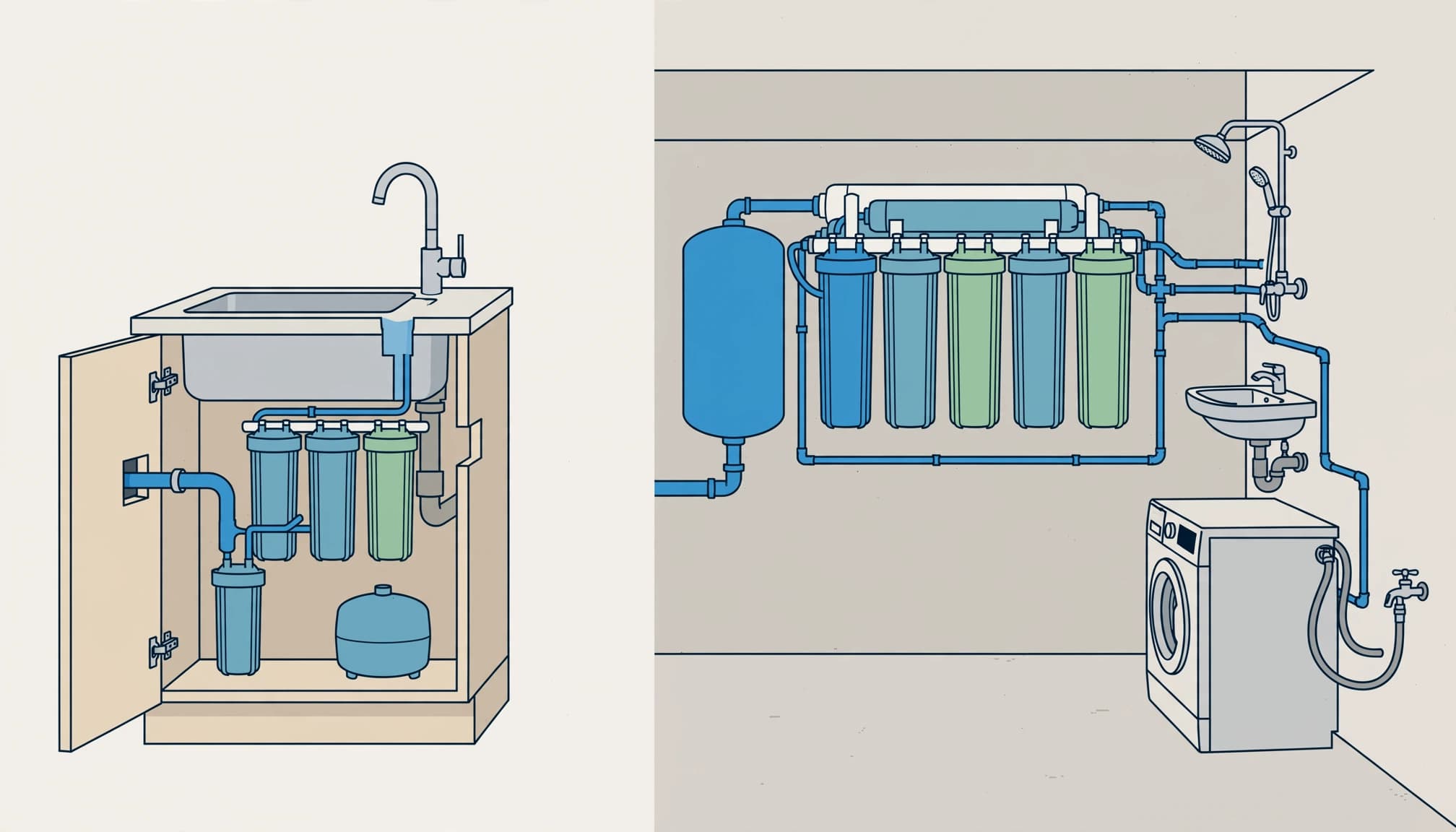
The two approaches have different equipment needs.
| Consideration | Point-of-use RO | Whole-house RO |
|---|---|---|
| Coverage | One faucet or connected outlet | Household fixtures connected to the treated supply |
| Common goal | Drinking and cooking water | Treated water at several fixtures |
| Equipment | Smaller unit, often under a sink | Larger treatment, storage, and pumping setup |
| Planning | Space and drain at the installation point | Daily demand, peak flow, storage, and reject-water disposal |
For many households focused on ingestion, an under-sink system with a cadmium-specific reduction claim is a practical starting point. Water from other faucets remains untreated unless they're connected to the system.
Whole-house treatment may fit when several fixtures need treated water or the well has other dissolved-contaminant concerns. It generally requires more space and a larger installation. Our comparison of whole-house and under-sink fluoride treatment also explains how coverage changes the equipment decision.
Size a Whole-House System for Your Home
A membrane's daily production capacity and a home's peak flow are different measurements. Your family might use water throughout the day but need several fixtures at once during a busy morning.
Start with the laboratory report, then consider daily water use, simultaneous fixture demand, available space, and the well pump's performance. A system sized by house square footage alone can miss important differences in household use.
Plan for storage and peak demand
Whole-house RO systems often make treated water gradually and store it in a tank. A repressurization pump then supplies the home's plumbing when fixtures open.
The tank and pump need enough capacity for periods when a shower, washing machine, and other fixtures run close together. The membrane must also replenish the tank fast enough for the household's normal use.
Account for pressure and plumbing
Feed pressure affects how much water the membrane produces. A booster pump may be needed when the available well pressure doesn't match the membrane's operating requirements.
The installation plan should also identify which lines receive treated water. Outdoor taps, irrigation, or other branches may sit outside the treated supply. If a fixture matters for your treatment goal, its connection needs to be part of the design.
Match Pretreatment to the Water Analysis
Pretreatment protects the RO membrane and helps the system operate as designed. The right combination depends on what the lab finds, rather than a standard package of filters.
Control sediment, hardness, and metals
Sediment filtration can catch sand, silt, and other particles before they reach the membrane. Hardness can create scale, so a softener or another scale-control method may be appropriate.
Iron and manganese can foul equipment and may call for their own treatment stage. A softener addresses hardness, while RO targets many dissolved contaminants. Our comparison of RO and water softeners explains why some homes use both.
Consider disinfectants and pH
Some membrane materials are sensitive to chlorine, so carbon treatment may be needed if the water is chlorinated. The correct setup depends on the disinfectant and membrane.
pH also affects water chemistry and can influence scaling or corrosion. Read more about well water pretreatment before RO and why a full analysis matters more than a single pH reading.
Plan for Reject Water Before Installation
RO divides incoming water into treated water and a reject stream. The reject stream carries a higher concentration of dissolved material, including contaminants separated by the membrane.
The amount of reject water depends on the system design, pressure, and water chemistry. Whole-house treatment processes more water than a kitchen unit, so its discharge deserves attention during planning.
A suitable drain must handle the expected flow and meet applicable plumbing and discharge requirements. Septic capacity, landscape drainage, and nearby lakes or canals can affect the options. Because the reject water contains concentrated material, don't assume it's suitable for irrigation or discharge to a waterway.
Discuss the destination with the installer before equipment goes in. The plan should also account for any backwash or regeneration water produced by pretreatment equipment.
Maintain the System and Test After Installation
A membrane can lose performance, and a clogged prefilter can reduce the water reaching it. Regular service helps protect the equipment, but a service visit alone doesn't establish how much cadmium reaches your faucet.
Follow the equipment manufacturer's maintenance instructions for prefilters, membranes, and storage components. Record pressure, production, and service work so changes are easier to spot.
Test the source and treated water
Collect a baseline sample of untreated well water before installation. After startup, have a certified laboratory test treated water for cadmium. Sampling at a representative drinking-water tap also helps account for the water's path through storage and household plumbing.
Ask the laboratory to use a reporting limit below the treatment target. If the finished water exceeds your target, use a safe alternative for drinking and cooking while the system and plumbing are assessed.
Keep testing as conditions change
Repeat cadmium testing during routine service and after repairs or changes that could affect treatment. Retesting is also useful if the well water changes or equipment performance declines.
A total dissolved solids meter can help identify a change in membrane performance, but it doesn't measure cadmium. Even a low TDS reading can't replace a laboratory cadmium test.
Frequently Asked Questions
Can a sediment filter remove dissolved cadmium?
A sediment filter catches particles, but it shouldn't be relied on to remove dissolved cadmium. It may still be useful ahead of an RO membrane to protect the equipment.
Does whole-house RO treat every outdoor faucet?
Not necessarily. Coverage depends on where the equipment connects and how the property's plumbing is arranged. An irrigation line or hose bib may branch off before treatment.
Is an under-sink system enough for cadmium?
It can be a good fit when the goal is treated drinking and cooking water at one location. Choose a point-of-use RO system with a cadmium reduction claim, then test the treated water after installation.
Can I tell whether cadmium is present by taste?
You can't rely on taste, smell, or appearance to identify cadmium. A laboratory test is the dependable way to measure it.
Choose Treatment Based on Your Water
Whole-house reverse osmosis can reduce cadmium, but the system must fit your well water and household demand. A smaller, cadmium-certified point-of-use unit may meet your needs if drinking and cooking are the main concerns.
At Trademark Water Systems, we provide water analysis and RO systems custom-made for well-water users in Southwest Florida. The goal is a treatment plan backed by test results , both before installation and after the system is running.
Latest posts
Read Our Blog
Tips, guides, industry best practices, and news.


Contact us
Get in touch
Our friendly team is ready to chat.
