
Lake Fountain Installation Near a Seawall: Hide the Cable
A lake fountain installation near a seawall can keep power cables out of sight by using a protected shore route and an approved transition into the water. The cable still needs to remain accessible for inspection and replacement.
For Southwest Florida homeowners and communities, the best plan starts before anyone digs or attaches hardware to the wall. Fountain placement, electrical safety, changing water levels, and maintenance access all affect the route.
Start With Fountain Placement
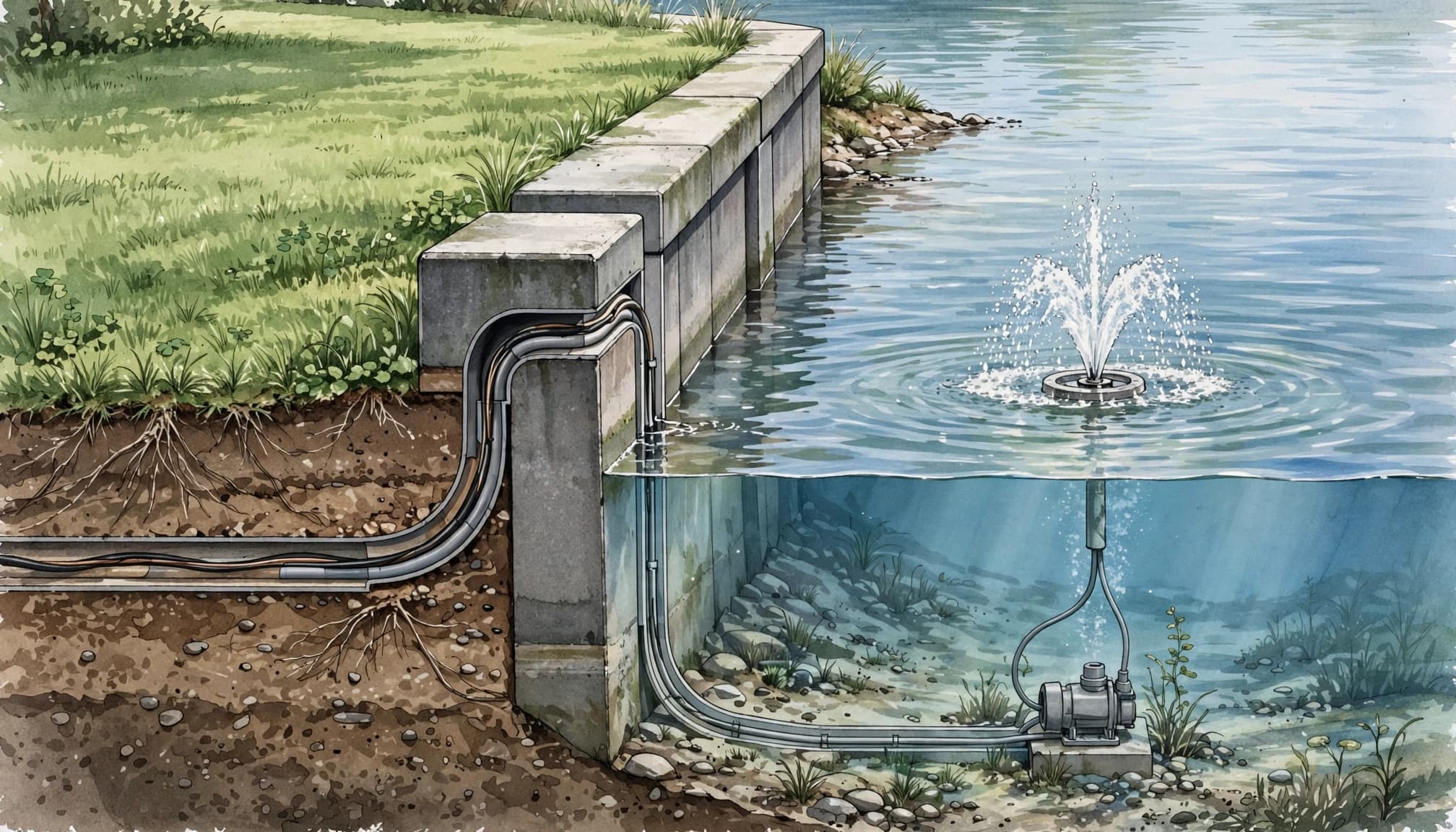
The shortest cable run isn't always the best one. Position the fountain where it has enough water to operate and enough room to stay clear of the seawall as wind and water levels change.
Account for Spray and Water Depth
Choose a location that keeps windblown spray away from sidewalks, electrical equipment, homes, and other areas people use. A fountain close to a hard shoreline can also sound louder at nearby homes.
Water depth matters too. A shallow intake can draw in sediment, while a fountain placed near an inlet may collect floating debris. Our Florida lake fountain placement guide covers these shoreline considerations in more detail.
Plan for Movement and Retrieval
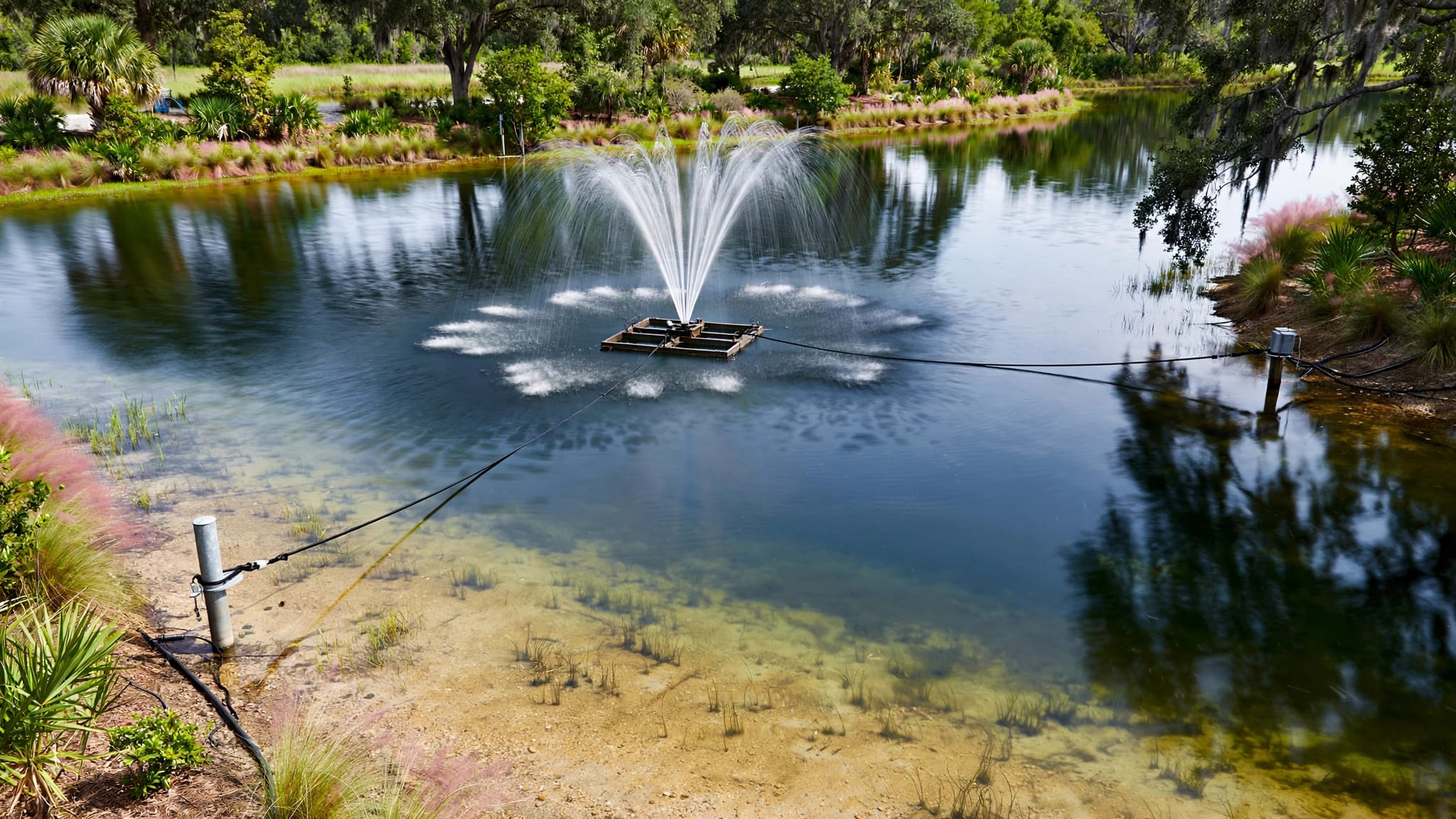
A floating fountain needs an anchoring plan that accounts for wind, waves, and changing water levels. Its power cable also needs enough allowance for that movement without pulling tight or rubbing against the wall.
Leave a safe way to retrieve the unit for cleaning and repair. If technicians need a boat, the property needs an appropriate access plan rather than an assumption that someone can pull the fountain ashore by its cable.
Address Approvals Before Shoreline Work
An installation can involve common property, drainage easements, protected vegetation, or other areas with restrictions. An HOA's approval doesn't replace any government permits that apply.
The complete site plan should show the fountain, anchors, electrical source, proposed cable route, control equipment, and access point. That gives the association and the authorities responsible for the property a clear picture of the work.
Requirements differ by location and waterbody. For example, the South Broward Drainage District has published fountain rules for certain lake systems, including placement and depth requirements. Those aren't statewide standards.
Our guide to Florida lake fountain permit questions explains why the cable and anchors may matter as much as the fountain itself.
Map the Power Route Before Installation
A concealed installation begins at the power source, not at the water's edge. Walk the proposed route with the fountain installer and a licensed electrical contractor before selecting equipment or disturbing the site.
Choose an Accessible Control Location
The electrician needs a suitable power source, a means of disconnecting the fountain, and ground-fault protection appropriate to the installation. The control equipment should be reachable for service without standing in water and positioned away from routine spray and flooding.
The fountain's electrical requirements also affect the circuit and cable selection. Lights, timers, and other controls add equipment to the plan. A loose extension cord across the lawn is not a substitute for a permanent fountain power route.
Keep the Route Away From Future Work
Trace the path around irrigation, drainage features, landscaping, and areas used by mowing equipment or vehicles. On community property, consider where future shoreline maintenance or excavation may take place.
Mark the route on a site drawing and keep it with the property records. That record gives future crews a useful starting point before they dig or work along the wall.
Choose a Protected Conduit Route
A protected route can conceal the shore-side wiring while reducing exposure to lawn equipment, sunlight, and accidental contact. The electrician selects conduit and fittings suitable for their locations and the fountain system.
Buried Conduit Behind the Seawall
A buried route can keep the shore-side run out of view across a lawn or landscaped area. It may work well when there's room to reach the wall without crossing restricted areas or interfering with other utilities.
The route still needs careful planning around roots, irrigation, drainage, and the seawall itself. A contractor should locate underground utilities before excavation and avoid undermining the wall or disturbing its drainage.
Burial makes a cable less visible, but it doesn't eliminate the need for a record of its location. Keep the route drawing accessible to both the owner and future maintenance crews.
Surface-Mounted Conduit Along a Structure
Where trenching isn't practical, conduit mounted along an approved structure may provide a more discreet route. A run placed where landscaping or the wall itself screens it can be less noticeable than a loose cable.
The conduit remains accessible for inspection, although it needs protection against impact and weather. Placement should also avoid creating a trip hazard or obstructing drainage and service access.
Keep the route serviceable. Bends, fittings, and access points should allow an electrician to work on the wiring without dismantling the seawall.
Protect the Seawall Transition
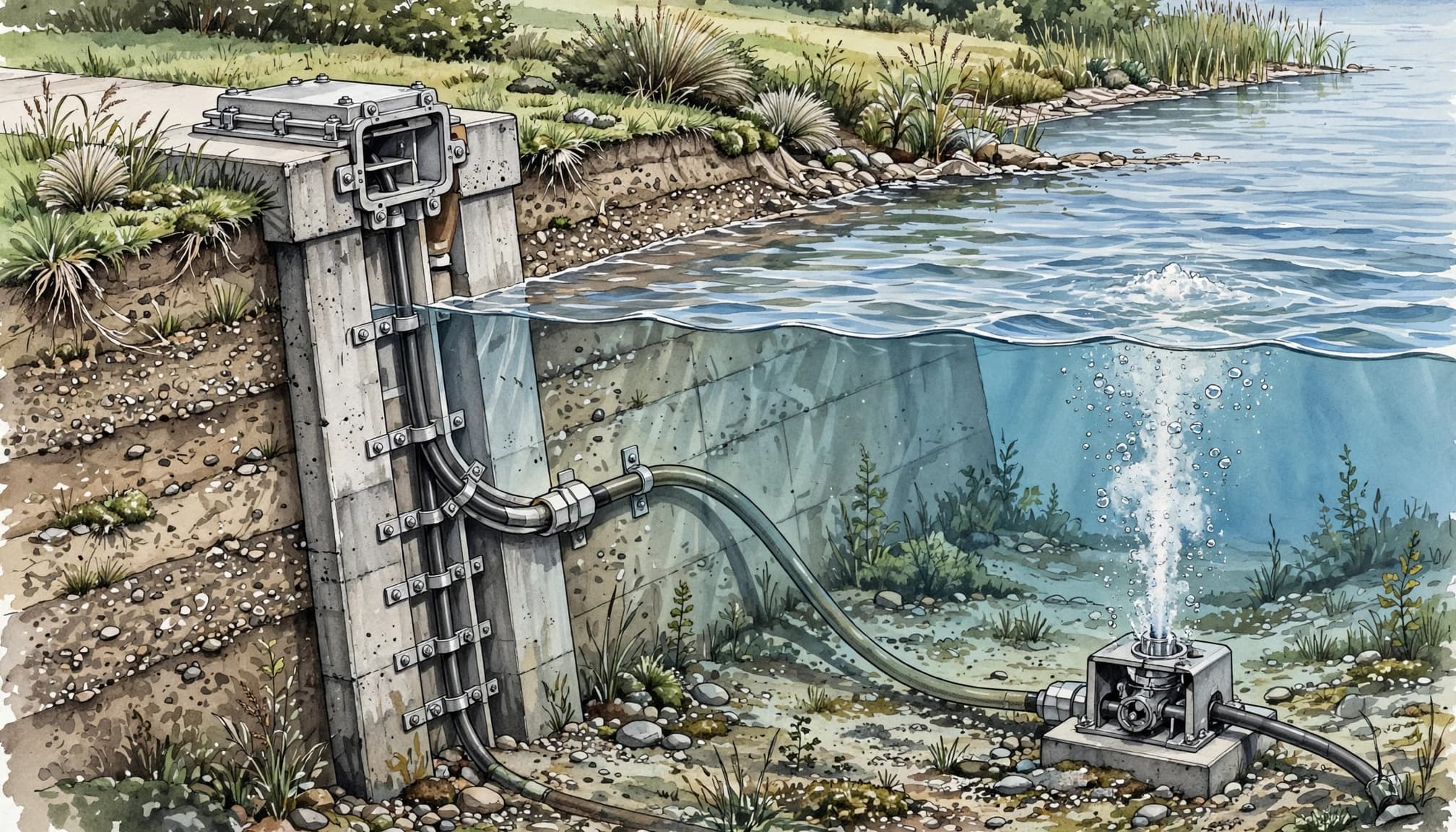
The transition between shore and water is where a concealed route needs special attention. The cable can rub against a wall edge, shift as water rises, or become strained if the fountain moves.
Support the Route Without Damaging the Wall
An installer can plan a protected path along an approved portion of the seawall, using suitable attachments and fittings for the exposure. Hardware should resist the wet shoreline environment and hold the route away from sharp edges.
Don't drill into, cut through, or attach equipment to a seawall without an approved plan. The wall is a structural feature, and its condition, drainage, and ownership all matter. Where the attachment could affect the wall, involve the appropriate qualified professional.
Make the Water Entry Easy to Inspect
The fountain cable needs a protected path into the lake and a transition suited to the equipment. A cable intended for underwater use may be concealed beneath the surface, while the shore-side route remains inside suitable conduit.
The installation should prevent abrasion at the wall and leave enough movement for normal changes in water level. It should also leave accessible points for inspection and replacement.
Don't assume that a concealed conduit stays dry. The electrician should select wiring and connections suited to the conditions, following the fountain manufacturer's instructions. Avoid improvised underwater splices or hidden junctions.
Materials and Tools for the Project
The final equipment depends on the fountain and site, but a project plan will generally include:
- The fountain, manufacturer-approved power cable, and anchoring equipment.
- Conduit, compatible fittings, protective hardware, and supports suited to their locations.
- Control equipment, disconnect, and electrical protection selected for the system.
- Site drawings, utility-location information, measuring tools, and equipment for the approved shore work.
- Suitable access and retrieval equipment for the fountain.
A licensed electrician supplies and installs the electrical components appropriate to the design. Fountain installers and seawall professionals handle the parts of the work within their qualifications.
Follow a Practical Installation Sequence
Once the location and scope are established, the project can move forward in an orderly sequence.
- Survey the site. Identify the power source, water depth, wall condition, nearby utilities, access route, and areas where spray or fountain movement could cause problems.
- Prepare the layout. Mark the fountain position, anchor locations, conduit path, water entry, control equipment, and retrieval area on a site plan.
- Obtain required approvals. Address community permissions, easements, electrical permits, and any applicable shoreline or waterbody requirements before work begins.
- Prepare the shore route. The installation team completes the approved excavation or surface-mounted route without compromising the seawall or its drainage.
- Install the fountain and cable. The fountain crew places the unit and anchors. The electrician handles the power route and connections, using equipment suited to the site.
- Complete testing and handover. After required inspections, the installation team tests operation, documents the route and shutoff location, and records the normal spray pattern.
During service or installation, nobody should enter the water or handle submerged components while the system has power. A qualified person must shut off the supply and establish that the equipment is safe to work on.
Keep the Cable Accessible After Installation
A concealed route should make the property look tidy without hiding damage from the people responsible for maintenance.
Inspect the Route and Fountain Together
Routine service should include the float, intake screen, anchors, mooring lines, visible cable, and shore-side fittings. Look for frayed cable jackets, loose supports, corrosion, rubbing, and signs that the fountain has shifted.
A weaker or uneven spray can also point to debris, buildup, or pump trouble. Our lake fountain maintenance checklist covers the equipment that needs regular attention.
If a breaker repeatedly trips or a cable looks damaged, shut the system down using the appropriate disconnect when it's safe to do so. Keep people away from the equipment and arrange qualified service.
Keep Records for Storms and Repairs
Florida storms can move a float, loosen hardware, and bring debris against the shoreline. Set a storm procedure that identifies who will shut down or secure the equipment and follow the manufacturer's directions for the fountain.
After severe weather, arrange an inspection before restoring power if the equipment may have shifted or sustained damage. Keep the fountain model, anchor locations, cable route, disconnect location, and maintenance history together so a new property manager or technician can find them.
A Concealed Route Should Stay Serviceable
A tidy lake fountain installation starts with a suitable fountain location and a protected path from the power source to the water. The seawall transition deserves particular care because movement and abrasion can damage a cable that's otherwise out of sight.
At Trademark Water Systems, we help Southwest Florida properties with lake fountain installation and design. A plan that preserves safe access makes the finished fountain easier to enjoy and maintain.
Latest posts
Read Our Blog
Tips, guides, industry best practices, and news.
Contact us
Get in touch
Our friendly team is ready to chat.
