
Lake Fountain Installation on a Steep Pond Shelf
A lake fountain installation on a steep pond shelf starts with finding a location where the pump has enough water and the fountain can stay securely positioned. The slope also affects where mooring lines can hold and how the power cable reaches shore.
For Florida communities, changing water levels and storm exposure add to the planning. A floating fountain can work well in this setting, but its location, anchoring, and service access need to fit the pond. Start by mapping what lies beneath the surface.
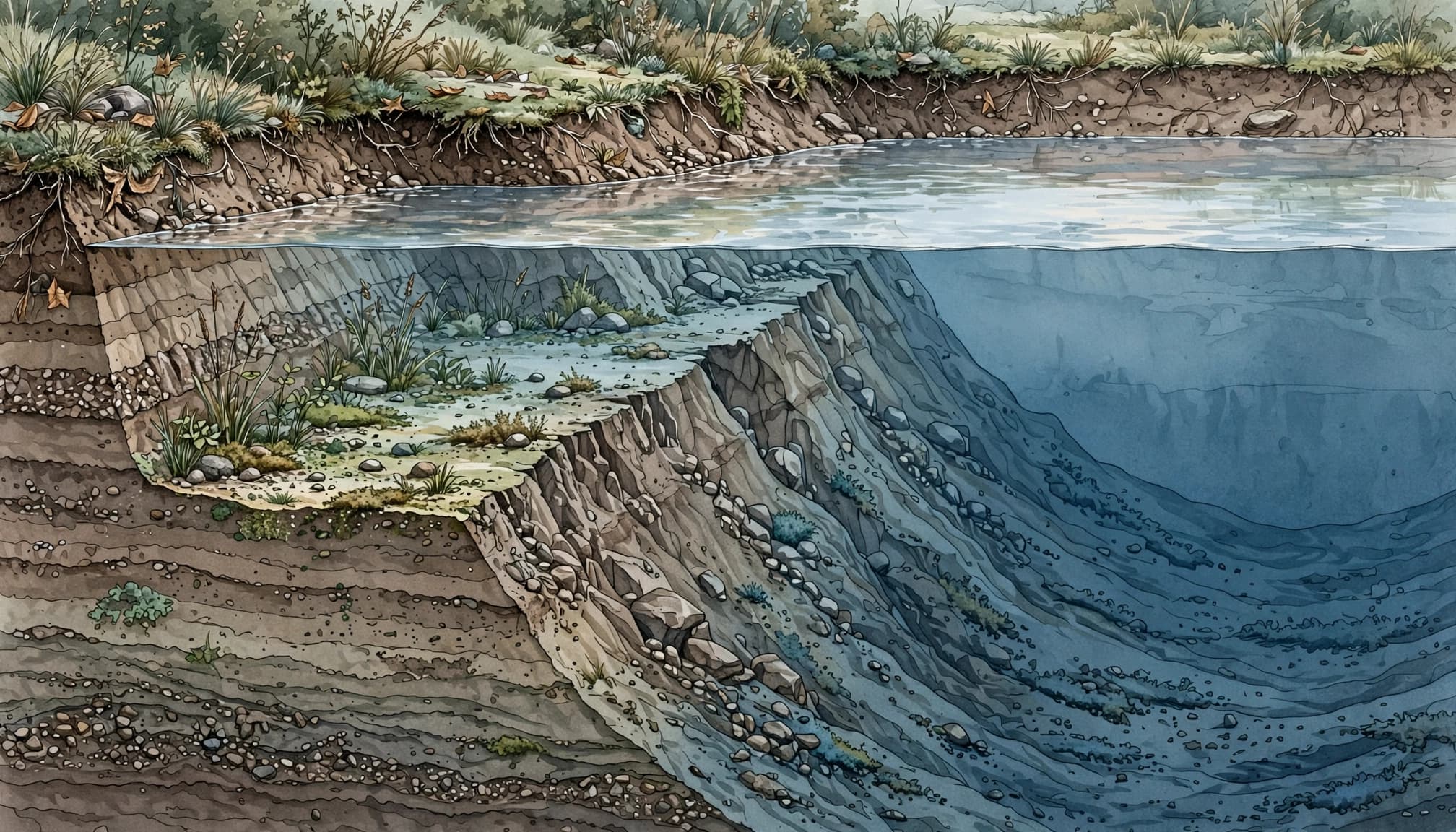
Assess the Pond's Steep Shelf
A shelf is the shallower area near the bank before the pond floor drops into deeper water. Its width and shape aren't always obvious from shore, especially when the water is cloudy or vegetation hides the edge.
Map the Bottom and Water Depth
A site survey should identify the shelf edge, the steepest part of the drop, and any flatter areas beyond it. Depth readings at several locations can reveal whether the proposed fountain site stays deep enough across the unit's possible range of movement.
Consider lower seasonal water levels, not only the depth on installation day. The pump intake needs the clearance specified for the fountain even when the pond drops. A location that works after heavy rain may become too shallow during a dry period.
Soft sediment matters, too. An intake close to the bottom can pull in mud and debris, reducing flow and increasing wear.
Look at the Bank and Pond Use
Inspect the shoreline for erosion, loose soil, exposed roots, and signs of runoff. Also mark drainage structures, irrigation intakes, docks, planted areas, and places where people fish or boat.
These features affect both installation and future service. Our guide to lake fountain placement for Florida shorelines covers other conditions that can influence the final location.
Choose a Fountain Location Beyond the Shelf
For many floating fountains, a suitable location is in open water beyond the steepest part of the shelf. The goal is to keep the intake clear of the bottom while leaving room for the fountain to move within its mooring area.
The deepest point isn't automatically the right choice. A site that's difficult to reach, exposed to heavy wind, or close to an outlet structure may create other problems. Likewise, placing the fountain directly over the shelf edge can leave little room for movement toward shallow water.
Consider the spray pattern as well as the pump position. Wind can carry water onto sidewalks, roads, electrical equipment, or nearby property. Choose a location with enough open water around the display and a clear path for service.
For an HOA retention pond, fountain size should match the pond's depth and shape as well as the desired appearance. Our retention pond fountain sizing guide explains why a larger pump isn't always the answer.
Plan an Anchoring Method for the Slope
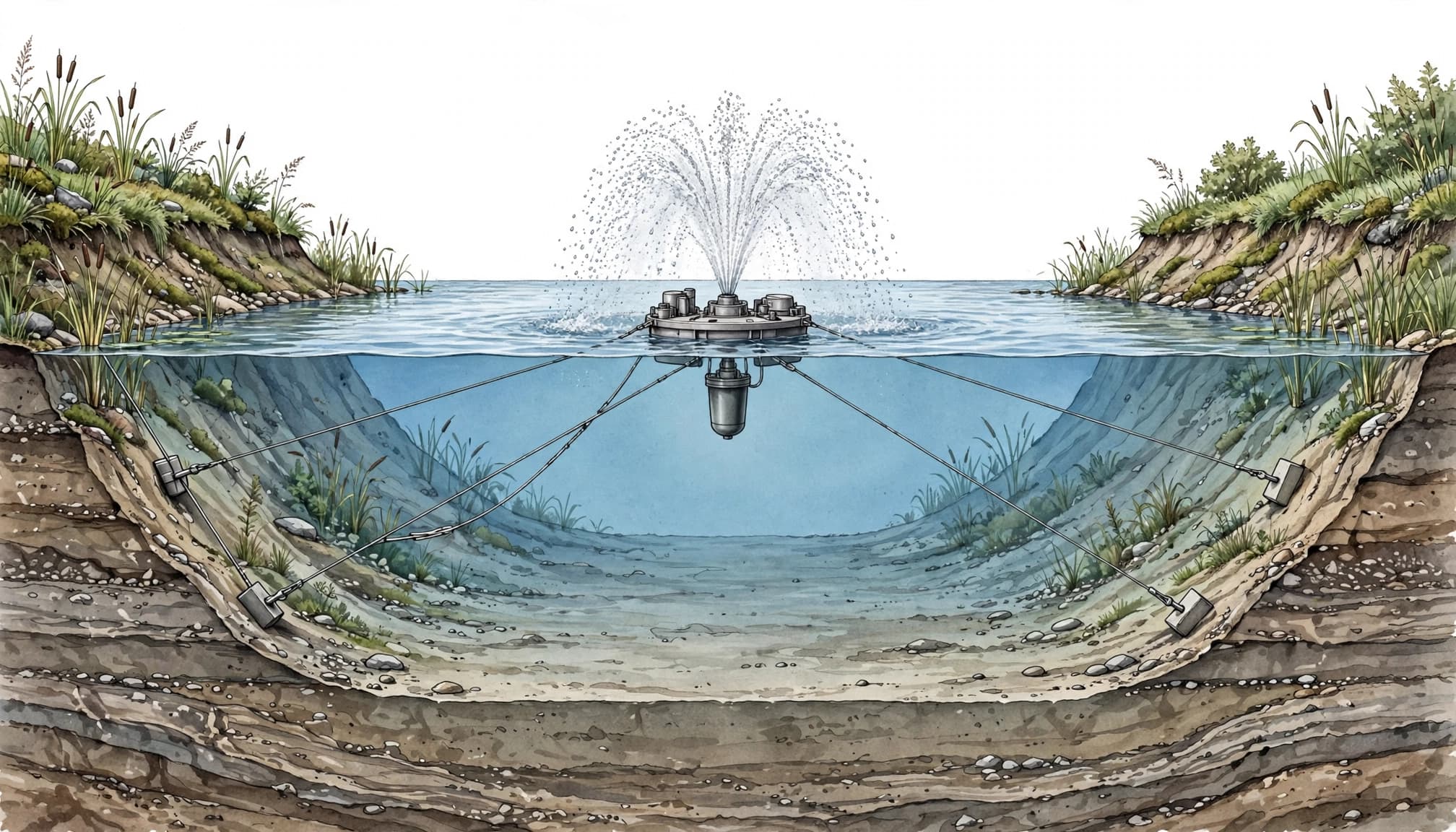
A floating fountain needs a mooring arrangement that holds it within its intended operating area as wind, waves, and water levels change. On a steep shelf, the pond floor can make that arrangement more complicated.
Use Stable Attachment Locations
A shoreline-based mooring can be an option where suitable attachment points are available in stable ground or on an approved structure. The lines and connections must suit the fountain and the forces at that location.
Avoid tying lines to trees, fence posts, dock rails, or lightweight landscape features. Those features aren't substitutes for a mooring system designed for the fountain.
Where the plan uses the pond bottom, the installer must account for the slope and bottom material. An attachment that shifts downhill can let the fountain drift toward the bank or put strain on its electrical cable. Soft sediment and loose material can also make placement more difficult.
Allow for Water-Level Changes
Mooring lines need enough movement for normal water-level changes without allowing the fountain to reach shallow water. Lines that are too tight can strain the float and connections. Excessively loose lines can let the unit wander or become tangled.
The right arrangement depends on the fountain, shoreline, and pond. A fixed-mounted unit is another option for some properties, but it requires a support suited to the bank and equipment. Our article on fixed-mount pond fountain supports explains those considerations.
Position and Secure the Pump
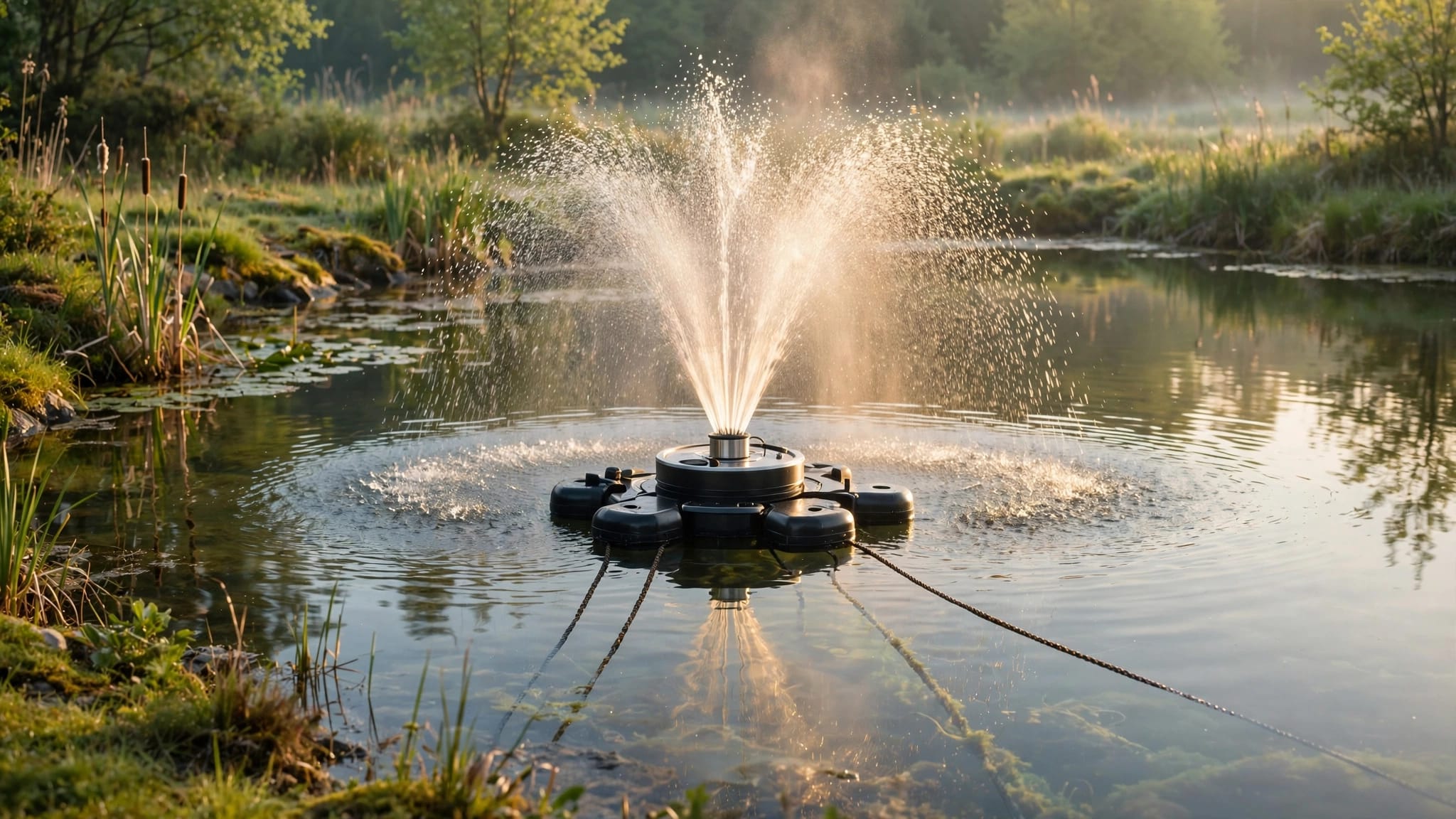
Most floating fountain assemblies hold the pump below a float, so the pump moves with the water surface. Assemble and secure the pump, float, intake screen, and nozzle according to the equipment instructions.
The float should sit level, and the intake should remain submerged with the required clearance above the pond bottom. Don't place the pump directly on the sloped shelf or improvise a support to compensate for inadequate depth. A pump that draws sediment can clog and wear prematurely.
Keep mooring hardware and the electrical cable clear of the intake. The pump cable shouldn't carry the fountain's weight or act as a mooring line. Use the attachment and strain-relief provisions supplied for the equipment.
If the fountain lists to one side, drifts after positioning, or produces an uneven spray, shut it down and inspect the assembly. A tilted float, an obstruction, or uneven mooring tension may need attention before regular operation.
Route and Protect the Power Cable
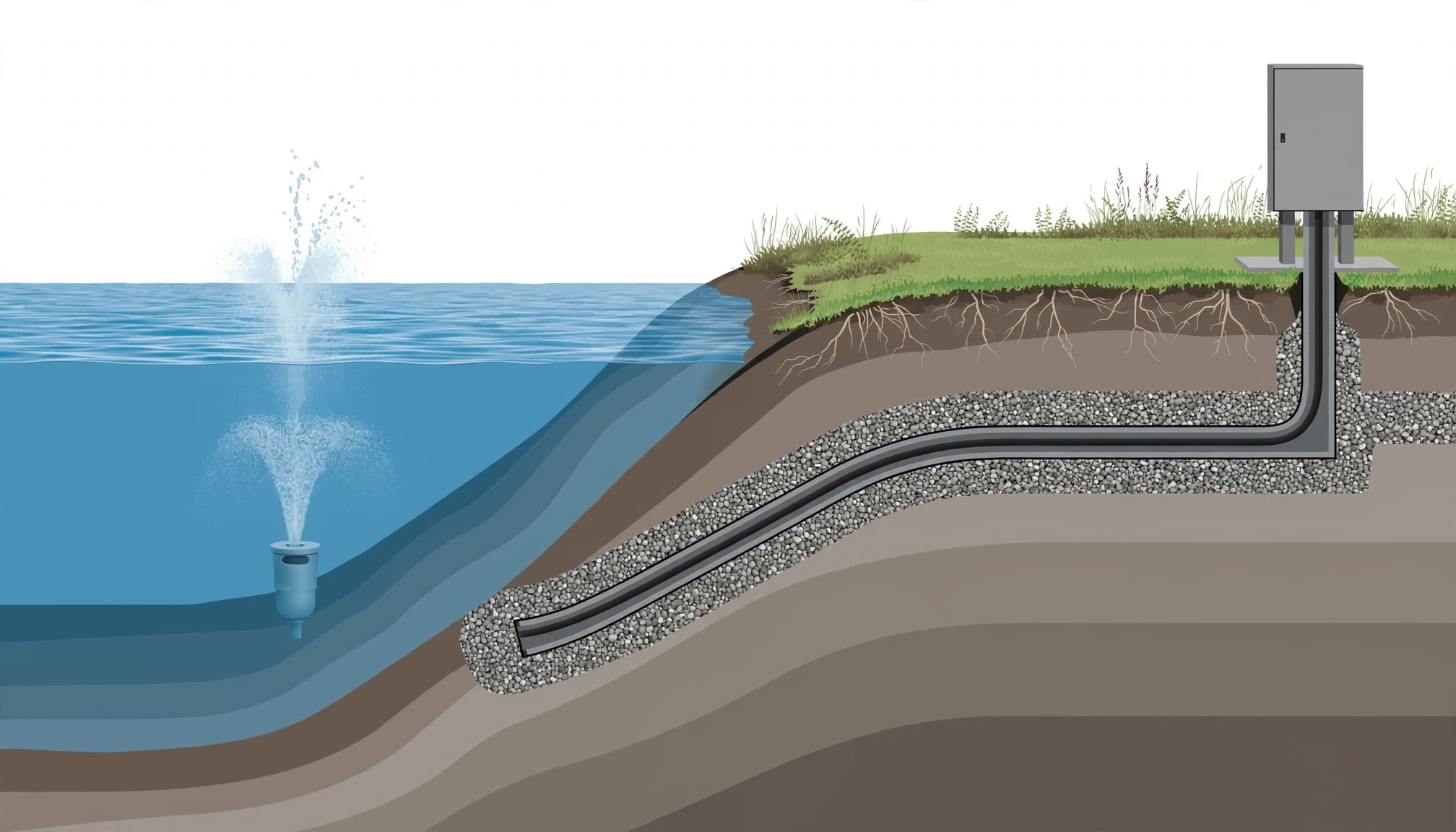
Plan the electrical route before moving the fountain into place. The cable must reach shore without pulling on the pump, rubbing against the shelf, or interfering with the mooring lines.
Protect the Shoreline Crossing
The point where the cable leaves the water deserves attention. Rocks, seawall edges, lawn equipment, and foot traffic can damage an exposed section. A protected route helps reduce abrasion and keeps the cable away from ordinary property maintenance.
Use cable and protective materials appropriate for the fountain and installation. The route should also leave room for water-level changes without creating unnecessary loose cable near the intake or mooring lines.
Never use an improvised splice or household extension cord to reach the fountain. Damaged insulation or a stressed connection calls for professional repair.
Provide Safe Electrical Access
A qualified electrician should handle the supply, controls, and protective equipment for the installation. The disconnect needs to be accessible so power can be shut off before anyone services the fountain.
Permits and approval processes vary with the property, community, and type of waterbody. Some managed drainage systems also restrict bottom disturbance or work near maintenance areas. Our Florida lake fountain permit guide describes common issues for owners and boards to address during planning.
Follow a Practical Installation Sequence
Once the site and equipment are selected, an installation generally follows this order:
- Map the shelf, proposed fountain location, mooring area, cable route, and service access. Include expected changes in water level.
- Prepare the approved mooring and electrical arrangements. Keep work away from drainage features and other restricted areas.
- Assemble the float, pump, intake screen, and nozzle using the manufacturer's instructions. Attach the mooring lines and cable at their designated points.
- Move the fountain into position and secure the mooring system. Allow for water-level changes while keeping the unit clear of the shallow shelf.
- Have the electrical connection completed, then observe the fountain from shore during startup. Record its position, float level, and normal spray pattern.
Never enter the water or handle submerged fountain components while the system has power. A qualified crew can manage the work where a steep bank, deep water, or heavy equipment makes access unsafe.
Solve Common Steep-Shelf Problems
A Drifting or Tilting Fountain
A fountain that moves toward shore may have a loose line, a shifting attachment, or an arrangement that doesn't account for changing water levels. A tilt can also indicate a float problem or uneven tension.
Shut the system down and have the mooring and float inspected. Repeatedly pulling the unit back into place won't solve a connection that continues to move.
Muddy Water or Reduced Spray
If the fountain stirs sediment or loses spray height, the intake may be too close to the bottom or blocked by debris. Algae and mineral deposits can also affect the screen and nozzle.
After power is safely disconnected, a service technician can inspect and clean the components. If the intake lacks clearance at low water, the solution may be a different fountain location rather than more frequent cleaning.
A surface fountain can improve the display and create water movement, but it won't circulate every deep or sheltered area. For ponds with broader circulation concerns, compare fountain aeration and bottom diffusers.
Maintain the Fountain Through Florida Weather
Look at the fountain regularly from shore. Changes in spray height, a leaning float, or movement toward the shelf can be early signs that equipment needs attention. Photos taken after installation provide a useful reference.
Routine service should include cleaning the intake screen, nozzle, and float, along with inspecting mooring lines, connections, anchors, and the visible cable. The frequency depends on debris, algae, water conditions, and the equipment. Our Florida lake fountain maintenance checklist offers a practical starting point.
Plan for storms before they arrive. Depending on the system and property, a professional may recommend shutting down, securing, or removing equipment. After severe weather, inspect for movement and damage before restoring power.
Call for service if the breaker trips repeatedly, the cable is damaged, the pump grinds or vibrates, or reduced flow continues after cleaning. Don't enter the pond to investigate an electrical problem.
Build the Installation Around the Pond
A steep shelf changes how a fountain must be positioned and secured. Depth, bottom conditions, water-level changes, and service access all affect the installation.
At Trademark Water Systems, we help Southwest Florida communities with lake fountain installation and repair. A site-specific plan gives the fountain room to operate and gives the people maintaining it a safer way to reach it.
Latest posts
Read Our Blog
Tips, guides, industry best practices, and news.

Contact us
Get in touch
Our friendly team is ready to chat.
