
High-pH Well Water Treatment Before Reverse Osmosis
High-pH well water can shorten membrane life, increase scaling, and reduce the performance of a reverse osmosis system. The right high-pH well water treatment depends on the complete chemistry of your well, not pH alone.
A pH reading above 7 means the water is alkaline, but that number doesn't explain what is causing the problem. Hardness, alkalinity, iron, manganese, total dissolved solids, and silica can all affect the treatment plan. Test the water first, then match pretreatment to the results and the RO manufacturer's requirements.
Key Takeaways
- High pH is only one part of well-water chemistry. Test the full water profile before choosing equipment.
- Hardness, alkalinity, iron, manganese, TDS, and silica can create scaling or fouling problems ahead of an RO membrane.
- A softener may reduce hardness, but it doesn't lower pH or remove all dissolved contaminants.
- Acid injection or carbon dioxide systems require careful design, monitoring, and professional installation.
- Follow the exact feed-water limits for your reverse osmosis system because membrane requirements vary by model.
Why High pH Can Complicate Reverse Osmosis
The pH scale runs from 0 to 14, with 7 considered neutral. Water above 7 is alkaline. Many wells naturally produce water with elevated pH because of local rock, minerals, and groundwater conditions. A pH above approximately 8.5 often deserves closer attention, especially when the water also contains high alkalinity or hardness.
Reverse osmosis does more than filter visible particles. Under pressure, water passes through a semipermeable membrane that reduces many dissolved salts and contaminants. However, the membrane can struggle when untreated water carries a heavy mineral load. Calcium carbonate scale may form when calcium, alkalinity, and pH combine at unfavorable levels. Silica can also become a concern in some wells, particularly when the system operates at high recovery.
High pH may also support the oxidation and precipitation of iron and manganese. Those metals can foul sediment filters and RO membranes, causing pressure loss or declining water production. A membrane that receives muddy, metallic, or heavily mineralized feed water has to work harder than one receiving properly conditioned water.
High pH doesn't automatically mean you need acid injection. It means the water needs a closer chemistry review before treatment equipment is selected.
An RO system also doesn't act as a complete pH-correction device. It can reduce dissolved minerals that influence pH, but the pH of the treated water depends on alkalinity, carbon dioxide, membrane performance, and other factors. The feed-water pH may also change after exposure to air, so a single reading can be misleading.
For that reason, don't choose a pretreatment method based on a pH strip or a basic water report alone. The cause of the high pH matters as much as the number.
Test the Complete Well-Water Profile First
A qualified laboratory or water-treatment professional should test raw well water before anyone recommends pretreatment. Collect the sample from the untreated well line, before softeners, filters, storage tanks, or chemical injection equipment. If treatment already exists, a second sample after treatment can show whether the equipment is working.
The test should include pH, hardness, alkalinity, iron, manganese, and TDS . Include silica when the well's geology, the expected RO recovery rate, or the membrane manufacturer makes it relevant. TDS measures the total concentration of dissolved material, but it doesn't identify each contaminant or predict every scaling condition.
Other tests may matter based on your location and water source. Nitrate, sulfate, chloride, sodium, fluoride, arsenic, sulfur, bacteria, turbidity, and organic compounds can influence the system design. A private-well water test should also address microbiological safety, since RO pretreatment doesn't replace disinfection or routine well maintenance.
pH and alkalinity need attention together. Two wells can show the same pH but require different treatment because one has much higher buffering capacity. Alkalinity indicates how strongly the water resists pH change, so it helps determine how much acid or carbon dioxide a correction system may need.
Hardness testing identifies calcium and magnesium that can form scale. Iron and manganese testing shows whether the water may stain fixtures or foul the RO membrane. Silica testing can help prevent a difficult-to-remove deposit in systems with high mineral loading.
A water professional may also review well flow, pump capacity, pressure, water temperature, and daily demand. RO systems need adequate pressure and consistent flow. A chemically correct treatment train can still perform poorly when the well pump cannot supply the required volume.
Homeowners comparing equipment should also understand the differences between RO and water softening, since each system addresses different water problems.
Choose Pretreatment Based on the Water Chemistry
High-pH well water doesn't have one universal solution. The most common pretreatment components address different problems, and some homes need more than one.
Remove sediment, iron, and manganese before the membrane
A sediment filter protects downstream equipment from sand, silt, rust, and other suspended particles. It won't lower pH or remove dissolved minerals, so it is only one part of pretreatment.
Dissolved iron and manganese may need oxidation followed by filtration. Depending on the test results, treatment may use air injection, a catalytic filter media, hydrogen peroxide, chlorine, or another approved oxidant. The selected method must match the concentration, form of the metals, flow rate, and required contact time.
Carbon filtration can remove chlorine used in some treatment systems and can improve taste or odor. However, ordinary activated carbon isn't a dependable high-pH correction method. If the well has no chlorine, adding carbon simply because an RO system is present may not solve the main problem.
Control hardness, alkalinity, and scale potential
A water softener exchanges calcium and magnesium for sodium or potassium. This can reduce hardness and protect plumbing, heaters, and RO equipment from calcium scale. Still, a softener doesn't lower pH , and it doesn't remove most dissolved contaminants responsible for high TDS.
Antiscalant may be appropriate for some RO designs, especially when a softener isn't practical or when the water contains a difficult combination of minerals. The product, dose, and injection point must match the membrane system. An antiscalant isn't a substitute for testing or for removing iron and suspended solids.
Silica requires separate attention. Standard softening may not control it, and high-pH conditions can change its behavior in the RO concentrate stream. When silica is elevated, the system designer may need to reduce recovery, select a different membrane arrangement, use a compatible antiscalant, or add specialized pretreatment.
Lower pH with acid or carbon dioxide when appropriate
Acid injection can lower alkalinity-related scale potential by adjusting the water before it reaches the RO membrane. Common systems use a metering pump, chemical tank, injection assembly, and control method that responds to flow or measured pH.
However, acid selection affects the treated water. Hydrochloric acid adds chloride, while sulfuric acid adds sulfate. Those ions increase the dissolved load entering the RO system and may create other corrosion or scaling concerns. The final choice depends on water chemistry, equipment materials, chemical storage, and local installation requirements.
Some systems use carbon dioxide instead of mineral acid. Carbon dioxide can lower pH without adding chloride or sulfate, but it needs suitable equipment and control. The water may also release carbon dioxide later, which can change pH after treatment.
Chemical feed systems need more than a pump mounted beside the well line. They require proper injection, mixing, calibration, chemical handling, and safety controls. A qualified water-treatment professional should design and install this equipment, especially when strong acids or oxidizing chemicals are involved.
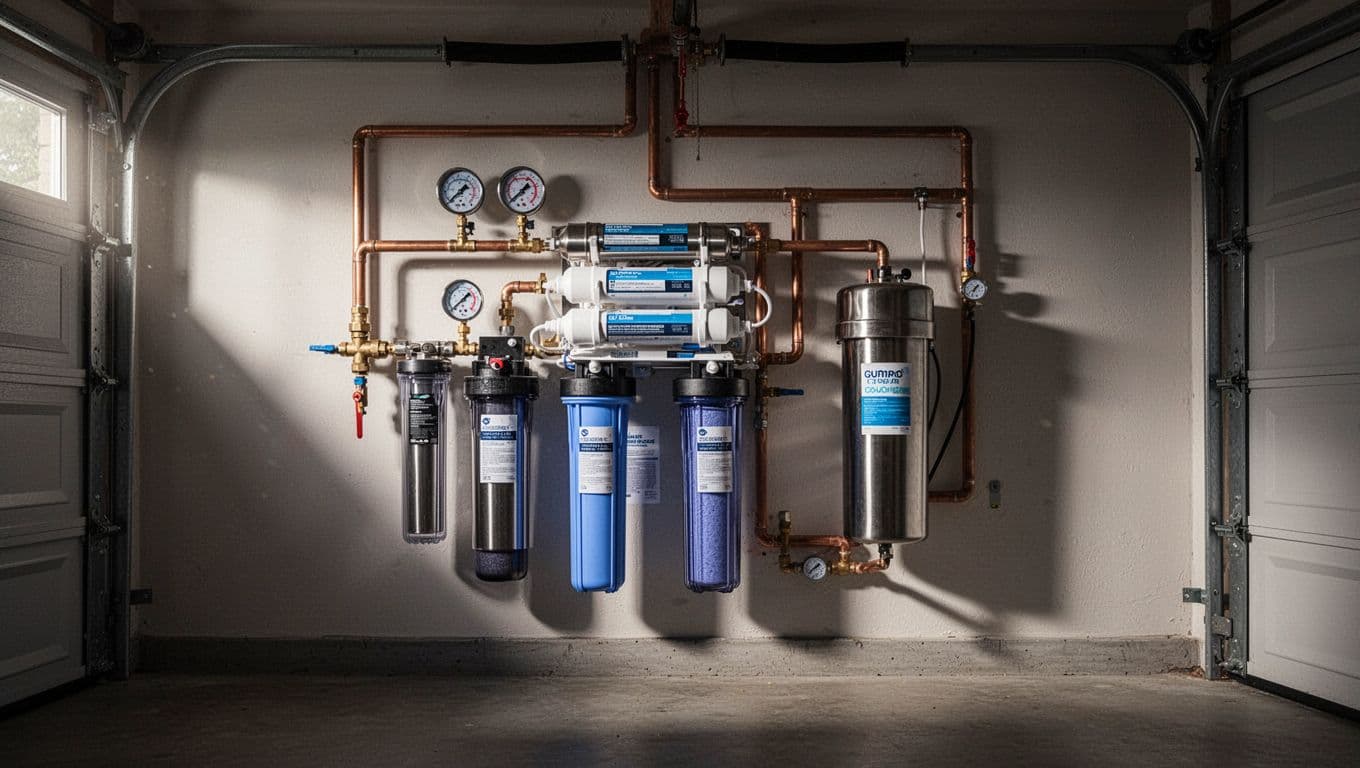
Put the Treatment Stages in the Correct Order
The treatment sequence should follow the water test and the RO manufacturer's specifications. A common arrangement may include these stages:
- Raw-water testing and pressure review identify the actual treatment needs.
- Sediment filtration removes particles that could clog valves, media, or membrane channels.
- Iron and manganese treatment handles metals before they can foul later equipment.
- Softening or scale control reduces hardness or manages the RO concentrate chemistry.
- pH adjustment lowers alkalinity-related scaling risk when the design calls for it.
- Carbon filtration or other polishing removes chlorine or specific taste and odor compounds.
- Reverse osmosis reduces dissolved salts and selected contaminants.
- Storage and final treatment provide treated water at the required flow and quality.
That sequence can change. For example, chemical adjustment may need to occur before a softener, after oxidation, or at another point to provide enough contact time. The correct order depends on the chemicals, media, pressure, flow, and treatment targets.
Don't set the pH to an arbitrary number without checking the equipment manual. RO membranes and complete systems have different operating limits. The acceptable pH range, maximum iron and manganese levels, hardness tolerance, chlorine limit, silica guidance, pressure range, and recovery rate can vary by manufacturer and membrane type.
After installation, test both the conditioned water entering the RO and the permeate leaving it. If the feed pH is correct but the RO water still has poor taste, high TDS, or low production, the cause may be membrane fouling, inadequate pressure, a damaged seal, incorrect recovery, or a different contaminant.
Maintain the System and Watch for Changes
Well chemistry can shift after drought, flooding, well repairs, pump replacement, or changes in groundwater movement. A treatment system that worked for years may need adjustment after the source water changes.
Check the system at intervals recommended by the installer. Early follow-up testing is especially useful after adding an acid feed or other chemical system. The technician may check pH before and after adjustment, chemical dose, alkalinity, pressure, flow, and RO rejection.
RO performance can be tracked with feed and permeate TDS readings. A simple rejection calculation is:
(Feed TDS minus permeate TDS) divided by feed TDS, multiplied by 100
TDS isn't a complete water-quality test, but a sudden change can point to membrane wear, fouling, a damaged O-ring, or an operating problem. Replace sediment and carbon filters on schedule, keep chemical tanks supplied, and have metering pumps calibrated when the dose changes.
Homeowners in Southwest Florida can review professional water conditioning services when a well system needs testing, pretreatment, RO installation, or repair.
Conclusion
High-pH well water treatment before reverse osmosis starts with a complete water test. pH alone can't reveal the hardness, alkalinity, metals, TDS, or silica that may damage performance or create scale.
A softener, filter, acid feed, carbon dioxide system, or antiscalant may each have a place, but the right choice depends on the well and the RO equipment. Follow the manufacturer's feed-water limits and use qualified help for chemical injection systems. When pretreatment matches the actual chemistry, the RO membrane has a cleaner, more stable water supply to treat.
Latest posts
Read Our Blog
Tips, guides, industry best practices, and news.


Contact us
Get in touch
Our friendly team is ready to chat.