
Why Well Water Leaves Orange Stains on Fixtures
Orange stains on sinks, tubs, toilets, and faucets usually point to one thing, iron in the water . When well water carries dissolved iron, it changes once it meets air, dries on a surface, and leaves rust-colored marks behind.
If the stain keeps coming back after you clean it, the water is still feeding the problem. The fastest path forward is to confirm what's in the water, because iron is common, but it's not the only possible cause.
Lab testing gives the clearest answer, and it helps you choose a fix that actually matches the issue.
Why iron in well water turns fixtures orange
Most orange well water stains start with dissolved iron. The water may look clear when it comes out of the tap, but once it hits oxygen, the iron oxidizes and turns into tiny rust particles.
Those particles stick to porcelain, chrome, glass, and tile. Then each new splash adds another layer. Over time, the stain settles in like dust on a fan blade that never stops spinning.
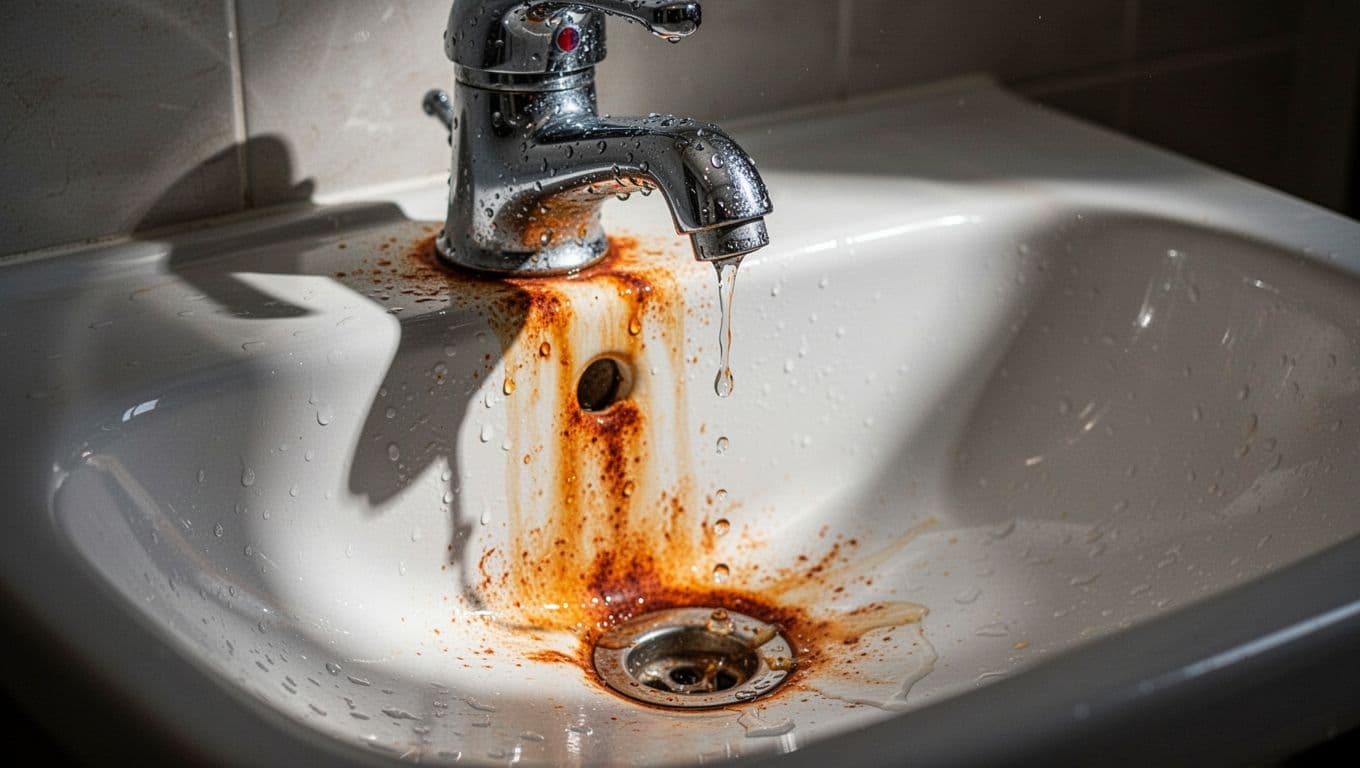
Heat and evaporation make it worse. A faucet that drips, a toilet that refills often, or a shower that stays damp gives iron more chances to settle. Rough spots on old fixtures also grab onto the stain more easily than smooth new surfaces.
Common signs the stain really is iron
Orange staining often shows up in the same places first. That pattern is a clue.
- Rust rings around toilet bowls
- Orange film on sink basins and drains
- Stains below faucet aerators
- Brown streaks in showers and tubs
- Reddish residue on laundry or dishware
- Orange buildup in toilet tanks
If the stain appears after water sits or dries, iron is a strong suspect. If you also notice a metallic taste, cloudy water, or brown specks, the problem may be broader than surface staining.
A stain can be a nuisance, but it can also be a clue that tells you how your well water behaves.
Visual signs help, but they do not replace testing. Two wells can leave the same orange mark for different reasons.
Why the stains keep coming back
Scrubbing removes the top layer, but it does not stop new iron from entering the water. That is why the stain returns so fast in some homes.
Several things can make the cycle worse. A rusty water heater, aging galvanized pipes, or iron-rich sediment in the well can all add to the mess. In some homes, water pressure changes stir up deposits that settle in plumbing and release more color later.
Also, once a fixture gets a thin orange film, new iron sticks faster. The surface acts like Velcro for minerals. So even when the water looks better for a day or two, the stain can rebuild quickly if the source stays untouched.
That is why repeated cleaning often feels like chasing the same spot over and over. The real fix comes from treating the water, not just the fixture.
When iron bacteria makes the problem worse
Iron is not always alone. Iron bacteria can live in well water and feed on iron. The result is a slimy orange, brown, or reddish buildup that clings to toilet tanks, pipes, and fixtures.
This can smell musty, swampy, or rotten in some cases. If that sounds familiar, solutions for smelly well water odors may help point you toward the right next step.
Iron bacteria can make stains harder to remove because the slime traps mineral deposits. It can also clog aerators, reduce flow, and leave fixtures looking dirty much faster than iron alone.
That is one reason water testing matters. A stain may look like plain rust, but bacteria can change the treatment plan.
How to clean orange stains that are already there
Short-term cleaning helps, especially when the stains are fresh. It will not cure the water problem, but it can make fixtures usable again.
For light buildup, start with a cleaner that matches the surface.
- Use white vinegar or citric acid on porcelain and chrome.
- Let it sit for a few minutes before scrubbing.
- Try a rust remover made for bathroom fixtures if the stain stays put.
- Use a soft brush or non-scratch pad on plated metal.
- Rinse well and dry the area after cleaning.
For toilet bowls, a product made for iron or rust stains usually works better than a standard bowl cleaner. Let it sit for the recommended time, then scrub with a nylon brush.
Avoid abrasive pads on shiny fixtures. They can scratch the finish and make future staining worse. Also, never mix bleach with acidic cleaners. That creates a dangerous reaction and does nothing to solve the stain.
Drying fixtures after use can slow down new buildup too. Water spots give iron a place to settle.
Long-term treatment options that stop new stains
The right treatment depends on what the water test shows. Iron level, pH, hardness, sediment, and bacteria all matter.
A professional water test helps match the system to the problem, and professional water conditioning services can sort out which setup fits your well.
Here is a simple comparison of the most common options:
| Treatment | Best for | Notes |
|---|---|---|
| Sediment filtration | sand, rust flakes, visible particles | Helps protect fixtures and equipment, but does not remove dissolved iron |
| Iron filter | dissolved iron that causes orange staining | Often the main fix for orange fixtures and rust-colored water spots |
| Oxidation system | higher iron levels, mixed contaminants, iron with sulfur | Turns dissolved iron into particles that can be filtered out |
| Water softener | low iron with hardness | Can help in some homes, but it is not the right fix for every iron problem |
A sediment filter is useful when the well sends up grit or visible particles. It protects plumbing and appliances, but it does not handle iron that is still dissolved in the water.
An iron filter is often the best answer when orange staining is the main complaint. These systems are designed to catch iron before it reaches your sinks, showers, and toilets.
Oxidation systems work well when iron levels are higher or when the water has more than one issue. They change the iron so it can be filtered out. That matters when staining is stubborn and widespread.
A water softener can help in some cases, especially when hardness and low iron show up together. Still, softeners are not a cure-all. If the iron level is too high, or if bacteria is involved, another system may be a better fit.
Testing also helps decide whether the issue is just nuisance staining or part of a bigger water quality problem. That difference matters. A brown ring in a toilet bowl is annoying, but it does not tell the whole story.
How to tell when testing matters more than scrubbing
If the stain is mild and shows up only on fixtures, the issue may be mostly cosmetic. If the water tastes metallic, looks cloudy, smells off, or leaves sludge in tanks and lines, the problem goes deeper.
A lab test can check iron, manganese, hardness, pH, and bacteria. Those results give you a clearer path than guesswork. They also help prevent the common mistake of buying a system that misses the real cause.
That is especially important in wells where conditions change by season. A test in one month can look different a few months later, and that can affect staining and treatment needs.
Conclusion
Orange stains on fixtures usually come from iron that oxidizes after it leaves the well. The stain may look minor, but it often points to a water issue that keeps feeding itself.
Cleaning helps for a while, yet the same marks return if the source stays in the water. When that happens, lab testing and the right treatment do more than scrub away the symptom.
FAQ
Do orange stains mean my well water is unsafe?
Not by itself. Orange staining usually means iron is present, and iron is often more of a nuisance than a health threat. Still, testing is smart if the water tastes strange, smells bad, or changes color.
What is the best way to remove orange stains?
For light stains, use vinegar or citric acid on porcelain and chrome. For stubborn buildup, use a rust remover made for bathroom fixtures. Rinse well, avoid abrasive pads, and keep bleach away from acidic cleaners.
What treatment works best for orange stains?
The best treatment depends on the test results. Many homes need an iron filter. Others need oxidation, sediment filtration, or a water softener when hardness and low iron are both part of the problem.
Latest posts
Read Our Blog
Tips, guides, industry best practices, and news.


Contact us
Get in touch
Our friendly team is ready to chat.