
Whole House RO Shutdown: Seasonal Home Guide
A vacant home can turn a dependable water system into a source of leaks, odors, and damaged equipment. A proper whole house RO shutdown protects the membrane, filters, pumps, plumbing, and water quality while you're away.
Turning off the water supply is only the first step. You also need to depressurize the system, protect components from freezing, and follow the manufacturer's storage instructions. Use this guide to prepare your system before leaving and bring it back online safely.
Key Takeaways
- Shut off water, power, and connected equipment before servicing the system.
- Depressurize the RO system before opening filter housings or disconnecting lines.
- Use only manufacturer-approved preservatives or sanitizers during extended storage.
- Prevent freezing, even if the home is vacant for only part of the winter.
- Flush thoroughly, inspect for leaks, and test water quality after restarting.
Why Seasonal RO Shutdowns Need Care
Whole-house reverse osmosis systems contain several parts that respond differently to long periods without use. The membrane, prefilters, storage tanks, pumps, valves, and connected plumbing all need attention before the home sits empty.
Water left in a closed system can develop an odor or lose its fresh quality. Filters can also become loaded with sediment while the house is vacant, especially when a private well or older plumbing supplies the property. A membrane that dries out, freezes, or sits in unsuitable water may perform poorly after restart.
Power matters, too. Some installations include a booster pump, ultraviolet treatment, electronic controls, or automatic valves. Shutting off the main breaker without following the system sequence may leave one component energized or cause an unexpected pressure condition.
The correct procedure depends on the equipment. Tank size, membrane type, pump configuration, and treatment stages vary by installation. Always keep the owner's manual available, and use the manufacturer's instructions for valve positions, drainage, storage, and sanitation.
A seasonal shutdown also gives you a useful maintenance opportunity. Check the service date, inspect tubing, and decide whether filters should be replaced before the property closes.
Whole house RO shutdown: Steps Before You Leave
Start the shutdown when you have enough time to inspect the system and complete a controlled drain. Rushing through the last hour before departure makes missed valves and hidden leaks more likely.
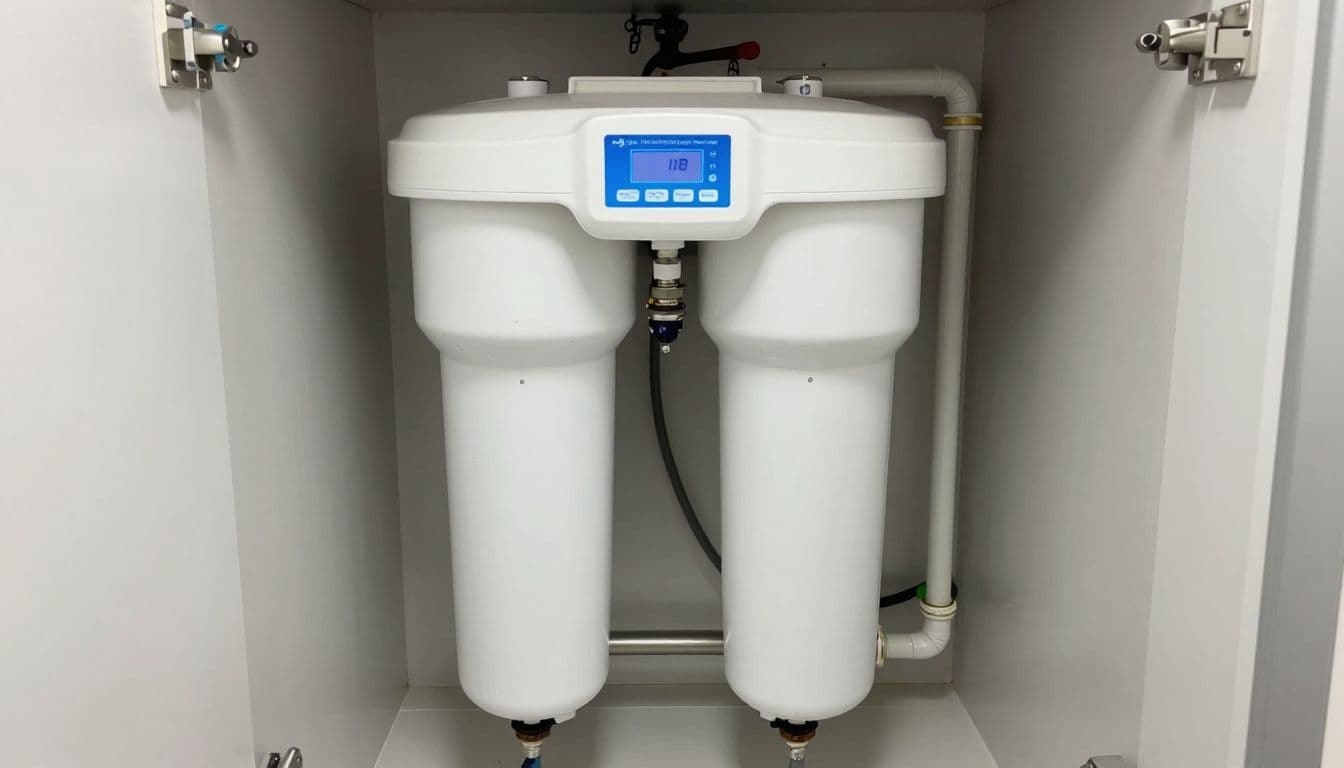
Follow this general sequence, then compare each step with your equipment manual:
- Stop water production. Close the incoming feed-water shutoff or the system's designated isolation valve. Don't close random valves if you aren't certain of their purpose.
- Turn off electrical equipment. Disconnect power to the RO controller, booster pump, UV unit, recirculation pump, and other connected components where installed. Use the manufacturer's instructions for hardwired equipment.
- Relieve pressure. Open an approved faucet or system drain point until flow stops. Wait for pressure to fall before loosening housings, tubing, or fittings. Pressurized housings can release water suddenly when opened.
- Drain the system as directed. Some systems require draining the storage tank, filter housings, lines, or other vessels. Others use a specific preservation process. Follow the written procedure for your model.
- Inspect accessible parts. Look for damp fittings, cracked housings, mineral deposits, damaged tubing, and loose electrical connections. A small drip can become a large leak during weeks of unattended operation.
- Record the condition. Note the date, filter condition, pressure readings, and any unusual sound, taste, or odor reported before shutdown. Photos of valve positions can help during restart.
Don't open a filter housing until the system is depressurized. If a housing won't loosen easily, stop and check the manual or contact a qualified technician.
Replace filters before storage only when the manufacturer recommends it. In some systems, new filters make sense before vacancy. In others, the system needs a complete sanitation and flushing procedure first.
Preparing for an Extended Vacancy
A short trip and a seasonal closure are different situations. If the home will remain empty for several weeks or months, standing water requires a more complete storage plan.
Ask these questions before choosing a procedure:
- Does the manufacturer require the membrane to remain wet?
- Should the storage tank stay full, empty, or isolated?
- Does the system need a preservative or sanitation treatment?
- Should filters be removed, replaced, or left in place?
- Does the plumbing need protection from freezing?
Use only manufacturer-approved preservatives or sanitizers . Never pour household bleach, pool chemicals, antifreeze, or an unapproved cleaning product into an RO system. The wrong chemical can damage membrane material, seals, tubing, or treatment media. It can also create a water-quality problem when the system returns to service.
Do not guess chemical concentrations or contact times. Those details depend on the membrane and system design. Follow the product label and manufacturer documentation, or have a water-treatment professional perform the storage procedure.
Freezing is another serious concern. Water expands as it freezes, which can split filter housings, crack fittings, and damage pumps. Keep the equipment and nearby plumbing above the manufacturer's minimum temperature. If the property may freeze, use the approved winterization procedure instead of relying on insulation alone.
In warmer areas, freezing may seem unlikely, but vacant homes can still experience power outages or HVAC failures. A seasonal inspection plan should account for both temperature and moisture.
A system that has been chemically preserved may require more flushing than one that was only isolated and drained. Never assume the first water is ready to drink.
Keep the water supply off during the vacancy unless the system was designed for remote operation and has leak protection. Automatic production can create a leak or overflow when no one is present to respond.
Restarting Your RO System After Storage
Restarting is more than opening the main valve. The first water produced may contain storage solution, stagnant water, loosened sediment, or sanitizer residue. Use a controlled startup and give yourself time to check the system.
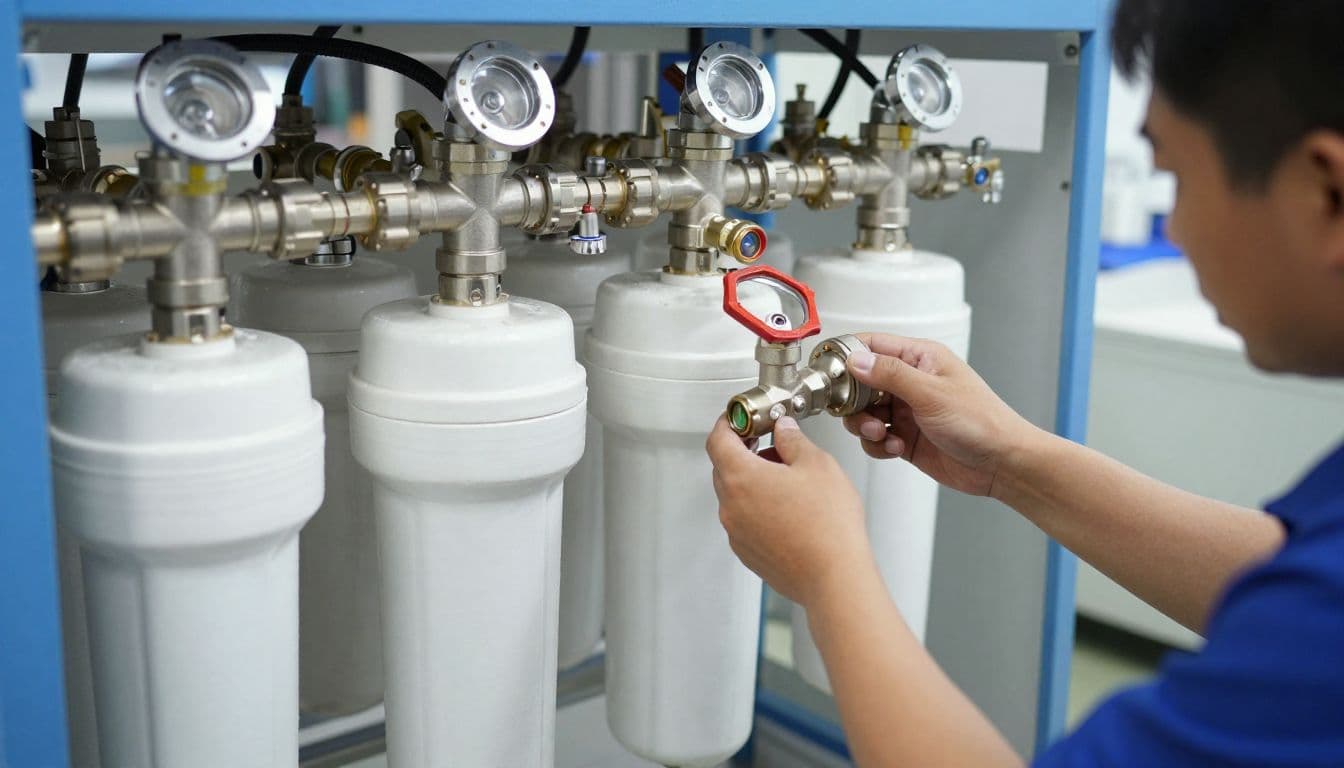
Use this sequence as a starting point:
- Inspect the room first. Check the floor, walls, drain, tanks, housings, fittings, and electrical connections. Confirm that no component cracked or shifted during storage.
- Check filters and membrane storage. Replace cartridges if the manufacturer requires fresh filters after a long shutdown. Confirm that any preserved membrane stayed in the approved solution.
- Close open drains and reconnect components. Reinstall housings, plugs, tubing, and caps according to the manual. Hand-tighten only as directed, because overtightening can damage seals.
- Restore water slowly. Open the feed-water valve gradually. Watch every connection while the system begins to pressurize. Keep a towel nearby to identify small drips.
- Restore electrical power. Turn on the controller, booster pump, UV component, and other equipment only after water connections are secure. Follow the manufacturer's startup order.
- Flush thoroughly. Send the initial water to an approved drain or other discharge point. Continue flushing for the time and volume stated in the manual. A preserved or sanitized system may need several flush cycles.
- Check operation. Look for normal pressure, steady flow, proper drain behavior, pump cycling, and UV status where applicable. Unusual noise, repeated cycling, low pressure, or a persistent odor needs attention.
Never use the water for drinking, cooking, ice, bathing, or other household purposes until the required flush is complete. If the system feeds every fixture, remember that storage water may remain in downstream pipes. Open representative faucets and flush those lines as directed.
After startup, test water quality before normal use. A handheld TDS meter can help identify a change in dissolved solids, but TDS alone doesn't confirm that water is safe. Depending on the system and property, testing may include bacteria, hardness, chlorine, or other parameters identified by the manufacturer or a qualified water professional.
A long-vacant home can also have plumbing issues unrelated to the RO equipment. Run fixtures one at a time, check under sinks, and inspect toilets, water heaters, refrigerator lines, and exterior hose connections.
When to Schedule Professional RO Service
Call for service if you can't identify the correct isolation valves, the system won't depressurize, or a housing remains stuck. Professional help is also appropriate when the membrane storage history is unknown or the system sat unused with water inside.
Watch for pressure loss, rising TDS, unusual taste, leaks, pump noise, and frequent cycling after restart. These are common signs your whole house RO needs service, especially when several appear together.
A technician can test pressure, inspect the membrane, verify valve operation, and check the pump and electrical components. Before a seasonal closure, ask whether the prefilters are due for replacement. Many homes start with a three-to-six-month interval, but sediment levels and water use can shorten it. This guide on how often to change whole-house RO prefilters offers useful maintenance planning guidance.
Don't restart a system with a cracked housing, active leak, damaged wire, or unknown chemical residue. Isolate the equipment and arrange an inspection.
Conclusion
A whole house RO shutdown protects more than the membrane. It also reduces the chance of leaks, damaged pumps, contaminated stagnant water, and difficult repairs when you return.
Use a written sequence: isolate the water, turn off connected power, depressurize, protect against freezing, and follow the approved storage procedure. When the home reopens, inspect every connection, flush thoroughly, and test the water before use. A careful shutdown makes the next restart far more predictable.
Latest posts
Read Our Blog
Tips, guides, industry best practices, and news.



Contact us
Get in touch
Our friendly team is ready to chat.