
What Tannins in Well Water Do to Your Home
Tannins in well water can make a clean home look dirty fast. One day the water looks normal, and the next it has a weak tea color that shows up in sinks, showers, laundry, and toilets.
If you own a private well, this problem can feel frustrating because the water may still taste fine. Still, those yellow and brown stains keep showing up, and they rarely go away on their own.
The good news is that tannins usually leave clues you can spot early. Once you know what to look for, it gets much easier to test the water and choose the right treatment.
Why tannins show up in private wells
Tannins come from decaying plant material. Leaves, roots, bark, and other organic matter break down in the soil, then seep into groundwater. In wells near wooded land, swamps, marshes, or surface water, tannins can be part of the water long before it reaches your tap.
They are most common in shallow wells or places where the water table moves close to the surface. Heavy rain can make the problem worse because more organic material washes into the ground. The water may look clearer in dry weather, then turn darker after storms.
Tannins are not the same as dirt or sand. They are dissolved organic compounds, so a simple sediment filter usually does not fix the issue. That is why the water can look tinted even when it feels clean.
Tannins usually do not make water gritty. They make it look stained.
Because the color comes from dissolved material, the problem often spreads through the whole plumbing system. You may notice it first in the kitchen, but it can show up anywhere water sits for a while.
The stains and water changes you notice first
The first sign is often tea-colored water . Sometimes the tint is light, almost like weak iced tea. Other times it is darker and more obvious. Either way, the color can make clear glass look cloudy and clean sinks look old.
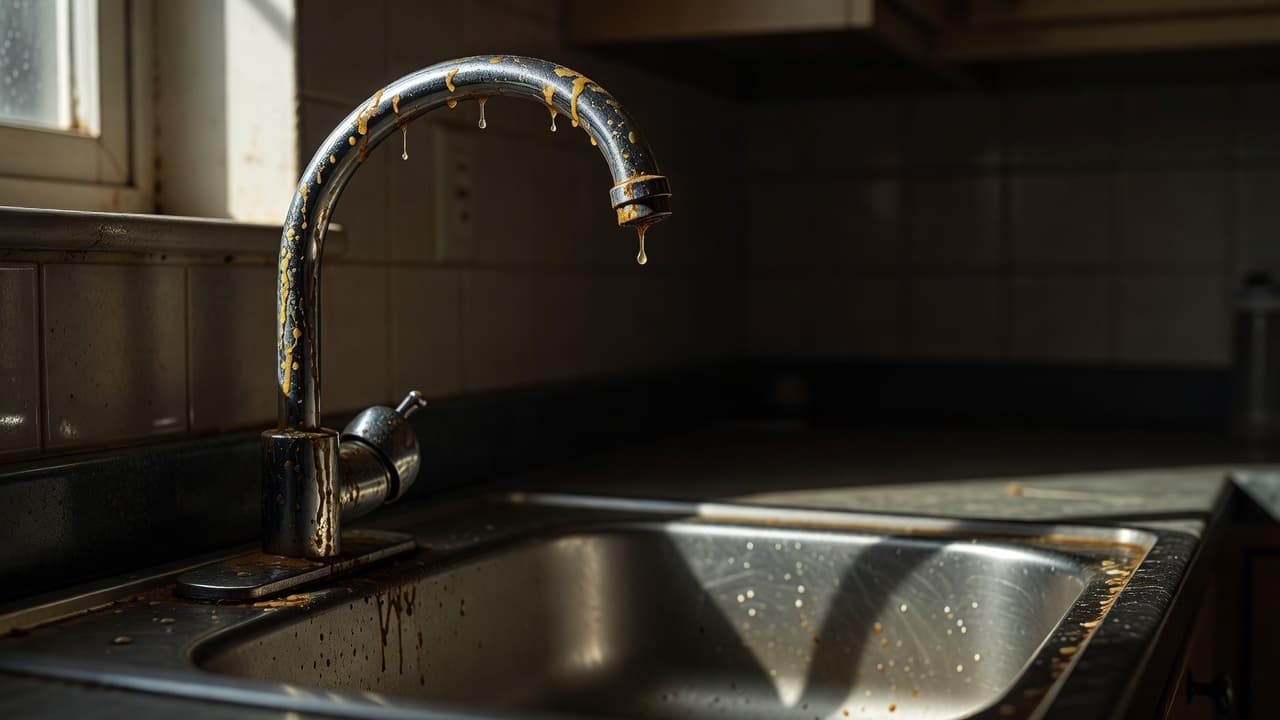
Tannins often leave yellow or brown stains on sinks, tubs, toilets, and shower walls. White fixtures show it the fastest. Chrome can also take on a dull film that makes it look older than it is. If you scrub the surface and the stain returns quickly, the water is often the source.
Laundry is another place where tannins stand out. White towels can pick up a beige cast. Light clothing may lose its bright look after repeated washing. In some homes, wash water leaves a faint stain on the sink or laundry tub too.
Shower doors, coffee pots, ice makers, and bathroom bowls can all show the same pattern. The stain may be light, but it keeps coming back because every use adds a little more color.
A few common signs include:
- Water that looks yellow, gold, or brown in a clear glass
- Rings or films inside toilets
- Faded whites after laundry cycles
- Brownish marks on porcelain and acrylic fixtures
- A stain that appears worse after the water sits for a while
The bigger clue is consistency. If the color appears across different fixtures, it usually points to a water-quality issue rather than a cleaning problem.
Tannins or iron? How to tell the difference
Tannins and iron are often confused because both can discolor water. That mix-up matters, since each one needs a different fix. Iron can leave rust-colored stains and a metallic taste. Tannins usually create a brown, amber, or yellow cast without the same metallic feel.
A simple comparison helps narrow it down:
| Clue | Tannins are more likely | Iron is more likely |
|---|---|---|
| Water color | Yellow, amber, or tea-colored | Rust, orange, or red-brown |
| Smell or taste | Often little to none | Metallic taste or smell is common |
| Sediment | Usually no grit | May leave particles or rust flakes |
| Stains | Light brown or yellow film | Orange or reddish stains |
| Source pattern | Stronger after rain or in shallow wells | Can stay steady year-round |
Both can happen together, so the table is only a starting point. A well that has tannins may also have iron, manganese, or low pH. When that happens, the water can look worse than any one issue would suggest.
Testing matters because cleaning up the wrong problem wastes money. A water softener may help with hardness, for example, but it does not remove tannins on its own. That is one reason homeowners think the treatment failed when the real issue was the wrong equipment.
What tannins can do to laundry, fixtures, and appliances
Tannins are usually more of a nuisance than a plumbing emergency, but they still affect daily life. Over time, the stains become part of the house's routine maintenance. You wipe them, scrub them, and still see them return.
Laundry is one of the biggest complaints. Tannins can dull bright fabrics and make whites look off-white. If you notice the problem after every wash, the water is likely staining before the detergent has a chance to do its work.
Fixtures take a hit too. Faucets, sink basins, shower walls, and toilet bowls can all pick up a film. Once the stain settles in, it takes more time to clean, and strong cleaners can wear on the surface.
Appliances that use water may also show the problem. Coffee makers, ice makers, dishwashers, and water heaters can all carry tannin-colored water through their lines. The issue is often cosmetic, but it can still shorten the life of filters and parts that get coated with organic residue.
In homes with reverse osmosis at the kitchen sink, drinking water may look better while the rest of the home still shows stains. That can be confusing. The tap water may taste fine, yet the toilet bowl and shower still tell a different story.
In many cases, the stain is what hurts the home most. It makes clean water feel unreliable, and it makes a well system seem harder to trust.
Testing and treatment that actually help
The first step is a proper well water test. Do not rely on appearance alone. A sample should look at tannins or color, iron, manganese, hardness, pH, and bacteria if the well has not been tested in a while. If the water looks tea-colored after rain, mention that when you ask for testing.
A good test helps you separate tannins from other issues. It also shows whether the problem is light, moderate, or heavy. That matters because treatment depends on the level, not just the color.
Ask for a test that covers:
- Tannins or true color
- Iron and manganese
- pH
- Hardness
- Bacteria, if needed
- Total dissolved solids for drinking-water concerns
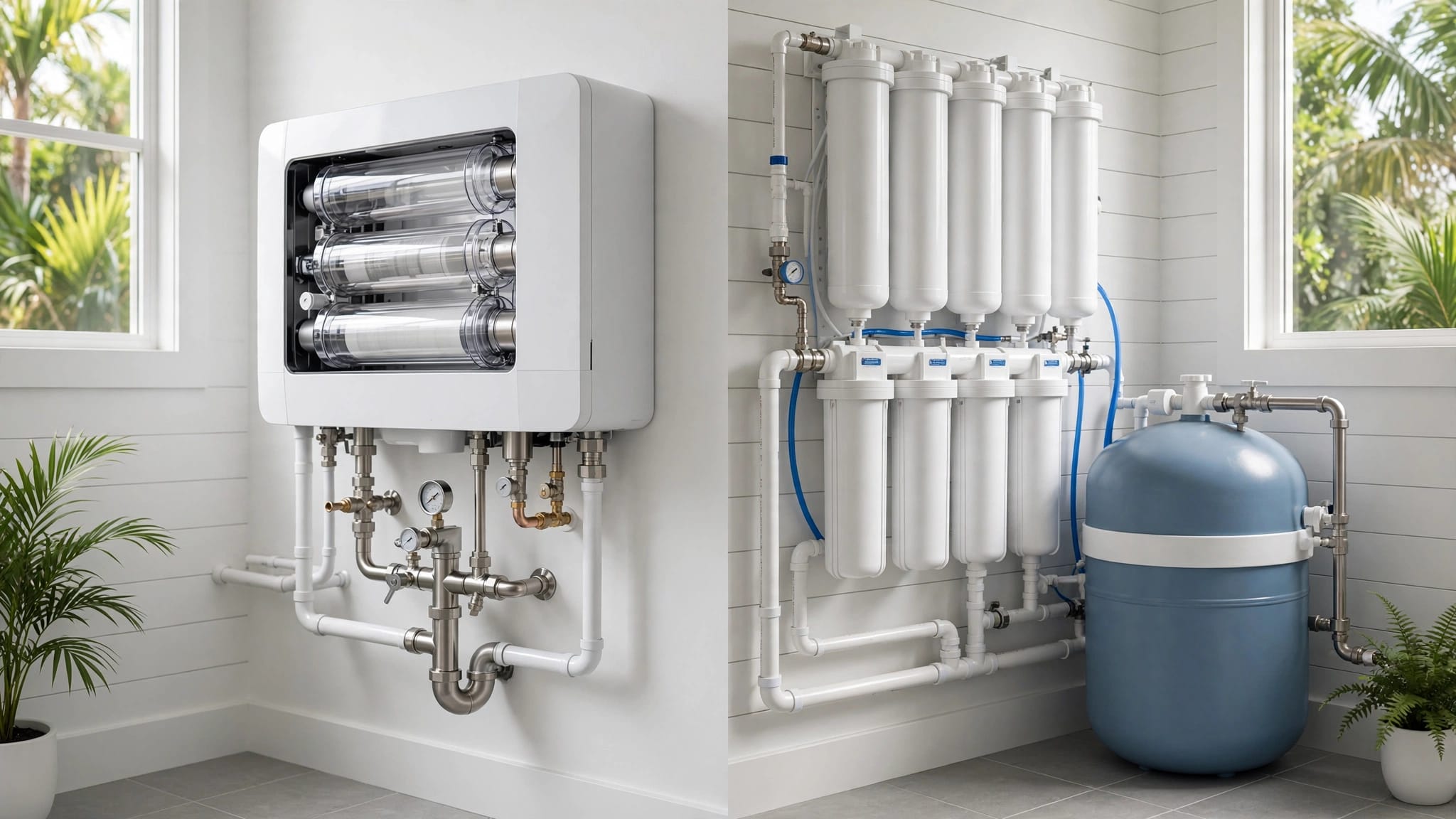
Once you know what is in the water, the treatment choice becomes clearer. A standard softener is not enough for tannins. Activated carbon can improve taste and odor in some cases, but it often will not solve whole-home staining. For many homes, anion exchange or a specialized tannin-removal system is a better fit.
Some homes also need reverse osmosis at the kitchen sink for drinking water. That can improve taste and clarity at one tap, but it will not stop stains in the laundry room or bathroom. Whole-home treatment handles the staining problem at the source.
A treatment plan from professional water conditioning services can match the right media to the right water issue. That matters when tannins show up with iron, hardness, or acidic water.
If your well has a mix of problems, the system may need prefiltration, tannin removal, and regular maintenance. The right setup depends on the test results, the size of the home, and how much water the household uses each day.
Conclusion
Tannins in well water may not be dangerous in the way a health warning sounds, but they can still make a home feel hard to keep clean. The stains, the tea-colored water, and the laundry issues all point to the same source.
The key is to test early and treat the right problem. When you know whether the color comes from tannins, iron, or both, you can stop guessing and choose a fix that works.
A clear, tested water supply makes daily life easier, and it keeps small stains from turning into a constant chore.
Latest posts
Read Our Blog
Tips, guides, industry best practices, and news.

Contact us
Get in touch
Our friendly team is ready to chat.