
High Silica Well Water: Protect Your RO Membrane
Silica can shorten the life of a reverse osmosis system before you notice a problem. With high silica well water , the membrane may produce less water, lose rejection, or develop a hard scale layer that routine filter changes cannot fix.
The right response starts with laboratory testing, not a guess at the treatment equipment. Your water analysis and RO specifications should guide pretreatment, operating pressure, recovery, and maintenance. First, it helps to understand why silica creates such a difficult membrane problem.
How High Silica Well Water Affects an RO Membrane
Silica is a natural mineral found in rock, soil, and groundwater. It enters a private well as water moves through mineral deposits. In a water report, you may see silica listed as silicon dioxide, dissolved silica, reactive silica, or total silica.
Most silica in well water is dissolved and can pass through conventional sediment filters. A clear glass of water may contain a significant silica concentration without looking cloudy. Sediment cartridges remove suspended particles, but they don't remove dissolved silica.
Reverse osmosis can reject much of the dissolved silica, but the membrane doesn't destroy it. Instead, the silica remains in the concentrate stream. As water moves through the membrane, the concentrate becomes more concentrated than the incoming well water.
At a high enough concentration, silica can form deposits on the membrane surface. These deposits reduce water flow and can increase the pressure needed to produce permeate. Silica scale is often difficult to remove because it doesn't respond as easily to standard acid cleaning as many carbonate scales.
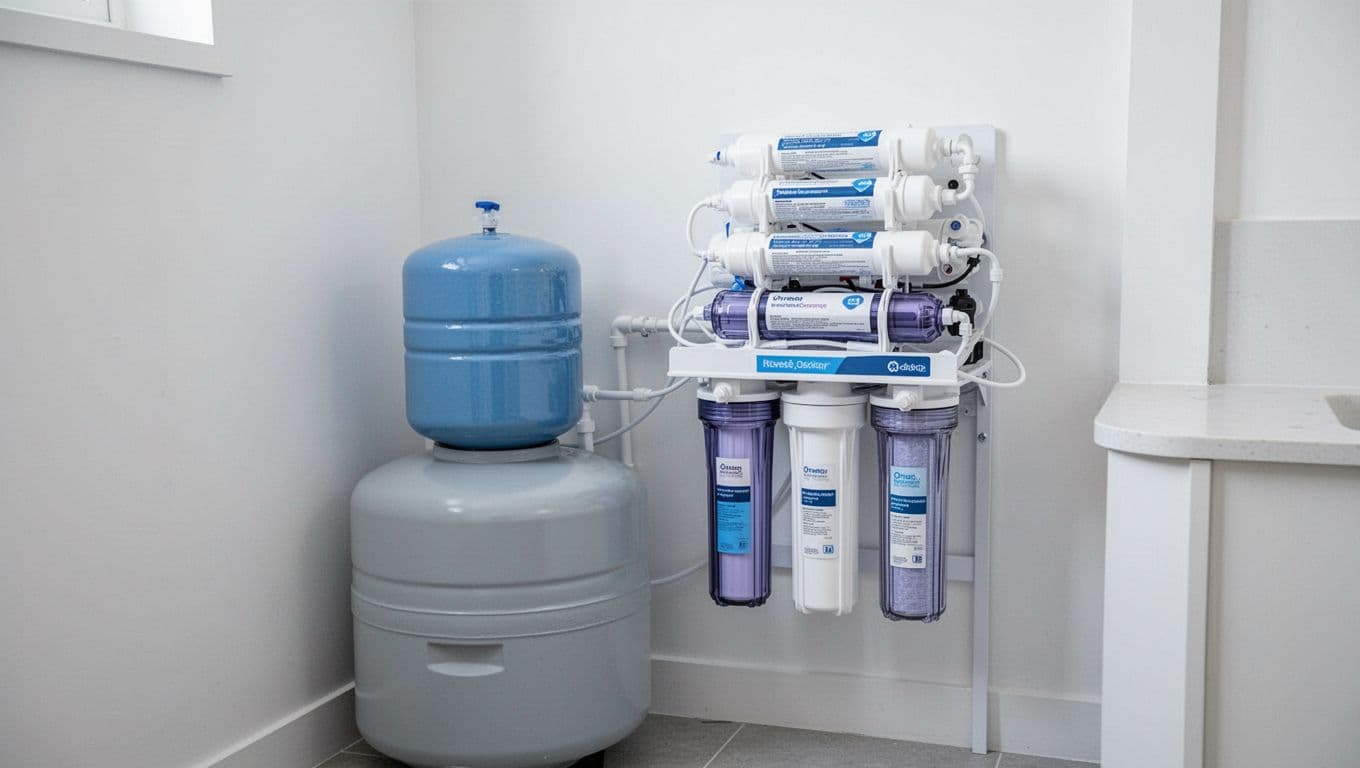
Other water conditions can increase the risk. High pH, warm water, hardness, iron, manganese, and suspended solids may change how deposits form or foul the membrane. A well system with several problems needs a treatment plan that addresses the whole water profile.
Silica risk depends on the concentration in the membrane concentrate, not only the number shown on the raw-water test.
Why Silica Scale Reduces RO Performance
An RO membrane has a thin separation layer that allows water to pass while rejecting many dissolved substances. The membrane needs adequate pressure and clean flow across its surface. When silica deposits collect there, both conditions can change.
The first symptom may be a gradual drop in production. Your storage tank takes longer to fill, or the system runs more often than it used to. A pressure gauge may show rising pressure before the water-quality problem becomes obvious.
Membrane rejection can also decline. A handheld conductivity or total dissolved solids meter may show higher permeate TDS, although the reading alone cannot identify silica fouling. Changes in temperature, pressure, flow, and membrane age also affect TDS.
Silica-related fouling often gets confused with a clogged prefilter. A dirty sediment cartridge can restrict flow before the membrane, while silica scale forms on the membrane itself. Both problems can reduce output, but they require different solutions.
Carbon filters protect many thin-film composite membranes from chlorine. They don't remove dissolved silica. A water softener can reduce calcium and magnesium hardness, which may lower one type of scaling risk, but it doesn't provide a complete silica solution.
Membrane cleaning may restore some performance if deposits are caught early. However, cleaning cannot guarantee a return to original output. A badly fouled membrane may need replacement, followed by changes to pretreatment or operating settings.
You can learn more about expected service factors in this guide to whole house RO membrane lifespan. The actual life of your membrane depends on the feed water and the way the system operates.
Test the Well Water Before Choosing Pretreatment
A complete laboratory water analysis is the starting point for high silica well water treatment. A basic taste, odor, or hardness test is not enough to size an RO system or select silica control equipment.
Ask the laboratory for both total silica and dissolved or reactive silica when available. These values can differ, and the distinction matters when suspended or colloidal material is present. Your water professional also needs the following information:
- pH, alkalinity, hardness, TDS, and conductivity
- Turbidity, color, suspended solids, and temperature
- Iron, manganese, sulfur-related compounds, and organic matter
- Chloride, sulfate, nitrate, and other site-relevant ions
- Bacteria testing when the water is used for drinking
- The well's flow rate, pump pressure, and seasonal changes
The RO system specifications are equally important. Record the membrane model, rated flow, design pressure, recovery rate, feed-water temperature, number of membrane elements, and expected permeate demand. Storage tank size and daily household use also affect how often the system operates.
A laboratory report gives you a starting point, but it doesn't replace field measurements. Well pressure can change when irrigation, showers, or other fixtures run. A technician may need to measure pressure before and after pretreatment while the RO system is producing water.
Test after well repairs, treatment changes, flooding, or long periods of nonuse. Private wells can experience sudden changes in sediment, bacteria, iron, and mineral content. A treatment setup that worked last year may need adjustment after a change in the well.
Don't select a recovery setting from a general online chart. The correct setting depends on membrane design, feed chemistry, concentrate flow, pressure, and the manufacturer's operating limits.
Select Pretreatment for the Entire Water Profile
Pretreatment should lower the load on the RO membrane before water reaches it. The equipment depends on test results, but several roles are common.
A sediment filter protects valves, flow controls, and membrane surfaces from sand, rust, and suspended particles. If the well carries heavy sediment, a larger prefilter, spin-down filter, or separate backwashing filter may be appropriate. Cartridge filters need replacement before they become restrictive.
Carbon filtration is useful when chlorine or certain organic compounds threaten the membrane or affect taste. It isn't a primary treatment for dissolved silica. Some well systems don't need carbon, while others need it because of added disinfection or treatment chemicals.
A softener can help when calcium and magnesium create a scaling risk alongside silica. It may protect the membrane from hardness scale, but the RO design still needs to account for silica in the concentrate.
Antiscalant may help in selected systems. It must match the water chemistry, membrane type, dose, and flow rate. Incorrect chemical selection or feed can damage equipment, create water-quality concerns, or fail to control the deposit.
Some high-silica installations need more specialized treatment. Options may include chemical silica reduction, separate media, nanofiltration, additional RO stages, or lower recovery. These choices require system design rather than a one-size-fits-all cartridge.
A lower recovery rate sends more water to drain and produces less permeate from each gallon of feed water. However, that extra concentrate flow can reduce the silica concentration at the membrane surface. The setting must balance membrane protection, water use, pump capacity, and wastewater handling.
Storage capacity also affects system performance. A tank that is too small may cause frequent starts, while an undersized membrane may struggle to meet demand. Review whole house RO storage tank sizing alongside the membrane and pretreatment design.
Operate and Maintain the System Carefully
Good maintenance protects the membrane, but it can't compensate for an incorrect design. Keep a simple service record with filter-change dates, pressure readings, permeate TDS, and production time.
Replace sediment and carbon cartridges according to measured pressure drop, water use, and the manufacturer's schedule. Many homes change whole-house RO prefilters every three to six months, but sandy wells or high water use may require a shorter interval. This prefilter replacement schedule gives homeowners a practical starting point.
Watch for these changes:
- The storage tank fills more slowly than before.
- Permeate TDS rises after the system has run long enough to stabilize.
- Pressure increases across a prefilter.
- The drain flow changes or stops.
- The system cycles repeatedly without filling the tank.
- Water develops a new taste, odor, or visible cloudiness.
Check the prefilter pressure drop first when production falls. Next, confirm that the feed-water pressure, shutoff valves, flow restrictor, and drain line are working correctly. A kinked drain line or blocked flow control can upset concentrate flow and increase scaling risk.
If the membrane is suspected of silica fouling, don't pour an unapproved cleaner into the system. Membranes have chemical limits, and the wrong pH or cleaning solution can cause permanent damage. A qualified technician can compare current performance with the membrane's rated conditions and select a compatible cleaning procedure.
Use a calibrated meter when checking TDS, and take readings at consistent times. A reading taken immediately after startup may differ from one taken after the system has flushed and reached stable operation. TDS also doesn't measure bacteria, and a home meter can't replace laboratory testing.
Drinking-water safety requires separate attention. RO can reduce many dissolved contaminants, but it doesn't make an untreated well automatically safe from bacteria or every possible pollutant. Test the finished water, maintain any required disinfection equipment, and follow local health guidance.
Know the Limits of RO for Silica Control
Reverse osmosis is often part of a silica-treatment plan, but it isn't always the only step. High silica can make recovery limits, wastewater volume, and membrane replacement costs more significant than they are in ordinary household applications.
A membrane's rejection rate doesn't tell you how much silica the complete system will remove over time. Feed chemistry, membrane age, pressure, temperature, cross-flow, and concentrate management all affect results. A system that produces low-TDS water at the faucet may still suffer from silica scale if the concentrate side is poorly controlled.
Pretreatment also has limits. A softener handles hardness, not dissolved silica. A carbon filter handles chlorine, not mineral scale. A sediment filter handles particles, not invisible dissolved minerals. Each component must have a defined job.
Before installation or modification, ask for a written design based on your laboratory report and the selected membrane specifications. The plan should state expected flow, recovery, pressure range, pretreatment, maintenance needs, and what happens to the concentrate water.
That level of detail helps prevent an expensive mismatch. It also gives you a clear way to judge performance without relying on guaranteed removal claims.
Protecting the Membrane Starts Before Installation
High silica well water can challenge an RO membrane even when the water looks clean. Silica becomes more difficult as the concentrate stream thickens, especially when pressure, recovery, pH, hardness, or temperature add to the scaling risk.
Start with a complete laboratory analysis and accurate RO specifications. Then match pretreatment, recovery, pressure, storage, and maintenance to those facts. Membrane protection begins before water reaches the membrane , and careful operating records help you catch trouble early.
A properly designed system may provide reliable treated water, but no RO setup can overcome every well condition without limits. Regular testing and qualified service give your household the safest path to stable performance.
Latest posts
Read Our Blog
Tips, guides, industry best practices, and news.



Contact us
Get in touch
Our friendly team is ready to chat.