
Barium Well Water Treatment: What Homeowners Need to Know
A private well can deliver water that looks perfect and still contain dissolved barium. Because barium has no reliable taste, odor, or color warning, a laboratory report is the starting point for barium well water treatment , not a glass-and-smell test.
Private wells fall outside federal public-water regulation, but the EPA's 2.0 mg/L benchmark remains a useful health reference. State standards may be lower. The right response depends on the barium level, the rest of your water chemistry, and how much water your household uses.
What barium in private well water means
Barium is a naturally occurring element found in certain rocks and soils. Groundwater can pick it up as it moves through underground mineral deposits. EPA also lists drilling waste, metal refinery discharge, and erosion of natural deposits as possible sources.
The source can't be identified from the barium number alone. Well depth, local geology, nearby industrial activity, and the well's construction history may provide useful context, but laboratory testing shows what is actually in your water.
Barium behaves differently from common well-water problems such as sediment, iron staining, or sulfur odor. A sediment cartridge can catch sand and rust particles, but dissolved barium passes through it. Activated carbon may improve taste or reduce certain chemicals, yet you shouldn't assume a carbon filter removes barium unless the manufacturer provides supporting performance data.
The main health concern is prolonged exposure to elevated concentrations. The EPA identifies increased blood pressure as the primary chronic health endpoint for barium. Short-term exposure to much higher amounts can cause gastrointestinal problems and muscular weakness. The EPA's technical fact sheet reports no evidence that barium causes cancer from lifetime exposure in drinking water.
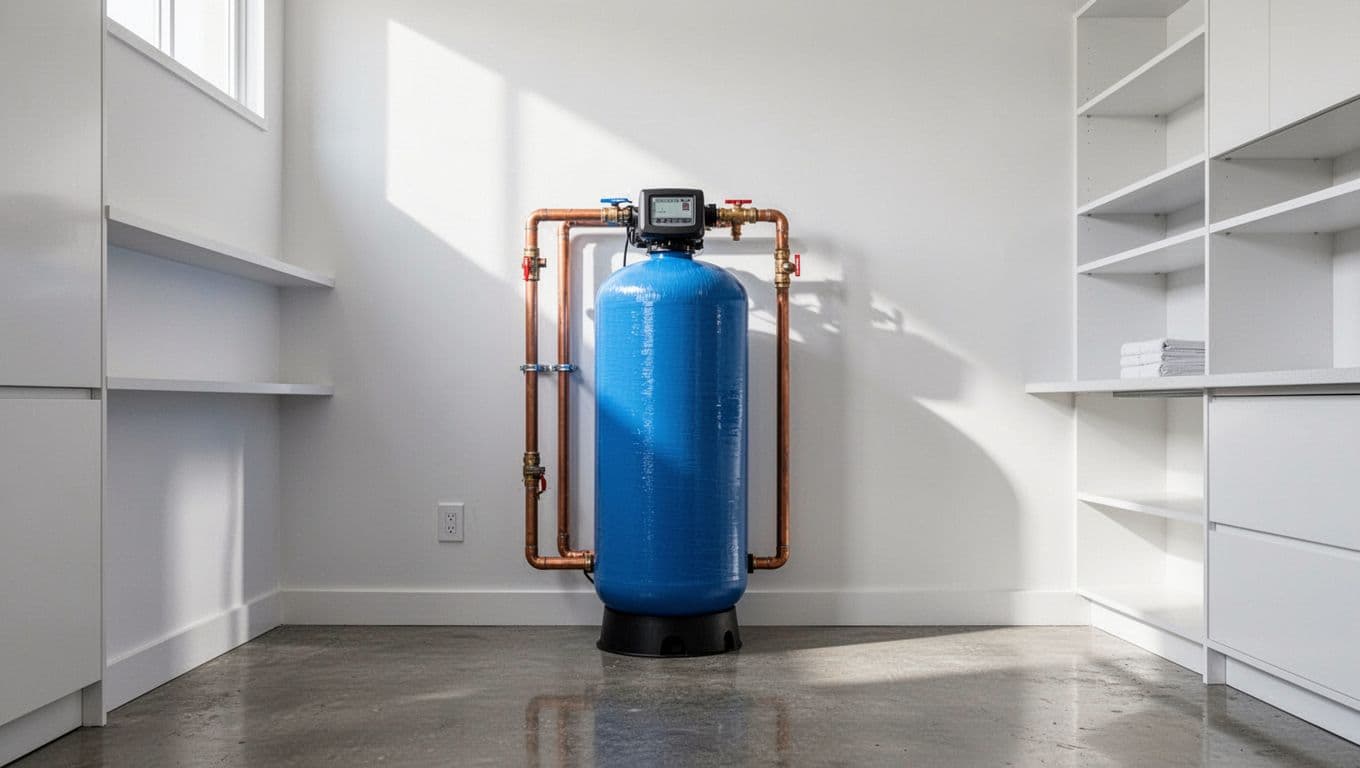
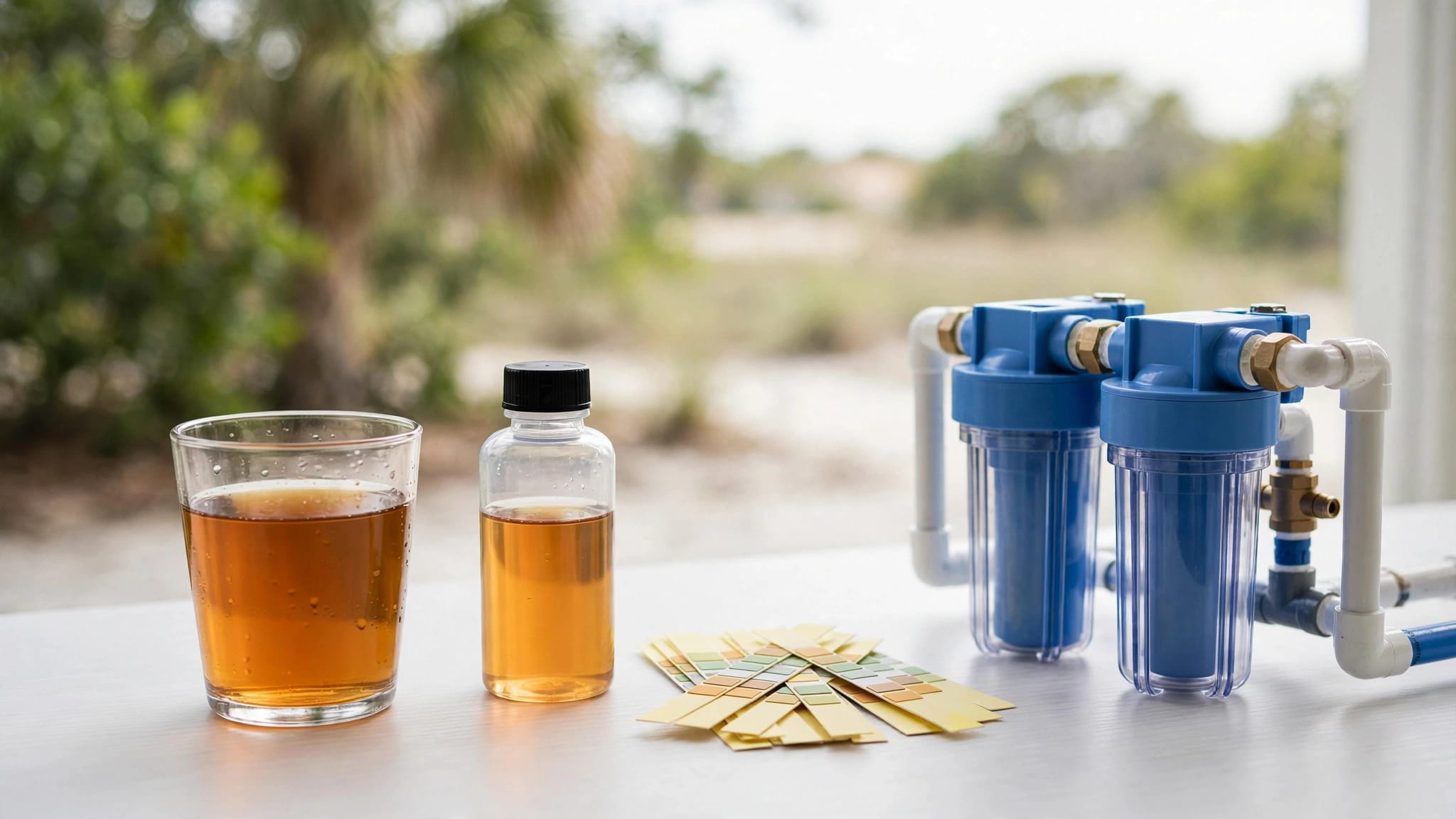
A clear glass of water won't tell you whether barium is present. Testing matters because the contaminant can remain invisible even when the water looks clean.
How much barium is too much for a private well?
Laboratories usually report barium in milligrams per liter, written as mg/L. For water, 1 mg/L is roughly equal to 1 part per million, or ppm.
The EPA maximum contaminant level for barium in public drinking water is 2.0 mg/L , or 2 ppm. The same number is also the EPA's maximum contaminant level goal. For a private well, that value is a health benchmark rather than a federal compliance order.
Some states use lower limits. North Carolina lists a groundwater standard of 0.7 mg/L, while California lists a drinking-water maximum contaminant level of 1 mg/L. Check your state or county health department before deciding how to interpret a result.
| Lab result | Practical meaning | Reasonable next step |
|---|---|---|
| Not detected | The lab found no barium above its reporting limit | Keep records and follow a routine testing schedule |
| Detected below the applicable standard | Barium is present, but below the comparison value | Review the full water report and local guidance |
| At or above 2.0 mg/L | The result reaches or exceeds the EPA public-water benchmark | Use an alternate drinking source until treatment is confirmed |
A result below 2.0 mg/L doesn't automatically mean the water needs no treatment. A lower state standard, a household member's health needs, or other contaminants may change the decision. If your result is at or above the applicable limit, use bottled or otherwise verified water for drinking, cooking, ice, and infant formula until a qualified professional helps you address it.
Barium well water treatment options
The right barium well water treatment depends on the concentration and the water entering the home. A treatment company should review the laboratory report, flow rate, pressure, available space, drain access, and daily water demand before recommending equipment.
Cation exchange and water softeners
Cation exchange is one of the established methods for reducing barium. In this process, resin captures dissolved barium and exchanges it for another ion, commonly sodium or potassium. A properly selected water softener may reduce barium while also treating hardness and scale.
However, a standard softener isn't automatically a barium-treatment system. Barium competes with other minerals for resin capacity, and high hardness, iron, or manganese can affect performance. The unit needs suitable resin, correct sizing, appropriate regeneration settings, and a practical plan for salt use and wastewater disposal.
Ask for documented performance rather than choosing a softener because it is labeled as a general-purpose filter.
Reverse osmosis
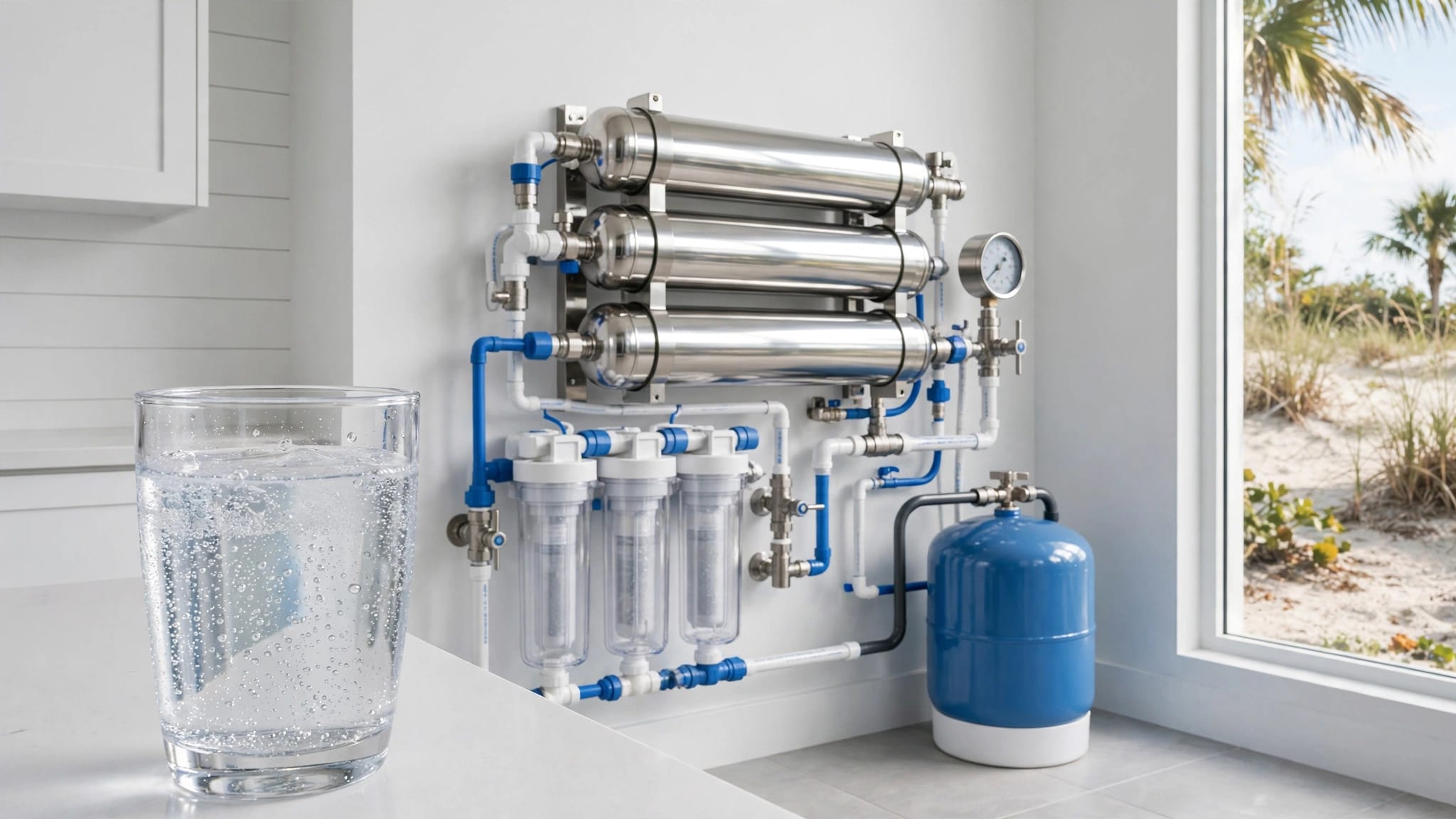
Reverse osmosis pushes water through a semipermeable membrane that can reduce many dissolved contaminants, including barium. An under-sink RO system often fits homes where the main concern is drinking and cooking water. Whole-house RO may make sense when the water chemistry creates a broader household concern, but it requires more equipment and planning.
RO systems need adequate pressure and usually work better with pretreatment. Sediment, iron, manganese, and hardness can shorten membrane life or reduce output. The system also produces a concentrated wastewater stream, so installers must account for drainage and water use.
Homeowners comparing these options can review reverse osmosis vs water softener for well water before choosing between point-of-use and whole-house treatment.
Distillation and other methods
Distillation can reduce barium at a single faucet, but household output is limited and the process uses electricity. Lime softening and electrodialysis are also recognized treatment methods, though they are more common in larger or specialized systems than in typical homes.
Boiling doesn't remove barium. As water evaporates, dissolved substances remain behind and may become more concentrated.
Boiling can make some water safer from microbes, but it doesn't solve a dissolved barium problem.
Why full water chemistry and household use matter
A barium result is only one part of a private-well assessment. The same treatment can perform very differently in two homes because the source water contains different minerals.
A useful laboratory panel may include barium, hardness, pH, iron, manganese, total dissolved solids, sulfate, chloride, sodium, and nitrate. Bacteria testing is separate, but it also matters for private-well safety. Your laboratory or water professional can recommend the right panel for local conditions and the history of your well.
These results affect equipment choices:
- Hardness can create scale on an RO membrane and increase the need for pretreatment.
- Iron and manganese can foul treatment media and cause staining.
- Sediment can clog cartridges and reduce water flow.
- pH can affect corrosion, resin performance, and other treatment processes.
- Total dissolved solids show the broader dissolved-mineral load.
Household demand matters just as much. A point-of-use RO unit may be enough for a couple who wants treated water at the kitchen sink. A larger family may need treatment at more than one faucet. Whole-house equipment must handle showers, laundry, appliances, and periods when several fixtures run together.
Sizing also depends on the well pump, pressure tank, service flow, available electrical power, drain connection, and space for tanks. A system that removes barium in a laboratory test may still disappoint if it can't produce enough treated water for the home.
If the water report also shows iron, review preparing well water for reverse osmosis before installing a membrane system. Pretreatment can protect the RO equipment, but it should match the actual test results.
Verify treatment after installation
Testing shouldn't stop when the equipment is installed. Post-installation verification confirms that the system reduces barium under real household conditions.
Before installation, save a baseline sample from the untreated well water. Use a state-certified laboratory when available, and follow its instructions for the bottle, flushing time, preservation, and shipping. Poor sampling can produce a misleading result.
After installation, test both sides of the system:
- Collect untreated water before it enters the treatment equipment.
- Collect treated water from the faucet or point where you plan to drink it.
- Compare the two laboratory results with the applicable health standard.
Testing only the treated sample doesn't show how much barium entered the system. The untreated sample provides the comparison needed to judge performance.
Taste, odor, and appearance remain poor indicators. A system can improve the way water tastes without removing barium, while treated water can look and taste unchanged even when the equipment is working. Laboratory results provide the meaningful check.
Maintenance depends on the technology. A softener needs salt, regeneration, resin-bed care, and periodic checks of settings. RO systems need replacement prefilters, membrane inspection, storage-tank sanitation, and pressure checks. Cartridge filters need replacement before they restrict flow or become overdue for service.
Retest after major well or plumbing work, changes in source conditions, equipment changes, or an unexplained rise in treated-water results. Follow the treatment manufacturer's schedule and any guidance from your local health department. Some public-health programs recommend annual testing after installing residential treatment, while other schedules depend on the contaminant and local risk.
Conclusion
Barium in private well water is invisible, so treatment decisions should begin with laboratory testing. The EPA's 2.0 mg/L benchmark provides a useful comparison, but state standards and the full water report may call for a different response.
A softener, reverse osmosis system, distiller, or specialized process may reduce barium, but no single filter fits every well. The best barium well water treatment matches the chemistry, household demand, and equipment maintenance plan, then proves its performance with follow-up testing.
Latest posts
Read Our Blog
Tips, guides, industry best practices, and news.
Contact us
Get in touch
Our friendly team is ready to chat.