
Uranium Well Water Treatment: Can Whole-House RO Work?
Uranium can enter private well water without changing its taste, smell, or appearance. If a laboratory finds it in your supply, uranium well water treatment should start with the test result, not a sales claim about a filter.
A properly designed whole-house reverse osmosis (RO) system can reduce uranium throughout a home. However, system performance depends on the uranium level, water chemistry, membrane selection, pretreatment, pressure, and ongoing testing. A standard softener or basic under-sink unit isn't automatically a whole-house solution.
The right choice starts with understanding what RO can remove, what your test results mean, and whether you need treated water at every tap.
Can whole-house RO provide uranium well water treatment?
Yes, reverse osmosis can reduce uranium in well water. An RO membrane uses pressure to push water through a semi-permeable barrier. Many dissolved substances stay in the concentrated reject stream, while treated water passes through the membrane.
The U.S. Environmental Protection Agency (EPA) sets a drinking-water standard for uranium at 30 micrograms per liter (30 µg/L) , also written as 0.030 milligrams per liter or about 30 parts per billion. The standard addresses concerns that include kidney toxicity and increased cancer risk. The EPA's maximum contaminant level goal for uranium is zero, although the enforceable standard is 30 µg/L.
EPA technical material reports that RO can remove 90% or more of uranium under suitable conditions. Uranium and radium removal often exceeds 95% in the referenced systems. An EPA study also reported about 99% uranium removal from a Florida groundwater sample containing 300 µg/L, using several tested RO membranes.
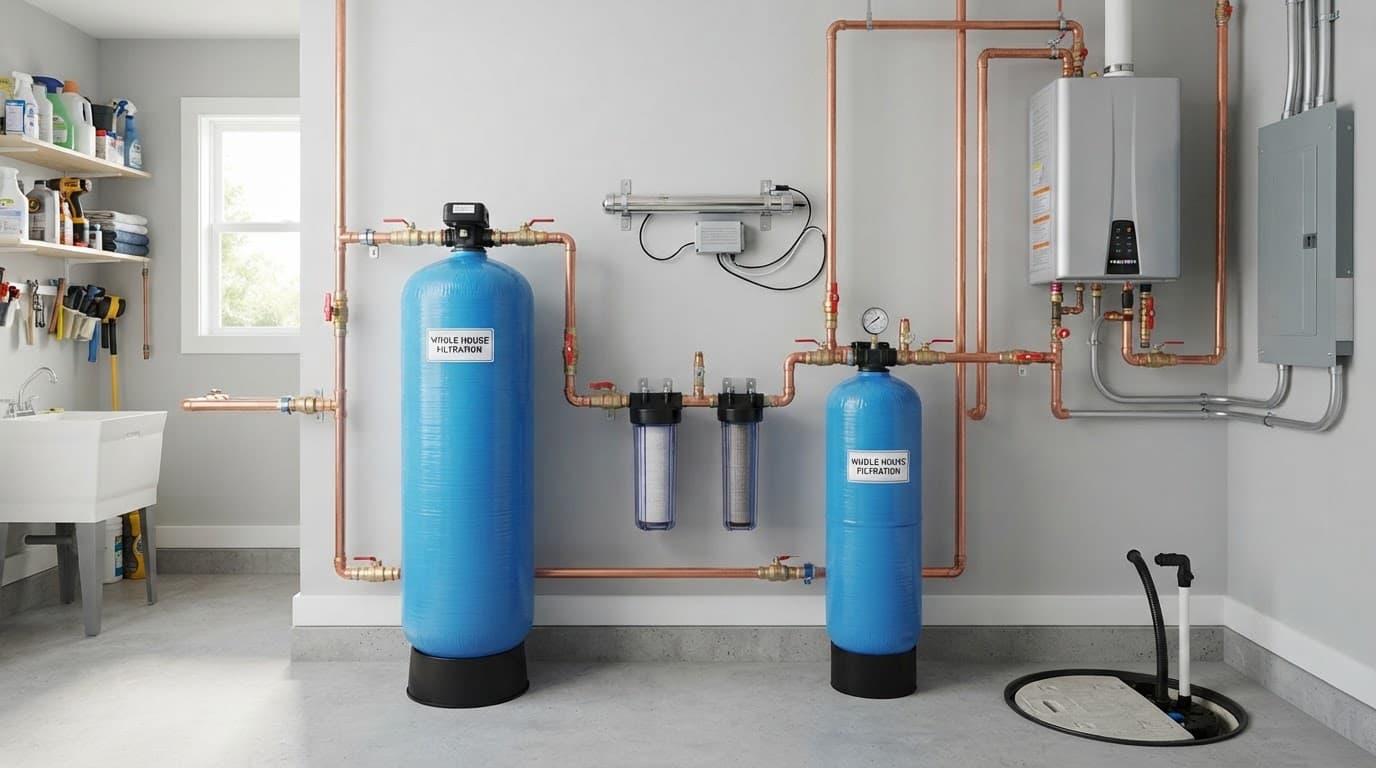
Those results show what RO can achieve in tested conditions. They don't guarantee that every residential system will produce the same result. Well water chemistry, membrane condition, pressure, flow rate, and pretreatment all affect performance.
A whole-house system also has to produce enough treated water for showers, laundry, toilets, appliances, and drinking. That makes the design more involved than installing a small RO unit beneath the kitchen sink.
Test uranium before choosing a filter
A water test is the first step in responsible uranium well water treatment. Without a laboratory result, you won't know whether uranium is present, how much treatment is needed, or whether another contaminant could damage an RO membrane.
Ask an accredited laboratory for a uranium-specific analysis . The result should report uranium concentration in µg/L or an equivalent unit. Contact your state health department or local authority for guidance on approved laboratories and sampling requirements.
A gross alpha test is useful, but it isn't the same as a uranium test. Gross alpha measures total alpha-particle activity from several possible sources. It may identify a radiological concern, but it doesn't establish the uranium concentration by itself. A high or low gross alpha result shouldn't replace direct uranium analysis.
Radon also requires separate attention. Radon is a radioactive gas that can occur in groundwater and enter indoor air after water is used. A radon-in-water test measures a different concern than uranium analysis. Radium and other radionuclides also need their own testing when local conditions or prior results point to them.
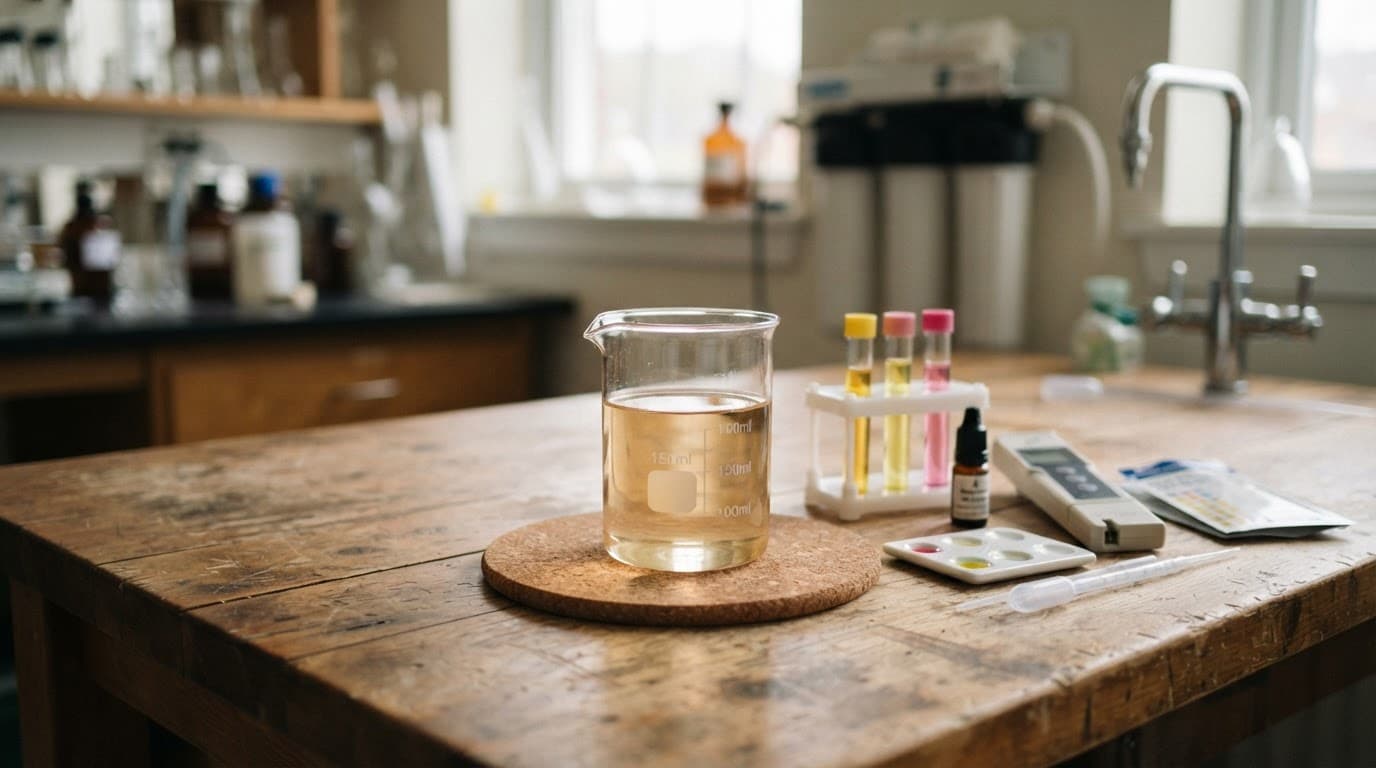
Your laboratory may also recommend testing pH, hardness, iron, manganese, turbidity, total dissolved solids, sulfate, nitrate, bacteria, and other well-water characteristics. These results help a designer select pretreatment and protect the RO membrane.
If uranium exceeds 30 µg/L, ask your local or state health authority about interim drinking-water guidance while you arrange treatment. Use a known safe source for drinking and cooking until you understand the result and confirm a suitable response.
What a whole-house uranium RO system needs
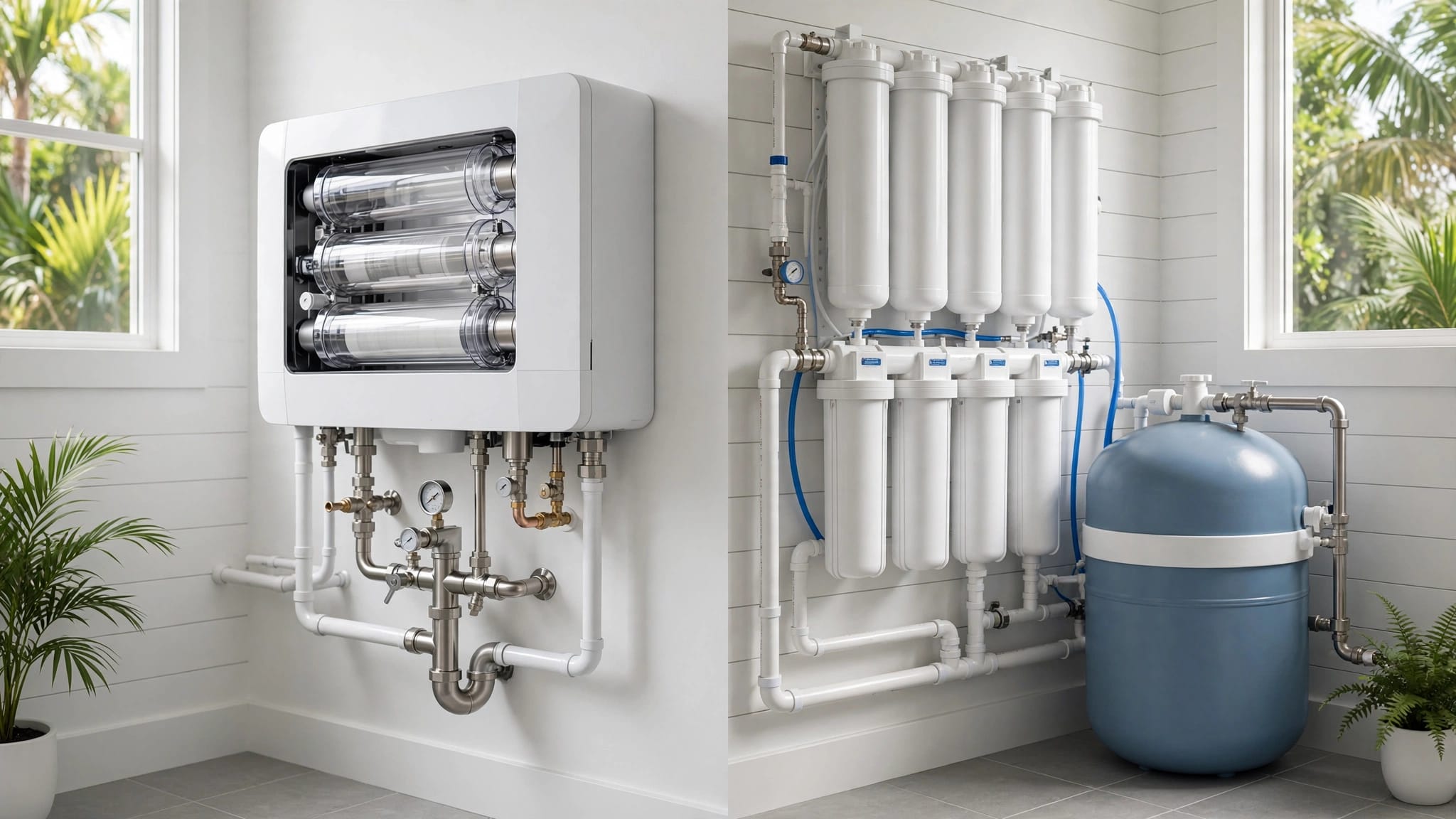
A whole-house RO system has several connected stages. The membrane is important, but it can't compensate for poor pretreatment, inadequate pressure, or incorrect sizing.
Pretreatment protects the membrane
Private wells often contain sediment, hardness, iron, sulfur compounds, or other minerals. These substances can foul filters, create scale, reduce water flow, or shorten membrane life.
Depending on the laboratory report, a system may need a sediment filter, carbon treatment, a water softener, iron removal, sulfur treatment, pH adjustment, or another conditioning stage. The order matters because each component affects what reaches the next one.
A softener can reduce hardness and protect against scale, but it doesn't replace uranium treatment . Likewise, a sediment filter can capture particles without removing dissolved uranium.
The RO membrane separates treated and reject water
After pretreatment, a pump or the home's water pressure sends water across the RO membrane. The treated portion flows toward a storage tank, while the reject stream carries concentrated minerals and uranium toward a drain or approved discharge point.
Reject-water handling needs careful review. A whole-house RO system can send several gallons of water to the drain for each gallon of treated water, although the ratio varies by design. Homes with septic systems, limited drainage, or local discharge restrictions need a professional plan before installation.
Because RO produces water more slowly than a typical well pump supplies it, whole-house systems often use storage tanks, booster pumps, pressure controls, and automatic shutoff equipment. This is why sizing a whole-house RO storage tank requires more than estimating daily drinking-water use.
Is whole-house RO the right uranium well water treatment?
The main residential choice is often between point-of-use RO and point-of-entry RO. The better option depends on where you need treated water and what the laboratory report shows.
| Option | May fit when | Main considerations |
|---|---|---|
| Point-of-use RO | You mainly need treated water for drinking and cooking | Lower water demand, smaller equipment, and treatment at selected faucets |
| Whole-house RO | You want treated water at every tap or have a broader dissolved-contaminant problem | Higher flow requirements, more space, pretreatment, storage, reject water, and maintenance |
Point-of-use RO is common for uranium because ingestion is the primary household concern. An under-sink system can supply a dedicated faucet or refrigerator line without treating water used for showers, toilets, or laundry.
Whole-house RO may make sense when you want one treated supply for the entire home, when several taps need treated water, or when the well has high total dissolved solids along with uranium. It also avoids relying on a single kitchen faucet for all drinking and cooking needs.
However, whole-house RO is a larger investment. It needs enough production capacity for peak demand, and the system must maintain water pressure throughout the home. You can learn more about the difference between whole-house RO and a water softener before choosing equipment.
The EPA's 30 µg/L standard helps establish the level of concern, but it doesn't decide which system belongs in your home. Water use, plumbing layout, storage space, wastewater handling, and the rest of the water analysis all matter.
Alternatives, installation, and long-term maintenance
Anion exchange is another established treatment method for uranium. It uses specialized resin to capture dissolved uranium under suitable water-chemistry conditions. The resin has a limited capacity, and regeneration, disposal, or cartridge replacement must be handled according to the system design.
Some products marketed as whole-house uranium filters use specialty media. Their performance can vary with uranium concentration, pH, alkalinity, competing minerals, flow rate, and contact time. Ask for documented performance data that applies to your water conditions rather than relying on a broad claim on a product label.
Common filters have different jobs:
- A carbon filter improves taste and can reduce some organic chemicals, but standard carbon treatment isn't a dependable uranium solution.
- Ultraviolet treatment can inactivate many microorganisms, but it doesn't remove dissolved uranium.
- A sediment filter captures suspended particles, not uranium dissolved in the water.
- A water softener reduces hardness and scale, but it isn't designed to provide reliable uranium removal.
After installation, the system should be flushed and allowed to stabilize before testing. Then collect a treated-water sample according to the laboratory's instructions. The post-installation result is the clearest way to confirm that the complete system, not just the membrane on a specification sheet, is reducing uranium as intended.
Don't use a handheld TDS meter as a substitute for uranium testing. TDS and conductivity can help track general membrane performance, but they don't identify uranium or prove that the water meets the EPA benchmark.
Maintenance usually includes prefilter replacement, membrane inspection or replacement, pressure checks, tank and pump service, leak checks, and periodic laboratory testing. The correct schedule depends on water chemistry, usage, equipment, and manufacturer instructions. Test again after major repairs, membrane replacement, changes to the well, or an unexplained change in taste, pressure, or water quality.
Keep copies of the original well test, treatment design, service records, and treated-water results. Those records make it easier to spot changes before they become a household water problem.
Conclusion
Whole-house RO can provide effective uranium well water treatment when the system is designed around a laboratory analysis and installed with suitable pretreatment, storage, pressure, and reject-water controls. EPA data supports strong uranium reduction by RO, but actual performance must be confirmed in your home.
Start with a uranium-specific test, and remember that gross alpha and radon tests measure different concerns. After installation, use an accredited laboratory to test the treated water and continue maintenance on the schedule your water and equipment require. A verified result is more reliable than any filter claim.
Latest posts
Read Our Blog
Tips, guides, industry best practices, and news.
Contact us
Get in touch
Our friendly team is ready to chat.