
Adding a Second Fountain: Can Your Power Support It?
Your existing electrical service may support a second lake fountain, but the answer depends on both the property's power demand and the circuit serving the lake. Fountain electrical requirements include the pumps, lights, controls, wiring, and protection needed for the installation.
A panel with spare room doesn't necessarily mean an outdoor circuit can handle another pump. Before choosing a fountain, look at the whole power path , from the service panel to the equipment in the water.
What Fountain Electrical Requirements Include
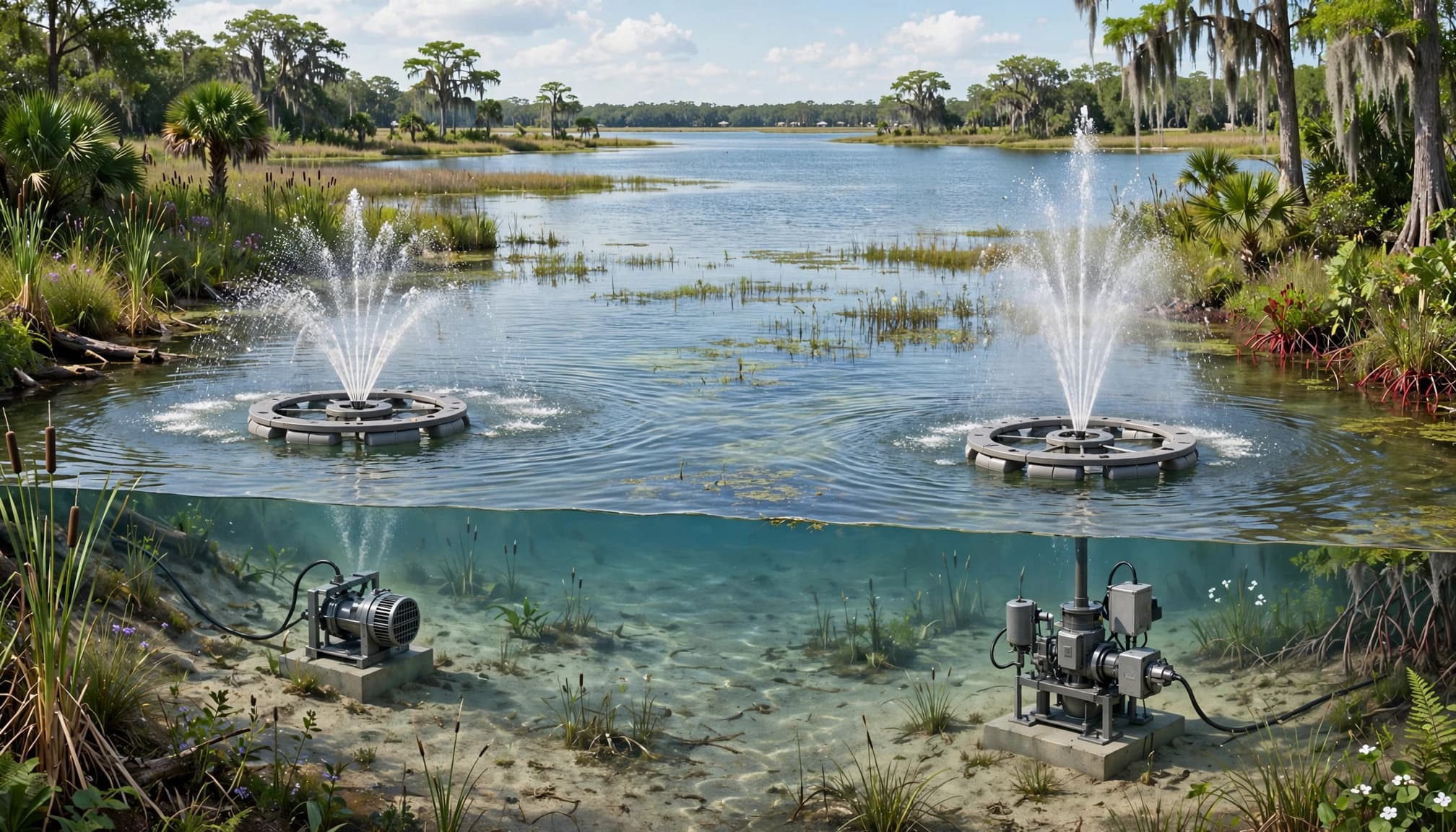
A second fountain adds more than another spray pattern. Each piece of equipment that draws power needs a place in the electrical assessment, including equipment already operating on the property.
Start With Both Pumps
Collect the equipment information for the existing fountain and the model you're considering. The pump nameplates and manufacturer instructions give the electrician a basis for assessing the demand and supply each unit needs.
Horsepower alone doesn't tell the whole story. Pumps with similar advertised sizes can have different electrical requirements, and starting a motor places different demands on a circuit than running it. The review should account for both conditions.
Also consider when the fountains will run. If the community expects both displays to operate at the same time, the electrical plan needs to accommodate that use.
Include Lights and Controls
Fountain lighting, transformers, timers, and remote controls can add electrical demand or require changes to the control panel. The assessment should include existing accessories and anything planned for the new fountain.
For example, an association might want the new pump to run during the day and its lights to come on after sunset. That schedule affects which equipment operates together. Our guide to lake fountain lighting options covers equipment choices and installation considerations.
Look at Everything on the Existing Circuit
The circuit supplying the first fountain may also serve other equipment. Adding a second pump without accounting for those loads can create problems, even if the first fountain has operated reliably for years.
Identify Shared Equipment
Landscape lighting, dock equipment, irrigation controls, refrigerators, and maintenance tools are examples of loads that may share an outdoor circuit. At a home, a water treatment or well pump may also be part of the broader electrical picture.
The electrician needs to know what the circuit supplies and which devices can run at the same time. A tool that's rarely used can still matter if a maintenance crew operates it while both fountains are running.
Circuit labels provide a useful starting point, but they don't always describe every connection. Older properties may have additions or changes that aren't clear from the panel directory.
Include the Operating Schedule
Timers can reduce operating time and utility costs, but a timer setting alone doesn't make an unsuitable circuit safe. Someone may change the schedule, override a control, or run equipment during maintenance.
If the proposed design depends on equipment operating at different times, that needs to be part of the electrician's design. Meanwhile, the association should keep the approved schedule and control instructions with its property records.
Separate Service Capacity From Outdoor Circuit Capacity
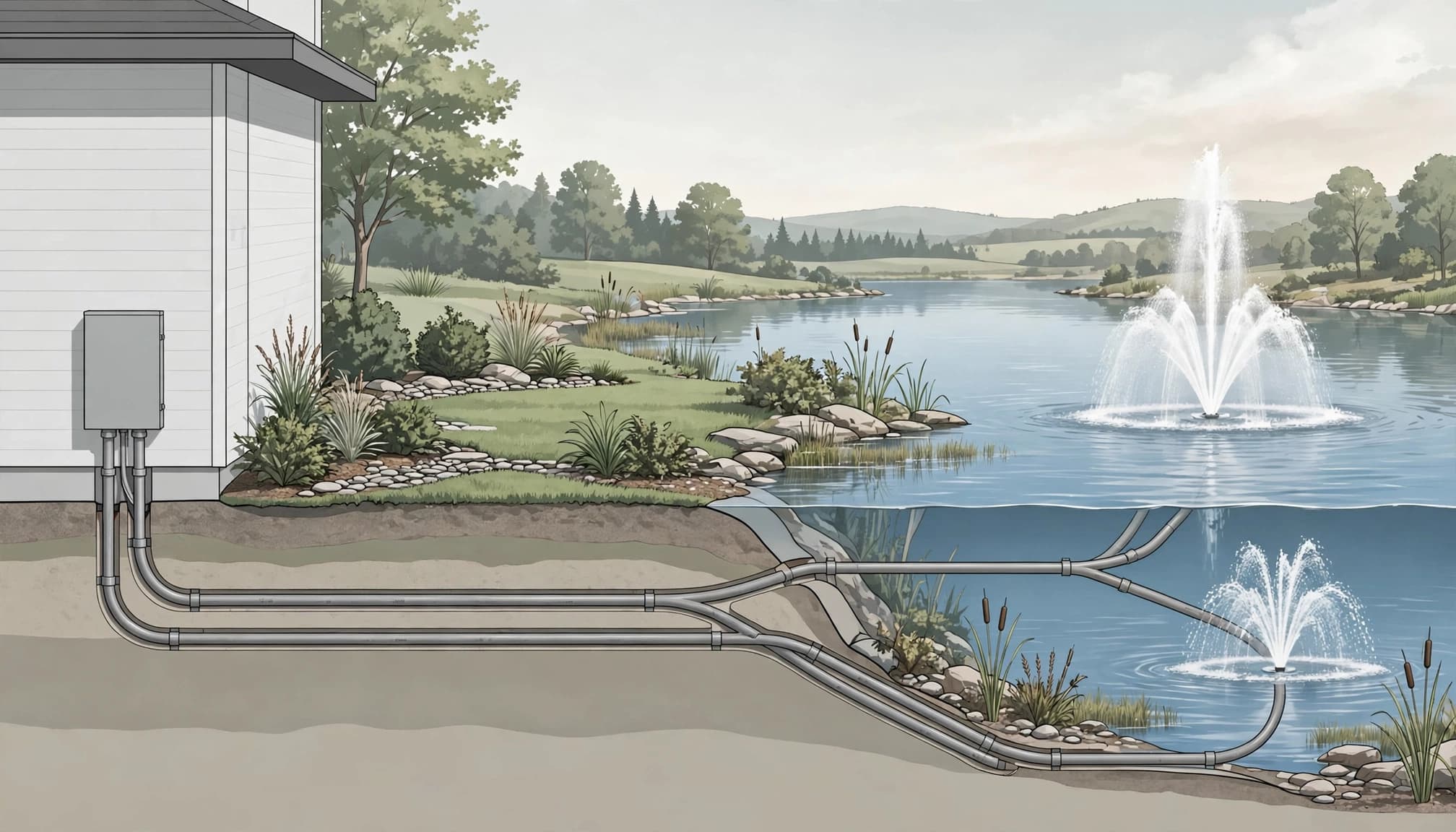
The electrical service supplies the property as a whole. A branch circuit carries power from a panel to particular equipment. Both need to be suitable for the proposed addition.
The Property May Have Room for More Demand
An electrician can assess the property's existing electrical demand alongside the proposed fountain equipment. That review includes other connected systems and the way the property uses them.
A community clubhouse, for example, may have air conditioning, lighting, kitchen equipment, and lake equipment drawing on the same service. A homeowner may have a well pump, water treatment equipment, and outdoor amenities to consider.
An open position in a panel doesn't prove that the service has sufficient capacity. It only shows that there may be physical room for a circuit component.
The Lake Circuit May Still Need Work
Even when the overall service can support the new equipment, the existing fountain circuit may be shared, unsuitable for the new pump, or routed too far from the planned location.
A new circuit or another suitable supply point may solve the problem without changing the entire service. The electrician also needs to assess the existing wiring, controls, and protection rather than assuming they're appropriate for both fountains.
Service capacity and circuit suitability are separate decisions. The first concerns the property as a whole; the second concerns the equipment and wiring that will supply the fountain.
When a Dedicated Fountain Circuit Makes Sense
A dedicated circuit supplies the equipment it's designed to serve instead of sharing power with unrelated devices. It can make a second fountain easier to operate and maintain, although the need depends on the equipment and installation.
Manufacturer Instructions May Call for One
The fountain manufacturer's instructions are part of the electrical plan. If the equipment calls for a dedicated circuit, that requirement belongs in the installation scope.
A separate circuit may also be appropriate when the existing outdoor circuit has other significant loads or isn't suitable for the new pump. This can require new wiring and protection even if the property's overall service has enough capacity.
Ask for an itemized proposal that identifies the new circuit, control equipment, wiring route, and electrical work. That helps the board or homeowner compare the actual installation scope with the equipment price.
Separate Controls Can Help With Service
Separate controls and accessible disconnects can allow a technician to work on one fountain without unnecessarily interrupting the other. They also make it easier to identify which equipment a control operates.
The arrangement must still follow the equipment instructions and applicable requirements. A dedicated circuit doesn't replace proper grounding, bonding, ground-fault protection, or an outdoor-rated installation.
Plan Ground-Fault Protection and Safe Disconnects
Water and electricity require a system designed for the actual site. Ground-fault circuit-interrupter, or GFCI, protection is an important part of that design.
GFCI Protection Is One Safety Layer
A GFCI detects an imbalance between outgoing and returning current and can shut off power when a ground fault occurs. Fountain equipment and nearby receptacles commonly fall under GFCI requirements, although the applicable rules depend on the installation.
GFCI protection doesn't repair a damaged cable or keep water out of a connection. It also doesn't replace the grounding and bonding required for the equipment. A qualified electrician should plan these components together with the pump, lighting, and controls.
Submerged lights need equipment intended for fountain use. An ordinary landscape-lighting setup isn't automatically suitable for fixtures in the lake.
Put Disconnects Where People Can Reach Them
A disconnect gives authorized personnel a way to shut off the equipment for service or an emergency. Its location and accessibility should be part of the plan for each fountain.
Keep shore-side controls away from the spray and out of areas that regularly collect standing water. Labels should identify the equipment each disconnect controls, so a service technician isn't left guessing.
Never handle a submerged pump, float, or cable while the system has power. If electrical equipment is wet, damaged, or surrounded by standing water, stay clear and call a qualified professional.
Use Wiring and Connections Suited to the Site
A fountain's electrical route travels through an environment that can include rain, irrigation, shoreline erosion, and lake water. Every part of that route needs equipment appropriate for its location.
Protect the Shore-Side Route
The installer and electrician should identify the source panel, conduit route, control enclosure, and connection points before work begins. Outdoor enclosures and fittings need to suit their exposure, while buried wiring needs protection appropriate to the installation.
Plan the route around areas used by vehicles, landscape crews, and future drainage work. Keep controls accessible for service without placing them in the fountain's splash zone.
A loose extension cord across a lawn or shoreline isn't a permanent lake fountain installation. It can be damaged by mowing equipment, collect moisture, or create a trip hazard.
Choose Equipment Intended for Submersion
A cable or connector near the fountain may need to tolerate continuous immersion. An outdoor label alone doesn't establish that a component is suitable underwater or listed for fountain use.
The installation should protect cable from abrasion, strain, anchors, and moving pump parts. It should also leave technicians a safe way to retrieve equipment for cleaning or repair. These details belong alongside the physical mounting plan, as discussed in our guide to pond fountain mounting and electrical safety.
When the Property May Need a Service Upgrade
A service upgrade may be necessary when an electrician determines that the existing service can't accommodate the proposed equipment along with the property's other demand. The decision comes after reviewing the full system, rather than counting fountains alone.
Consider Circuit Changes First
If the service can support the addition but the existing outdoor circuit can't, the project may call for a new circuit and a suitable route to the lake. Replacement controls or other electrical improvements may also be needed.
A different fountain model or operating arrangement may change the project requirements. Any revised plan still needs an electrical assessment that accounts for the way the equipment will be used.
These options can affect trenching, shoreline access, and the amount of work needed at the panel. Include them in the project scope before comparing installation proposals.
Don't Treat a Trip as Proof of Limited Service
A breaker or GFCI trip deserves attention, but it doesn't automatically mean the property needs a larger service. A damaged pump, wet connection, worn cable, or problem elsewhere on the circuit can also cause a trip.
If a fountain repeatedly trips its protection, leave it off and arrange a professional diagnosis. Our lake fountain maintenance checklist covers other signs that a fountain needs service.
Plan Access and Approvals Before Installation
The electrical route can cross common property, a drainage area, or a lake maintenance easement. That makes the site plan as important as the equipment selection for a community project.
Map the Route and Service Access
Mark the proposed fountain location, source panel, control enclosure, disconnect, and cable route on a site plan. Include the shoreline access needed to install and retrieve the equipment.
If the route crosses an easement or common area, obtain the necessary permission before trenching. Some easements restrict excavation or private electrical equipment. The electrical work, shoreline work, or both may also require permits or inspection.
Our guide to Florida lake fountain permits explains the planning questions property owners and associations should address.
Keep a Record for Future Maintenance
After installation, retain the fountain manuals, electrical plan, control instructions, and permit records. Note which disconnect operates each unit and who is responsible for scheduling service.
A clear record helps a new property manager or board understand the system without relying on memory. It also gives a technician useful information when a fountain develops a weak spray, damaged cable, or recurring electrical fault.
Make the Second Fountain Part of the Whole System
The decision starts with the combined demands of the pumps and accessories. It also depends on the condition and suitability of the circuit, wiring, controls, and protection that reach the lake.
A sound electrical plan distinguishes a circuit improvement from a service upgrade and accounts for future maintenance.
At Trademark Water Systems, we help Southwest Florida property owners and communities plan, install, and maintain lake fountains. A qualified electrical contractor can assess the power supply and complete the electrical work the project requires.
Latest posts
Read Our Blog
Tips, guides, industry best practices, and news.


Contact us
Get in touch
Our friendly team is ready to chat.
