
Brine Tank Cleaning: A Safe Guide for Homeowners
A dirty brine tank can leave salt bridges, sludge, odors, and poor softener performance behind. Regular brine tank cleaning helps your water softener use salt properly and complete its regeneration cycle.
The job is manageable for many homeowners, but it involves heavy salt, standing water, slippery floors, and electrical equipment. Follow your owner's manual first, use basic protective equipment, and avoid chemical shortcuts. Start by knowing when cleaning is needed and how to prepare safely.
Why Brine Tank Cleaning Matters
A water softener uses salt to create brine. During regeneration, the brine moves through the resin tank and helps remove trapped hardness minerals. The brine tank itself doesn't need to look spotless, but heavy residue can interfere with salt dissolving and may block the float or brine line.
Signs the tank needs attention
Check the tank when you add salt. A healthy tank usually contains loose pellets or crystals with no thick sludge at the bottom. Watch for these warning signs:
- Salt forms a hard crust that doesn't break apart easily.
- The bottom contains muddy residue or a large amount of undissolved salt.
- The tank has an unusual odor.
- Salt levels barely change between regeneration cycles.
- The softener produces hard water even after it regenerates.
- The float assembly or brine well appears blocked.
A salt bridge can make the tank appear full while the softener has little usable salt. You can read more about preventing salt bridges in a brine tank before starting a full cleaning.
How often should you clean it?
Many general maintenance guides suggest cleaning a brine tank every 6 to 12 months . That range isn't a universal rule. Your owner's manual should take priority.
Cleaning may be needed sooner when you use low-quality salt, your water contains iron or manganese, or sediment enters from a private well. High humidity can also make salt clump. On the other hand, a clean tank with good salt and no buildup may need less frequent attention.
Inspect the tank monthly, even if you don't clean it monthly. Choose a time when the salt level is low or nearly empty. Removing a partly empty tank is easier and reduces the weight you need to handle.
Prepare the Work Area Before Cleaning
Good preparation prevents most avoidable problems. Read the instructions for your exact model before moving salt or disconnecting any tubing. Some systems have a removable brine tank, while others place it close to the control valve with short, rigid connections.
Gather simple supplies
You may need:
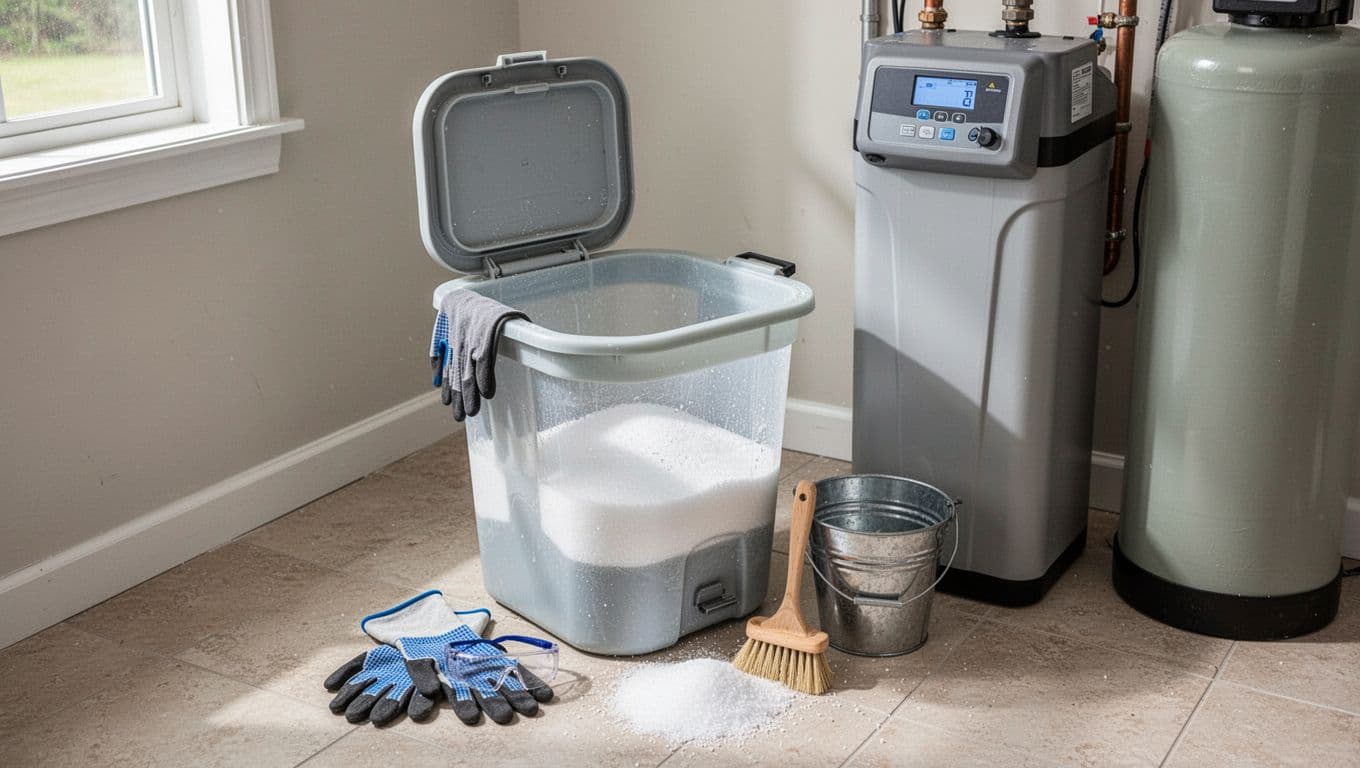
- Protective waterproof gloves and safety glasses.
- A plastic scoop or small bucket for removing salt.
- A soft brush or cloth.
- Warm water.
- Mild dish soap, only if the manual permits it.
- Towels for spills.
- A second container for salt that you plan to reuse.
Avoid abrasive pads, metal tools, acids, bleach, and general household cleaners. Never combine cleaning products. A chemical reaction can release irritating fumes or leave unwanted residue in the tank.
Make the area safe
Keep children and pets out of the room until the work is finished and the floor is dry. Open a door or window when possible, especially if the space has limited ventilation.
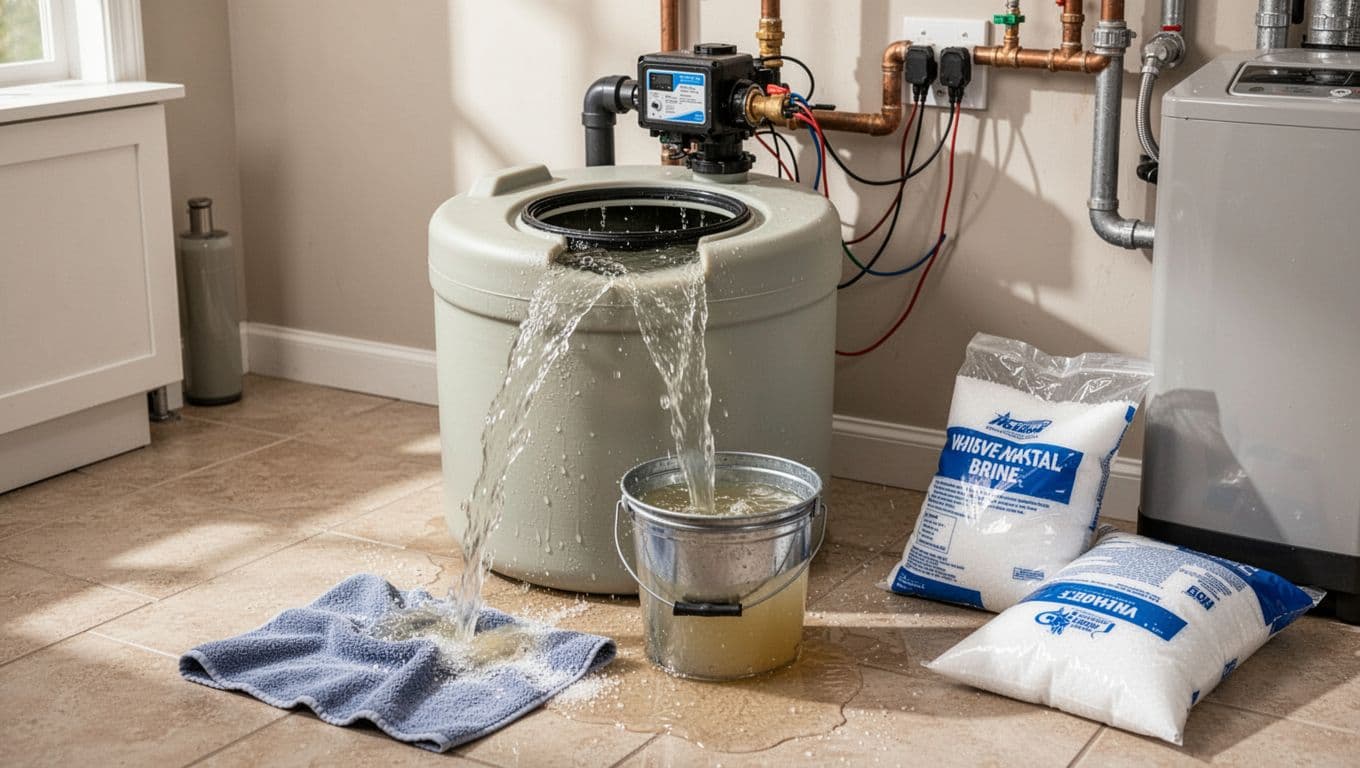
Place towels around the tank before draining it. Brine can make floors slick and can damage some plants or grass. Keep buckets, hoses, and rinse water away from outlets, control heads, plugs, wiring, and other electrical components.
Salt bags can weigh far more than they look. Don't lift a full bag alone or twist while carrying it. Use smaller containers, ask for help, or leave the salt in place until the tank is nearly empty.
A Safe Brine Tank Cleaning Procedure
The exact steps vary by model, so use the owner's manual whenever it differs from this general process. Never climb into the tank or place your body inside it. If you can't reach the bottom safely, contact a qualified technician.
Put the softener in a safe state
Set the system to bypass mode according to the manual. Bypass mode keeps untreated water available while preventing water from moving through the softener during the work.
Turn off the water supply if the instructions require it. Disconnect power at the plug or breaker only when the area is dry and you can do so safely. Don't reach across a wet floor to unplug equipment.
If the manual instructs you to disconnect the brine line, identify each connection before removing it. Take a photo of the setup so you can return each tube to its original position. Never force a fitting, float, or control component.
Remove salt and residue carefully
Scoop out loose salt in small amounts. Don't shovel aggressively against the tank wall because older plastic tanks can crack. Place reusable salt in a clean, dry container, and discard salt that contains sludge or debris.
Drain the remaining brine through the method listed in your manual. If the tank has no clear drain procedure, don't guess. Water treatment systems differ, and forcing a hose or valve can cause a leak.
Once the salt is out, inspect the bottom for sediment or hardened deposits. A plastic scoop can loosen a salt bridge, but stop if a crust won't break apart with gentle pressure. Prying hard against internal equipment may damage the tank or brine assembly.
Wash with mild soap and rinse well
For ordinary buildup, use warm water and a small amount of mild dish soap if the manufacturer allows it. Wipe the inside with a soft cloth or brush. Focus on the lower walls and bottom, where salt residue collects.
Use one cleaning product only. Never add bleach to soapy water, and never combine bleach with vinegar, acids, ammonia, or another household cleaner. Avoid bleach as a routine treatment unless the owner's manual specifically approves it for your model and gives a precise procedure.
Rinse the tank several times with clean water. Remove all visible soap and loosened residue before reassembly. Keep rinse water away from the control valve and electrical connections.
Inspect without dismantling the system
Look at the float, brine well, screen, tubing, and connections. Check for visible cracks, kinks, loose fittings, or salt deposits. Don't remove the control valve or open the mineral tank as part of routine brine tank cleaning.
The resin tank and control head contain parts that need correct pressure, flow, and settings. They aren't the same as the salt tank, and cleaning one doesn't mean the other needs to be opened.
Refill, Restart, and Check for Leaks
After the tank is clean, reconnect any tubing exactly as the manual shows. Confirm that fittings are secure, but don't overtighten plastic connections. Make sure the float moves freely and that no hose rests against a sharp edge.
Add the correct salt and water
Use the salt type and fill level listed in the owner's manual. Many systems use pellets or crystals, but the right choice depends on the equipment. Don't fill above the recommended level, and don't add water unless the instructions call for it.
Keep salt dry while carrying it. Pour or scoop it slowly to avoid spills. If you need to refill from a heavy bag, use a smaller container or get help.
Return the system from bypass to service only after the tank and connections are ready. Restore power according to the manual. Run a regeneration cycle when instructed, particularly if you used soap or if the manual requires a post-cleaning flush.
Watch the first cycle
Stay nearby while the softener runs its first regeneration after cleaning. Check the floor, brine line, drain connection, and tank fittings for leaks. Listen for unusual sounds and confirm that wastewater flows through the correct drain path.
Never direct brine or rinse water into a flower bed, vegetable garden, pond, or storm drain. Salt can harm plants and soil. EPA materials have also raised concerns about softener brine entering sewers or receiving streams, so follow local disposal rules and your equipment instructions.
Mistakes That Can Create New Problems
Using chemicals without checking the manual
A chemical treatment may appear faster, but it can damage components, leave residue, or create unsafe fumes. Manufacturer guidance differs, so don't copy a bleach recipe from another brand's website or assume a product is safe because it worked in a different system.
Routine cleaning usually needs physical removal of salt and residue, followed by a thorough rinse. If the manual calls for sanitation, follow its exact product, amount, contact time, and regeneration instructions. When those instructions are missing, ask a technician instead of improvising.
Treating every performance problem as a dirty tank
Hard water after cleaning can result from an incorrect setting, a blocked drain, a failed injector, exhausted resin, low water pressure, or a problem with the control valve. Well water with iron, manganese, or sediment may also affect softener performance.
Cleaning the salt tank won't correct those problems. A water test and equipment inspection may be needed, especially when the system has continued to perform poorly after a complete regeneration.
When to Call a Qualified Technician
Stop the job and arrange service if the tank is cracked, the control valve leaks, the brine line won't disconnect, or electrical parts have become wet. Call for help when you need to move a heavy tank or salt load that you can't handle safely.
Professional service is also the right choice when the float is stuck, the injector is clogged, the softener won't draw brine, or the drain backs up during regeneration. Don't open the resin tank or control valve unless the manufacturer specifically identifies that work as homeowner maintenance.
A technician can also help when the tank fills with water, salt remains unchanged for weeks, or hard water continues throughout the home. Those symptoms often point to a flow, programming, pressure, resin, or water-quality issue rather than simple dirt.
Conclusion
Safe brine tank cleaning is usually a careful maintenance task, not a chemical project. Inspect the tank regularly, clean it when salt quality or water conditions create buildup, and choose a time when the salt level is low.
Use gloves and eye protection, keep children and pets away, protect electrical components, and rinse away every trace of approved cleaner. If the tank, tubing, valve, or drain creates uncertainty, qualified service is safer than forcing the repair.
Latest posts
Read Our Blog
Tips, guides, industry best practices, and news.



Contact us
Get in touch
Our friendly team is ready to chat.