
Choosing Lake Fountain Lighting for Beauty and Safety
An unlit fountain can vanish after sunset, even when its spray looks impressive in daylight. The right lake fountain lighting makes the water pattern visible, controls glare, and fits the electrical demands of a wet outdoor installation.
Owners comparing LED fixtures need more than a wattage number. Color temperature, lumens, beam angle, housing, controls, service access, and code compliance all affect the result. Start by deciding what the lights must do.
How to Match Lake Fountain Lighting to Your Goals
Lighting decisions start with purpose. A private lake fountain may need a soft evening accent, a vivid display at an HOA entrance, or enough light to make the spray and nearby water edge easier to see. Those goals use different fixtures, placement, and controls.
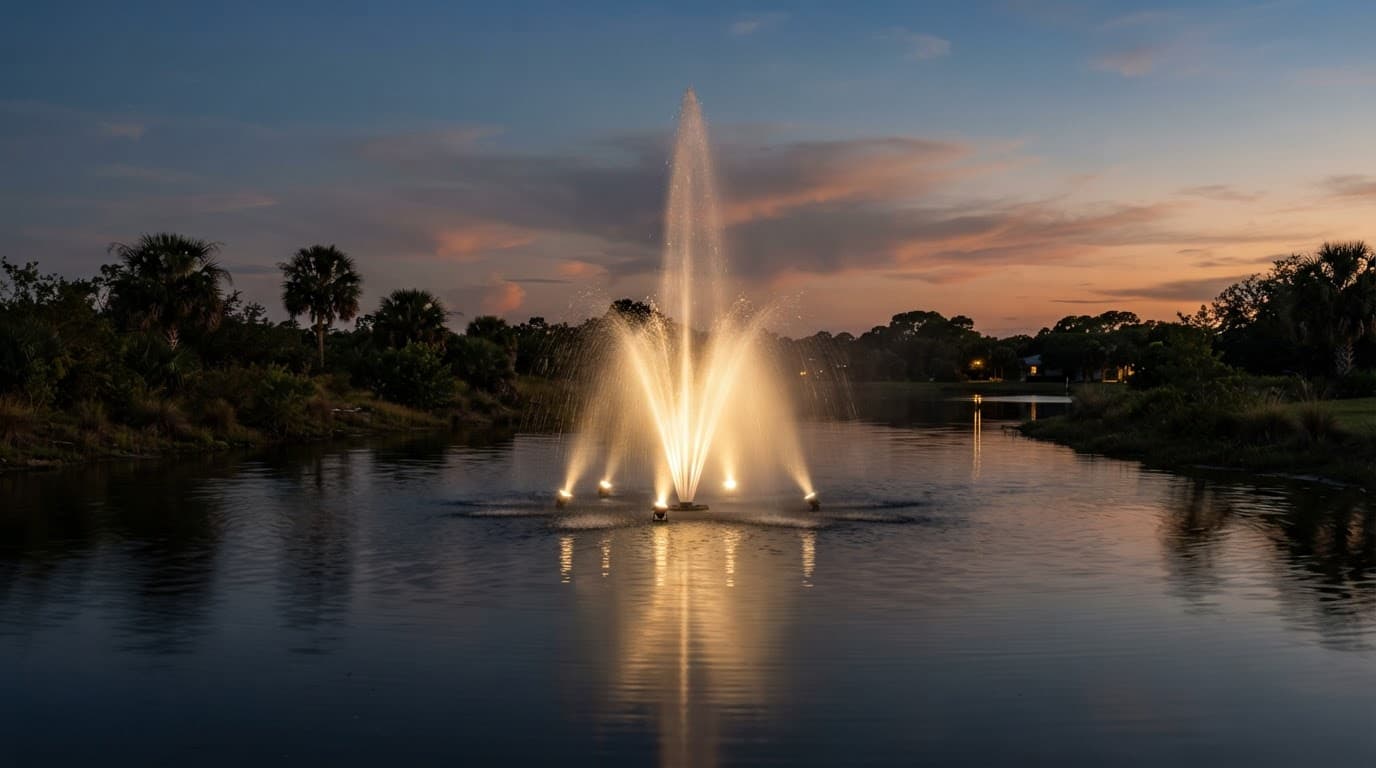
Separate Decorative Lighting From Safety Lighting
Decorative fountain lighting draws attention to the highest jet and the shape of the plume. Warm white fixtures can produce a calm appearance against dark water, while color-changing systems can support events or seasonal displays.
However, colors may look uneven when algae, sediment, or tannins affect water clarity. Fixed white light is usually easier to keep consistent throughout the year.
Visibility and safety need separate planning. Underwater lights show the fountain itself, but they don't reliably light an irregular shoreline, dock edge, path, or swimming area. Use dedicated fixtures for walking surfaces and access points.
Keep glare away from homes, roads, and boat operators. A bright display should never encourage someone to assume the lake is safe for swimming or boating.
Place Fixtures Around the Actual Spray Pattern
Before selecting fixtures, inspect the fountain's spray pattern at night. A nozzle that sends water high may need a narrow beam aimed upward. A broad sheet or fan pattern may look better with wider light distribution around the base.
Installers should consider nozzle count, fountain diameter, water depth, and viewing angles. Too few lights can create dark sections, while too many may produce hot spots and excess glare. Ask for a nighttime test before final aiming.
Compare the LED Specifications That Affect the Result
Once the purpose is clear, compare the specifications that affect the water's appearance and the system's power needs. Product sheets should list more than fixture wattage.
Choose a Color Temperature That Fits the Property
Color temperature describes whether white light looks warm, neutral, or cool. Warm white around 2700 to 3000 Kelvin often gives fountains a softer appearance. Neutral white around 4000 Kelvin can reveal water detail with less amber tint.
Cool white above 5000 Kelvin may appear crisp, but it can look harsh against homes and landscaping. The best choice depends on the surrounding lights, the fountain's viewing distance, and the mood you want after dark.
Ask whether the fixture maintains the same color underwater and whether the control system can dim it. RGB fixtures create changing colors. RGBW fixtures add a dedicated white channel, which usually produces cleaner white scenes.
If the fountain needs year-round curb appeal rather than event effects, fixed white may offer simpler operation.
Read Lumens, Beam Angle, and Power Together
Lumens measure visible light output. Watts measure electrical consumption. They aren't interchangeable. A high-wattage fixture can waste power if its beam misses the spray.
Beam angle describes how widely the light spreads. Narrow optics concentrate light on a tall jet. Wider optics cover a broad plume but may need more output to keep the water bright. Lens design also affects glare and how much light reaches the surface.
Compare total lumens per fixture, beam angle, wattage, and fixture count together. Then check whether the stated output applies underwater. Water depth and clarity can reduce perceived brightness, especially when the lake contains suspended particles or algae.
Match the Fixtures to Lake Conditions and Maintenance
Lake water is harder on equipment than a dry garden setting. Algae, mineral deposits, suspended sediment, and sun exposure can affect lenses, seals, and metal parts.
Choose Materials Rated for Submersion
Choose fixtures designed for continuous submersion. Look for a corrosion-resistant housing, a sealed cable entry, and hardware rated for the water conditions at your property.
Stainless steel is common for aquatic fixtures, but the grade and finish still matter near coastal air or brackish water. Southwest Florida properties may face salt exposure, mineral buildup, and intense sunlight, so ask how the proposed materials handle those conditions.
An IP68 rating describes resistance to dust and water ingress. It doesn't, by itself, prove that a product is listed for fountain use or suitable for permanent submersion. Request the listing information, installation instructions, and maximum submersion depth before buying.
Check Cable, Connectors, and Service Access
Cable selection matters as much as fixture selection. Confirm that the cord has a permanent-submersion rating and enough length for the fountain position without sharp bends or tension. Connectors and splices need an underwater rating that matches the installation. Ordinary landscape connectors don't automatically qualify.
Keep cable away from the intake and moving pump parts. Ask how the installer will secure slack and protect the shoreline connection. Also confirm that technicians can retrieve each fixture for cleaning or replacement without draining the lake.
Before choosing a location, review this guide to lake fountain placement for Florida shorelines. Trees, shoreline vegetation, debris, and water depth can affect both lighting and long-term access.
Confirm Electrical and Installation Requirements
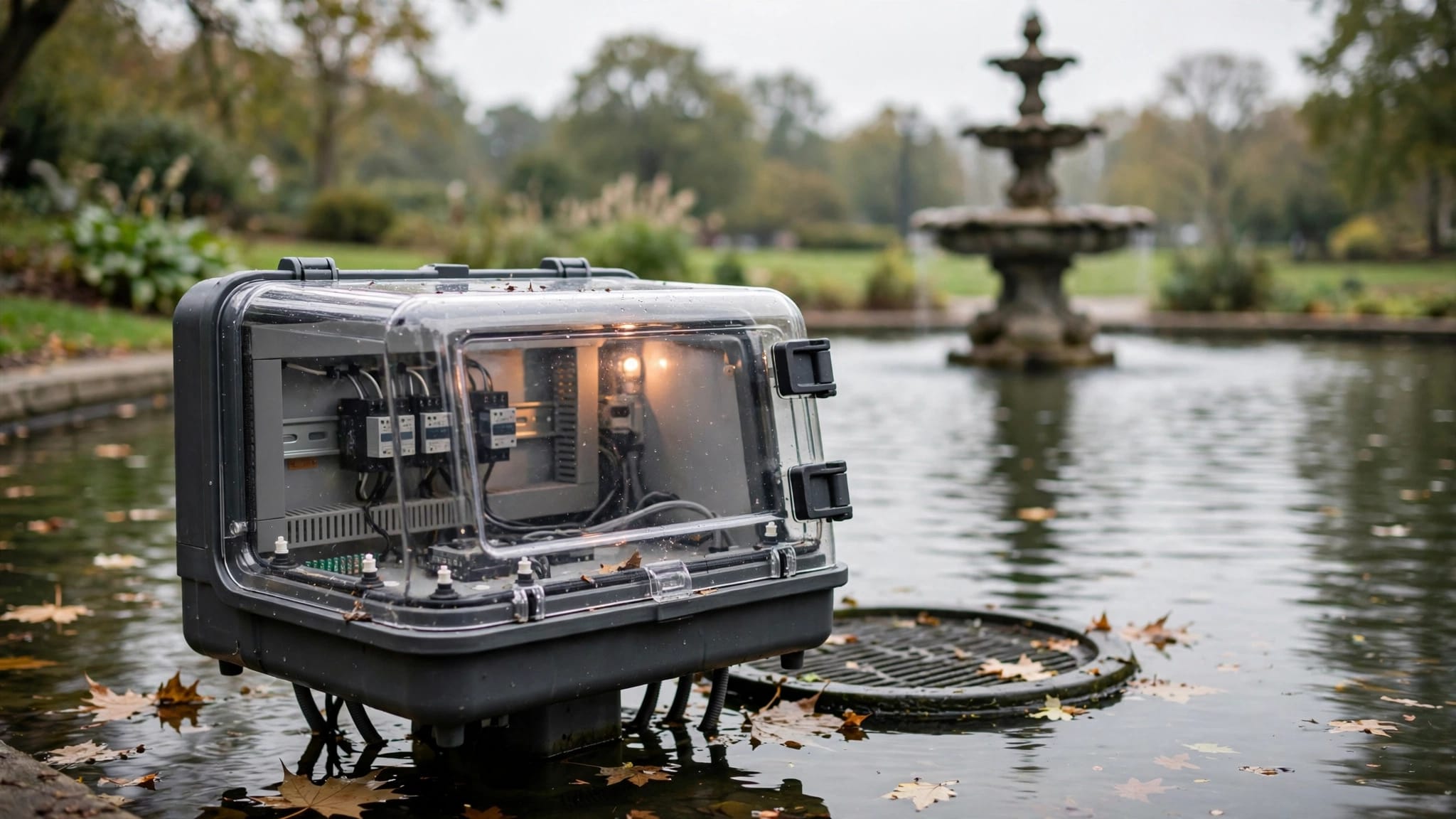
Submerged lighting combines water exposure with electricity, so installation details deserve careful review. A qualified electrical contractor should evaluate the whole fountain system, not only the LED fixture.
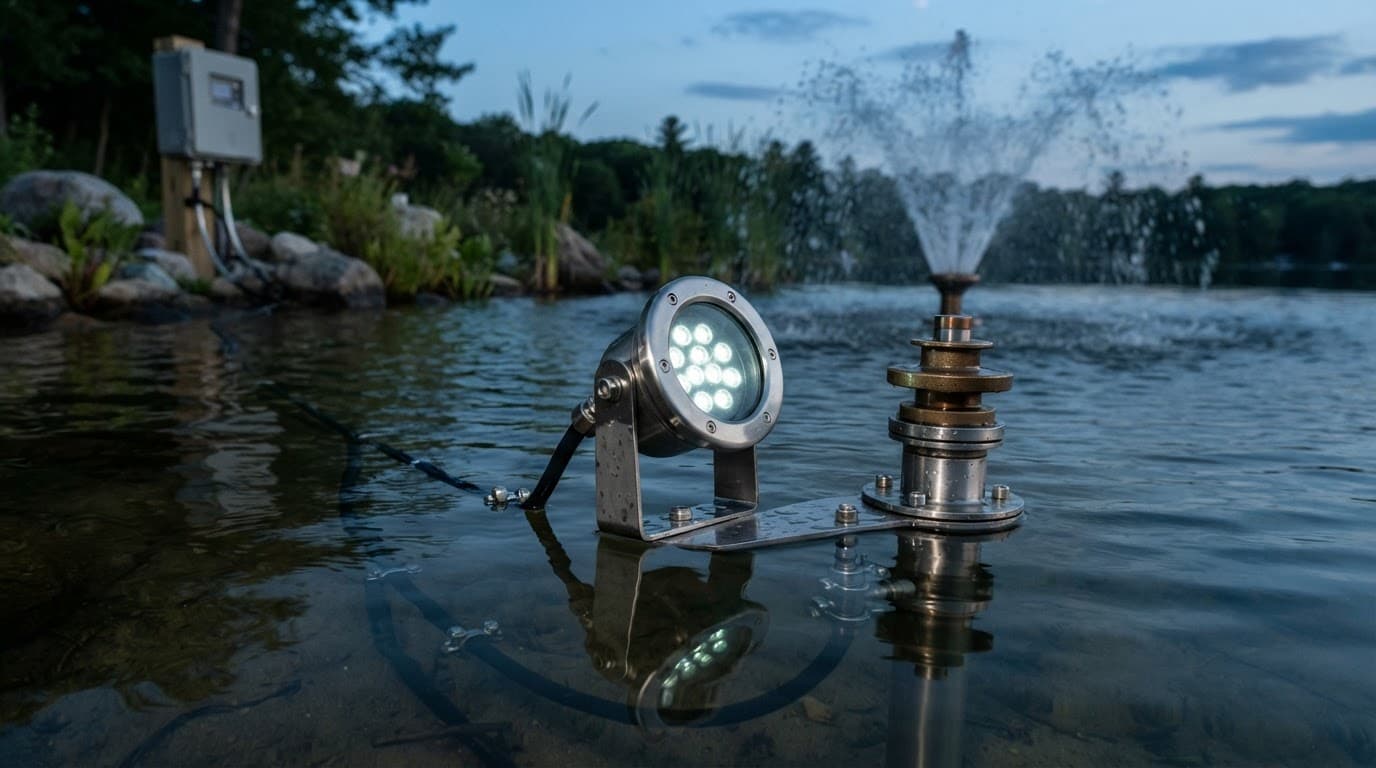
Understand What "Low Voltage" Really Means
NEC Article 680 covers pools, fountains, and similar installations. Fountain provisions include Sections 680.50 and 680.51. Under 680.51(A), submersible luminaires, pumps, and other submersible equipment generally need GFCI protection.
The low-voltage exception is narrower than many product labels suggest. It applies only when the equipment is listed for operation at the low-voltage contact limit or less, and the transformer or power supply complies with 680.23(A)(2).
Commonly cited contact limits are 15 V AC sinusoidal, 30 V DC continuous, or 21.2 V peak nonsinusoidal AC. The exact listing and locally adopted code edition control the installation.
A low-voltage label does not, by itself, prove that a submerged fixture qualifies for a fountain-code exception.
A standard landscape-lighting transformer isn't automatically the correct power supply for a submerged fountain fixture. Have the contractor verify the fixture, driver, transformer, and control system as one compatible assembly.
Use Professional Electrical Installation
Florida projects follow the Florida Building Code and Florida Electrical Code framework, along with local amendments and inspection practices. Before work starts, confirm the locally adopted code edition, permit needs, equipment listing, circuit rating, disconnect location, GFCI protection, grounding, and bonding.
Bonding connects metal fountain parts to the equipment grounding path. GFCI protection provides rapid power shutdown when current leaves its intended path. One doesn't replace the other.
Receptacles rated 125 to 250 volts, 60 amps or less, within 20 feet of a fountain edge commonly fall under GFCI rules. The electrical contractor and local authority having jurisdiction should verify the exact requirement for your property.
Installation may include the control panel, transformer, underwater cable, junctions, grounding, bonding, disconnects, and final testing. A company that provides professional lake fountain installation can coordinate the fountain equipment with the electrical work.
Compare Total Cost and Ongoing Maintenance
Good lighting should be affordable to operate and practical to maintain. The lowest fixture price rarely tells you what the finished project will cost.
Review the Complete Installed Price
Ask each contractor to itemize the fixture count, wattage, transformer or power supply, cable, connectors, controls, mounting hardware, installation labor, permits, testing, and access equipment.
A fountain in deep water may require a boat, lift, or specialized retrieval method. Those costs can matter more than a small difference in fixture price.
Also compare control features. A timer or photocell can automate evening operation. Color-changing systems may add control hardware, programming, and future troubleshooting. Calculate total wattage before selecting the transformer, and leave room for the required system load.
LEDs usually use less energy and require less frequent lamp replacement than halogen fixtures. Still, drivers, cables, seals, and connectors can fail. The quote should explain what the warranty covers and whether replacement parts will remain available.
Build Cleaning and Repair Into the Plan
Mineral deposits and algae can cover lenses, reduce brightness, and distort the spray's appearance. Debris can restrict the pump intake or affect the nozzle pattern. A regular inspection helps identify these issues before the display changes noticeably.
Watch for flickering, a dim fixture, an uneven spray, unusual vibration, or a breaker that trips. Shut down equipment that shows an electrical problem and arrange a professional inspection.
A maintenance plan should cover fixture cleaning, cable and connector checks, pump and nozzle inspection, water-level monitoring, and spray-pattern adjustments. Trademark Water Systems offers lake fountain maintenance services, while this lake water fountain repair guide covers common causes of weak flow and electrical trouble.
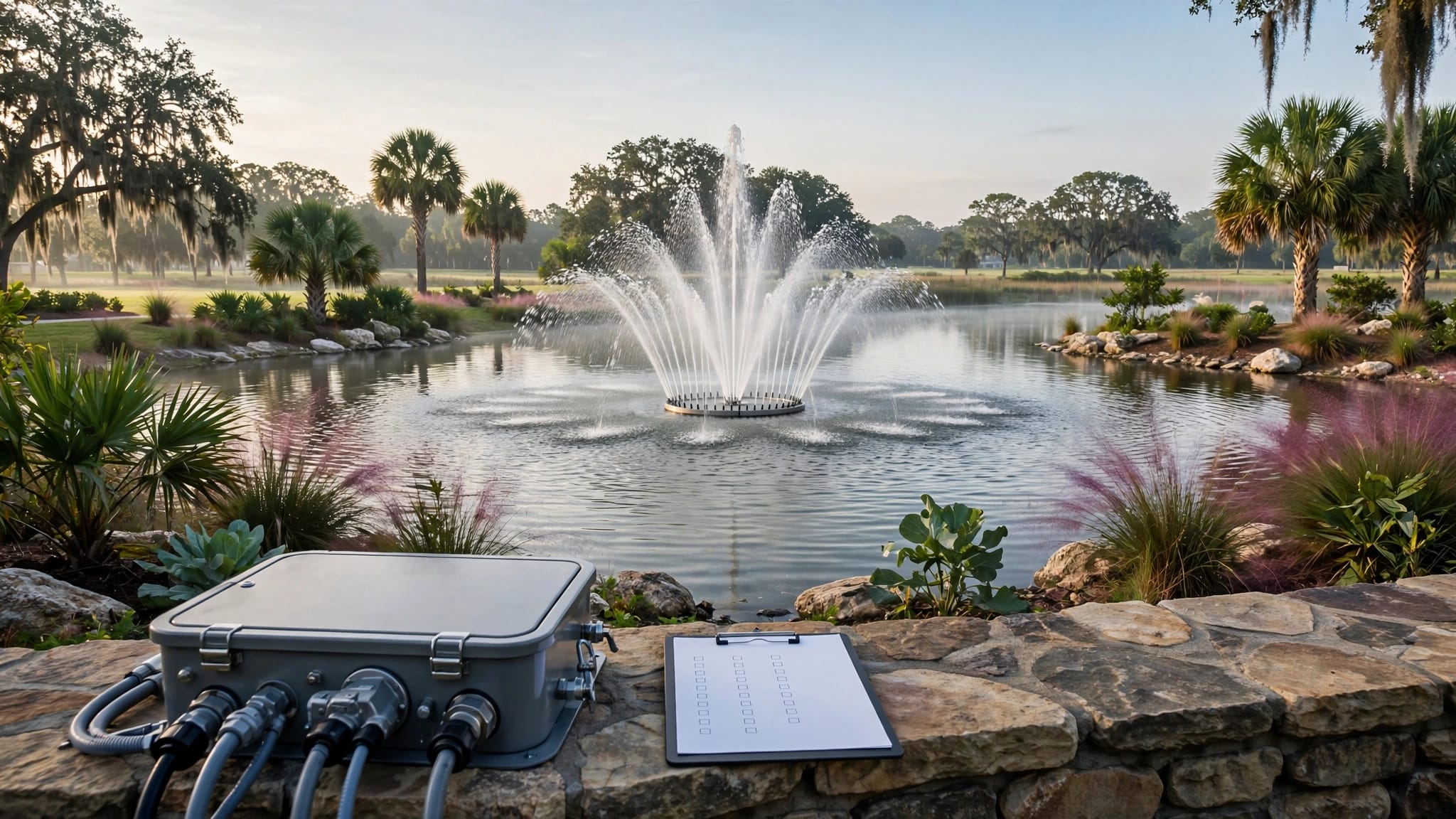
Use This Checklist Before Purchasing
Ask for written answers to these questions before approving an LED lighting system:
- Is each fixture listed for continuous underwater fountain use?
- What are the operating voltage, wattage, current draw, and total system load?
- How many lumens does each fixture produce underwater?
- What beam angle and lens design fit the fountain's spray pattern?
- Is the light fixed white, RGB, or RGBW, and can the control system dim it?
- What housing, cable, connector, and seal materials suit the lake environment?
- Does the IP rating support the intended use, and what separate safety listing applies?
- Does the transformer or power supply meet the applicable fountain requirements?
- Where will GFCI protection, grounding, bonding, disconnects, and control equipment go?
- Can an installer retrieve the fixtures for cleaning and replacement?
- What permits, inspections, warranty terms, and maintenance services are included?
These answers make competing quotes easier to compare. They also reveal when a low price leaves out electrical work or future service access.
Conclusion
The right lake fountain lighting begins with the viewing goal, not a fixture catalog. Decorative display, shoreline visibility, and safety lighting need separate decisions, while lumens, beam angle, color, materials, controls, and service access determine how well the system performs.
Choose equipment listed for its intended submerged use, then have a qualified electrical contractor confirm the transformer, GFCI protection, grounding, bonding, and local code requirements. A fountain that looks beautiful at noon should also be safe, serviceable, and easy to maintain after dark.
Latest posts
Read Our Blog
Tips, guides, industry best practices, and news.

Contact us
Get in touch
Our friendly team is ready to chat.