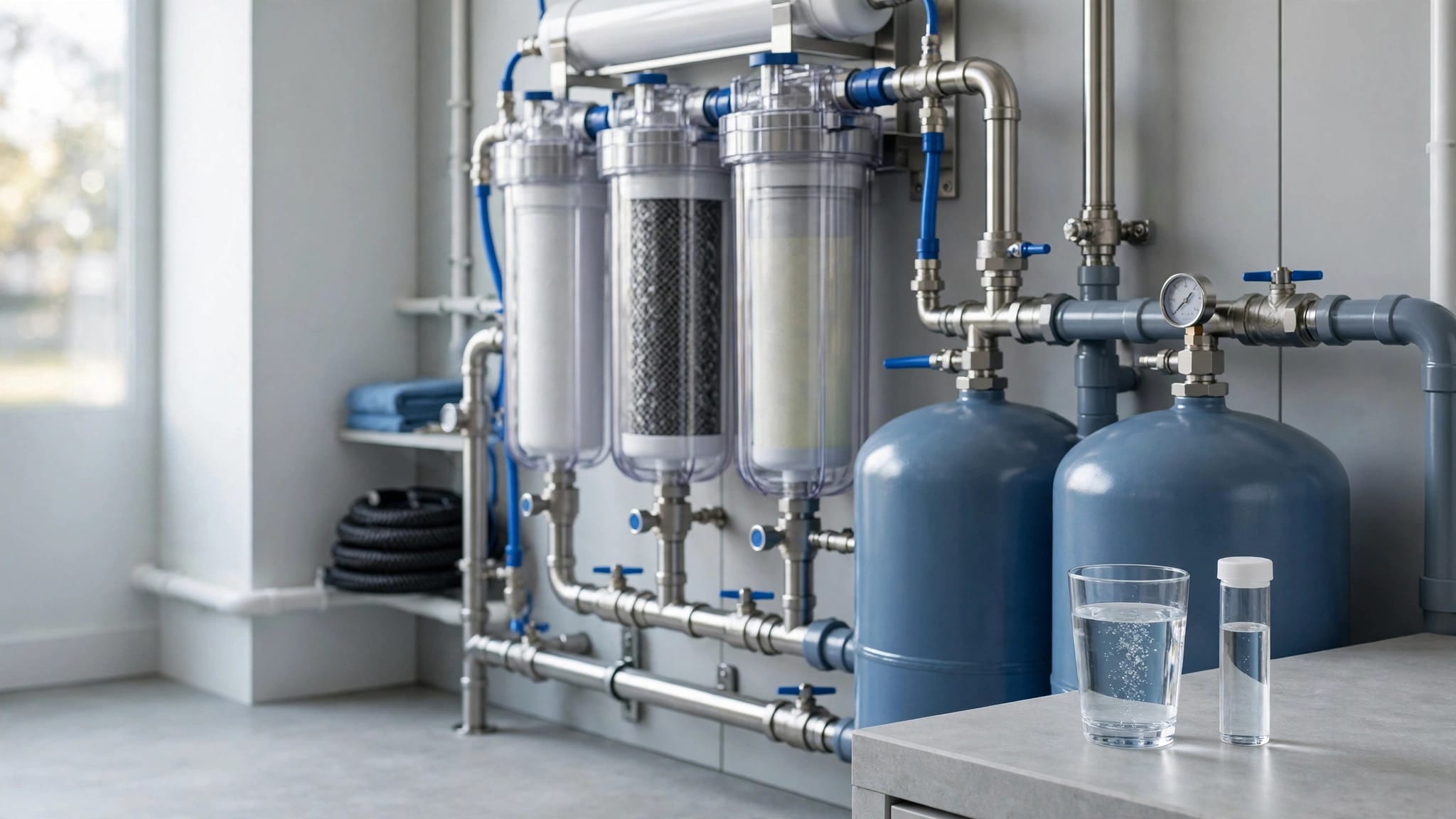

Can Whole-House RO Reduce Aluminum in Well Water?
Yes, reverse osmosis can reduce aluminum in well water , but the result depends on the aluminum's form, the well's chemistry, and the system's design. The general principle of RO supports removal of dissolved substances, but results for other contaminants don't prove a specific aluminum reduction.
A whole-house system also treats far more water than a drinking-water unit. Before choosing one, consider pretreatment, flow needs, wastewater, ongoing service, and how you'll measure the result.
Key Takeaways
- RO can reduce dissolved substances, but there's no aluminum-specific result in the information covered here.
- Aluminum's form and overall water chemistry affect treatment.
- A whole-house system needs suitable pretreatment, pressure, capacity, and wastewater handling.
- Compare lab results from before and after installation to assess performance.
Can Whole-House RO Reduce Aluminum in Well Water?
Reverse osmosis pushes water through a semipermeable membrane. The membrane allows water to pass while holding back many dissolved substances. That makes RO a possible treatment approach when aluminum is present in well water.
However, a general description of RO doesn't predict the result for a particular well. Aluminum can occur in different forms, and a lab result alone may not show how the water will behave through a specific system. The safest answer is conditional: RO may reduce aluminum, but performance must be established for the water and equipment involved.
Dissolved aluminum and particles behave differently
The water report should be interpreted alongside the system design. Aluminum that is dissolved may behave differently from aluminum attached to particles. A sediment filter can capture some suspended material, but it doesn't replace treatment designed for dissolved contaminants.
Other contaminant results don't establish aluminum performance
RO performance depends on the contaminant and water conditions. For example, our information about whole-house RO for arsenic in well water discusses arsenic, not aluminum. Results for one substance shouldn't be treated as proof of removal for another.
What Affects Aluminum Removal Performance?
The membrane is only one part of a well-water treatment system. Pressure, water chemistry, flow demand, and pretreatment all influence how reliably the equipment operates. A system designed without a full picture of the well may struggle to maintain performance.
Water chemistry and pressure matter
Well water can contain sediment, iron, manganese, hardness, or other substances that affect equipment. Iron and hardness can foul an RO membrane, while low pressure can limit membrane operation. Some systems need a booster pump to meet their pressure requirements.
The chemistry also affects how aluminum occurs in the water. That's why an aluminum result should be reviewed with the rest of the water report, rather than treated as a stand-alone number.
Pretreatment protects the membrane
Sediment filtration removes particles such as sand and silt before they reach the RO stage. Depending on the lab results, other treatment may be needed to address iron, manganese, hardness, or other water-quality issues.
Pretreatment should match the actual water, since adding equipment without a reason can raise maintenance needs without solving the problem. For a useful overview of treatment stages, see our guide to Florida well water purification stages.
How to Size a Whole-House RO System
Whole-house RO must supply the home's peak water demand, not only a drinking-water tap. Household size, plumbing flow, simultaneous showers or appliances, and the well's available pressure all matter. A high-flow home may need multiple membranes or a larger system than a small household.
Sizing also involves storage and delivery. A whole-house RO system may need a treated-water tank and a delivery pump to provide adequate flow at fixtures. The system designer needs to account for the well pump and pressure tank as well as the RO equipment.
RO sends a portion of incoming water to a drain as reject water. The amount varies with the equipment and operating conditions, so wastewater planning should be part of system design. A drain connection and a practical way to manage the discharge are essential considerations.
Testing and Maintenance Confirm the Result
Testing is how you find out whether aluminum levels changed after installation. Use the same laboratory method for the untreated and treated samples when possible, and follow the lab's sampling instructions. Compare results from the raw well water with water collected after the RO system has been operating.
Build a before-and-after baseline
Test the untreated well water before selecting equipment. After installation, test water from a treated-water tap to see how the system performs under real conditions. Keep the reports and dates together, since they give you a record to compare after maintenance or changes in water quality.
Routine testing also helps identify changes in the well. Annual testing provides a baseline, and retesting is useful after flooding, well repairs, changes in taste or odor, or unexplained staining.
Keep up with service
Prefilters need replacement, and membranes require maintenance according to operating conditions and manufacturer guidance. Changes in pressure, flow, or water quality can also indicate a need for service. A clogged prefilter or fouled membrane can reduce output and disrupt the system's operation.
How RO Compares With Other Treatment Options
A sediment filter can remove suspended particles, but it doesn't address dissolved aluminum. Other treatment methods may suit specific water conditions, yet the right option depends on the form of aluminum and the rest of the well-water report.
Distillation separates water through evaporation and condensation, while RO uses membrane pressure and produces a reject stream. Each approach has different equipment, energy, and water-management needs. Our comparison of reverse osmosis vs. distillation for well water offers more context on those tradeoffs.
A point-of-use RO unit may be more practical when treatment is only needed at a drinking-water tap. Whole-house RO treats water throughout the home, but requires more equipment, planning, and service.
Frequently Asked Questions
Will an under-sink RO system treat every faucet?
No. A point-of-use unit treats water connected to that unit, usually at one tap. Whole-house RO is designed to supply treated water to the home's plumbing.
Can a sediment filter remove all aluminum?
A sediment filter can capture suspended particles, but it won't reliably address dissolved substances. Testing and treatment design determine whether additional stages are needed.
How can I tell if the system is reducing aluminum?
Compare laboratory results from before and after installation. Use samples collected according to the lab's instructions, and retain the reports for later comparison.
Choose RO Based on the Test Results
Whole-house RO may reduce aluminum in well water, but the outcome depends on water chemistry and system design. Start with a well-water test, plan for pretreatment, capacity, and reject water, then use before-and-after testing to assess results. A properly sized system and a clear testing baseline make the performance easier to judge.
Latest posts
Read Our Blog
Tips, guides, industry best practices, and news.


Contact us
Get in touch
Our friendly team is ready to chat.