
Can Whole-House RO Reduce Strontium in Well Water?
A whole-house reverse osmosis system can reduce many dissolved contaminants, but that alone doesn't confirm how it will perform on strontium in your well. Treat RO as a possible option, then use water tests before and after installation to measure actual results.
The right setup depends on the water chemistry and the home's demand. For many households, point-of-use RO may be simpler if the concern is limited to drinking and cooking water.
Key Takeaways
- Test first: A lab result for untreated water helps guide treatment choices.
- Verify performance: Test treated water after startup to see whether strontium levels have changed.
- Plan for household demand: Whole-house RO needs suitable pretreatment, pressure, storage, and wastewater handling.
- Compare treatment locations: Point-of-use RO treats one connected tap, while whole-house RO supplies multiple fixtures.
Can Whole-House RO Reduce Strontium?
RO reduces total dissolved solids and many dissolved contaminants. However, a general claim about RO performance doesn't establish how a specific whole-house system will handle strontium in your well. Results depend on the membrane, operating conditions, and source-water chemistry.
Start with a lab test
Test untreated well water through a qualified drinking-water laboratory and request a strontium result. A full water analysis can also identify issues such as hardness, iron, manganese, or sediment that may affect system design.
A test gives you a baseline for comparing treatment options. It also helps avoid buying equipment to address a vague concern about "impurities" when the water contains a different problem.
Confirm results after installation
Once the system is operating, test the treated water and compare it with the untreated sample. Repeat testing during routine service, and retest if your well water changes seasonally. Taste and appearance can't confirm whether strontium levels have changed.
How Whole-House RO Works
The treatment path
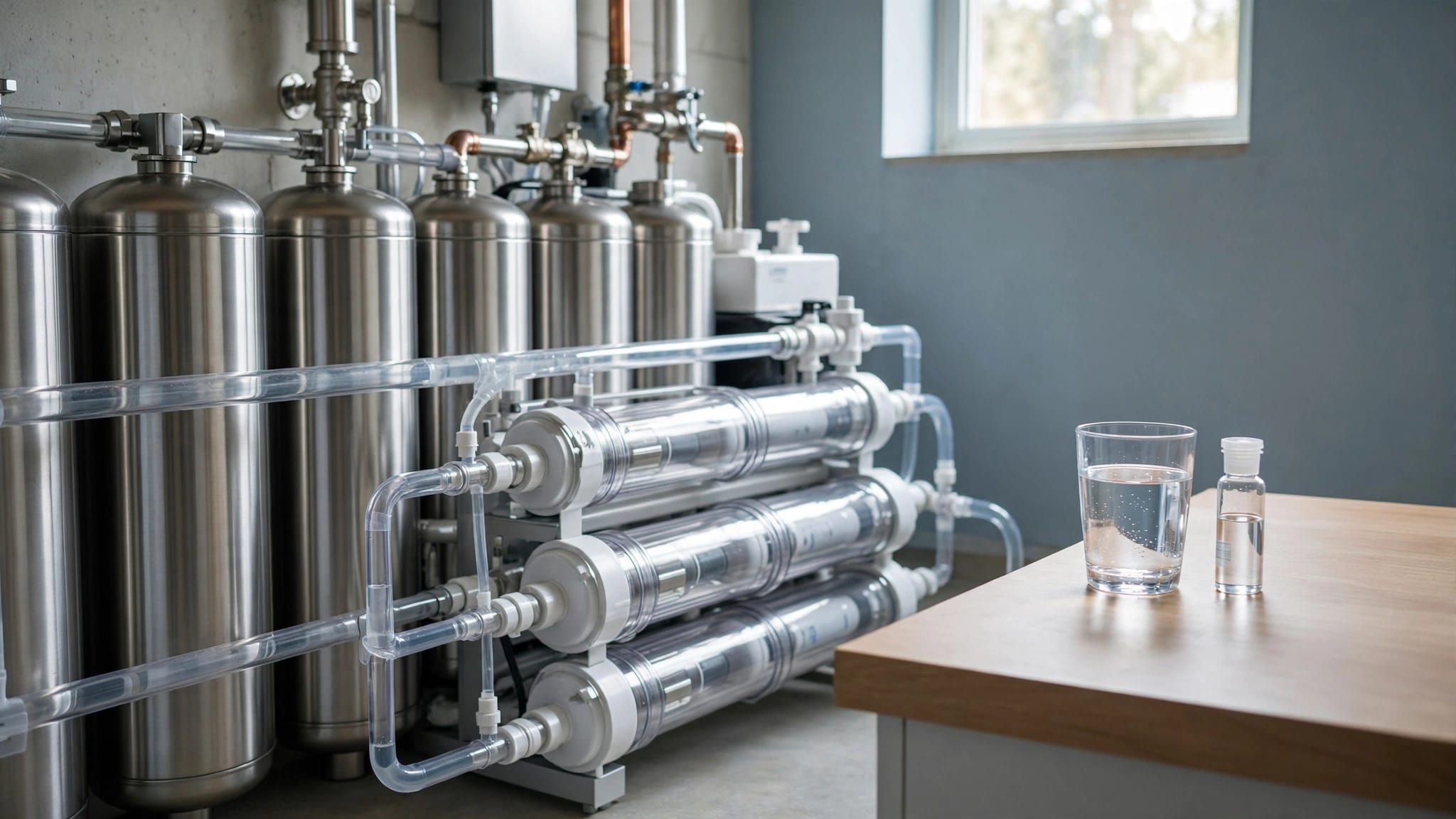
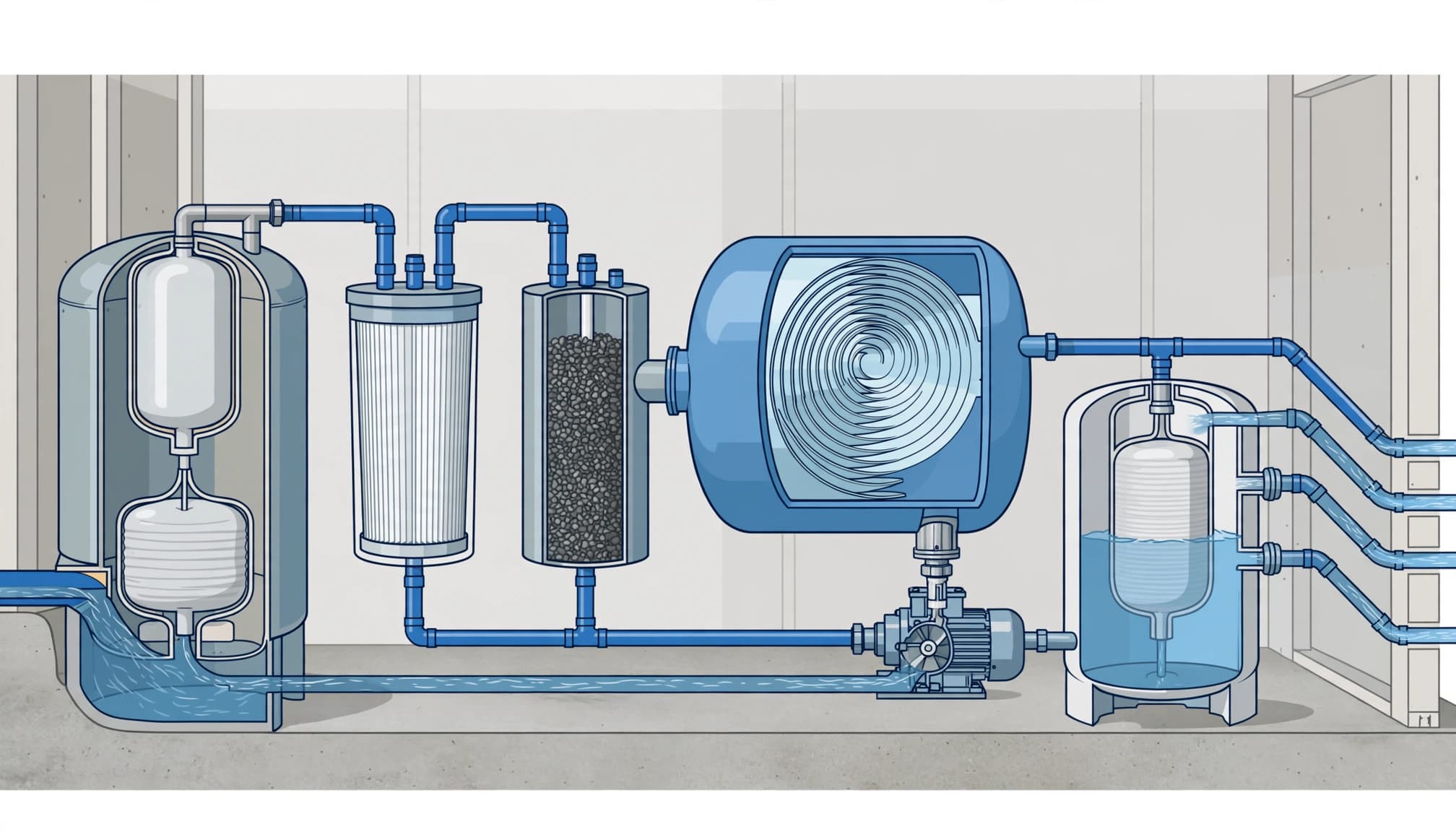
A whole-house system connects near the point where well water enters the home. Pretreatment stages address particles or water conditions that could affect the membrane. The RO membrane then separates treated water from a concentrated reject stream.
Because the membrane produces water more slowly than a home may use it, many systems store treated water in a tank. A booster or repressurization pump can then supply water to household fixtures.
Pressure and flow shape performance
The system must support the well pump's output and the home's peak demand. Low pressure can reduce production, so the design may need a booster pump. Storage and delivery equipment also matter when showers, laundry, and other fixtures run at once.
A system's membrane capacity alone doesn't tell you how well it will meet household demand. This guide to whole-house RO storage tank sizing covers the role storage plays in system planning.
Size the System and Protect the Membrane
Match capacity to actual use
System size should follow water chemistry, daily use, and peak flow, not square footage alone. The design may need to account for the well pump's recovery, available installation space, pressure, and the number of fixtures receiving treated water.
Some homes may not need RO at every tap. Leaving high-volume uses such as irrigation outside the treated-water supply can reduce the amount of water the system must produce.
Use pretreatment where the test calls for it
Sediment, iron, manganese, and hardness can foul or scale an RO membrane. Suitable pretreatment can protect the membrane and help maintain production. The right stages depend on the well analysis, so avoid adding filters without a specific purpose.
If chlorine is present, carbon treatment may be needed to protect the membrane. Private wells don't usually contain municipal disinfectant unless the owner adds it, so carbon isn't automatically required.
Account for Wastewater and Maintenance
Plan where reject water goes
RO sends a portion of the incoming water to a drain as concentrate. Whole-house systems produce more reject water than an under-sink unit, so the installation must account for drain capacity and local plumbing requirements. Septic systems may need special consideration.
Keep filters, pumps, and membranes in service
Prefilters need replacement, and the membrane requires performance checks and periodic service. Clogged filters can reduce production, while poor pressure or membrane fouling can affect system output. Follow the manufacturer's service instructions and test the treated water as part of ongoing maintenance.
Whole-House RO vs. Point-of-Use Treatment
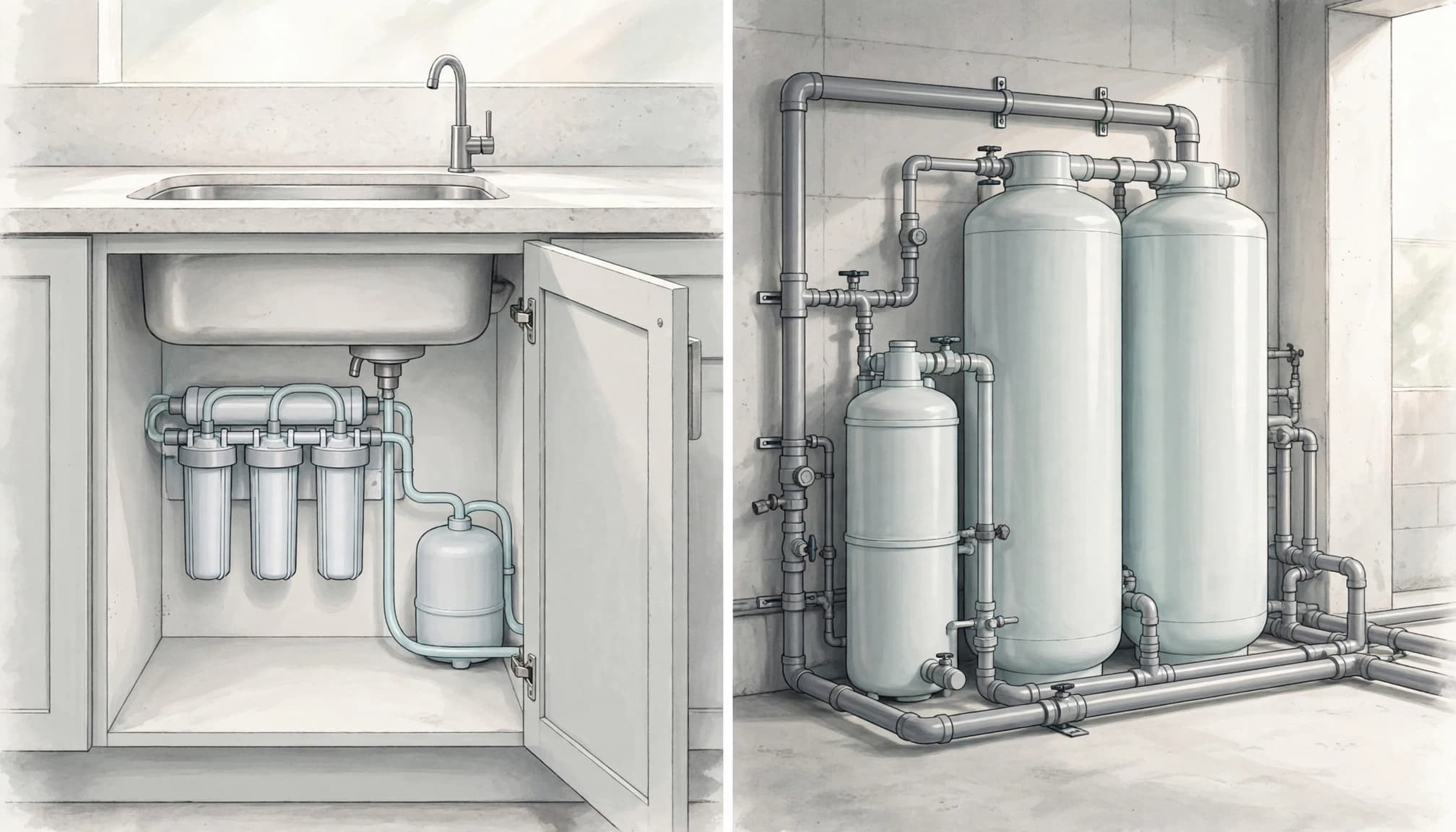
Under-sink RO treats water at one connected faucet, often for drinking and cooking. It usually needs less storage and has a smaller wastewater stream than whole-house RO. If testing shows a concern across the property or you want treated water at several fixtures, a whole-house system may fit, but it requires more equipment and planning.
A water softener addresses hardness, which is different from reducing a range of dissolved contaminants. Choose between treatment types based on the lab results, not on one system's broad claims. Our guide to RO and distillation for private well water compares two options for treating drinking water.
Frequently Asked Questions
Should I install whole-house RO based on a strontium concern alone?
No. Begin with a lab test that measures strontium and other relevant water conditions. Then match the treatment plan to those results and confirm performance with a treated-water test.
Does a water softener do the same job as RO?
No. A softener reduces hardness, while RO reduces total dissolved solids and many dissolved contaminants. They address different water problems.
How often should I test after installation?
Test treated water after the system is commissioned, then retest during routine service or if source-water conditions change. The results help show whether the system continues to meet its treatment goal.
Let Test Results Guide the Decision
Whole-house RO involves more than choosing a membrane. Water chemistry, pretreatment, flow, storage, pressure, reject-water handling, and maintenance all affect how the system works in a home.
For strontium, use a before-and-after lab comparison rather than assuming performance from a general RO claim. At Trademark Water Systems, we offer water analysis and treatment services for homeowners in Naples and Southwest Florida.
Latest posts
Read Our Blog
Tips, guides, industry best practices, and news.


Contact us
Get in touch
Our friendly team is ready to chat.