Can a Lake Fountain Be Installed Near Aquatic Plants?
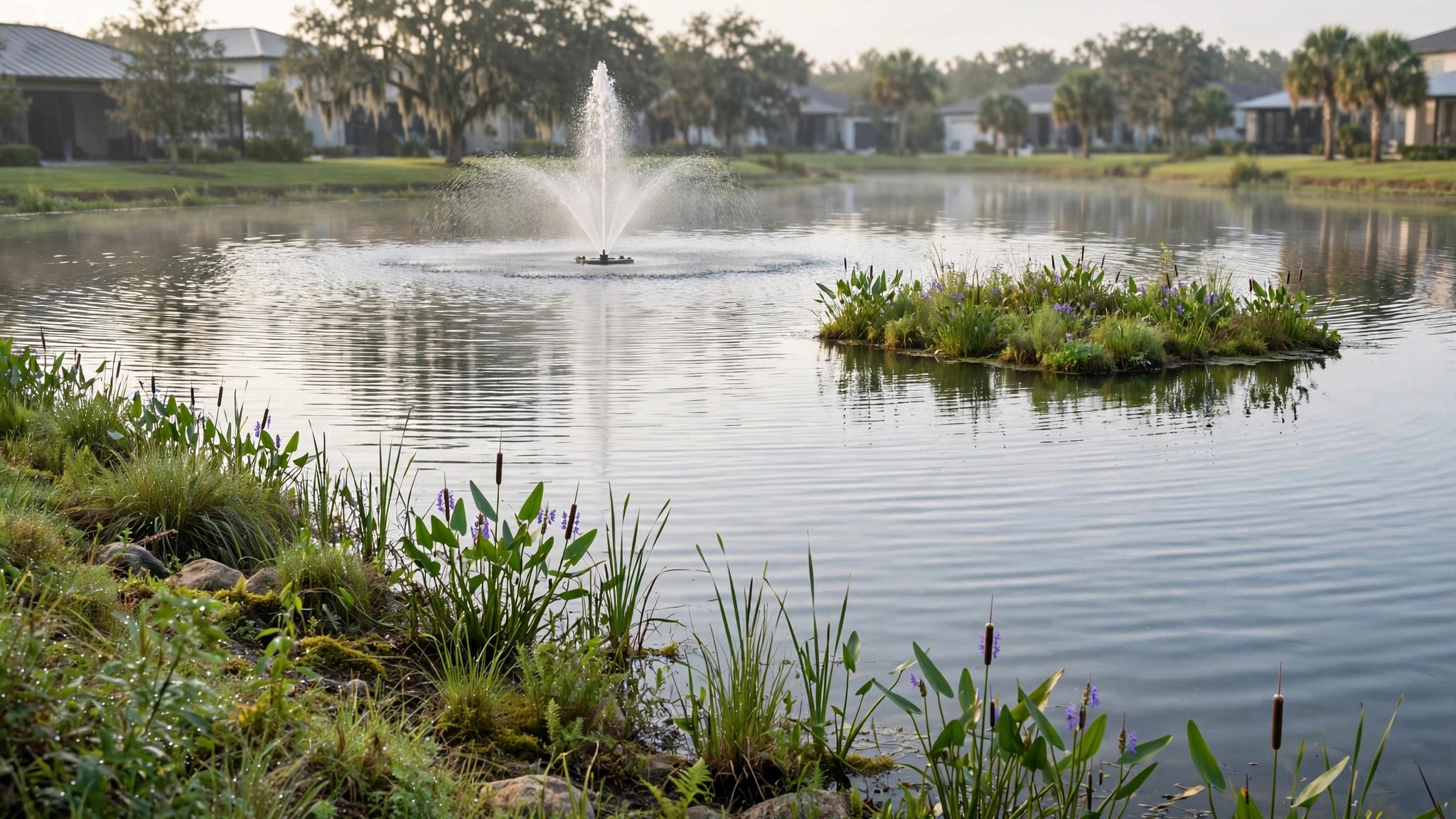
Yes, a lake fountain can be installed near submerged aquatic plants when its float, intake, anchors, and mooring lines stay clear of designated plant beds. The right location depends on water depth, bottom conditions, circulation patterns, and safe access for maintenance.
A fountain moves water around its operating area, but it won't circulate every cove or protect every plant zone by itself. Plan the installation around the vegetation you want to preserve, not just the view from shore.
How lake fountain placement affects submerged plants
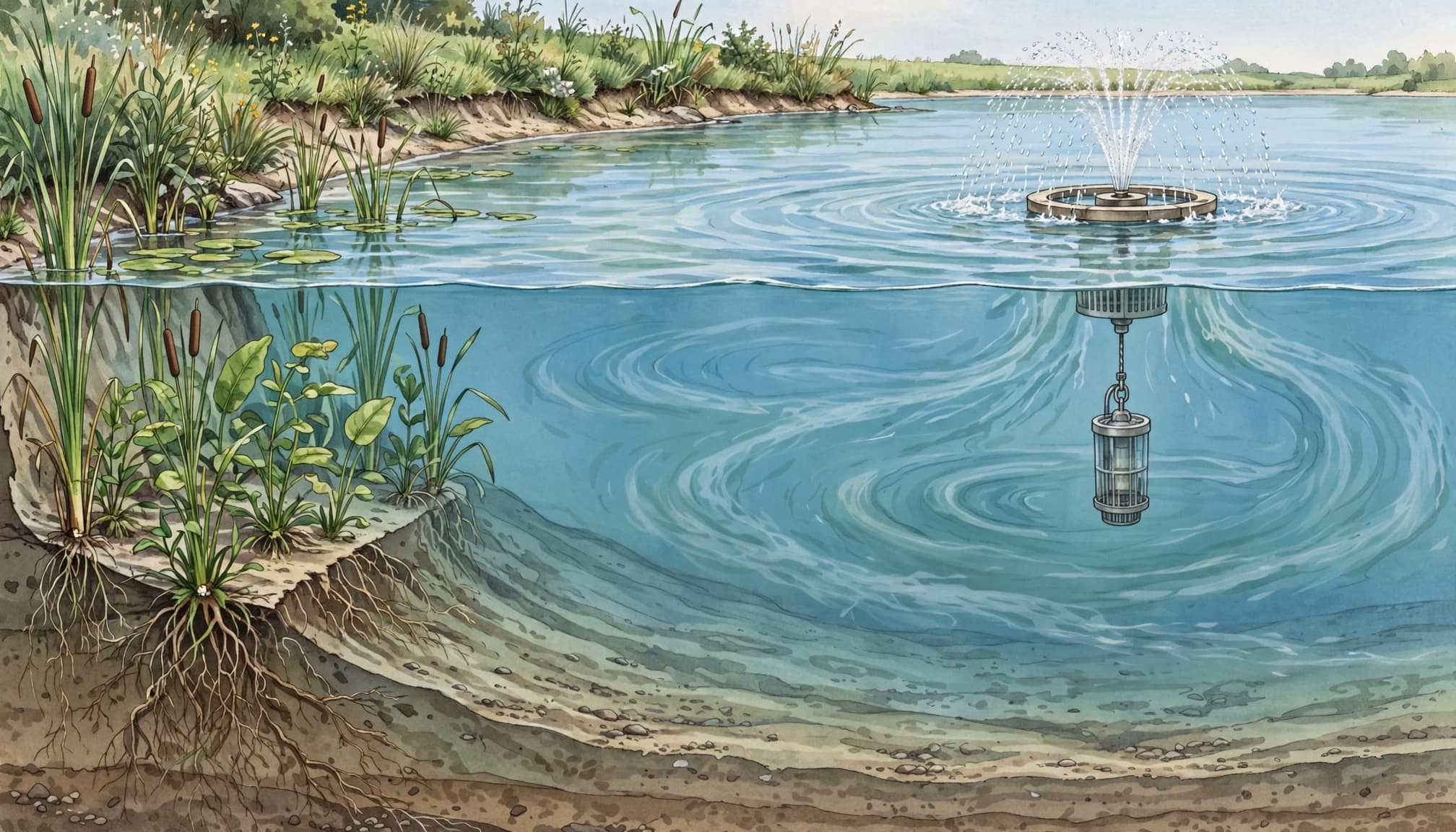
Fountain spray creates surface movement, and the pump draws water through an intake. These actions can affect conditions near the unit, while the fountain's actual reach depends on its capacity, spray pattern, and the shape and depth of the lake.
Keep plant beds separate from the equipment
Place the fountain in open water rather than within a dense bed. An intake too close to vegetation may collect loose plant material or become obstructed. A float, anchor, or cable routed through a planted zone can also interfere with maintenance or disturb the area.
There isn't one reliable clearance distance for every lake. Plant density, depth, bottom conditions, fountain design, and water-level changes all affect the layout. A site plan that marks existing vegetation gives installers and property managers a clearer boundary to work around.
Treat circulation as local, not lake-wide
A fountain can improve circulation near its operating zone, but it may leave quiet water in coves or along shallow margins. Its spray pattern and location influence where surface water moves. That movement shouldn't be treated as proof that a plant bed will be unaffected.
A fountain also doesn't remove excess nutrients or replace shoreline and runoff management. For a closer look at what surface fountains do compared with other aeration systems, see fountain aeration vs. bottom diffusers.
Position the fountain outside designated plant zones
Start with a site survey that marks plant beds, the shoreline, docks, inlets, outlets, and the proposed fountain location. A practical layout keeps the fountain in open water, with enough room for the unit to operate without drifting into shallow areas or striking the bank.
Our Florida lake fountain placement guide covers other placement factors, including shoreline conditions and access. Wind direction matters too: spray that lands on a path or fertilized lawn can create a slipping hazard and carry nutrients back into the lake.
Check depth at low water
A lake that looks deep after heavy rain may have a shallow shelf during a dry spell. Measure depth where the fountain and intake will sit, using the lake's lowest normal level as the planning condition. Follow the fountain manufacturer's minimum operating depth and intake-clearance requirements.
Keep the intake above the bottom with enough clearance for water to flow without pulling sediment. Soft muck, submerged roots, and accumulated leaves can complicate operation and retrieval. Dense vegetation around the intake may also restrict flow.
Keep anchors and lines out of the beds
A floating fountain needs a stable anchoring plan. Place anchors and mooring lines outside designated plant zones where the site allows, and account for normal water-level movement so the unit doesn't drift toward shore or vegetation.
Leave a safe service route from the bank to the control equipment. If a crew needs a boat to reach the fountain, access and retrieval should be part of the installation plan, not an afterthought.
Preserve plant zones during installation and maintenance
Mark protected or intentionally planted areas on the project plan, and share those boundaries with the installer and maintenance crew. Keep equipment, anchors, and routine service activity out of those zones. Don't clear shoreline plants or reshape a bank without the required approval, since some vegetation and shoreline features may be protected or subject to site restrictions.
After installation, record the fountain's normal position, spray direction, and anchor locations. During routine service, watch for a changed spray pattern, a clogged intake, or vegetation growing around the float or mooring lines. Shut off power before inspection, and use trained service personnel when safe access or equipment requires it.
Account for local rules before installation
Rules can depend on the lake system and the work involved. Some systems restrict disturbance of the lake bottom or set limits on where anchors and cables can go. The South Broward Drainage District, for example, has published requirements for fountains and aerators in certain lake systems. Those are local rules, not statewide Florida standards.
Installation may also involve electrical work, cable routing, or changes near a shoreline. The project plan should show where equipment will sit and how it will be anchored. See questions to ask about lake fountain permits for more on site-specific restrictions.
Key takeaways
A lake fountain can operate near submerged plants when the equipment stays in open water and the plant beds remain clear of anchors, lines, and service activity. Measure depth at low water, follow the manufacturer's intake requirements, and consider how local currents and shoreline conditions affect the site. A fountain supports movement near its operating area, but it doesn't replace plant-zone protection or broader lake management.
Frequently asked questions
Can a fountain go directly over submerged plants?
Avoid placing the float and intake directly over a designated plant bed. Equipment and maintenance can interfere with the area, and vegetation near the intake may restrict flow. A site-specific layout is more useful than assuming one distance works for every lake.
Can fountain circulation reach every part of a lake?
No. Circulation is strongest near the operating zone, and coves or shallow margins may remain relatively still. Fountain capacity, spray pattern, depth, and lake shape all affect coverage.
Will the intake pull plants out of the lake?
Plant-specific effects depend on the equipment and conditions at the site. Keep the intake clear of dense vegetation and sediment, and follow the manufacturer's operating requirements.
Choose a location that protects the lake and the fountain
A good installation leaves designated plant beds undisturbed while giving the fountain enough open water, depth, and service access to operate properly. Plan the float, intake, anchors, and cables together, and keep local site restrictions in view.
Latest posts
Read Our Blog
Tips, guides, industry best practices, and news.


Contact us
Get in touch
Our friendly team is ready to chat.