
Why a Lake Fountain Relay May Stay Energized
A lake fountain relay that appears to stay energized points to a control or electrical issue, but the symptom alone doesn't identify the fault. A relay is part of a system that may include a timer, sensors, a controller, wiring, and the fountain's pump.
For a community or homeowner, the safest first step is to note what the fountain does and when it does it. Then leave electrical testing and repairs to a qualified technician. Understanding the symptom can help you describe the problem clearly without opening the control panel.
What "stays energized" means
The word "energized" refers to power reaching a relay's control side. A fountain that keeps running past its expected stop time may look like a relay problem, but the observation doesn't show which part of the control system is responsible.
The relay is one part of a larger system
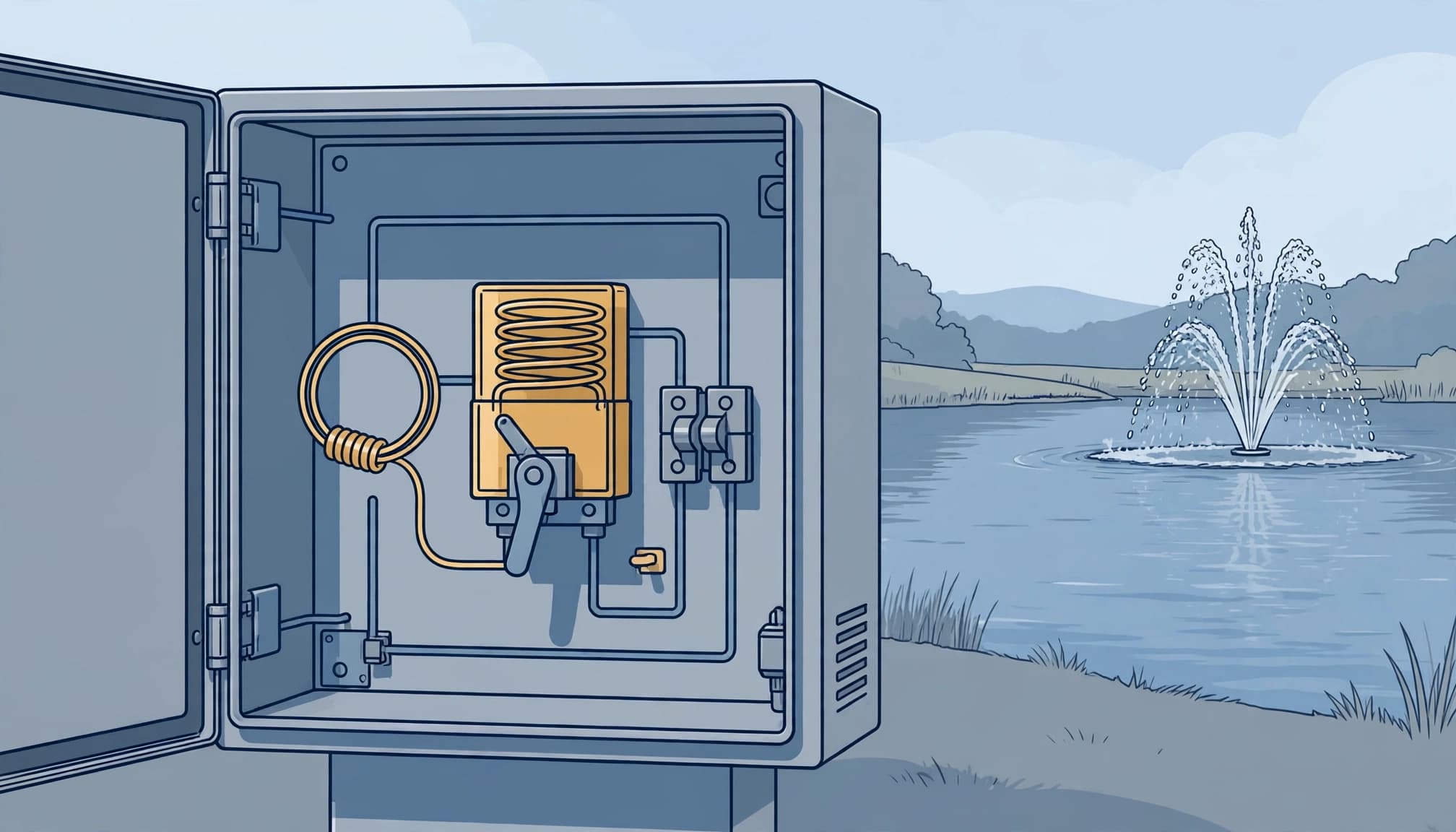
A lake fountain's control setup can connect the power supply, control equipment, and pump operation. Depending on the installation, a timer, sensor, or control board may affect when the fountain runs. A fault or unexpected setting elsewhere in that system can resemble a relay issue from outside the cabinet.
That's why the fountain's visible behavior is useful, but limited. A continuous spray tells you the unit is running. It doesn't reveal whether the relay, a command from the controller, or another electrical component is involved.
A symptom is not a confirmed diagnosis
A relay can't be diagnosed by looking at the spray pattern or listening to the pump alone. Similar operating symptoms may have different causes, and a controller warning can refer to the electrical supply, a protective device, the controller, the lighting circuit, or the pump.
Separate continuous operation from other fountain problems
Fountains can show several kinds of operating trouble. Distinguishing them helps you share a clearer description with the person who will assess the equipment.
Note when the fountain runs and stops
If a fountain runs past its normal schedule, record the time it should have stopped and whether it continued without interruption. If it stops shortly after starting, that's a different pattern. The cause may involve restricted water flow, an electrical fault, or a problem inside the pump, as described in our guide to a lake fountain that shuts off after starting.
The timing matters because a start-and-stop problem isn't the same symptom as a fountain that keeps running. Keep the description factual. For example, note whether the unit started on schedule, ran normally, and then failed to stop when expected.
Watch for changes beyond the run time
A change in spray height, sound, or breaker behavior can provide useful context. A new noise or weaker spray doesn't prove the relay is at fault, but it can help a technician understand whether the problem involves broader fountain operation.
Record what changed and when. Avoid repeatedly switching the fountain on and off to test it, especially if you hear unusual sounds or see a breaker trip.
What you can observe without opening the control panel
Safe observations can help narrow down the issue without exposing you to electrical equipment. Keep your attention on the fountain's schedule, visible operation, and any user-facing controller display.
Compare the actual schedule with the programmed schedule
If you can view the timer or controller through its normal user interface, note the programmed run and stop times. Check whether the displayed time is correct and whether the selected operating mode matches the schedule you expect.
Don't remove covers or alter wiring to get a better look. If the control display shows a warning or an unexpected mode, record the exact message. That information can help service staff distinguish a scheduling question from a control fault.
Keep a short symptom record
A simple record is more useful than a guess about which component failed. Write down when the fountain ran, when it should have stopped, any displayed warning, and any change in spray or sound. Include recent outages or storms if they happened near the first occurrence.
If the fountain serves a shared lake, tell the property manager or the person responsible for maintenance. A consistent report from residents helps prevent repeated resets and gives the service team a clearer timeline.
How timers, sensors, and controllers fit in
A relay doesn't act alone. Its behavior depends on a control signal, and that signal may be affected by other parts of the system. The exact arrangement varies by fountain installation, so symptoms should be assessed in context.
Timers and operating schedules
A timer or controller may determine when the fountain is meant to run. Incorrect time settings, an unexpected schedule, or a mode that overrides the usual program can make operation seem unusual. A visible schedule mismatch is worth reporting, but it doesn't establish that the relay itself has failed.
If the settings appear correct and the fountain continues running outside its normal schedule, avoid making electrical adjustments. Share the observed schedule and behavior with a technician instead.
Sensors and control boards
Some control systems use sensors or a control board to manage operation. A warning may point to several parts of the system, not one specific component. Trademark Water Systems' guide to safe checks for fountain controller faults covers the kinds of information that can help when a controller displays an error.
Don't assume that a warning means the pump or relay needs replacement. The supply, protective device, controller, lighting circuit, or pump may all need consideration during a professional assessment.
Safety comes before troubleshooting
A lake fountain combines electricity and water. Don't touch submerged equipment, wiring, or exposed components to investigate why a fountain keeps running.
Avoid opening or testing the cabinet
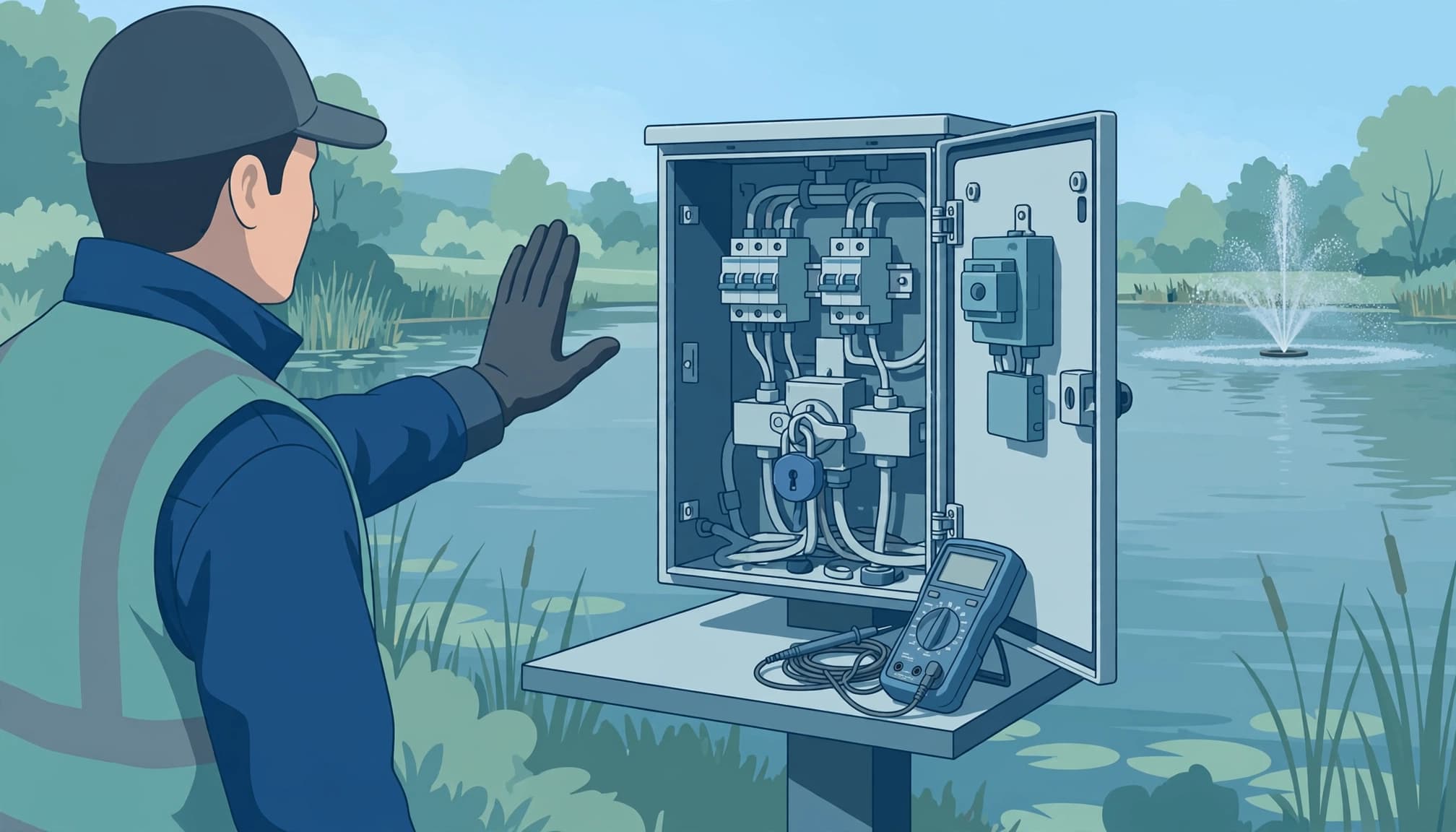
Disconnecting power is necessary before inspecting or cleaning equipment, but opening a control panel or testing electrical components is different from checking a display or noting a schedule. Those tasks should be handled by someone qualified to work on the system.
If you aren't trained to work with electrical equipment, don't use a meter or attempt to move wires, reset components inside the panel, or replace parts. A visible control cabinet doesn't make its contents safe to handle.
Stop operation when there are warning signs
A breaker that trips more than once, a GFCI that won't reset, or a damaged cable are reasons to stop operating the fountain and arrange service. Don't keep resetting a protective device to force the unit to run.
For other electrical concerns, avoid handling the equipment and describe what you observed. Our guidance on lake fountain repair or replacement also explains when electrical or structural issues call for professional assessment.
What to expect from a service assessment
When a technician assesses a fountain that won't stop, your observations help establish the operating pattern. The assessment can then consider the controls and the fountain together, rather than assuming one part is responsible.
Share the details that help narrow the issue
Provide the expected schedule, the actual run times, any display message, and any recent change in spray or sound. Mention whether a breaker tripped or the GFCI failed to reset. If the fountain is in a community lake, explain who manages access to the equipment.
Avoid resetting the system repeatedly before service. A record of what happened, including unsuccessful resets or recent maintenance, can preserve useful context.
Keep repair decisions tied to the diagnosed fault
A continuously running fountain doesn't automatically call for relay replacement. The appropriate repair depends on what the inspection finds in the controls and equipment. A diagnosis also helps determine whether the issue is limited to a control component or involves another part of the installation.
For Naples-area communities and homeowners, Trademark Water Systems provides lake fountain installation and service. Electrical diagnostics should be left to qualified service personnel rather than attempted by residents.
Routine maintenance helps catch changes earlier
Regular maintenance doesn't guarantee that a control fault won't happen, but it can help identify changes in fountain operation. Comparing current operation with normal spray, sound, and schedule gives property managers a useful reference.
For a shared lake, designate someone to report changes and keep service notes in one place. Include dates, visible warnings, and any work done. Our lake fountain maintenance checklist offers additional guidance for routine upkeep.
If a fountain's operation changes suddenly, respond to the actual signs rather than guessing at the cause. A persistent spray, an error display, and a repeated breaker trip call for different levels of urgency, but none should prompt untrained electrical work.
Key takeaways
- A fountain that keeps running doesn't, by itself, confirm a relay fault.
- Timers, sensors, control boards, the electrical supply, protective devices, and the pump may all be relevant to a controller or operating issue.
- Record the schedule, run behavior, warnings, and visible changes instead of opening the control panel.
- Stop operation and arrange service if a breaker trips repeatedly, a GFCI won't reset, or a cable appears damaged.
FAQ
Does a fountain that keeps running mean its relay is bad?
No. The observation alone can't identify the faulty component. A timer, sensor, controller, electrical supply, protective device, or pump may also be relevant.
Can I reset the controller to stop the fountain?
Use only normal user-facing controls, and don't keep resetting the system if the problem returns. Record any warning message and arrange service when the fountain continues operating unexpectedly.
Should I inspect the wiring myself?
No. Don't open the cabinet, handle wiring, or test electrical components unless you're qualified to do that work. Disconnect power before any inspection or cleaning, and have electrical diagnostics handled by a qualified technician.
Get the cause assessed safely
When a lake fountain relay appears to stay energized, the fountain's behavior is a starting point, not a diagnosis. Record what the unit does, note any warning signs, and keep people away from electrical equipment.
A clear timeline helps the technician assess the control system and the fountain as a whole. That's safer and more useful than replacing a part based on the spray alone.
Latest posts
Read Our Blog
Tips, guides, industry best practices, and news.



Contact us
Get in touch
Our friendly team is ready to chat.
